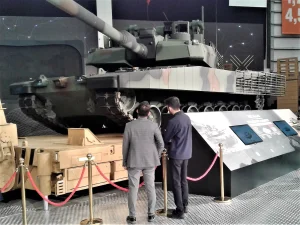
FEMSAN DC motors: from 0.18 kW to 397 kW

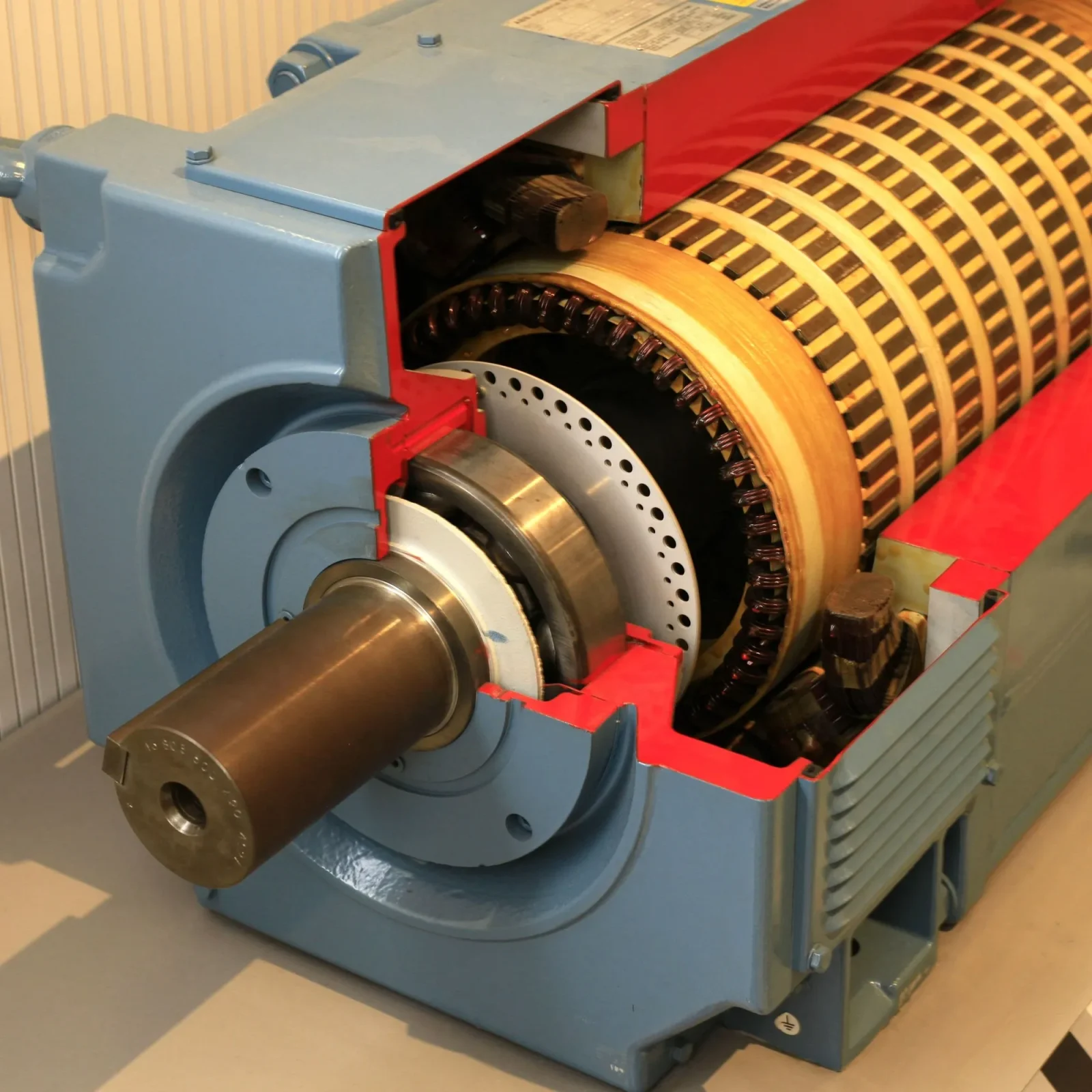
FEMSAN’s DC motors are the company’s oldest product family, produced since its founding, and today comprise three main series: permanent magnet (ferrite and neodymium) brushed DC motors in the 0.18-5 kW range, series-wound DC motors in the 0.85-12 kW range, and square-frame industrial DC motors in the 0.75-397 kW range. The catalog lists torque production of up to 2,000 Nm in custom designs.
Permanent magnet brushed DC motors
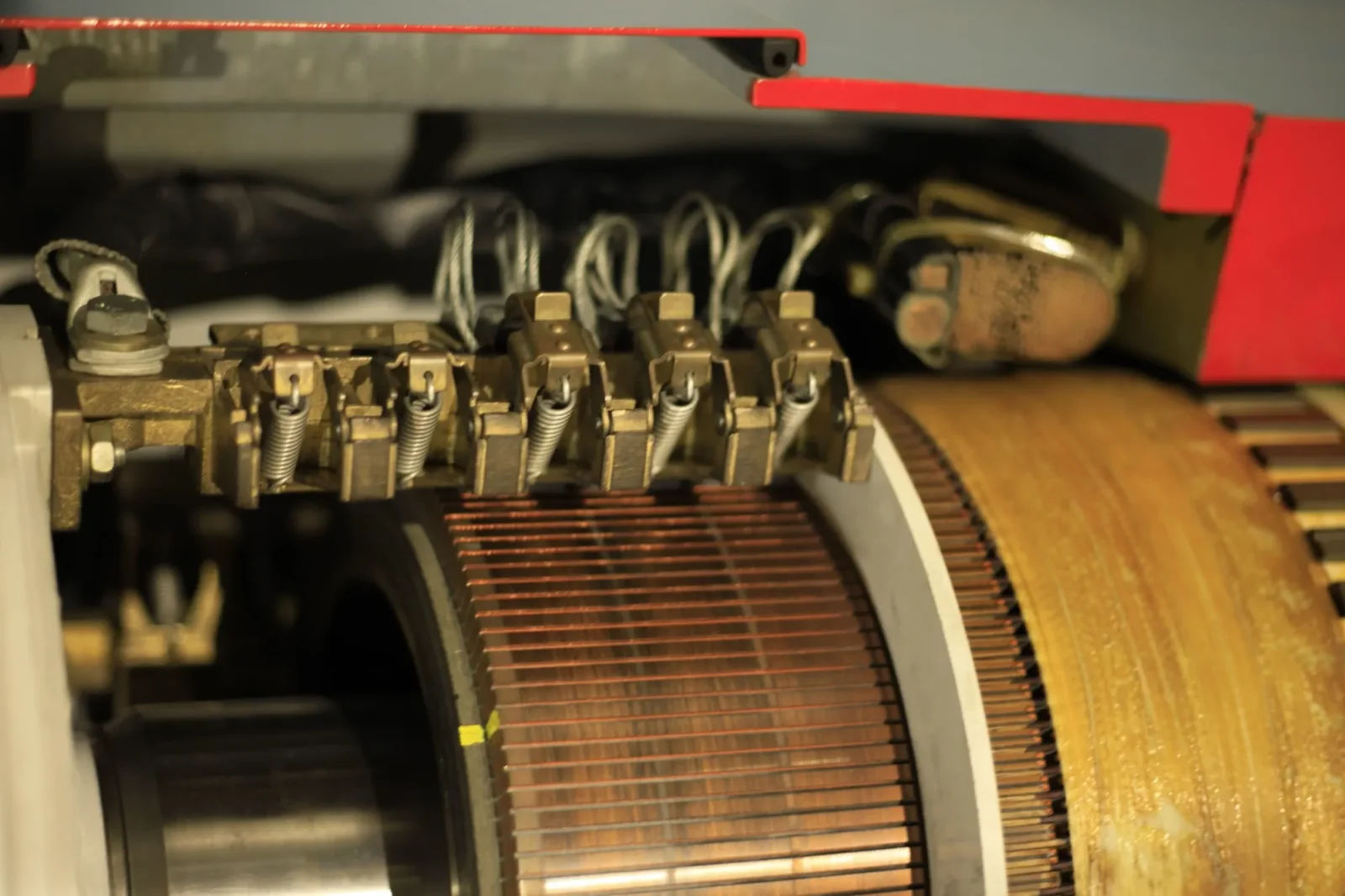
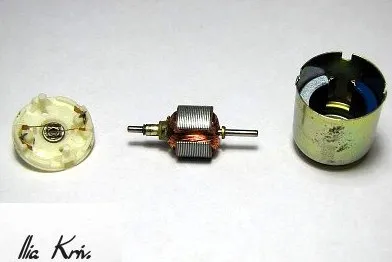
The ferrite magnet series is produced in frames 70, 80 and 90 at 0.18-3 kW; the neodymium magnet series in frames 63, 90 and 100 at 0.37-5 kW. Supply voltage ranges from 12 to 180 V DC depending on the application; custom speed designs are made in the 600-3,000 rpm band. The catalog specifies IP23 and IP44 protection classes, Class F insulation (Class H on request), S1 continuous and S2 intermittent duty, and extended brush life through copper-graphite brushes. With the magnets in the stator, the construction is compact and reduces frame heating.
| Series | Frame | Power | Voltage |
|---|---|---|---|
| Ferrite magnet | 70 / 80 / 90 | 0.18-3 kW | 12-180 V DC |
| Neodymium magnet | 63 / 90 / 100 | 0.37-5 kW | 12-72 V DC |
| Series-wound | 112 / 132 / 160 | 0.85-12 kW | 24-72 V DC |
| Square frame | K.08-K.10 types | 0.75-397 kW | 180-500 V DC |
Square-frame industrial DC motors
Because a DC motor’s speed is proportional to armature voltage and its torque to current, thyristor-fed DC drive systems were the standard solution for precise speed control before frequency converters became widespread; owing to the installed base in existing plants, production and refurbishment of these motors continues today.
The square-frame series is built to the IEC 60034 family of standards: IP23 protection (IP44 on request), IC06 forced cooling by an AC motor, foot mounting (IM B3) and Class F insulation. In the catalog table, types starting from K.08.07 run from 0.69 kW to 15 kW, and the series continues up to 397 kW; the motors are rated for supply from a three-phase fully controlled thyristor drive. High-torque industrial drives such as rolling mills, extrusion lines and lifting systems are this series’ domain. On request, flange mounting, protection above IP44 and speed feedback via a tachogenerator can be added.
Series-wound motors and low-voltage applications
The series-wound motors (24-72 V DC) are produced for battery-powered applications requiring high starting torque; the catalog gives a torque band of 4.6-38.2 Nm in frames 112-160. Battery-fed systems such as forklifts, tow tractors and platform vehicles are this series’ typical users. The company’s low-voltage custom designs on the defense side are derived from the same engineering base; examples of use in military projects appear in the defense projects file.
Application areas
The catalog keeps the DC series’ application list broad: battery-powered vehicles, industrial machinery, shuttle warehouse systems, lifting and crane systems, automated guided vehicles, amusement park rides, cleaning machines and personnel lift platforms. What these applications share is a need for either grid-independent low-voltage supply or precise speed control from a thyristor drive. On the defense side, the same motor base is used in turret drives, hatch-ramp mechanisms and auxiliary systems, with windings and sealing built to military standards as required. The company’s verified defense work is listed in the defense projects file.
Modular hardware and custom design
The catalog shows that worm and planetary gearboxes, magnetic brakes, incremental encoders, tachogenerators and motor controllers can be added to the DC series in modular fashion. The company states that it produces custom windings and custom shaft-flange machining to customer requirements. Brushless alternatives and the advantages of electronic commutation are examined in the BLDC motors file, and applications requiring closed-loop position control in the servo motors file. The complete list of product families is in the products guide.
Frequently asked questions
When does a brushed DC motor still make sense?
For applications needing simple speed control, low cost and direct battery supply, the brushed motor is the economical solution; not requiring drive electronics is an advantage.
Up to how many kW does FEMSAN produce DC motors?
The catalog lists the square-frame series up to 397 kW and custom designs up to 2,000 Nm of torque.
What is the difference between ferrite and neodymium magnets?
A neodymium magnet delivers a stronger magnetic field from the same volume; the motor becomes more compact with higher power density, but costs more than ferrite.
Which standards do the square-frame motors meet?
The catalog references IEC 60034-1/-5/-6/-7 and IEC 60085.
Can encoders and brakes be added later?
The catalog supports modular configuration; encoders, tachogenerators, brakes and gearboxes are configured at the factory.
Sources and verification note
All technical values in this file are taken from FEMSAN’s official industrial catalog. Accessed: August 13, 2026.
- https://www.hannovermesse.de/apollo/hannover_messe_2023/obs/Binary/A1228817/FEMSAN%20END-2019-ENG.pdf
- https://www.femsan.com/ (product groups page)
- https://www.sahaistanbul.org.tr/firma/femsan-elektrik-motorlari-san-ve-tic-a-s
- https://www.linkedin.com/company/femsan-electric-motors