Twelve rockets in a shipping container: Lockheed’s Kodiak launcher fires for the first time

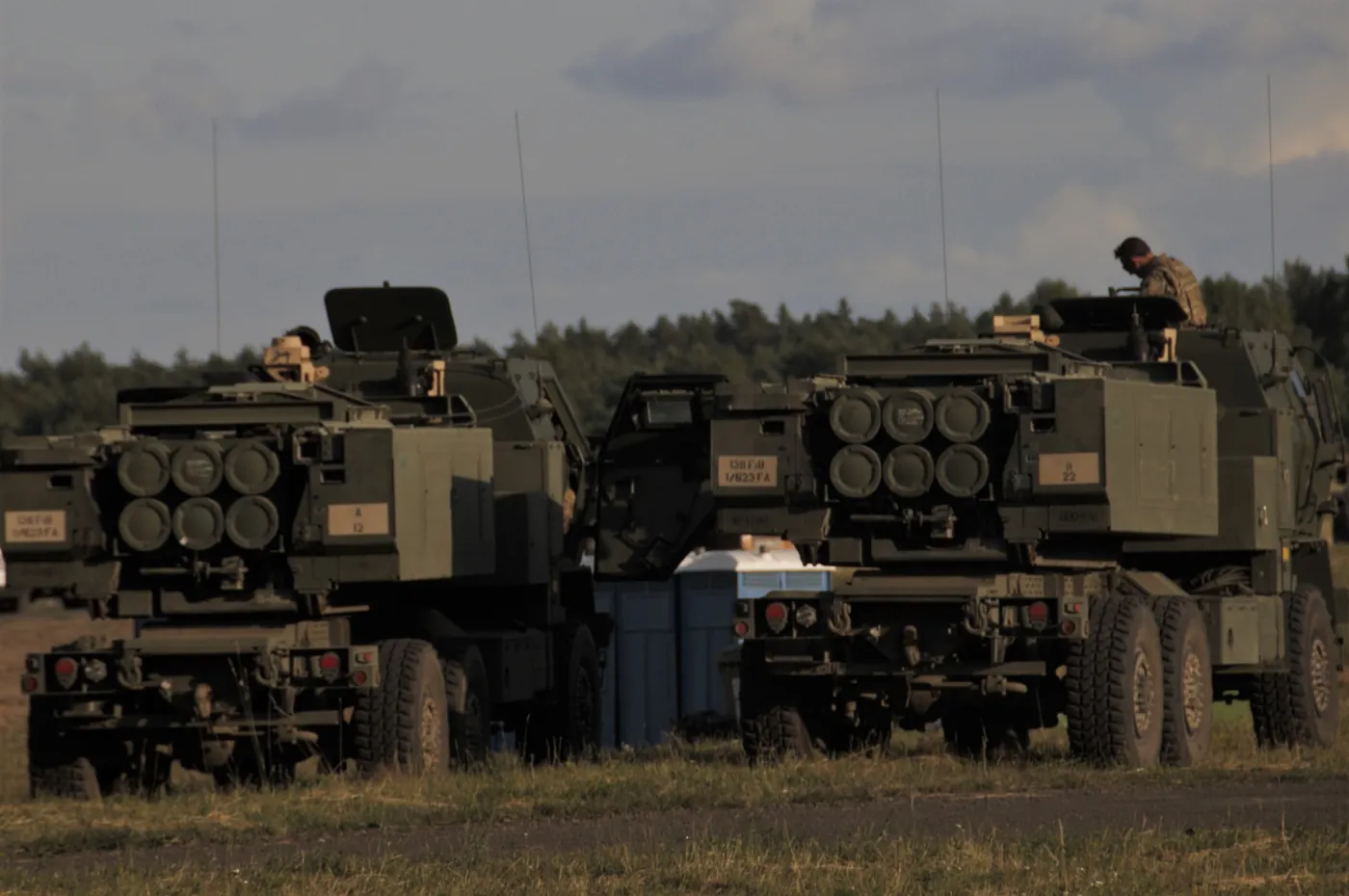
Lockheed Martin has fired a guided rocket out of a shipping container for the first time. The Kodiak launcher holds 12 GMLRS rockets in a single container — twice a HIMARS load — and needs no launcher vehicle at all. The live-fire test took place on 12 August at the Yakima Training Center in Washington state.
At a Glance
- What happened: First integrated live-fire test of the Kodiak containerized rocket launcher
- When: 12 August 2026
- Where: Yakima Training Center, Washington state, USA
- Who: Lockheed Martin — company-funded development, no customer contract yet
- Round fired: Reduced-Range Practice Rocket, the same trainer used by HIMARS and M270A2
- Capacity: 12 GMLRS per container; over 70 km range, up to 150 km with Extended-Range GMLRS
- Pace: From concept to live fire in under six months
- Wider read: Western artillery is shifting from armoured launchers to hidden, modular firing boxes
A rocket launcher without a vehicle
Until now, firing a GMLRS rocket meant fielding either a HIMARS truck or a tracked M270. The test Lockheed Martin announced on 12 August breaks that link. Kodiak fires the same rockets straight out of a standard freight container, taking the launcher vehicle out of the equation entirely.
At Yakima the company fired a Reduced-Range Practice Rocket, the trainer round already used across the HIMARS and M270A2 fleets. Lockheed says the system met every planned mission requirement on the first attempt. The detail the company keeps repeating is the schedule: concept to live fire took less than six months.
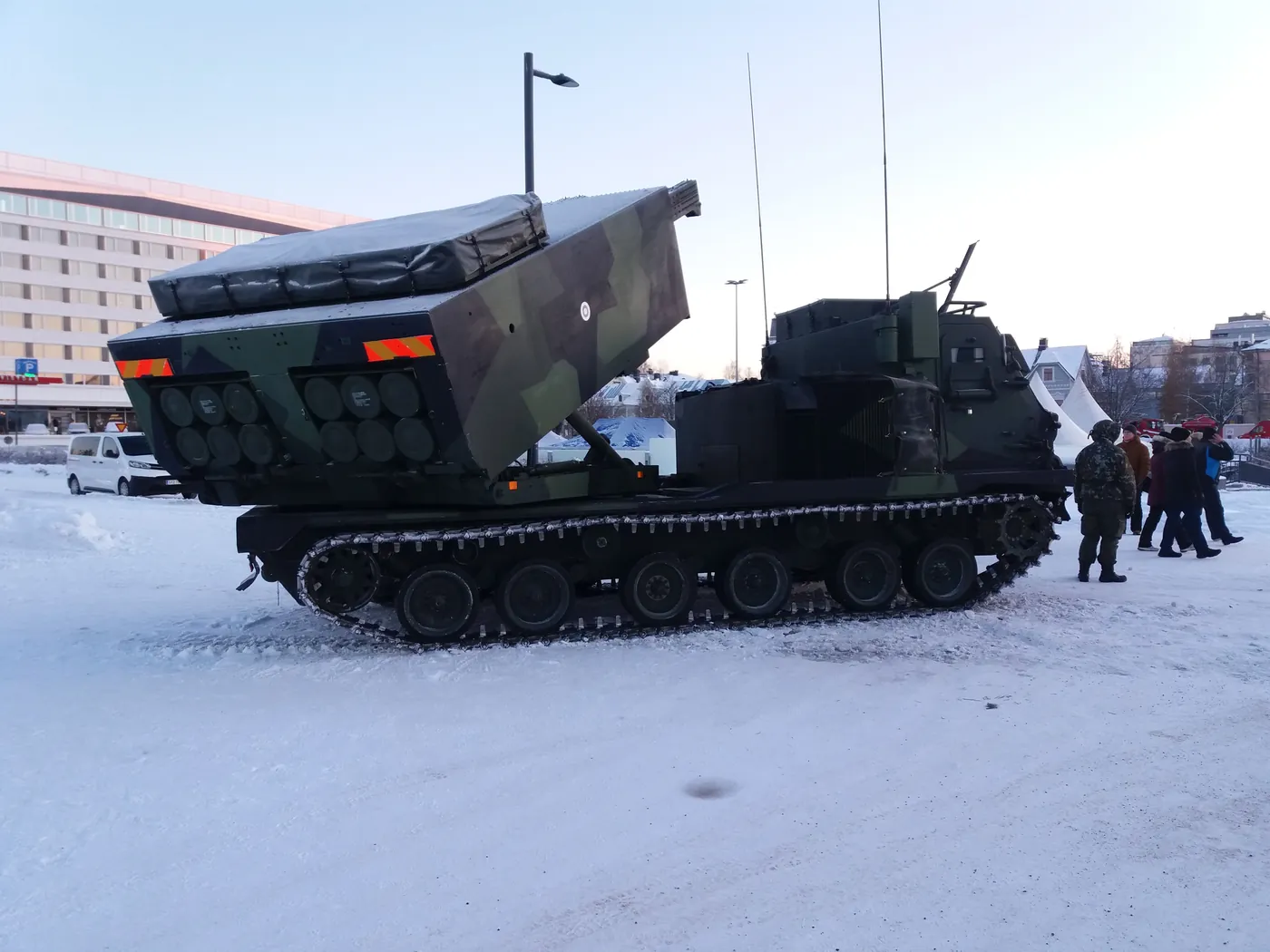
The numbers explain the interest. A single Kodiak container carries 12 GMLRS rockets — double a HIMARS load and equal to the tracked M270. An army can multiply its firing points without building a single new armoured vehicle, using rockets already in its inventory.
The lesson from Ukraine: make the launcher disappear
Kodiak’s timing is no accident. In Ukraine, HIMARS batteries became prize targets; Russian reconnaissance drones and Iskander crews spent three years hunting launchers. Survivability now depends less on range than on how ordinary a system looks from above.
A freight container is about as ordinary as military hardware gets. Sitting in a port yard, on a rail flatcar or on a merchant deck, it is indistinguishable from thousands of others in satellite imagery. The idea itself is not new — Russia has marketed the container-launched Club-K Kalibr for years, and Ukrainian and Israeli firms have explored variants. What is new is a major Western prime doing it with the most widely fielded rocket in NATO service.
Lockheed stresses that Kodiak can be employed from land, sea and air platforms. In practice that means a container rolled off a transport aircraft turning an island strip into a fire base, or one lashed to an auxiliary ship’s deck covering a coastline. It maps neatly onto the distributed basing concepts the US Marine Corps has adopted across the Pacific.
The magazine behind it is real, too. Lockheed has pushed annual GMLRS output to 14,000 rounds, and the Extended-Range variant that stretches reach to 150 km is entering production. The usual bottleneck when multiplying launchers — rocket availability — is less binding this time.
Kodiak Containerized Launcher — Key Data
| Manufacturer | Lockheed Martin (USA) |
| Type | Containerized guided rocket launcher |
| First live fire | 12 August 2026, Yakima Training Center, Washington |
| Munition | GMLRS family (M31/M30 series) |
| Rockets per container | 12 (HIMARS: 6, M270: 12) |
| Range | Over 70 km; up to 150 km with ER GMLRS |
| Warheads | Unitary (~90 kg) or Alternative Warhead |
| Deployment | Land, sea and air platforms |
| Test round | Reduced-Range Practice Rocket (RRPR) |
| Development time | Under six months, concept to live fire |
| GMLRS production | 14,000 rockets per year |
Kodiak is not alone: a family of boxes
Kodiak sits inside a broader push. Lockheed’s GRIZZLY launcher targets larger missiles and has already run its own live-fire series, while GMARS — developed with Rheinmetall — puts the same rocket family on a wheeled truck for European customers, with Germany among the interested parties.
Read together, the message is clear. Western manufacturers have moved past asking how many rockets fit on which vehicle, and started asking where firepower can be hidden. The launcher becomes a modular box; the platform becomes whatever carries it.
Kodiak has no customer and no contract yet. Lockheed funded it internally — usually a sign that a company sees demand coming before a requirement is written. With US Army long-range fires budgets under pressure, an offer to fire existing rockets from more places for less money is unlikely to sit on the shelf.
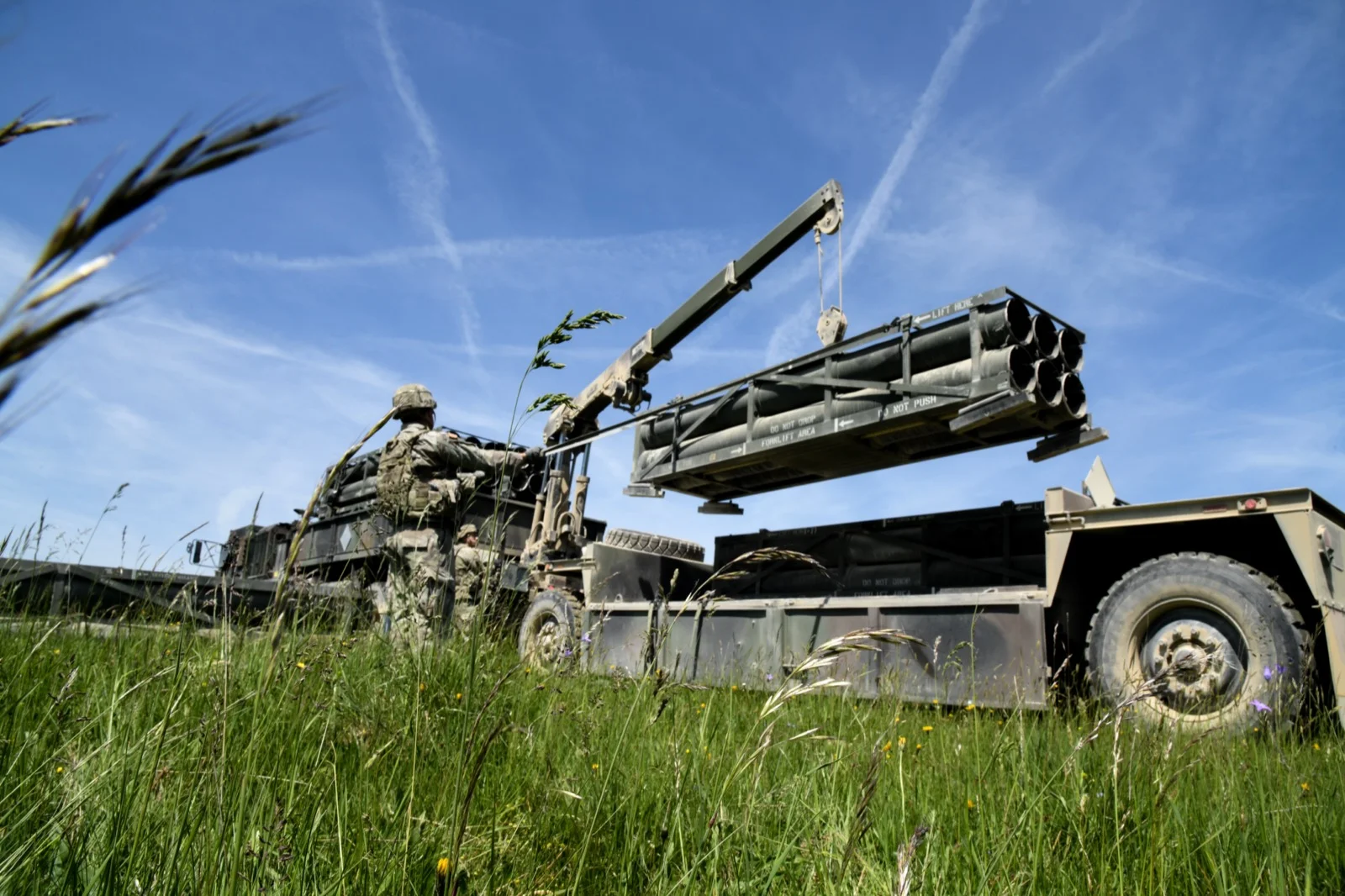
Turkey’s industry has travelled a parallel road. Roketsan’s pod-based launch approach on the 122 mm and 300 mm families, and the boxed launchers built for ATMACA and ÇAKIR, follow the same modular logic — a sealed container of ready rounds that can be moved between platforms. The American twist is to use the civilian shipping standard itself, and to sell concealment as the headline feature. Standardising the box may well become the next competitive front in the export market.
Sources
- Lockheed Martin press release — Kodiak Containerized Launcher Completes First Live-Fire Launch Test (12 August 2026)
- Army Recognition — U.S. Tests Kodiak Containerized Launcher Built to Fire 12 GMLRS Rockets Without a HIMARS
- Aviation Week — Lockheed Martin Tests New Containerized GMLRS Launcher
- Defence Industry Europe — Lockheed Martin completes first live-fire test of Kodiak containerized launcher