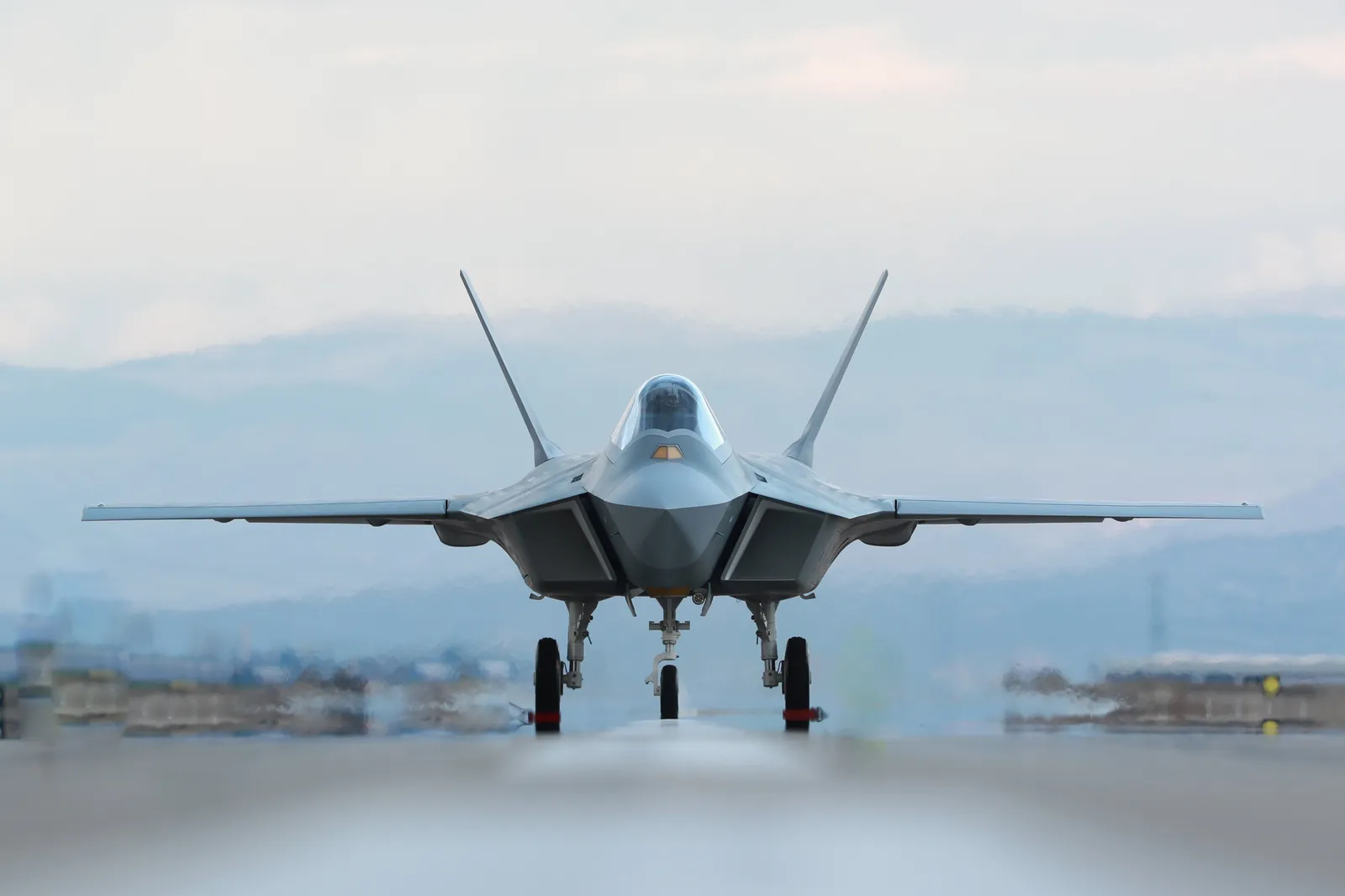
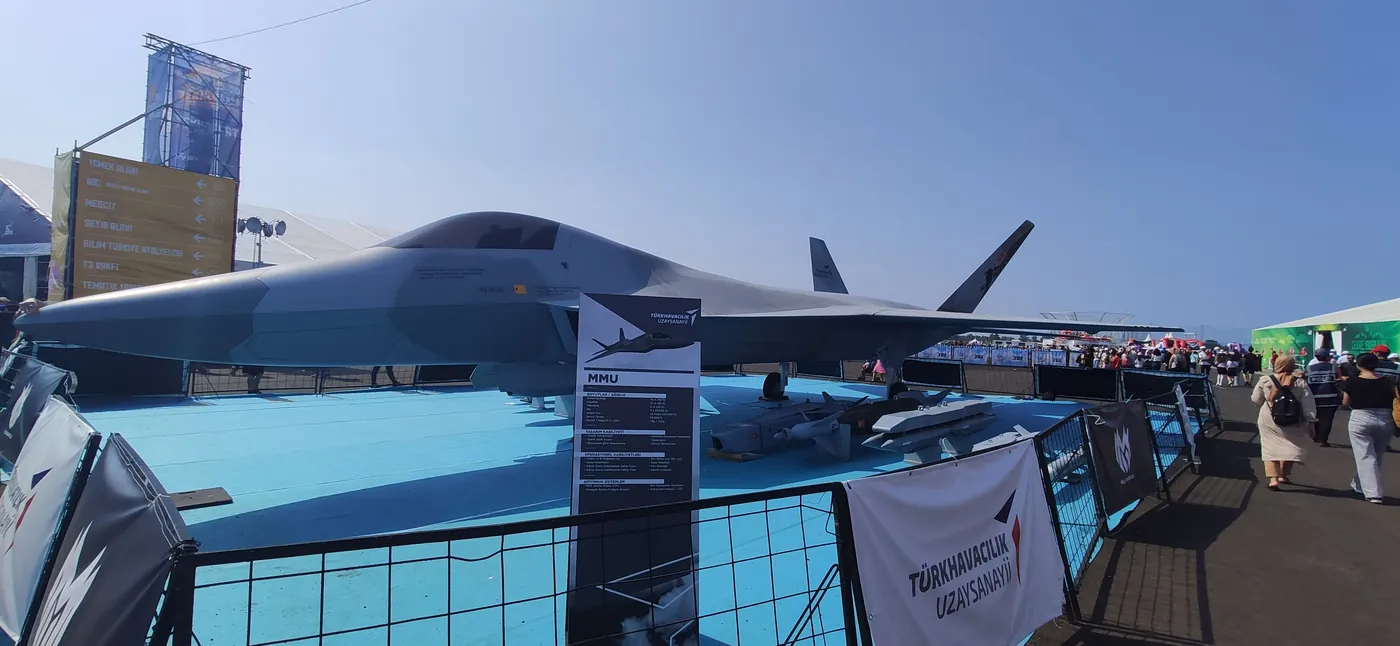
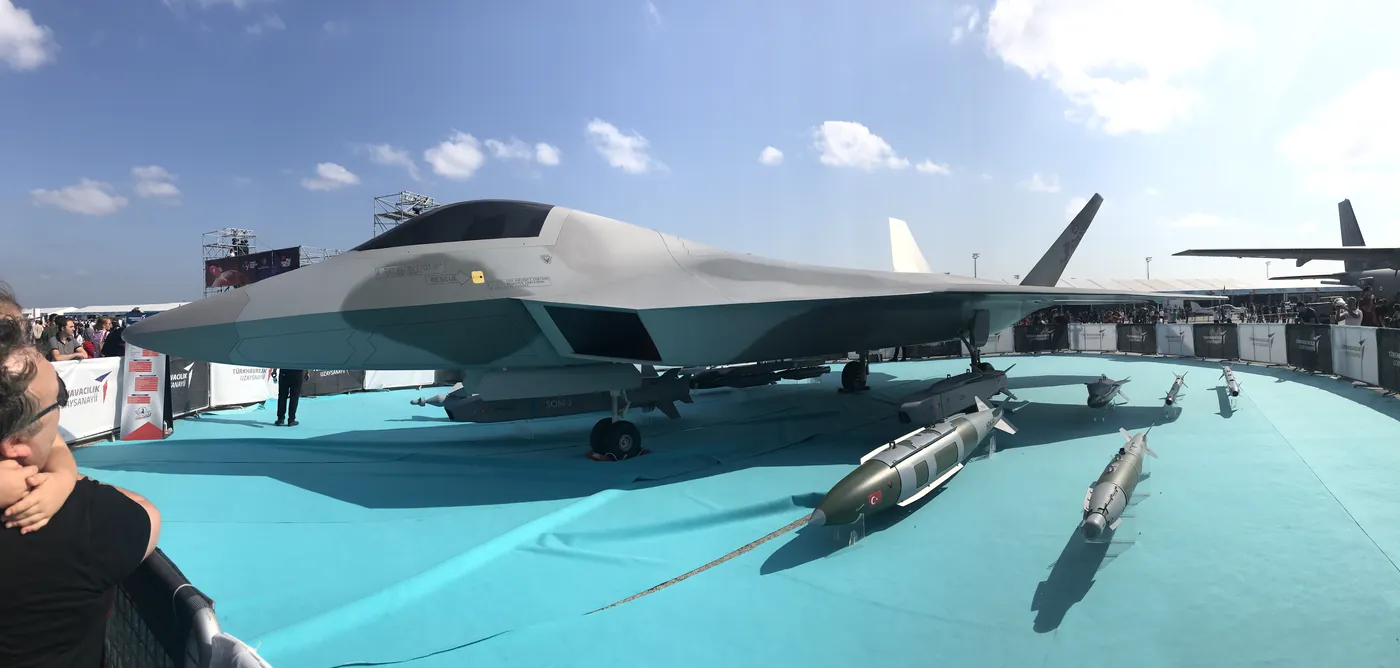
KAAN (formerly the National Combat Aircraft / TF-X) is a 5th-generation twin-engine fighter developed by Türkiye’s TUSAŞ. Having made its first flight on 21 February 2024, its first batch of 20 Block-10 aircraft is planned for delivery to the Turkish Air Force in 2028–2030. KAAN also found its first export customer in Indonesia, with a firm order for 48 aircraft.
This dossier compiles KAAN’s delivery timeline, orders and customers, milestones and technical data from open sources and is updated regularly. (As the aircraft is not yet in serial delivery, figures reflect plans and contracts.)
21 Feb 2024
First flight
2028–2030
First 20 aircraft (Air Force)
~100
Türkiye fleet target
Indonesia 48
First export order
Contents: Tap each heading to expand — what KAAN is, who ordered it, first flight and delivery timeline, engine, milestones, specs, peer comparison, subsystems and FAQ.
What is KAAN?
KAAN is a low-observable (stealth) 5th-generation fighter designed for air superiority and multi-role missions. With internal weapons bays, an indigenous AESA radar and sensor fusion, it targets the capabilities required by modern air combat.
It is being developed to replace Türkiye’s aging F-16 fleet and to fill, with an indigenous solution, the gap left after Türkiye’s removal from the F-35 program. KAAN is thus the most ambitious and strategic project of the Turkish aerospace industry.
Who ordered it, and how many?
KAAN sits at the center of both the Turkish Air Force’s fleet plan and international interest. The table summarises operators/customers and numbers per open sources.
Operator / Customer
Units
Status
Turkish Air Force
20 (first Block-10 batch); target ~100
2028–2030 delivery plan
Indonesia
48 (firm order)
2025 deal; ~2032 indigenous engine
Evaluating nations
~9 countries (incl. Saudi interest)
Acquisition reviews through 2035
Beyond Türkiye’s ~100-aircraft fleet target, around nine countries are reported to be evaluating KAAN through 2035, making it a potential export star.
First flight and delivery timeline
KAAN rolled out on 18 March 2023 and made its first flight on 21 February 2024 at Mürted Air Base, making Türkiye one of the few nations to fly its own 5th-generation fighter.
Per the announced plan, the first 20 Block-10 aircraft will reach the Turkish Air Force in 2028–2030. TUSAŞ aims to fly three prototypes by the end of 2026 to accelerate testing.
KAAN’s early prototypes and blocks use US-made General Electric F110-GE-129 turbofans. As of 2025, 10 F110 engines had been received, with talks underway for 80 more.
Localization: Türkiye is developing the indigenous TEI TF35000 turbofan as KAAN’s ultimate powerplant, planned for Block 30/40 aircraft from around 2032 to make KAAN fully independent in propulsion too.
Prototype flight-test program (3 prototypes by end-2026)
TUSAŞ
Open source
Apr–Jun 2025
Firm order for 48 aircraft
Indonesia
Euro-SD
2025
First 10 GE F110 engines received (talks for 80 more)
TUSAŞ
FlightGlobal
2028–2030
First 20 Block-10 to Turkish Air Force (planned)
Air Force
Yeni Şafak
2032
Indigenous TF35000-powered Block 30/40 (planned)
TUSAŞ / TEI
Euro-SD
Technical specifications
Feature
Value
Type
5th-generation twin-engine fighter
Crew
1
Engine (interim)
2 × General Electric F110-GE-129 (~29,000 lbf)
Engine (indigenous, target)
2 × TEI TF35000 (Block 30/40, ~2032)
Max speed (target)
~Mach 1.8+
Low observability
Stealth airframe + internal weapons bay
Avionics
Indigenous AESA radar + sensor fusion
Armament
Internal Gökdoğan/Bozdoğan air-to-air missiles, SOM and standoff munitions
Comparison with global peers
KAAN belongs to the 5th-generation class alongside the US F-35 and F-22, China’s J-20 and Russia’s Su-57. With Europe’s GCAP and FCAS still in development, KAAN’s flying prototype gives Türkiye a time advantage.
Its edge is developing many subsystems — radar, avionics, air-to-air missiles — indigenously and offering a model open to co-production and export. The Indonesian order shows this model can attract international buyers even at the project stage.
Subsystems and armament
KAAN’s mission systems are largely supplied by domestic institutions: ASELSAN develops the indigenous AESA radar and electronic-warfare systems, with avionics and sensor fusion from various organizations.
For weapons, the aircraft is designed to carry TÜBİTAK SAGE and ROKETSAN Gökdoğan and Bozdoğan air-to-air missiles internally, plus standoff munitions like the SOM cruise missile — preserving its stealth profile while delivering high strike power.
Why it matters for Türkiye
KAAN is a strategic project shaping the future of Türkiye’s air power. After removal from the F-35 program, obtaining a next-generation air-superiority capability indigenously is critical to national security.
The project also feeds a vast domestic industry across engines, radar, avionics and missiles. Export deals like Indonesia’s make KAAN not just a defense item but an economic and diplomatic lever for Türkiye.
Frequently Asked Questions
When will KAAN be delivered to the Turkish Air Force?
Per the announced plan, the first 20 Block-10 aircraft will be delivered to the Turkish Air Force in 2028–2030, with first deliveries targeted for 2028–2029.
How many KAAN will be built?
Türkiye targets a fleet of about 100 for its air force. The first batch is 20 Block-10 aircraft, with numbers rising further through exports.
When did KAAN first fly?
KAAN made its maiden flight on 21 February 2024 at Mürted (Akıncı) Air Base, after its roll-out on 18 March 2023.
Is KAAN’s engine indigenous?
Early prototypes and blocks use US-made General Electric F110 engines. The indigenous TEI TF35000 is planned for Block 30/40 aircraft from around 2032.
How many KAAN did Indonesia order?
Indonesia became the first export customer with a firm order for 48. Indigenous-engine versions are targeted to enter both Turkish and Indonesian inventories from 2032.
What ‘block’ versions does KAAN have?
Early Block 10 and Block 20 use the F110, while Block 30/40 are planned with the indigenous TF35000, each block bringing more mature avionics and capability.