





Orbiter 4 UAV: Israel’s MALE ISR Drone — Technical Analysis, Operational Record and Bayraktar TB2 Comparison

Orbiter 4 is a Medium Altitude Long Endurance (MALE) unmanned aerial vehicle developed by Israel’s Aeronautics Defense for persistent intelligence-surveillance-reconnaissance (ISR) and ISTAR missions. With over 24 hours of endurance, a 6,000-metre service ceiling, and a modular payload architecture supporting EO/IR, SAR radar, SIGINT, and ELINT configurations, Orbiter 4 occupies the upper tier of Aeronautics’ family while positioning below the heavier armed MALE platforms like Bayraktar TB2 or General Atomics MQ-9 in both weight and primary mission profile. Its primary competitive advantage is a cost and logistics profile that targets mid-tier defence forces with ISR-heavy operational requirements.
Technical Specifications
| Parameter | Value |
|---|---|
| Developer | Aeronautics Defense (Israel) |
| Wingspan | ~9 m |
| Maximum Take-Off Weight | ~220 kg |
| Payload capacity | ~45 kg |
| Endurance | 24+ hours |
| Service ceiling | ~6,000 m |
| Range | ~250 km (datalink-limited) |
| Speed | ~120–170 km/h (cruise/max) |
| Launch | Catapult; wheeled runway; air-drop (select configurations) |
| Recovery | Runway landing; parachute |
| Guidance | GPS/INS; autonomous flight with operator oversight |
| Payload options | EO/IR gimbal, SAR radar, SIGINT, ELINT packages |
| Operators | Israel, Azerbaijan, European and African customers |
Multi-Sensor Payload Architecture
Orbiter 4’s modular payload design allows mission reconfiguration before flight:
- EO/IR gimbal: Day/night continuous surveillance; moving target indication (MTI); stabilised tracking.
- SAR radar: All-weather, day/night surface imaging; ground moving target indication (GMTI). This capability differentiates Orbiter 4 from lighter tactical drones in overcast/fog/night environments.
- SIGINT/ELINT: Electronic signal collection; radar emission mapping; communications intelligence.
Operational Record: Azerbaijan
Orbiter 4’s most documented operational context is Azerbaijan. During the 2020 Nagorno-Karabakh conflict, Azerbaijan integrated Israeli-made and Turkish UAV systems in an ISR-to-strike chain that documented the effective use of persistent ISR platforms to enable precision strike by armed drones and loitering munitions (Harop). Whether Orbiter 4 specifically was deployed in Nagorno-Karabakh remains ambiguous in public-domain documentation; Aeronautics’ established supplier relationship with Azerbaijan and the system’s MALE ISR profile are consistent with the role played by the ISR component of Azerbaijan’s drone fleet.
MALE Comparison
| System | Country | MTOW | Endurance | Armed | Primary Mission |
|---|---|---|---|---|---|
| Orbiter 4 | Israel / Aeronautics | 220 kg | 24+ h | Limited | ISR/ISTAR; persistent surveillance |
| Heron TP | Israel / IAI | 4,650 kg | 52 h | Yes | Strategic ISR + armed |
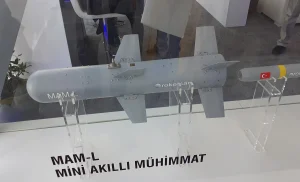
| Bayraktar TB2 | Turkey / Baykar | 650 kg | 27 h | Yes (MAM-L/C, Cirit) | ISR + armed operations; hybrid |
| Akıncı | Turkey / Baykar | 5,500 kg | 24 h | Yes (heavy) | Strategic strike; SEAD/DEAD |
| TAI Aksungur | Turkey / TAI | 1,250 kg | 50 h | Yes (Cirit/MAM) | Long-endurance ISR + armed |
| MQ-9 Reaper | USA / GA-ASI | 4,763 kg | 27 h | Yes (Hellfire/GBU) | Armed ISR; strategic |
Turkish Counterpart: Bayraktar TB2
| Attribute | Orbiter 4 | Bayraktar TB2 |
|---|---|---|
| MTOW | 220 kg | 650 kg |
| Endurance | 24+ h | 27 h |
| Armed | Limited (ISR-primary) | MAM-L, MAM-C, Cirit (4 hardpoints) |
| SAR radar | Yes (modular) | Optional; standard EO/IR focus |
| Combat data | Limited public documentation | Libya, Nagorno-Karabakh, Ukraine: extensive combat record |
| Exports | Azerbaijan + European/African customers | 27+ countries; global network |
| Cost tier | Lower (lighter platform) | Mid-range (cost-to-performance benchmark) |
The Bayraktar TB2’s advantages over Orbiter 4 are clear: heavier payload capacity, integrated armed mission capability, an extensive combat record, and a 27-country export network. Orbiter 4’s competitive positioning is in the segment below: smaller budgets, lighter logistics footprint, and ISR-only operational requirements. These systems are not true head-to-head competitors — they address adjacent but distinct operational requirement profiles.
Envanter Medya Analysis
Orbiter 4 represents a rational mid-tier MALE positioning: too heavy for frontline tactical ISR (that’s Orbiter 1/2/3), too light and ISR-focused to contest the armed MALE market dominated by TB2, Akıncı, and Reaper. The segment it targets — mid-tier defence forces with ISR-heavy requirements and budget constraints that preclude full armed MALE platforms — is real and growing, as demonstrated by its export track record across multiple regions.
Turkey’s TB2 and Aksungur investments pursue the opposite integration philosophy: combining ISR and armed strike capability on a single platform, effectively addressing both the Orbiter 4 market segment and the Reaper market with a single product. The 27-country TB2 customer base validates this dual-mission approach as a market judgment. For customers who need ISR but not armed capability — and who cannot justify TB2’s total system cost — Orbiter 4 occupies a genuine commercial space. The question is whether that space narrows as TB2 prices compress through scale and as Turkey’s domestic industry continues to push unit economics down the capability curve.