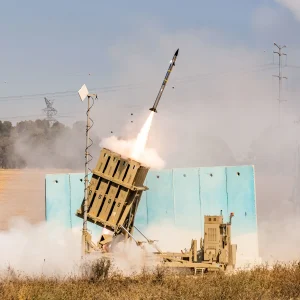
All 12 Vendors Clear Gate One in Golden Dome’s Space Interceptor Race


Every one of the 12 companies competing to build space-based interceptors for the Pentagon’s Golden Dome missile shield has cleared the program’s first gate, according to program director Lt. Gen. Michael Guetlein. Prototypes come next — and the first real intercept demonstration is pencilled in for June 2029.
At a Glance
- 12 companies, 20 separate OTA awards, $3.2 billion in development funding
- Gate 1 covered design freeze and component-level testing — sensor-to-interceptor data transfer, spacecraft propulsion
- Guetlein expects all providers to move into Gate 2, where they build space-capable prototypes
- Gate 3 proves the interceptor works on orbit; Gate 4 proves it integrates with the wider architecture
- Three interceptor classes: boost phase, exo-atmospheric and midcourse
- Flight tests in 2027-2028; intercept demonstration in June 2029
Speaking at the Space and Missile Defense Symposium in Huntsville, Guetlein delivered the first concrete progress report on the most contested part of Golden Dome. All 12 firms picked in April have passed what the Space Force calls Gate 1 — an unglamorous milestone that amounts to locking down a design and proving the subsystems work on a bench.
That work included transmitting data from sensors to interceptor systems and testing spacecraft propulsion, Guetlein said. The verdict was positive enough that the entire field is expected to advance. Nobody has been eliminated yet, which is itself a deliberate choice.
Four gates, no early winners
The Space Force has structured the effort less like a traditional acquisition and more like a prize competition. Vendors must pass through four sequential gates: design and component testing, then a space-capable prototype, then proof that the thing works on orbit, and finally integration into Golden Dome’s broader command-and-control architecture. The Pentagon has said it will not request production money until competitors show the capability is not just effective but scalable and affordable.
| Gate | What it demands | Status |
|---|---|---|
| Gate 1 | Design freeze, component-level testing | All 12 vendors passed |
| Gate 2 | Build a space-capable prototype | Next step |
| Gate 3 | Prove the interceptor works on orbit | Flight tests 2027-2028 |
| Gate 4 | Integrate with the Golden Dome architecture | Intercept demo June 2029 |
The competitor list stretches well beyond the usual primes. Lockheed Martin, Northrop Grumman, Raytheon and General Dynamics Mission Systems are in — but so are Anduril, SpaceX, True Anomaly, Turion Space, Quindar, GITAI USA, Sci-Tec and Booz Allen Hamilton. Twenty awards and $3.2 billion are spread across that field.
Why put interceptors in orbit
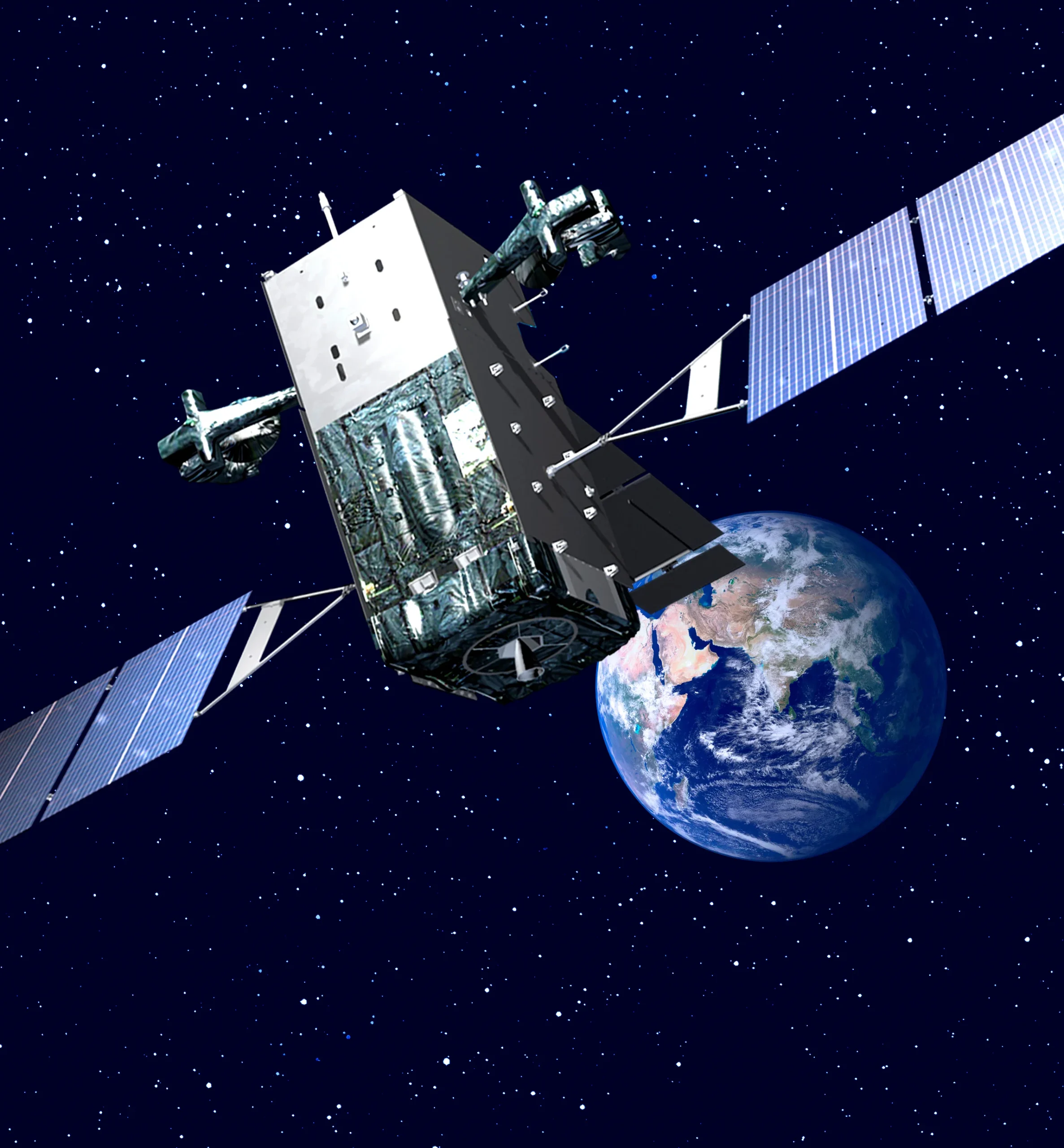
Today’s missile defense meets the threat late. A ballistic missile launches, arcs above the atmosphere, and systems like THAAD or Patriot try to kill it on the way down. Space-based interceptors invert that logic: hit the missile while its motor is still burning, when it is slowest, brightest and easiest to track.
The concept dates to the Star Wars era. What has changed is the economics — launch costs have collapsed and putting large numbers of small satellites on orbit is now affordable. Golden Dome’s architecture accordingly calls for three interceptor classes, each matched to a different window in a missile’s flight.

The budget is the harder gate
Guetlein’s second message at the symposium mattered more than the first: without reconciliation funding, he warned, the program stops in October. Golden Dome has stood up a large number of parallel development lines very quickly, and all of them depend on uninterrupted money. Budget instability could leave the four-gate schedule as paperwork.
The prize-based model exists precisely to spread that risk. Running 12 firms at once divides development cost and keeps a single failure from stalling the program — but it only works while the prize pool stays full.
Layered air and missile defense is no longer a great-power preoccupation alone. Türkiye’s ÇELİK KUBBE effort, which ties short-, medium- and long-range layers into a single command-and-control fabric, rests on the same premise: no single system defeats the threat, only complementary layers do.

Sources
- Breaking Defense — “Space-based interceptor contractors passed first Golden Dome milestone: Guetlein” (August 2026)
- Air & Space Forces Magazine — Golden Dome SBI awards and budget warning
- DefenseScoop — Space Force names 12 companies for space-based interceptors (April 2026)