Guinea’s Military Power: Which Tanks, Armoured Vehicles and Helicopters Are in the Inventory? (2026)

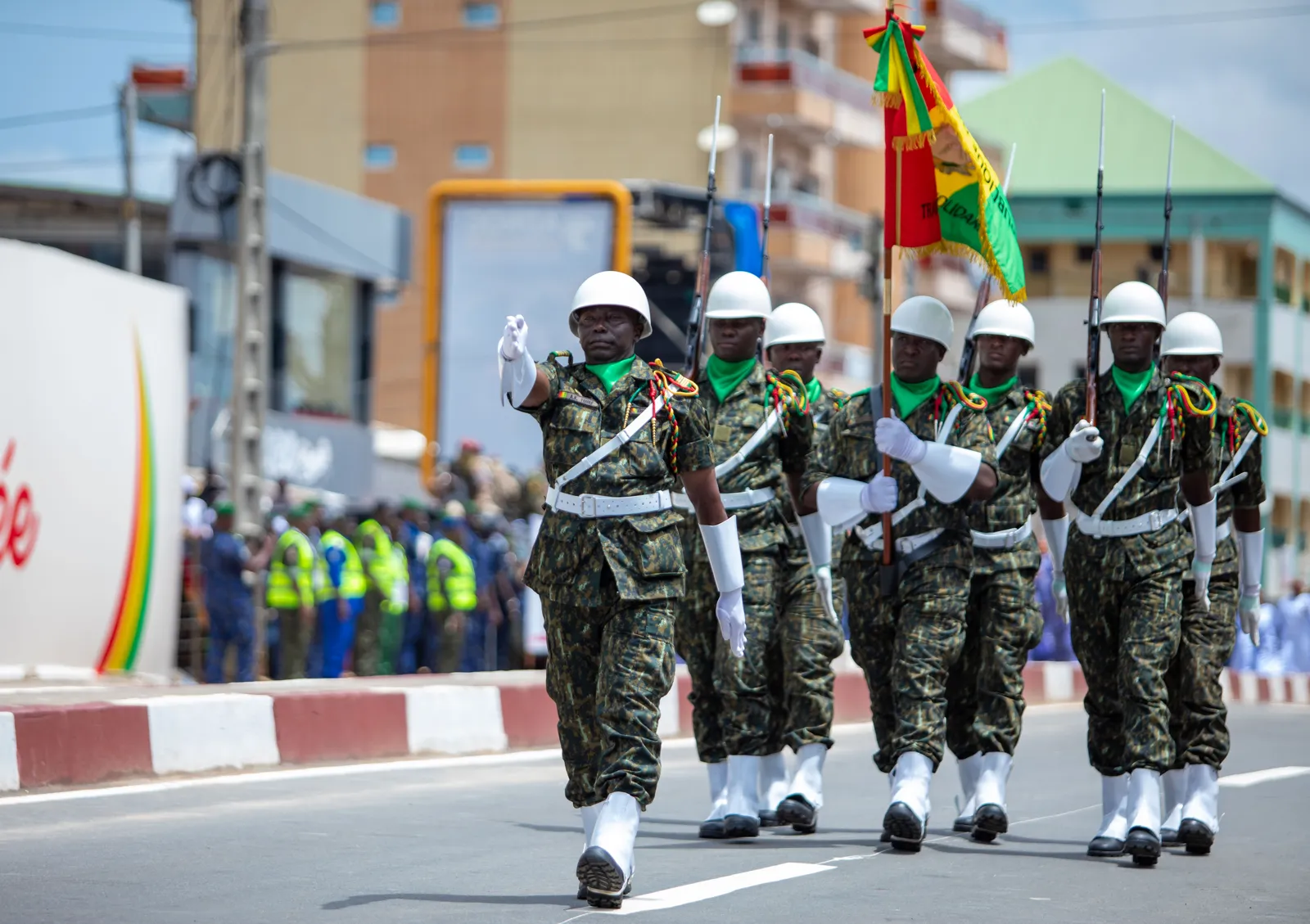
Guinea’s military inventory bears the marks of a renewal process that accelerated after the 2021 coup. Gulf-sourced Streit armoured vehicles, Russian Tigr vehicles and Mi-35P helicopters that surfaced in 2026 have joined Soviet-era T-54s, PT-76s and BTRs. Under Mamadi Doumbouya, who took office as elected president in January 2026, the army is being shaped by deals financed with bauxite revenue and by expanding cooperation with Russia.
At a Glance
- Active personnel: About 9,700 active personnel (IISS, approximate): roughly 8,500 in the army, 800 in the air force and 400 in the navy, plus some 2,600 paramilitaries in the Gendarmerie and Republican Guard
- Tanks: 8 T-54/T-55 main battle tanks and 15 PT-76 light tanks (approximate); the T-34s still listed are not believed to be operational
- Armoured vehicles: Several hundred: Soviet BRDM and BTR-40/50/60 vehicles, Mamba and Puma MRAPs from South Africa, about 100 Tigrs from Russia and dozens of Streit Cougars and Spartans that began arriving in late 2024 (approximate)
- Military aircraft: No operational combat aircraft; a small helicopter fleet (about seven according to FlightGlobal) and at least two Mi-35P attack helicopters that surfaced in photographs in June 2026
- Navy: About 400 personnel and a few small patrol boats based at Conakry and Kakanda; no blue-water capability
- Defence budget: Roughly 1.5-2 percent of GDP (estimated; figures vary by source); a 2023 armoured vehicle deal with Streit Group worth about 150 million euros was reportedly paid for with bauxite concessions
Note: The inventory figures below are approximate values drawn from open sources such as Global Firepower, the IISS Military Balance and SIPRI.
About the Guinea Armed Forces
The Guinean Armed Forces comprise the army, air force, navy, National Gendarmerie and Republican Guard. According to IISS, active personnel number about 9,700, of whom around 8,500 are in the army. Some sources claim much higher strength after 2021, but those figures cannot be verified. The country is divided into four military regions centred on Kindia, Labé, Kankan and Nzérékoré, plus the Conakry special zone.
The army’s political weight is a defining feature of Guinean history. After the coups of 1984 and 2008, special forces commander Mamadi Doumbouya seized power in September 2021. Following a new constitution put to referendum in September 2025, Doumbouya won the December 2025 election and was sworn in as president on 17 January 2026. The dismissal of 173 soldiers for desertion in August 2026 shows that discipline problems persist.
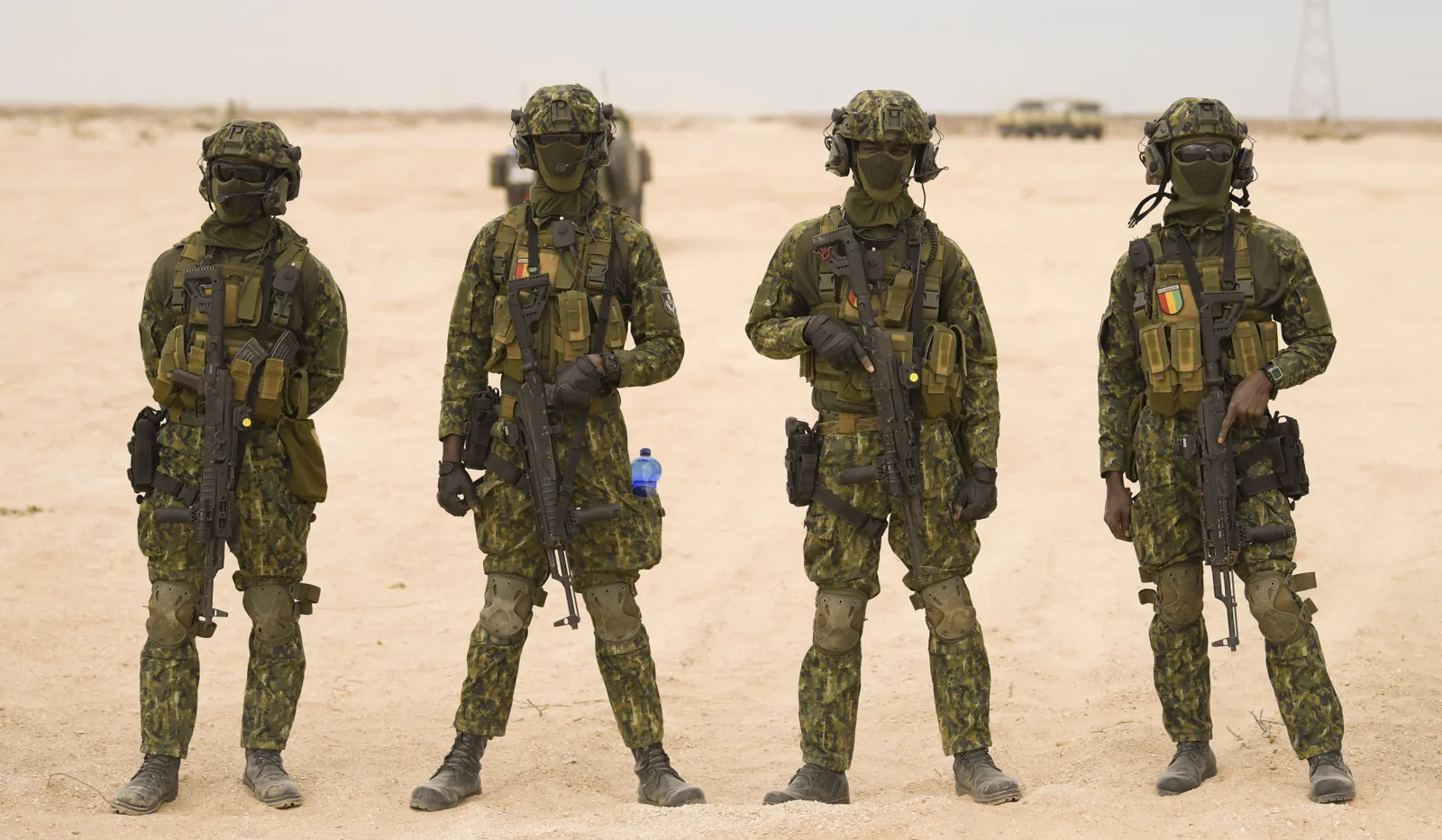
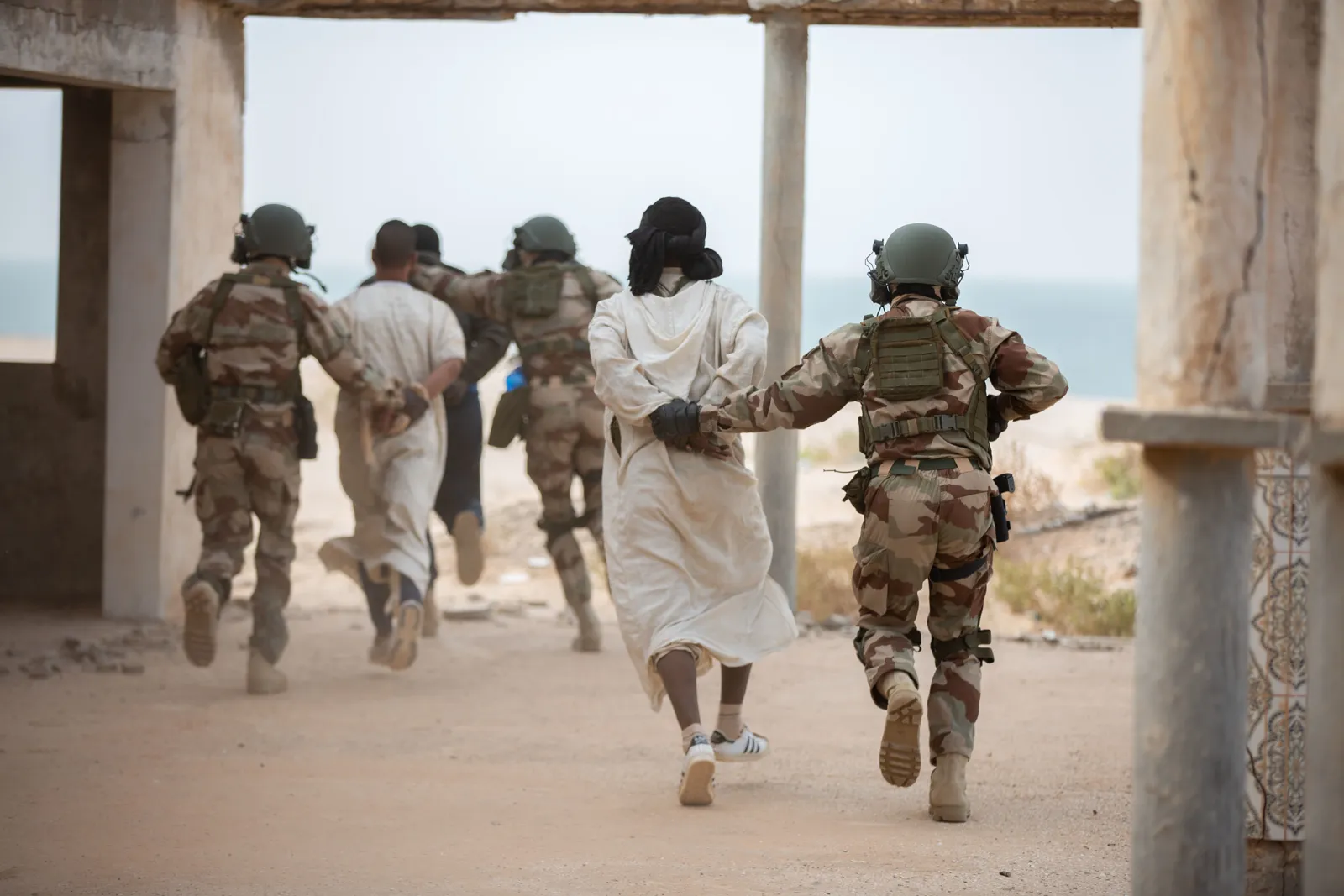
The land inventory is largely Soviet in origin. Eight T-54/T-55s and 15 PT-76 tanks, BRDM scout cars and BTR-40, BTR-50 and BTR-60 carriers remain on the books. Mamba and Puma MRAPs came from South Africa and about 100 Tigrs from Russia. In 2023 a deal worth about 150 million euros was signed with UAE-based Streit Group; according to Military Africa, part of the payment was made in bauxite concessions, and dozens of Cougars and Spartans were delivered from December 2024.
Artillery includes A-19 and M-46 towed guns, D-44 anti-tank guns, BM-21 Grad and a small number of BM-27 Uragan rocket launchers. Air defence is limited to 37 mm, 57 mm and 100 mm anti-aircraft guns; there is no modern surface-to-air missile system in the inventory.
The air force today is little more than a small helicopter force. Two MiG-21s remaining from the 1986 delivery are in storage. At least two Mi-35Ps, which surfaced in photographs in June 2026, have joined the Mi-17 and Puma transport helicopters. On 1 May 2026 a large equipment package acquired through cooperation with Russia was handed over at the main air base in Conakry in a ceremony attended by Doumbouya, and a drone squadron under the chief of defence staff was created in July 2025.
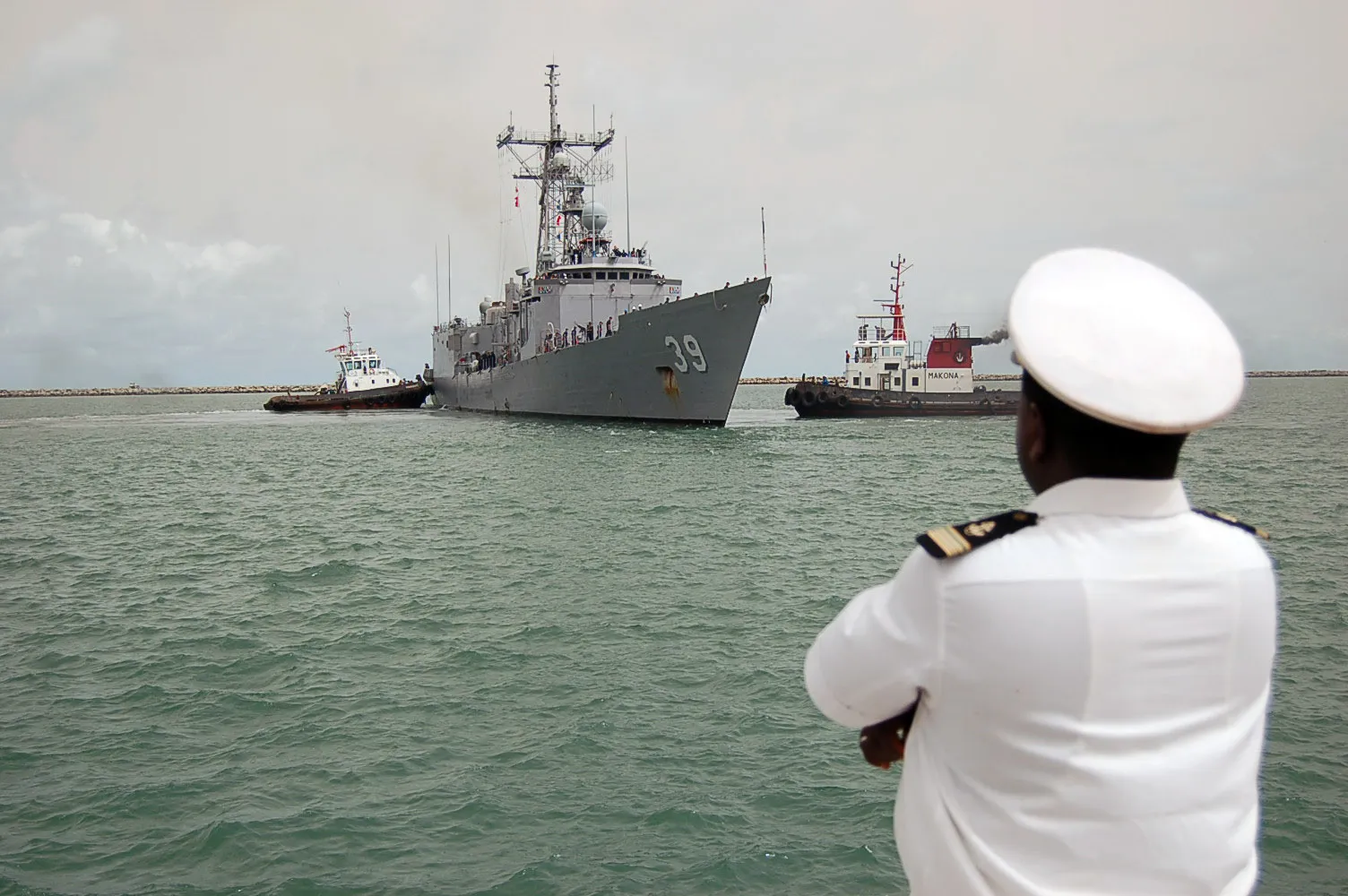
The navy, with about 400 personnel and a few small patrol boats, focuses on coastal security. The country’s roughly 300 km Atlantic coastline and Conakry port, through which bauxite from one of the world’s largest reserves is exported, make maritime security economically critical.
Land Forces Inventory
| System type | Est. quantity |
|---|---|
| Main battle and light tanks | T-54/T-55 (8) and amphibious PT-76 light tanks (15); around 30 T-34-85s also appear in the inventory, but most are believed to be out of service (approximate) |
| Reconnaissance and infantry fighting vehicles | BRDM-1/BRDM-2 (25), Panhard AML-90 armoured cars (2) and BMP-1s (2) (approximate) |
| Armoured personnel carriers | BTR-40 (16), BTR-50 (10), BTR-60 (8), BTR-152 (6) and South African Mambas (10); about 100 GAZ Tigr mobility vehicles from Russia (approximate) |
| MRAPs and new armoured vehicles | Puma M26-15 (32) and M36 (9) from South Africa; dozens of Cougars and Spartans delivered from December 2024 under a 2023 deal with UAE-based Streit Group. The preliminary agreement reportedly envisaged 200 Spartans and 200 Cougars (approximate) |
| Artillery and rocket launchers | A-19 122 mm (12), M-46 130 mm (12) and D-44 85 mm (6) towed guns, BM-21 Grad and BM-27 Uragan (3) rocket launchers and 82/120 mm mortars (20) (approximate) |
Air Force Inventory
| Platform | Est. quantity |
|---|---|
| Combat aircraft | No operational combat aircraft; two remaining MiG-21s from the batch delivered in 1986 are reported to be in storage |
| Attack helicopters | Older Mi-24/Mi-25s (3-4, mostly in storage) and at least two Mi-35Ps photographed in Conakry in June 2026; the helicopter force was used against rebels on the Sierra Leone border in 2000-2001 |
| Transport helicopters and UAVs | Mi-17 (2) and SA 330 Puma (2) transport helicopters; a drone squadron under the chief of defence staff was created in July 2025, and the May 2026 Russian delivery reportedly included drones (approximate) |
Missile and Air-Defence Systems
| System | Type / Note |
|---|---|
| Air defence | No modern surface-to-air missile system; 61-K 37 mm (8), Type 59/S-60 57 mm (12) and KS-19 100 mm (4) anti-aircraft guns and reported shoulder-fired Strela-2 missiles (approximate) |
| Anti-tank missiles | 9M14 Malyutka guided anti-tank missiles and RPG-7 launchers; the Mi-35P’s ability to carry Ataka and Shturm missiles adds a limited airborne anti-armour capability |
| Tactical missiles | There are no ballistic or cruise missiles; the longest-range firepower comes from BM-27 Uragan and BM-21 Grad rocket launchers |
Naval Power
| Class / Type | Est. quantity |
|---|---|
| Patrol boats | A few small patrol boats and landing barges based at Conakry and Kakanda; the Streit Group deal reportedly envisaged about 20 Triton 850 armed patrol boats, though deliveries have not been made public (approximate) |
| Maritime security role | Fisheries protection, counter-smuggling and coastal patrols against piracy risk in the Gulf of Guinea along roughly 300 km of Atlantic coastline; Conakry port is critical for bauxite exports |
The Turkey Angle: Turkish Defence Industry
Relations between Türkiye and Guinea gained an institutional footing when the two countries opened embassies in 2013. During President Recep Tayyip Erdoğan’s visit to Conakry in March 2016, agreements covering defence, health and energy were signed. In May 2021 Guinea’s defence minister and Türkiye’s ambassador in Conakry discussed strengthening military cooperation. On the economic side, Turkish Airlines has flown Istanbul-Conakry since 2017, Turkish contractors have undertaken projects worth about 220 million dollars, and Türkiye’s Albayrak Group is involved in operating Conakry port.
Open sources do not currently document any major Turkish-made platform in Guinea’s inventory; the big purchases of recent years went through UAE-based Streit Group and Russia. The regional picture nonetheless offers strong precedents for the Turkish defence industry: Guinea’s neighbour Mali, as well as Burkina Faso and Niger, operate the Bayraktar TB2, while Côte d’Ivoire’s army and gendarmerie have signed contracts for Otokar armoured vehicles.
Guinea’s needs overlap with combat-proven Turkish products: tactical UAVs for border surveillance, training and maintenance support for the newly created drone squadron, coastal patrol boats, MRAP-class armoured vehicles and short-range air defence. A procurement policy financed by bauxite revenue and open to supplier diversification makes Guinea one of the potential markets for Turkish defence exports in West Africa.
Frequently Asked Questions
How many tanks does Guinea have? Approximately 8 T-54/T-55 main battle tanks and 15 PT-76 light tanks. Around 30 T-34-85s are also listed, but most are not believed to be operational.
Does Guinea have fighter jets? There are no operational combat aircraft. Two MiG-21s remaining from the 1986 delivery are reported to be in storage. Air power rests on Mi-17 and Puma helicopters and Mi-35P attack helicopters that surfaced in June 2026.
How many soldiers does Guinea have? According to IISS, the Guinean Armed Forces have about 9,700 active personnel, plus some 2,600 paramilitaries in the Gendarmerie and Republican Guard.
Are Guinea, Guinea-Bissau and Equatorial Guinea the same country? No. This article covers the Republic of Guinea, whose capital is Conakry. Guinea-Bissau and Equatorial Guinea are separate countries with their own armed forces.
Is there defence cooperation between Türkiye and Guinea? Agreements that included defence were signed during Erdoğan’s 2016 visit to Conakry, and military cooperation was discussed at a senior level in 2021. However, open sources document no major Turkish platform in Guinea’s inventory.
Bottom Line
The Guinean inventory shows a rapidly changing but still limited army in which Soviet-legacy tanks and guns stand alongside new Gulf and Russian platforms. Streit armoured vehicles, Tigr vehicles and Mi-35P helicopters improve mobility for internal security and border missions, but there are no operational combat aircraft, modern air defence or blue-water forces. What will matter next is how bauxite revenue is channelled into defence and how far expanding cooperation with Russia ties the supply chain to a single source. The search for supplier diversification opens a natural space for the Turkish defence industry in UAVs, patrol boats and MRAPs.