Tanzania’s Military Strength 2026: Personnel, Budget and Equipment

Tanzania fields the Tanzania People’s Defence Force (TPDF), a roughly 27,000–30,000-strong active force built around the Army, with small Air and Naval Commands, backed by an estimated 80,000 reserves. Global Firepower’s 2026 edition ranks the country around 84th–89th of 145 states reviewed, with an annual defense budget in the $1–2.2 billion range depending on the source. Equipment is overwhelmingly Chinese- and Soviet-era in origin — Type 59 and T-54/55 tanks, J-6/J-7 fighters — and, unlike several of its East African neighbors, Tanzania has no confirmed Turkish military hardware in service as of 2026.
TPDF structure and personnel
The Tanzania People’s Defence Force was formed in September 1964 after the mutiny of the colonial-era Tanganyika Rifles, replacing it with a force built on a different command culture. It operates under the Ministry of Defence and National Service in Dodoma/Dar es Salaam and reports to the President as Commander-in-Chief.
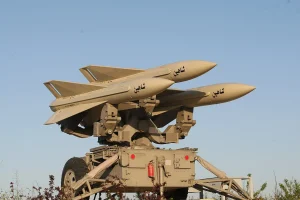
- Land Force Command — the dominant branch, organized around division-level headquarters, an armored brigade, and multiple infantry brigades, plus artillery and air-defense units. This is where the large majority of active personnel serve.
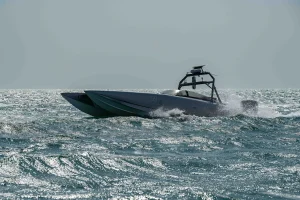
- Tanzania Naval Command — a coastal and lake-patrol force of roughly 1,000 personnel operating fast attack craft and patrol boats from bases including Dar es Salaam, with responsibility for the mainland coastline, Zanzibar’s waters, and the Great Lakes.
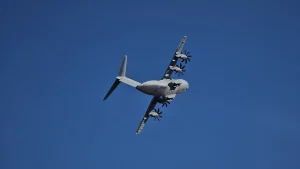
- Tanzania Air Force Command — a small service of a few hundred to around 3,000 personnel (estimates vary by source) operating aging Chinese-origin fighters and a mixed transport/trainer fleet from bases at Dar es Salaam and Mwanza.
Independent trackers put total active personnel at roughly 27,000 (Global Firepower, 2026) to around 30,000–33,000 in some other estimates, with an additional 80,000 in reserve. The spread reflects how Tanzania reports figures inconsistently rather than any single authoritative headcount — a caveat worth keeping in mind for every number in this article.
Where Tanzania ranks, and the limits of the data
Global Firepower’s 2026 index places Tanzania in roughly the 84th–89th position out of 145 countries reviewed, among the middle tier of African militaries — well behind regional heavyweights like Egypt, Algeria and Nigeria, but ahead of most of its immediate East African neighbors by raw equipment count.
It is worth repeating for every country profile on this site: Global Firepower is a privately compiled index, not an official military assessment. Its formula weights equipment quantity heavily and does not fully capture training quality, maintenance readiness, logistics, or doctrine. Where possible, figures below are cross-checked against SIPRI, IISS “The Military Balance,” and open reporting from outlets such as DefenceWeb; where they aren’t, that is noted.
Defense budget
Tanzania’s defense budget has been reported at different levels depending on the source and year: Global Firepower’s 2026 snapshot cites roughly $1 billion, while a 2024 Wikipedia-sourced figure (drawing on Tanzanian budget documents) puts it closer to $2.2 billion, or about 1.1–1.4% of GDP. Neither figure is broken down publicly by procurement, personnel, and operations line items, which is typical for the region and makes year-over-year comparisons unreliable. What is consistent across sources is that Tanzania’s defense spending, as a share of GDP, sits below the regional leaders (Algeria, Egypt) and is oriented more toward maintaining an existing force than large new acquisitions.
Current equipment: Army, Navy and Air Force
| Category | Reported inventory | Origin |
|---|---|---|
| Main battle tanks | Type 59, T-54/55 (exact current operational numbers not publicly disclosed) | China / Soviet-era |
| Light tanks / reconnaissance | Type 62 light tanks, Scorpion reconnaissance vehicles | China / UK |
| Armored personnel carriers | BTR-40, BTR-152 and related types | Soviet-era |
| Fighter aircraft | Chengdu J-6 and J-7 (~24 airframes reported; serviceable rate not publicly disclosed) | China |
| Trainers | Hongdu K-8 Karakorum | China |
| Naval vessels | Fast attack craft and patrol boats (fleet size varies by source, roughly a dozen hulls); limited amphibious lift | Mixed (China, others) |
The picture that emerges is a force still running largely on Cold War-era Chinese and Soviet platforms, with the Ministry of Defence stating publicly that it intends to “spend more on the procurement of defence equipment for the army and the air force,” particularly to improve maritime surveillance against piracy risks and to protect newly discovered offshore gas fields. As of 2026, that stated intent has not translated into a publicly confirmed major new platform order.
Foreign partners and training
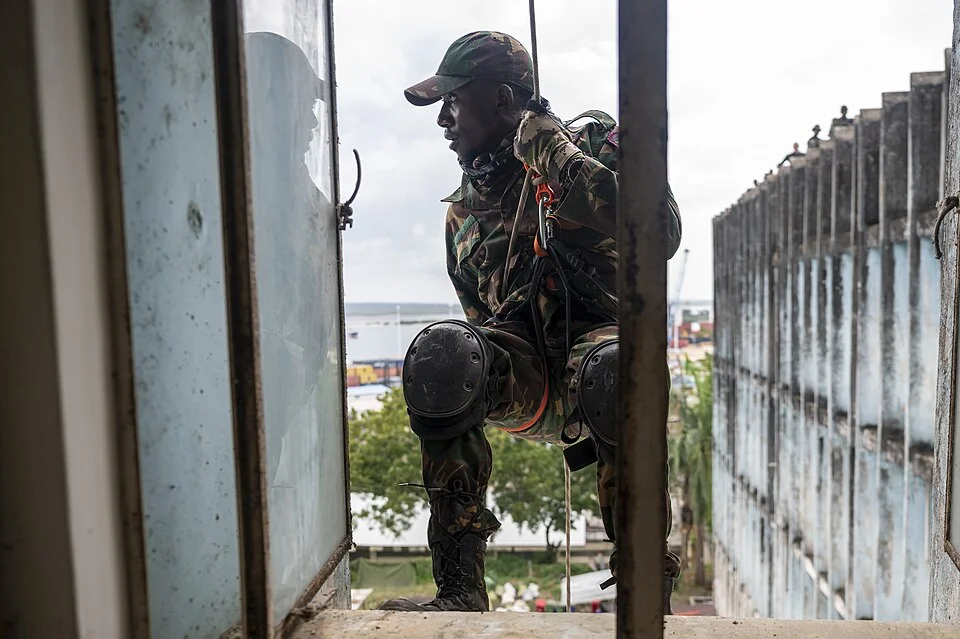
Tanzania’s external military relationships lean toward China for hardware and toward the United States for training and capacity-building. China has long been the TPDF’s principal equipment supplier, including combat aircraft and transport platforms, and continues periodic training and assistance programs. The United States runs recurring engagement through U.S. Africa Command — including the annual Justified Accord exercise (hosted in Kenya, with Tanzanian units participating) and bilateral Joint Combined Exchange Training rotations with U.S. Special Forces inside Tanzania itself — focused on counter-piracy, maritime security, and special operations readiness rather than equipment transfers. Smaller training and assistance links exist with India, the UK, and other partners.
Turkish equipment in Tanzanian service: what’s confirmed
Unlike Uganda and Rwanda (both operating Otokar Cobra II armored vehicles) or Nigeria (a confirmed Bayraktar TB2 and armored vehicle operator), Tanzania has no confirmed Turkish-made military equipment in service as of 2026. Open-source reporting on Türkiye’s post-2021 African drone customers — a list that has come to include Libya, Ethiopia, Angola, Somalia, Djibouti, Mali, Burkina Faso, Niger, and Nigeria — does not include Tanzania. Coverage of Turkish military training activity in East Africa (Somalia, Niger, Kenya) likewise does not name Tanzania as a current partner.
That does not rule out future cooperation. Türkiye has signed defense or security cooperation agreements with roughly 30 African states in recent years and has been actively courting East African militaries — Kenya signed a defense cooperation agreement with Türkiye in 2025, for example. For a force explicitly looking to modernize maritime surveillance and replace aging Chinese airframes, Turkish options such as coastal patrol vessels, armored personnel carriers, or light attack/ISR aircraft would be a plausible fit on paper. But as of this writing, that remains speculation, not reporting — this article will be updated if a confirmed order or delivery is reported.
Tanzania vs. its neighbors
| Country | Active personnel (approx.) | Confirmed Turkish equipment |
|---|---|---|
| Tanzania | ~27,000–30,000 | None confirmed |
| Kenya | ~25,000 | Defense cooperation agreement signed (2025); equipment deliveries not yet confirmed |
| Uganda | ~45,000 | Otokar Cobra II APCs (confirmed) |
| Rwanda | ~33,000 | Otokar Cobra II APCs (confirmed) |
| Nigeria | ~230,000 | Bayraktar TB2, armored vehicles (confirmed) |
See our full profiles on Rwanda’s military strength, Nigeria’s military strength, and the strongest armies in Africa in 2026 for the wider regional picture, plus our guide to Turkish armored vehicles in African service.
FAQ
How many active soldiers does Tanzania have?
Estimates range from roughly 27,000 (Global Firepower, 2026) to around 30,000–33,000 in other sources, plus about 80,000 reserves. Tanzania does not publish a single authoritative figure.
Does Tanzania use Turkish military equipment?
Not as of 2026, based on available open-source reporting. Tanzania is not listed among confirmed buyers of Bayraktar drones or Otokar vehicles, unlike neighbors Uganda and Rwanda.
What is Tanzania’s defense budget?
Reported figures range from about $1 billion (Global Firepower, 2026) to $2.2 billion (2024 budget-year figure cited by other trackers), roughly 1.1–1.4% of GDP.
Who supplies Tanzania’s military equipment?
Primarily China, historically supplemented by Soviet-era/Russian-origin stock. The United States, India and the UK provide training and limited non-combat support rather than major hardware.
Is Global Firepower’s ranking official?
No. It is a privately compiled index that weights equipment quantity heavily; it is not a government or defense-ministry assessment and should be read alongside sources like SIPRI or IISS.
Sources
- Global Firepower, 2026 Tanzania Military Strength
- DefenceWeb, Tanzania People’s Defence Force profile
- Wikipedia, Tanzania People’s Defence Force (cross-checked against primary reporting where cited)
- U.S. Africa Command / SETAF-Africa, Justified Accord 2024 exercise releases (DVIDS)
- U.S. Department of the Air Force, 3rd Special Forces Group Tanzania JCET release (DVIDS, August 2025)
- U.S. Navy, Africa Partnership Station Tanzania release (DVIDS)
- DefenceWeb, reporting on Turkish drone exports to African states and Kenya-Türkiye defense cooperation agreement
Last updated: September 9, 2026.