Rwanda’s Military Strength 2026: Personnel, Budget and the Turkish Cobra II Fleet

Rwanda’s Military Strength 2026: Personnel, Budget and the Turkish Cobra II Fleet
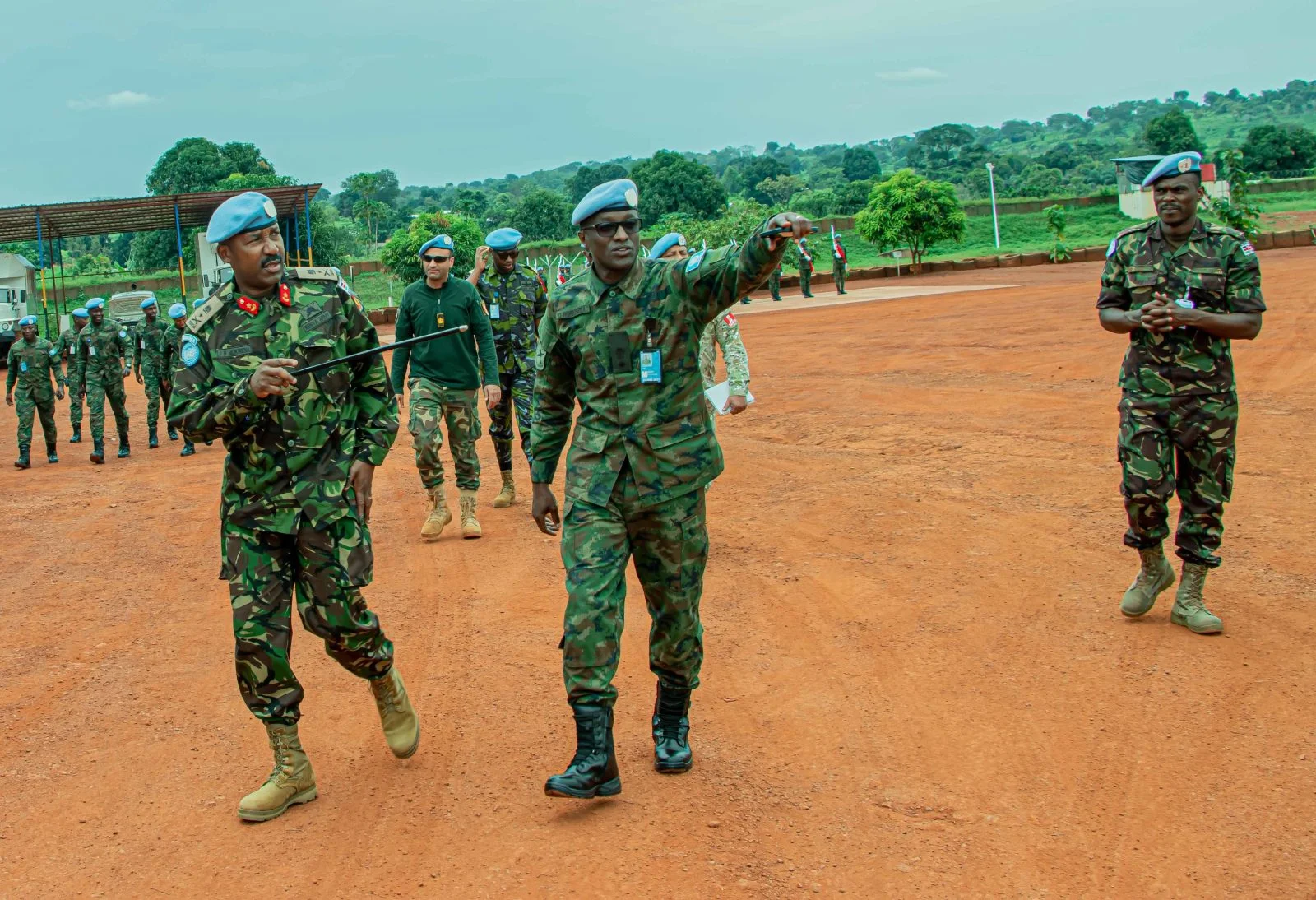
Rwanda fields a compact, infantry-heavy force of roughly 33,000 active personnel — about 32,000 in the Army and 1,000 in a small Air Force — built around expeditionary peacekeeping rather than territorial defense. Independent trackers put annual military spending at around $185–191 million. Rwanda has no navy (it is landlocked) and no confirmed combat aircraft. Its most visible foreign hardware is Turkey’s Otokar Cobra II armored personnel carrier, seen with Rwandan troops on peace-support duty in Mozambique; a widely reported interest in Bayraktar drones remains unconfirmed.
Rwanda Defence Force: structure and personnel
The Rwanda Defence Force (RDF) operates under the Ministry of Defence in Kigali, with the Chief of Defence Staff commanding the Army and Air Force as a single integrated force rather than fully separate service branches. As of 2026, Brigadier General Juvenal Marizamunda serves as Minister of Defence, a post he has held since June 2023.
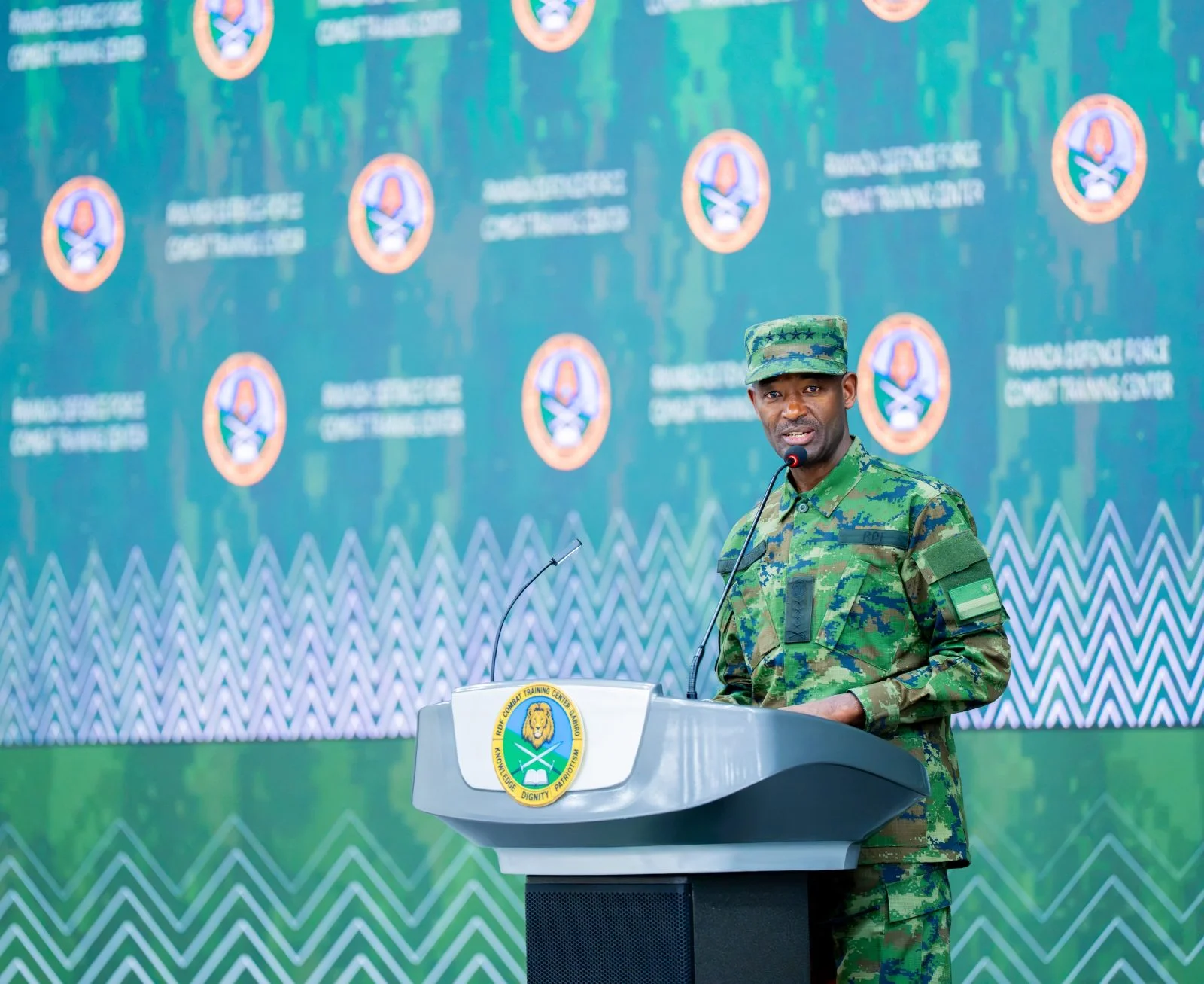
- Rwandan Army — the overwhelming majority of the force, organized into divisions headquartered around the country, with a Special Operations component that graduated 531 personnel from an 11-month course at the Nasho Basic Military Training Centre in April 2026.
- Rwandan Air Force — a small helicopter- and light-transport-based service with no fixed-wing combat aircraft; it exists mainly to support the Army’s domestic and expeditionary operations rather than to contest airspace.
- Reserve and gendarmerie-adjacent elements — RDF training pipelines (such as the Gabiro Combat Training Centre) also process officers and NCOs from the Rwanda National Police and Rwanda Correctional Service, reflecting a force structure built around integrated internal and expeditionary security roles.
Where Rwanda ranks, and the limits of the data
Rwanda is a useful case for showing what Global Firepower (GFP) actually is: a privately compiled comparative index, not an official military-strength register. GFP-derived trackers place Rwanda around 116th out of roughly 145 countries assessed worldwide in 2026, but Rwanda does not appear at all on GFP’s own headline African rankings list, which covers a narrower set of larger militaries. That gap illustrates a broader point — GFP’s methodology weights equipment counts and personnel heavily and is not designed to capture a force like the RDF, whose real-world relevance comes from expeditionary peacekeeping performance rather than raw inventory size. Treat any single ranking number here as directional, not authoritative, and cross-check against SIPRI or IISS’s The Military Balance where precision matters — see our Strongest Army in Africa 2026 ranking for how Rwanda’s larger neighbors compare on the same metrics.
The 2026/27 defense budget
Rwanda’s Ministry of Finance and Economic Planning presented a Frw 7,796.3 billion national budget for the 2026/27 fiscal year, a roughly 12% increase over the revised 2025/26 budget, with the government’s stated priorities centered on agriculture, jobs and economic stability rather than a defense build-up. Rwanda does not publish a detailed, itemized defense line separately from the consolidated budget documents. Independent aggregators (Trading Economics, using SIPRI-consistent methodology) estimate total military expenditure at roughly $191 million in 2025, up from about $175 million in 2024, and around $185 million on a 2026 tracker basis — in the same range as recent years, and modest by regional standards next to Egypt or Algeria’s multi-billion-dollar budgets. As with personnel figures, treat the USD conversions as approximate; exchange-rate assumptions vary by source and date.
Current equipment: Army and Air Force
Rwanda’s inventory is modest and mixed-origin, built up mostly through second-hand and single-batch purchases rather than large standing contracts. Figures below are compiled from open-source military reference data (DefenceWeb, GlobalSecurity) and should be read as approximate, since Rwanda does not publish a detailed official order of battle.
| Category | Equipment | Approx. quantity |
|---|---|---|
| Main battle tanks | T-54/T-55 | ~24 |
| Armored vehicles | AML-60/90, Ratel 60/90, RG-31 Nyala, RG-32 Scout, Otokar Cobra II | Not publicly disclosed in full; over 100 combined |
| Artillery | Type-54 105mm, D-30 152mm towed guns, RM-70/Lynx multiple rocket launchers | Several dozen pieces |
| Attack helicopters | Mi-24/Mi-35 Hind | Small number (single digits) |
| Transport helicopters | Mi-8/Mi-17 Hip | Under 15 |
| Fixed-wing combat aircraft | None confirmed | 0 |
| Navy | None — Rwanda is landlocked | 0 |
Rwanda’s peacekeeping footprint: Mozambique, CAR, South Sudan
What distinguishes the RDF from most militaries its size is an unusually active expeditionary posture. Rwanda has deployed troops to UN and bilateral missions across the continent for over a decade, and by 2026 this has become the force’s defining feature:
- Mozambique (Cabo Delgado) — Rwanda deployed roughly 1,000 troops and police in July 2021 to help Mozambican forces contain the Islamic State-linked insurgency around Palma’s gas fields; deployment levels have grown since, and Kigali extended its presence into 2026 as EU financial support under the European Peace Facility approaches its scheduled end in May 2026.
- Central African Republic — RDF Battle Group VIII serves under MINUSCA in the Bria sector of the CAR, alongside a separate bilateral Rwandan contingent that has operated in CAR since 2014.
- South Sudan — Rwandan troops and police serve within UNMISS, including engineering and protection-of-civilians roles.
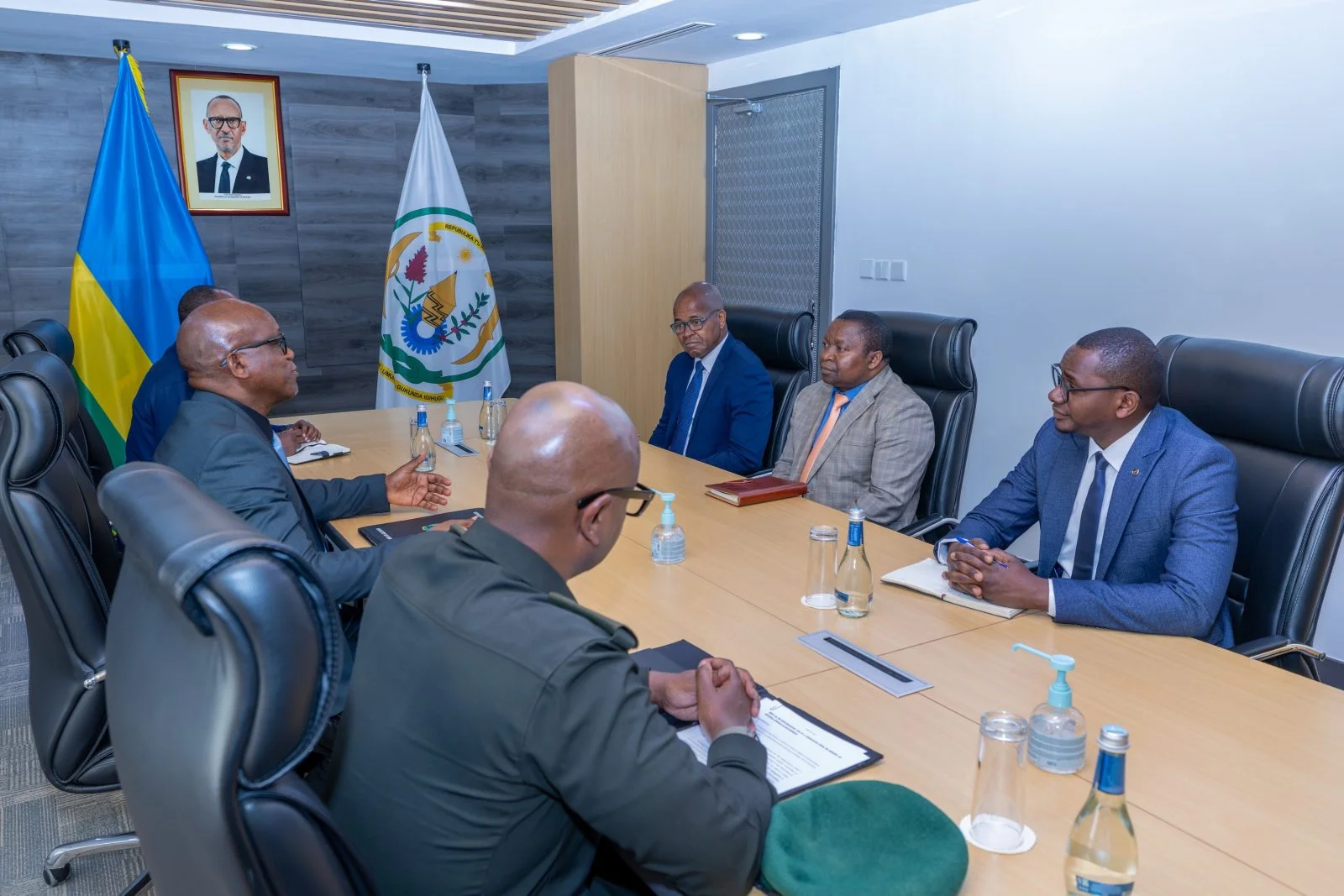
This expeditionary role also drives bilateral defense cooperation with host and partner nations. In late August 2026, a Mozambican Ministry of Defence delegation visited Kigali to study Rwanda’s military welfare systems (the Zigama savings and credit scheme and the Military Medical Insurance scheme), a sign that the Mozambique relationship now extends beyond the counter-insurgency mission itself.
Turkish equipment in Rwandan service
Rwanda is a confirmed operator of the Otokar Cobra II, a Turkish 4×4 armored personnel carrier that Otokar markets on mine- and IED-protection for exactly the kind of counter-insurgency patrol work the RDF conducts in Mozambique. Rwandan troops were photographed and reported operating Cobra II vehicles in Cabo Delgado from 2022 onward, and DefenceWeb has listed Rwanda among the Cobra family’s confirmed African customers alongside Burkina Faso, Ghana, Algeria, Mauritania, Nigeria and Tunisia — see our full guide to Turkish armored vehicles in Africa for how the Cobra II compares to the ARMA and Kirpi families. Rwanda does not publish fleet totals, so the exact number of Cobra II vehicles in RDF service is not publicly disclosed.
On the drone side, the picture is unconfirmed rather than negative: reporting from 2021 suggested Rwanda was exploring a Bayraktar TB2 purchase, and more recent trade coverage has noted continued Rwandan interest in Baykar systems, but no confirmed delivery, contract value or operational TB2/AKINCI unit has been documented for Rwanda to date. That places Rwanda in the “reported interest, not confirmed operator” category alongside several other African militaries — distinct from confirmed TB2 users such as Nigeria and Ethiopia, both covered in our military-strength series, as well as Somalia and Libya’s GNU (full list in our Bayraktar TB2 African operator guide).
Who else supplies Rwanda
Rwanda’s equipment base reflects decades of mixed sourcing rather than a single patron relationship: Soviet-era and Russian-origin platforms (T-54/55 tanks, Mi-24/Mi-35 and Mi-8/17 helicopters, D-30 and RM-70 artillery) form the core of the heavy inventory, South African armored vehicles (Ratel, RG-31, RG-32) reflect regional peacekeeping-oriented procurement, and Turkey’s Otokar has become the most visible recent Western-aligned addition. Rwanda’s defense relationships with the United States, France, the United Kingdom and the European Union are weighted toward training, logistics and peace-support-operation funding (such as the European Peace Facility support for the Mozambique deployment) rather than major platform sales.
FAQ
How many active personnel does the Rwanda Defence Force have?
Open-source estimates converge around 33,000 active personnel — roughly 32,000 in the Army and 1,000 in the Air Force. Rwanda does not publish an official detailed order of battle, so treat this as an estimate.
Does Rwanda have a navy?
No. Rwanda is landlocked and maintains no naval branch.
Does Rwanda operate Bayraktar TB2 drones?
Not confirmed. Reports since 2021 describe Rwandan interest in Baykar drones, but no confirmed contract, delivery or operational unit has been documented.
Does Rwanda operate Turkish armored vehicles?
Yes, confirmed. Rwandan forces operate the Otokar Cobra II APC, documented in service with peacekeeping contingents in Mozambique’s Cabo Delgado province since 2022. Rwanda does not publish the total fleet size.
What is Rwanda’s defense budget?
Rwanda does not publish a separate, detailed defense budget line. Independent trackers estimate total military expenditure at roughly $185–191 million for 2025/2026, a small fraction of Rwanda’s overall Frw 7,796.3 billion national budget for FY2026/27.
Where are Rwandan troops currently deployed?
Rwanda’s largest expeditionary deployments in 2026 are in Mozambique’s Cabo Delgado province (counter-insurgency, bilateral and EU-supported), the Central African Republic (MINUSCA, Bria sector), and South Sudan (UNMISS).
Sources
- Rwanda Ministry of Defence, news releases and imagery (August–September 2026)
- DefenceWeb, “Rwanda Defence Force” and “African Military Profile: Rwanda” country profiles
- DefenceWeb, “African country orders Arma, Cobra vehicles from Turkey’s Otokar” (2 November 2020)
- Army Recognition, “Rwanda military contingent in Mozambique operating with Turkish-made Otokar Cobra II APCs” (14 September 2022)
- Africa Defense Forum, “As Drone Warfare Expands in Africa, Turkey Increases Share of the Market” (11 February 2025)
- Africa Defense Forum, “Rwanda Extends Military Presence in Insurgent-Hit Cabo Delgado” (February 2026)
- Rwanda Ministry of Finance and Economic Planning, 2026/27 Budget Speech (as reported via tralac.org and Rwandan press)
- Trading Economics, Rwanda Military Expenditure (aggregator data, not an official Rwandan government source)
- Global Firepower, 2026 country listings (comparative index, not an official military register — Rwanda is not included in GFP’s own African top-line ranking)
Last updated: September 2026.