The quiet bottleneck in NATO’s navies is a crane — and Poland is about to build 80 per cent more of them

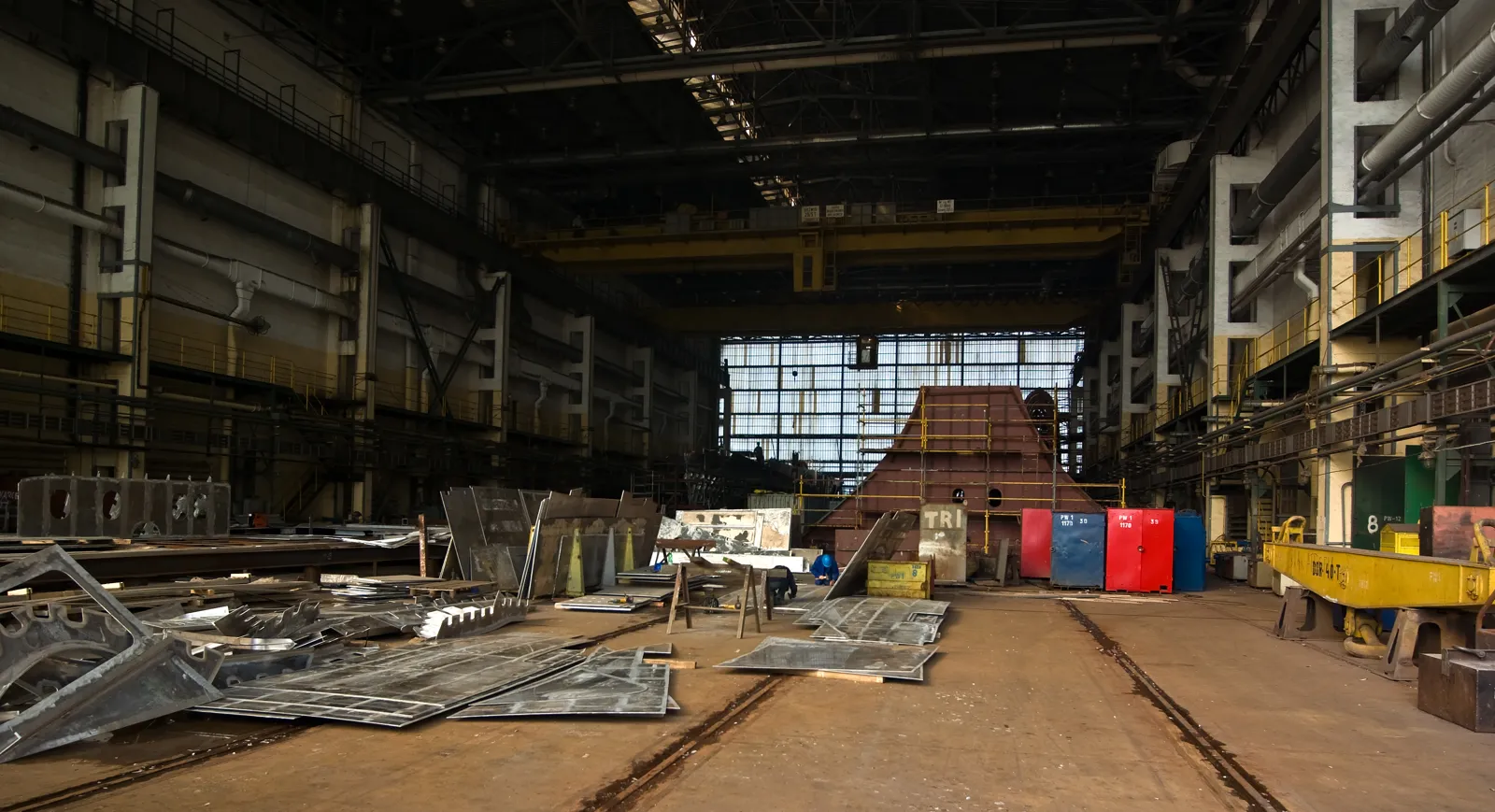
Fairbanks Morse Defense is turning its plant at Redzikowo, in Poland’s Słupsk district, into a Global Davit Manufacturing Centre of Excellence. A €6.98 million investment will take floor space from 3,000 to 5,600 square metres and lift annual capacity to as many as 150 davits — an 80 per cent increase. Ground was broken on 13 August 2026, with completion due in the fourth quarter of 2027.
At a Glance
- Who: Fairbanks Morse Defense; Rolf Andreas Wigand, Managing Director of Davits.
- Where: Redzikowo, Słupsk district, on Poland’s Baltic coast.
- How much: €6.98 million — €5 million for buildings, €1.9 million for equipment and a test yard.
- How much bigger: Floor space from 3,000 to 5,600 m²; output up 80 per cent to as many as 150 davits a year.
- When: Groundbreaking 13 August 2026; completion in Q4 2027.
- Jobs: Headcount up around 30 per cent over three years — welders, electricians, hydraulic technicians, assemblers, engineers.
- Why now: As uncrewed vessels multiply, the systems that launch and recover them become the constraint.
What a davit is, and why it suddenly matters
A davit is the crane system that lowers a boat or an uncrewed vehicle from a warship’s deck into the water and hauls it back aboard. It looks like ordinary ship’s furniture, and it turns out to matter at the sharpest moments of an operation. In a search-and-rescue task, a boarding operation or the despatch of an uncrewed surface vessel, success depends on getting that craft safely into a moving sea and safely back out. Sailors call the business launch and recovery, and they will generally tell you recovery is the hard half: a vehicle may deploy in calm water and come home to a different sea state.
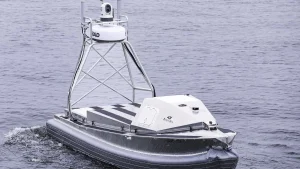
The reason this equipment has climbed the defence agenda is uncrewed systems. Navies are handing mine hunting, submarine tracking, harbour security and reconnaissance to uncrewed surface and underwater vehicles. A frigate’s deck now carries not one workboat but several uncrewed craft together, and each one needs a system to put it over the side and get it back. Those systems occupy the part of a ship’s design that cannot easily be enlarged: deck space.
The result is a pattern familiar across defence manufacturing, in which the interesting item is the platform and the constraint is its ancillary equipment. A navy can order all the uncrewed vehicles it likes; if its ships lack the launch-and-recovery infrastructure to work them, the capability never reaches the water. The Poland investment is a bet placed precisely in that gap.
Rolf Andreas Wigand, the company’s Managing Director of Davits, framed the siting decision around infrastructure and labour, calling Poland’s Słupsk district a clear choice for the centre given its strategic location, strong regional infrastructure and skilled workforce.

Where the €6.98 million goes
The split tells you something about the work. Of the €6.98 million, €5 million goes to buildings and €1.9 million to equipment and a test yard. The test yard appearing as its own line item is no accident: davit systems cannot be handed to a ship without being proven under load and across repeated cycles. A system that will lower and recover an uncrewed vehicle hundreds of times needs to have run those cycles on the factory site first.
Floor space goes from 3,000 to 5,600 square metres, which amounts to nearly doubling productive volume. Annual capacity rises to as many as 150 davits, an 80 per cent increase on current output. The plant handles hydraulic and electrical assembly along with winch installation support. Headcount is projected to grow by roughly 30 per cent over three years, in trades including welders, electricians, hydraulic technicians, assemblers and engineers.
The company feeds the site from product lines under its Vestdavit and Welin Lambie businesses. Both are long-established names in marine davits, and consolidating them into a single centre of excellence reads as an effort to make scattered production efficient under one roof. The systems serve both crewed boats and uncrewed vehicles.
The completion date carries its own information. Finishing in the fourth quarter of 2027 means the capacity is being readied not for today’s order book but for the wave expected from 2028 onward. Capacity investment in defence typically precedes visible demand, because standing up a line takes longer than winning a contract.
Fairbanks Morse Poland Davit Centre: Key Facts
| Facility | Global Davit Manufacturing Centre of Excellence |
| Location | Redzikowo, Słupsk district, Poland |
| Investment | €6.98 million |
| Breakdown | €5 million buildings; €1.9 million equipment and test yard |
| Groundbreaking | 13 August 2026 |
| Completion target | Fourth quarter of 2027 |
| Floor space | 3,000 m² → 5,600 m² |
| Output increase | 80 per cent, to as many as 150 davits a year |
| Employment growth | About 30 per cent over three years |
| Product brands | Vestdavit and Welin Lambie |
| Role | Launch and recovery of crewed and uncrewed vessels |
Why Poland became the centre of this work
Siting the investment in Poland fits one of the clearest industrial trends of recent years. The country expanded its defence budget rapidly, committed to major land and air acquisitions, and demanded industrial participation in return. Poland today is not simply a customer buying systems; it is a production base drawing an ever-larger share of Europe’s maintenance, manufacturing and support hubs onto its own soil. The Apache maintenance centre established in the same country is another instance of the trend.
Geography is in the equation too. Słupsk sits close to the Baltic coast, and the Baltic has become one of NATO’s most sensitive maritime areas over the past three years, with suspected sabotage against undersea cables and pipelines pushing critical infrastructure protection to the top of the agenda. Uncrewed vehicles are the first choice for that work, because they can absorb long, repetitive and hazardous tasks without risking a crew. The threat picture driving davit demand is taking shape in the very sea where the plant is being built.
The company frames this as strengthening European strategic autonomy, with lifecycle support for allied navies among the stated aims. The underlying argument is that equipment built and supported inside a European NATO member is more resilient to supply-chain disruption and shipping delay. The lesson of recent years runs the same way: the most expensive delay is the part waiting on the far side of an ocean.

The Turkish angle: an uncrewed fleet needs something to launch it
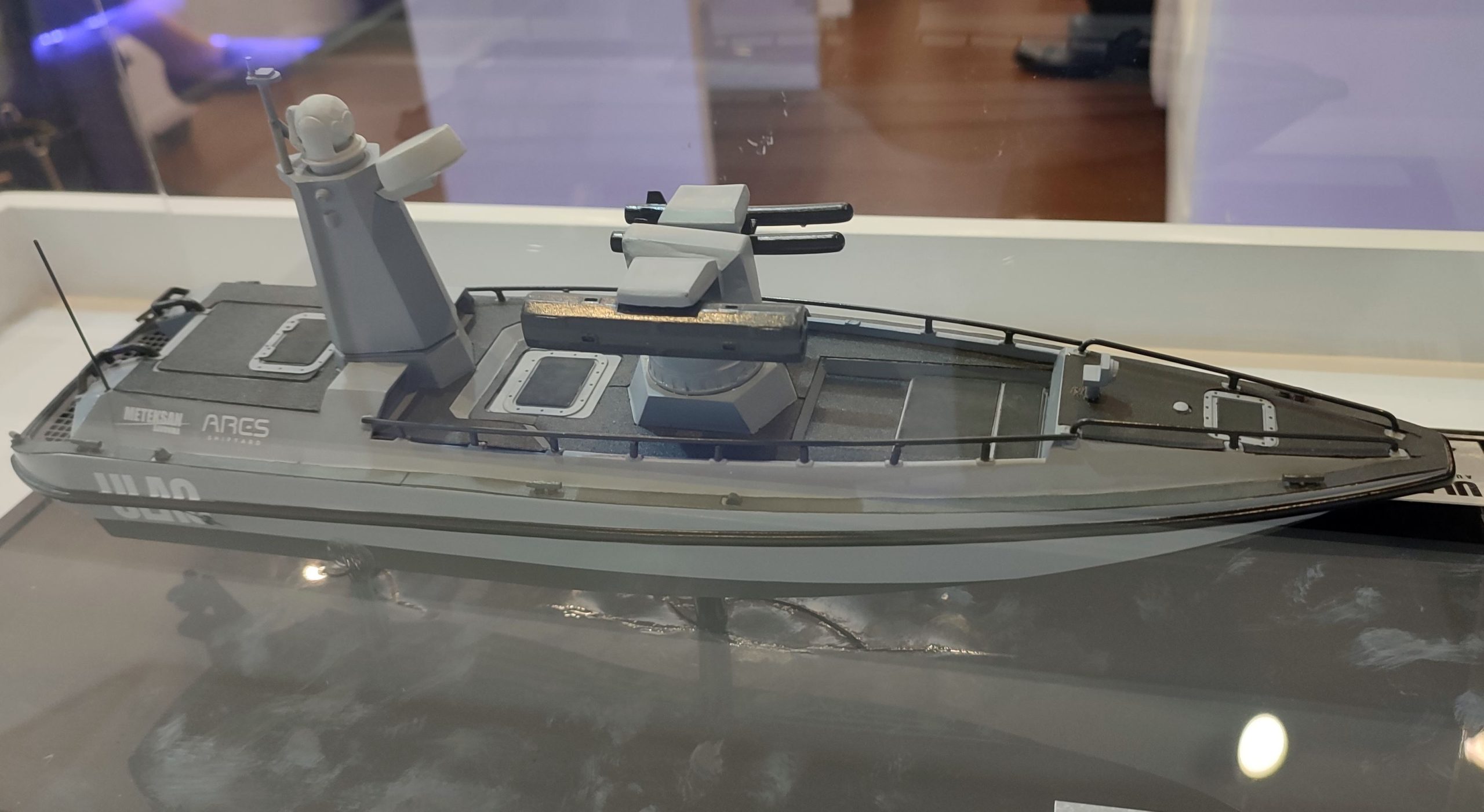
Türkiye has built a substantial position in uncrewed surface vessels. The armed USV ULAQ was followed by platforms in several classes, and Turkish yards now produce these craft for the national navy and for export. TCG Anadolu’s well deck, meanwhile, offers a platform well suited to putting uncrewed vehicles in the water and taking them back.
The lesson of the Fairbanks Morse case is that building the vehicle is half the equation. The other half is getting it off the ship and back aboard in a moving sea. The equipment looks modest, and yet it sets the availability rate of an uncrewed flotilla directly. As Turkish naval platforms find more export success, meeting the deck-side launch and recovery requirement with domestic solutions starts to matter for both cost and supply security.
There is an export argument as well. Davits and launch-and-recovery systems are a quiet sub-item alongside a ship sale — but one reordered with every new uncrewed vehicle. Offering those subsystems inside the package, in countries where Türkiye already exports naval platforms, is a way of converting a one-off ship sale into a supply relationship measured in decades. The Poland investment is modest in size at roughly €7 million; what is being built is plainly a market position.
Sources
- Defence Industry Europe — “Fairbanks Morse Defense expands Poland production facility” (17 August 2026)
- Fairbanks Morse Defense — corporate statements; Vestdavit and Welin Lambie product information
- Wikipedia — davits; marine launch and recovery systems