Indra to Integrate Thales’ Laser-Guided LMM Missile Into Spain’s New SILAEM System — A Dedicated Last Line of Defense for Navy Ships

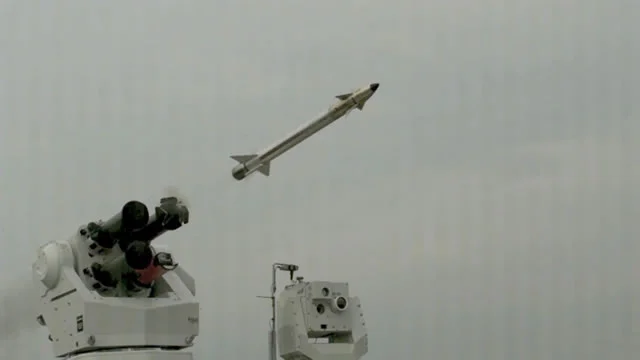
Spanish defense company Indra has reached an agreement with the Spanish subsidiary of Thales to integrate the laser-guided Lightweight Multirole Missile (LMM) into SILAEM (Sistema Lanzador Embarcado), the country’s first indigenously designed shipborne point-defense system. The €51 million program, launched under the Spanish Ministry of Defense’s Special Modernization Programs, aims to give Spanish Navy vessels a dedicated last line of defense against drones, helicopters, small attack craft and cruise missiles.
Closing an Operational Gap Below Major Air-Defense Systems
SILAEM is conceived as the innermost defensive layer around a warship, engaging threats that have already penetrated longer-range air-defense and missile systems or that operate at close range from the outset, such as fast attack boats, unmanned surface and aerial vehicles, and coastal strikes. The system will be offered in two configurations: a standalone installation or a version integrated with SCOMBA, Spain’s indigenous naval combat management system. Indra is responsible for the overall system integration and command-and-control architecture, and is also supplying the X-band fire-control radars that will track and engage incoming threats.
LMM: A Compact, Precision-Guided Interceptor
The LMM missile at the core of SILAEM weighs approximately 13 kilograms, has a range exceeding 6 kilometers and reaches speeds above Mach 1.5. Its laser-guidance system was designed specifically to limit collateral and blast damage during interception, an important feature for engagements that may occur close to a ship’s hull or near friendly vessels and coastlines. Beyond naval applications, the missile’s modularity allows it to be fired from shoulder-launched and tripod-mounted configurations, from vehicles, and from platforms such as RapidRanger, making it suited to a range of targets including drones, helicopters, lightly armored vehicles and small boats.
Open Architecture Aimed at NATO Interoperability
SILAEM’s open architecture is intended to ease integration with NATO and allied navies’ combat systems, reflecting a broader push among European defense manufacturers to design point-defense solutions that can be adopted across multiple fleets without extensive customization. The program is scheduled to run through August 2028, giving Indra and Thales Spain several years to complete development, testing and initial deployment aboard Spanish Navy vessels.
A Parallel Contract: SIMBAD-RC for the F-80 Frigates
In a separate but related move, the Spanish Navy has also ordered MBDA’s SIMBAD-RC point-defense systems for three F-80-class frigates, under a distinct contract worth approximately €29.7 million. Procuring two different point-defense solutions in parallel reflects a deliberate strategy to close the close-range defense gap through more than one supplier and technology path, reducing dependency on a single system or vendor.
Why It Matters
Point-defense systems such as SILAEM rarely draw the attention given to larger air-defense networks, yet they address an increasingly urgent operational need. With drone and unmanned surface vessel threats growing in the Mediterranean and along NATO’s southern flank, low-cost, rapid-reaction interception systems are becoming a higher priority for allied navies seeking affordable, layered protection against saturation attacks and asymmetric threats.