Poland lines up Europe’s largest Apache maintenance hub as it prepares for the biggest fleet outside the US

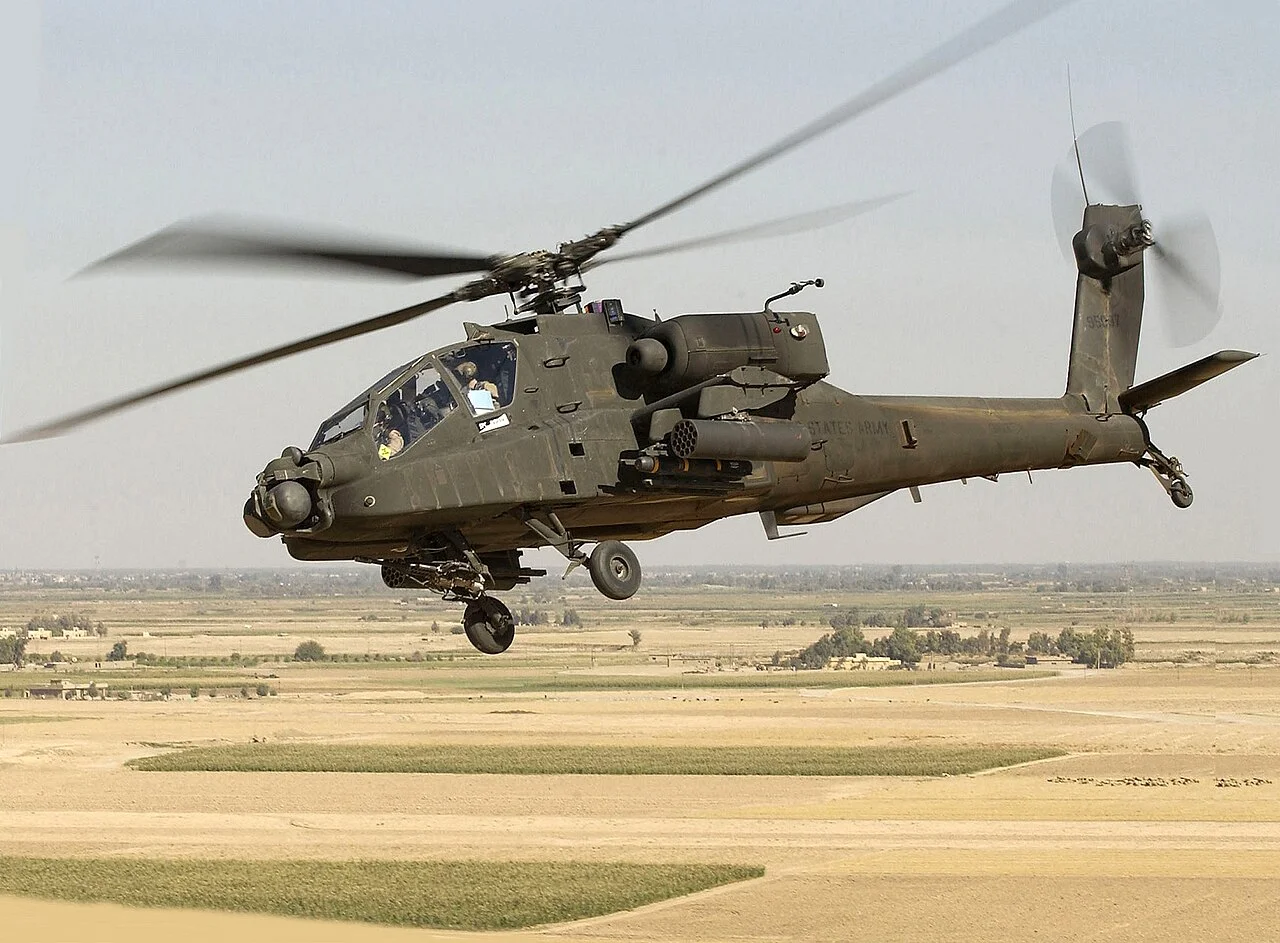
Boeing has signed the offset agreements that will put heavy maintenance of Poland’s 96 AH-64E Apache Guardians on Polish soil. The deals, inked in Lodz on 11 August, land more than a year before the first aircraft arrives – and when the fleet is complete, Warsaw will field the largest Apache force outside the United States.
At a Glance
- The deal: Offset implementation agreements between Boeing, WZL-1 and WCBKT, signed 11 August 2026 in Lodz
- Scope: Organisational and intermediate-level maintenance, selected depot-level component repair, ground support equipment
- Fleet: 96 AH-64E Apache Guardians under a roughly $10 billion package signed in 2024
- Deliveries: 2028 through 2032 – 15, 20, 32, 21 and eight aircraft per year
- Bridging fleet: Eight AH-64Ds leased from the US Army are already flying training sorties in Poland
- Standing: Poland becomes the 19th Apache operator and, once deliveries finish, the largest after the US Army
- Backdrop: Polish defence spending exceeds 4% of GDP, the highest share in NATO
What the agreements actually buy
Buying attack helicopters is the easy part. Keeping them flying is where programmes quietly fail. Rotor heads, mission computers, gun systems and targeting sights all come off the aircraft on a schedule, go through overhaul and go back on – and if that work happens on another continent, airframes sit idle for months while the operator absorbs both the currency risk and the supply chain risk.
The tripartite agreements signed in Lodz are aimed squarely at that problem. Wojskowe Zaklady Lotnicze Nr 1 (WZL-1) will handle organisational and intermediate-level inspections and repairs, plus selected depot-level component work. The second signatory, the Military Central Bureau of Design and Technology (WCBKT), will work with Boeing to determine whether Polish-designed ground support equipment can be cleared for use with the Apache. That covers everything from generators to hydraulic test rigs – the unglamorous hardware that decides how fast a squadron can regenerate.
Boeing vice-president Marc-Olivier Sabourin called the signing “a significant milestone in Boeing’s partnership with Poland.” WZL-1 chief executive Jacek Goszczynski was more specific about the ambition: the aim is to establish the largest Apache support infrastructure in Europe. WCBKT’s Roman Fiszer framed it as a chance to consolidate his company’s position as a national centre of expertise. Prime Minister Donald Tusk, for his part, said the facility would be Europe’s biggest of its kind once running.
Ninety-six aircraft, spread across five years
Warsaw signed the Apache package at Inowroclaw in the summer of 2024. The roughly $10 billion deal covers weapons, logistics and support alongside the aircraft themselves, and stands as the largest single foreign military sale purchase Poland has ever made. Deliveries begin in 2028 and run to 2032 at a rate of 15, 20, 32, 21 and eight aircraft – meaning the fleet only reaches critical mass around 2030.
That schedule left an obvious gap: what do the crews fly in the meantime? The answer was a lease of eight AH-64Ds from the US Army, already operating in Poland. They give Polish crews time inside the Apache way of working – sensor fusion, target handoff, teaming with unmanned aircraft – before the Guardians arrive. The new agreements also cover the management of that leased fleet and the associated personnel training.
An industrial move on the eastern flank
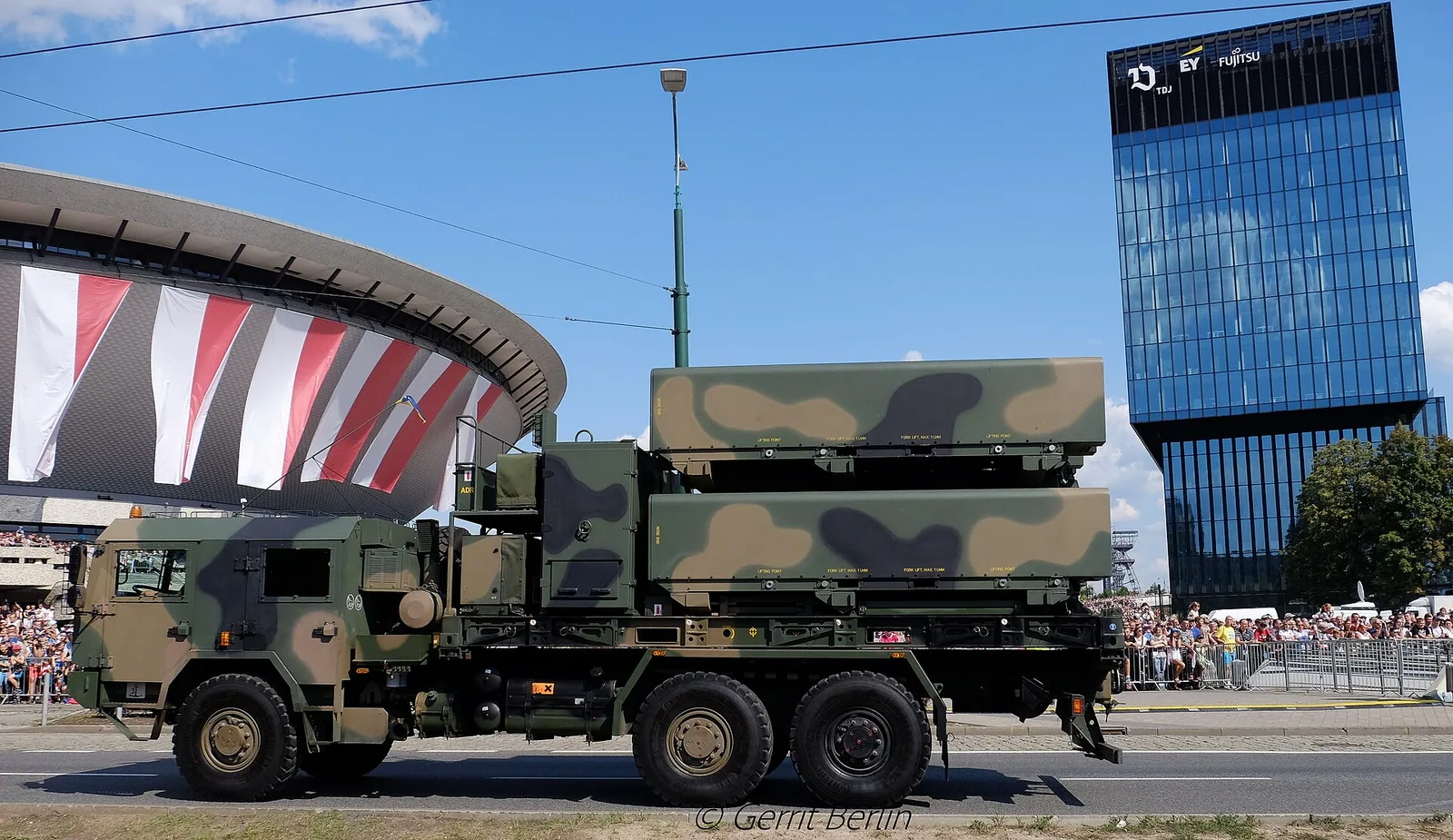
The Apache decision does not sit in isolation. Over five years Poland has ordered Abrams tanks, South Korean K2 tanks and K9 howitzers, Patriot batteries and HIMARS launchers, while pushing defence spending past 4% of GDP. Buying at that pace creates a familiar bottleneck: if sustainment capacity does not grow at the same rate as the inventory, the fleet exists on paper and not on the flight line.
The Lodz hub is meant to absorb that risk. WZL-1 has facilities in Lodz and Deblin and more than eight decades of aircraft maintenance behind it; WCBKT has been Poland’s sole domestic supplier of ground support equipment since the early 1990s. Both sit within the Polish Armaments Group. Regionally, the centre is unlikely to serve Poland alone – it is a natural candidate to take work from other European Apache operators.
AH-64E Apache Guardian – Technical Summary
| Manufacturer | Boeing (United States) |
| Crew | 2 (pilot and co-pilot/gunner) |
| Powerplant | 2 x General Electric T700-GE-701D turboshafts |
| Max speed | ~300 km/h |
| Main gun | 30 mm M230 chain gun, 1,200 rounds |
| Weapons | AGM-114 Hellfire, JAGM, 70 mm Hydra rockets, Stinger |
| Radar | AN/APG-78 Longbow mast-mounted fire control radar |
| Manned-unmanned teaming | MUM-T: live video and control of partnered UAVs |
| Polish order | 96 aircraft, roughly $10 billion (2024) |
| Delivery window | 2028-2032 |
Why the Apache still sells
The AH-64 first entered service in the 1980s, but the Guardian standard moved the platform somewhere else entirely. The mast-mounted Longbow radar lets the aircraft classify dozens of targets while exposing only its radome above cover. MUM-T lets the crew pull live video from a partnered drone and, in some modes, steer it – a meaningful edge at a time when Ukraine has shown how carefully rotary-wing aviation must be handled under the shadow of man-portable air defence.
The underlying argument is familiar to anyone following Turkiye’s rotary-wing programmes. Turkish Aerospace’s T129 ATAK ran into the same question after its Philippine export contract – not whether the aircraft performed, but where its sustainment chain would live. On the heavier ATAK-2, the stated goal is to keep most of that chain, from the engine to the mission systems, inside the country. Poland’s Lodz decision points to another route to the same destination: import the platform, domesticate the sustainment.
Sources
- Boeing press release – WZL-1, WCBKT and Boeing offset agreements (11 August 2026)
- Defense Express / en.defence-ua.com – Poland to Become World’s Second Apache Helicopter Operator
- UK Defence Journal – Poland to build Europe’s largest Apache support base
- Overt Defense – Boeing Signs Deal For Poland Apache Attack Helicopter Service Centre
- Breaking Defense archive – Poland’s Apache agreement (2024)