





Northrop Grumman Wins $863m M1156 Guidance Kit Contract

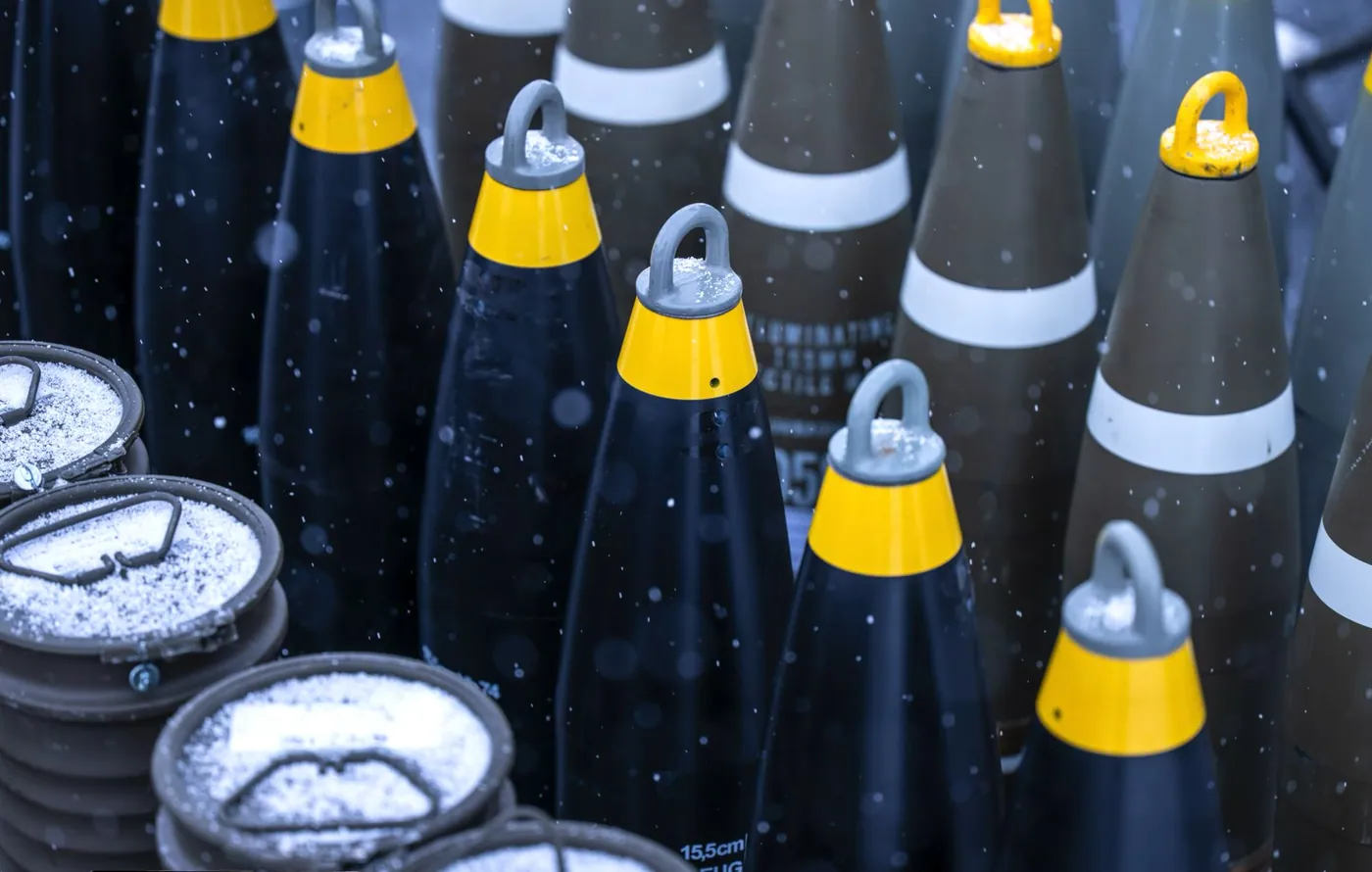
The U.S. Department of Defense has awarded Northrop Grumman a framework contract with an $862.8 million ceiling for the M1156 Precision Guidance Kit and its variants — the screw-on nose assembly that turns an ordinary 155 mm artillery shell into something close to a guided weapon.
How the deal is structured
The award is a firm-fixed-price, indefinite-delivery/indefinite-quantity arrangement covering manufacture, inspection, test, packaging and delivery. No funding was obligated at signature. The $862.8 million figure is a ceiling — the maximum that can be ordered against the vehicle — not committed spending.
Orders may be placed through 3 September 2031. Work location and funding are determined with each individual order. For the Army, that structure buys two things at once: a production line kept warm across a five-year window, and the freedom to scale quantities up or down as budgets and operational demand move.
What the PGK actually is
The M1156 is not a guided projectile. It is a fuze-well replacement — a nose kit containing a GPS receiver and four small canards that threads into the front of a standard 155 mm shell. Stockpiled dumb rounds become precision rounds without ever going back to a factory.
After firing, the kit uses the projectile’s spin as a reference, computes where the round is going, and trims the trajectory by adjusting canard pitch. The published performance threshold is a circular error probable under 50 metres regardless of firing range. For comparison, an unguided 155 mm round at 20 kilometres can miss by several hundred metres.
The kit also carries a safety function: if it calculates that the round cannot reach the target area, it can render itself inert — a design choice aimed squarely at fratricide and collateral risk.
The jamming problem
The Pentagon has separately commissioned an improved M1156A1 drawing on combat lessons, Ukraine prominent among them. That war exposed the kit’s central vulnerability with uncomfortable clarity: PGK is a GPS weapon, and Russian electronic warfare units built a jamming envelope along the front line that measurably degraded precision munitions in the early phases.
The engineering answers are known — controlled-reception-pattern antennas that null out jamming from known directions, receivers with better anti-spoofing logic, and inertial fallback when the satellite signal disappears. What matters is how fast they reach the field. A contract running to 2031 gives the Army room to phase those improvements into production rather than pausing the line.
Guns it fits
PGK is compatible with most NATO-standard 155 mm systems. In U.S. service that means the towed M777A2 and the self-propelled M109A6 Paladin and M109A7. The kit is also released to allied armies through Foreign Military Sales.
That compatibility is the strategic argument. Rather than developing a new family of guided shells, the Army adds a precision layer to ammunition it has already produced in the millions. A fully guided round such as Excalibur costs several times what a standard shell plus a PGK does — and the stockpile is already sitting in depots.
The wider picture
The award belongs to a larger effort to rebuild American artillery ammunition capacity. Deliveries to Ukraine made plain that Western 155 mm inventories were sized for peacetime assumptions and could not sustain a high-intensity war for long. Monthly shell production targets have been climbing since, and guidance kits are an inseparable part of that expansion — volume without accuracy simply moves the shortage downstream.
Turkish industry is working the same equation from its own direction. Efforts at TÜBİTAK SAGE and ROKETSAN in the 155 mm class follow a comparable logic: extend range, add precision, and do it on top of existing stocks where possible. It is the same formula Turkish industry has applied in air-delivered munitions for years with the HGK and KGK kit families, now migrating into tube artillery.
Sources
- U.S. Department of Defense daily contract announcements, 3 September 2026
- Northrop Grumman product literature
- Analysis by Defence Industry Europe