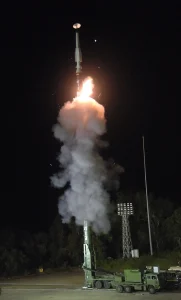






Britain Commits GBP 780 Million to Triple the Army’s Strike Reach With PrSM

Britain is buying reach. The Ministry of Defence has set aside £780 million across four financial years for extended-range strike: £190 million to join the Precision Strike Missile programme alongside the United States and Australia, and £590 million for long-range rocket artillery. The MOD’s claim is blunt — the package would “triple the Army’s reach.”
What PrSM brings
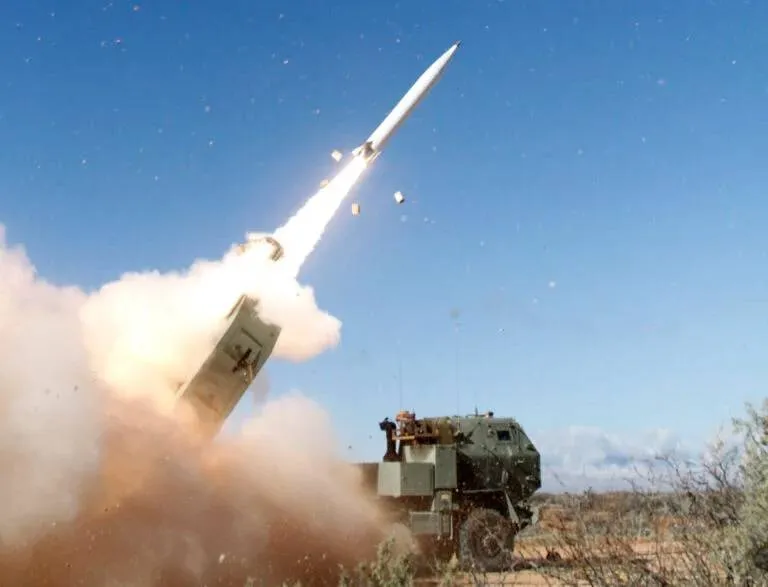
The Precision Strike Missile is Lockheed Martin’s replacement for ATACMS, the ballistic missile the U.S. Army has fired from HIMARS and M270 launchers for three decades. Its most practical advantage is packaging: two PrSMs fit in the same launch pod that holds a single ATACMS, doubling the salvo a launcher can put in the air before reloading.
The first increment exceeds 500 kilometres in range. Later blocks are planned to add a maritime strike seeker, extended range and alternative warhead options. Lockheed Martin announced on 2 September that it had completed a production qualification event at White Sands Missile Range, firing two PrSMs from a HIMARS.
Britain’s entry makes it the third user nation. The announcement did not specify quantities, delivery dates, or how the money splits between procurement and support — omissions that make the headline figure harder to assess than it first appears.
The package around it
The £780 million sits inside a £19.2 billion allocation for land capabilities, structured around preparing the British Army for high-intensity NATO warfighting.
Two adjacent lines matter. Project ASGARD receives £370 million over four years to build a reconnaissance-strike network, tying surveillance assets, artificial intelligence and digital networks together to shorten the targeting cycle. A further £570 million goes to drones, cyber capabilities and space-based sensors feeding what the MOD calls a Digital Targeting Web.
Further out sits Deep Precision Strike, a UK-German project aiming at weapons exceeding 2,000 kilometres by the early 2030s, ground-launched first with air and naval applications to follow. The MOD projects at least £36 billion in additional land investment between 2030 and 2035.
Launchers, not just missiles
PrSM will arrive on existing infrastructure. Britain is upgrading its M270 fleet to the M270A2 standard — new fire control, an uprated powerpack, and the ability to fire next-generation munitions including PrSM. The missile buy therefore does not require a new platform.
Launcher numbers are the harder question. The British Army’s M270 holdings shrank considerably after the Cold War, and part of the £590 million rocket artillery line is expected to go toward rebuilding that fleet. Deterrent value depends not only on how far a missile flies but on how many targets can be engaged at once.
A continent rearming for depth
Britain’s move fits a pattern visible across Europe. Ukraine demonstrated that the ability to strike logistics hubs, command posts and ammunition depots deep behind the line shapes outcomes at the front. Long-range fires, largely neglected in post-Cold War European force design, are now near the top of most procurement lists.
Poland moved fastest, acquiring Chunmoo launchers from South Korea and HIMARS from the United States. The ELSA initiative, grouping Germany, France, Italy and Poland, aims at a European long-range missile of its own. Norway selected Hanwha for rocket artillery earlier this year.
Turkey reached this point earlier than most, and largely through domestic industry. ROKETSAN’s TRG guided rocket family, the KHAN short-range ballistic missile and TAYFUN give the Turkish Armed Forces a deep-strike capability that European armies are now spending heavily to acquire. As NATO standardises on munitions like PrSM, the demand curve for this class of weapon across Europe is likely to stay steep — a market Turkish industry watches closely.
Sources
- UK Ministry of Defence announcement, September 2026
- Lockheed Martin statement, 2 September 2026
- Defence Industry Europe, 3 September 2026