America’s Land-Based Hypersonic Striker ‘Dark Eagle’ Edges Toward the Front Line: A $2.7 Billion Leidos Contract

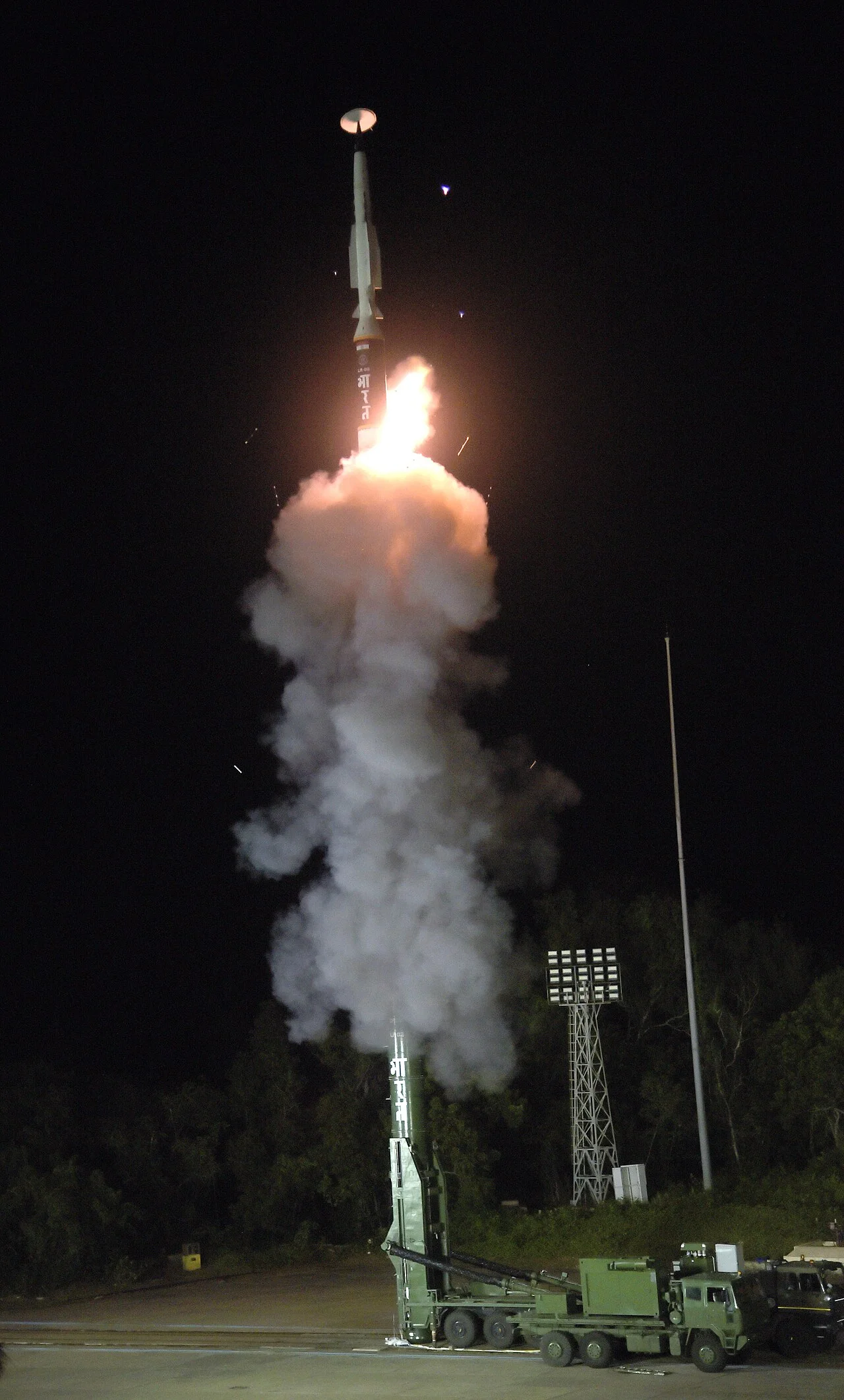
The U.S. Army’s first operational land-based hypersonic strike system, ‘Dark Eagle’ (the Long-Range Hypersonic Weapon, or LRHW), is moving from the prototype phase into series production under a contract worth roughly $2.7 billion. The deal, awarded to defense contractor Leidos, aims to finally accelerate the system into the field after years of test setbacks and delays.
The agreement was signed on 31 March 2026 by the Redstone Arsenal element of U.S. Army Contracting Command, with Leidos disclosing it publicly in May. Valued at $2.7 billion, the contract carries the program from a flexible other transaction authority arrangement onto a production contract governed by standard federal acquisition rules. That shift is read as a sign of stepping from the trial phase into regular manufacturing within military procurement.
What exactly does the contract cover?
According to open sources, the contract’s most critical feature is that it merges two previously separate efforts under one roof. The first is the Thermal Protection Shield, which protects the warhead from the extreme heat of reentry; the second is the Common Hypersonic Glide Body (C-HGB) program, the lifeblood of the system. The Defense Department says the consolidation will streamline development and speed up delivery.
The contract is structured with a base period followed by option years, giving the government flexibility to spread production volume and pricing over time. Leidos is executing the work through its subsidiary Dynetics, which has been involved in the relevant programs since 2019. The company takes on responsibility for shortening production timelines and safeguarding the continuity of the component supply chain.
One important point: the program does not belong to the Army alone. Dark Eagle is the land leg of a joint Army-Navy effort, with the same glide body shared by the Navy’s ship-launched hypersonic weapon. This common glide-body architecture is meant to spare the two services from developing it separately at duplicate cost.
What is ‘boost-glide’, and what does the C-HGB do?
Dark Eagle works differently from a conventional missile. The system relies on the boost-glide principle: a large rocket motor (booster) carries the warhead into the upper atmosphere and up to high speed. Once a certain altitude and velocity are reached, the rocket separates, leaving behind the unpowered glide body, which cannot fly on its own.
This is exactly where the C-HGB comes in. As it descends toward the target, the glide body travels at speeds above five times the speed of sound (Mach 5) while maneuvering. Unlike conventional missiles that follow a set ballistic arc, it glides along a low, variable path, making it far harder to track and intercept. Much of the deterrent value of hypersonic weapons stems from this unpredictability.
Range and fielding status
The system is entirely land-based. A Dark Eagle battery consists of four M983 heavy truck-trailers (Transporter-Erector-Launchers, or TELs), each carrying two missile canisters, plus a command vehicle, for eight missiles per battery. This setup lets the system relocate without being tied to a fixed base.
As for range, U.S. congressional and Defense Department documents cite a reported operational range of roughly 2,775 kilometers (1,725 miles). While some open sources mention higher figures, this is the value repeated in official documents; because the true range is classified, no precise figure is shared publicly. Even this range is enough to reach theater-scale targets that once required far longer-range systems.
| Attribute | Open-source data |
|---|---|
| System type | Land-based, boost-glide |
| Warhead | Common Hypersonic Glide Body (C-HGB) |
| Speed | Above Mach 5 |
| Reported range | ~2,775 km (1,725 mi) |
| Battery structure | 4 × M983 TEL (8 missiles) + command vehicle |
| Contract | ~$2.7 billion, Leidos (Dynetics) |
On the fielding side, the program has clearly picked up pace. The first unit to operate the system, Bravo Battery (1st Battalion, 17th Field Artillery Regiment, 3rd Multi-Domain Task Force), was formally activated at Joint Base Lewis-McChord in Washington state in December 2025. In March 2026 an Army official said the battery would receive its first operational missiles ‘soon’. The system had also been deployed outside the U.S. mainland for the first time during the Talisman Sabre exercise in Australia in the summer of 2025.
The strategic picture
Dark Eagle’s maturation is part of America’s effort to close the gap with great powers that have advanced quickly in hypersonic capability in recent years. The fact that China and Russia have displayed operational systems in this weapons class added urgency to the program in Washington. Bringing a land-based, mobile, fast striker into the field amounts to a new layer of deterrence against time-critical, heavily defended targets.
Even so, the picture is not fully settled. Keeping the production rate low at the outset, the actual date the first missiles enter the unit, and the program’s trajectory through future budget cycles stand out as the main variables that will determine the system’s true operational weight in the period ahead.
Open-source verification notes
- The contract value (~$2.7 billion) and the Leidos/Dynetics role were confirmed through several defense publications and an official DVIDS release; the contract is reported to have been signed on 31 March 2026 and announced in May.
- That the contract merges the Thermal Protection Shield and C-HGB programs and shifts from an OTA to a FAR production contract was verified via Washington Technology and InsideDefense.
- For range, the ~2,775 km (1,725 mi) figure repeated in official/congressional documents was used; higher values cited in some sources (e.g. ~3,500 km) were not stated as fact because they could not be verified.
- The battery structure, the M983 TEL and the C-HGB boost-glide architecture are consistent with Congressional Research Service material and open sources.
- The December 2025 activation of Bravo Battery at JBLM was confirmed via official DVIDS news and imagery.
Sources
- Washington Technology — “Leidos lands $2.7B Dark Eagle production contract” (May 2026)
- InsideDefense — “Leidos awarded $2.7 billion to combine components in Army, Navy hypersonic program”
- DVIDS — “Behind Dark Eagle: Contracting at the Speed of Hypersonic” / “LRHW Battery Activates at JBLM”
- Congress.gov / CRS — “The U.S. Army’s Long-Range Hypersonic Weapon (LRHW): Dark Eagle” (IF11991)
- USNI News — “Report to Congress on U.S. Army’s Dark Eagle Hypersonic Weapon” (April 2026)