MBDA ASMP-A: France’s Independent Nuclear Deterrent and the Path to ASN4G Hypersonic

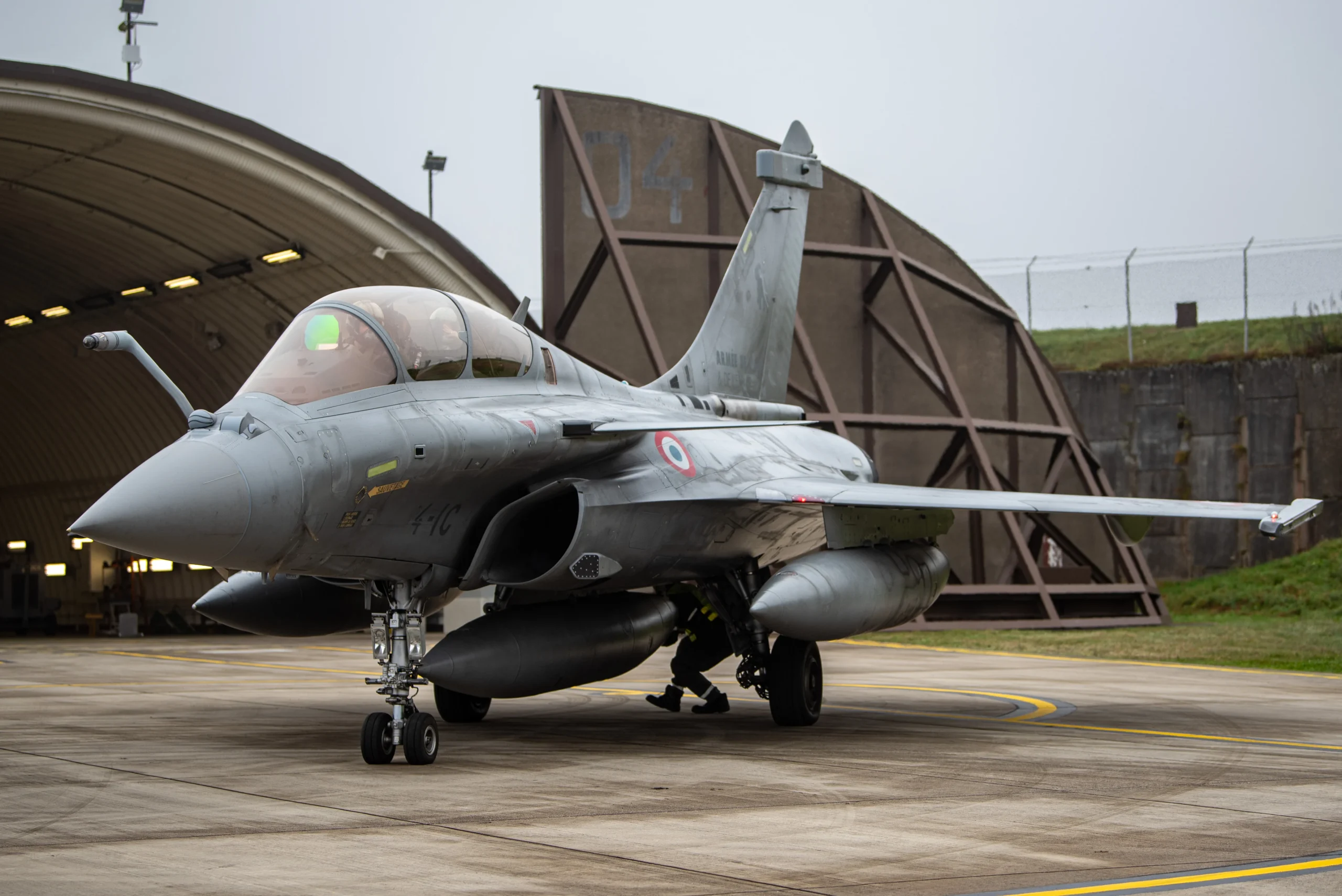
France is the only NATO member with a fully independent nuclear deterrent — meaning no allied authorisation is required to employ it. The ASMP-A (Air-Sol Moyenne Portée Amélioré) is the air-delivered component of that deterrent: a Mach 3 standoff missile carried by the Rafale fighter, with a range of approximately 500 km and a thermonuclear warhead. Produced by MBDA, it represents the most strategically sensitive system in the company’s portfolio — and the one most directly relevant to the future of European strategic autonomy.
Note: This article draws exclusively on publicly available official sources including French Ministry of Defence publications. No operational deployment details, targeting information, or classified parameters are discussed.
1. French Nuclear Doctrine
French nuclear strategy — dissuasion — rests on three principles that distinguish it from NATO nuclear arrangements:
- National sovereignty: France’s nuclear weapons are employed solely on French national authority — no dual-key, no NATO authorisation process
- Strict sufficiency: France maintains the minimum arsenal necessary to deter rather than fighting a nuclear war — not matching adversary warhead-for-warhead
- Tous azimuts (all-direction deterrence): The deterrent is not aimed at specific adversaries — it deters any state from threatening vital French interests
2. Technical Parameters (Publicly Available)
| Parameter | Value (public sources) |
|---|---|
| Type | Air-launched standoff nuclear missile |
| Speed | Mach 3 |
| Range | ~500 km (French MoD public documents) |
| Warhead | TNA — Tête Nucléaire Aéroportée (~300 kt, public estimate) |
| Guidance | INS + terrain contour matching + terminal update |
| Platform | Rafale F3 (active) + Mirage 2000NK (retired) |
| Status | Operational; replacement by ASN4G planned for 2030s |
3. Strategic Significance Within NATO
France’s independent nuclear deterrent creates a distinctive strategic architecture within the alliance:
- US NATO nuclear sharing: B61 gravity bombs stationed at allied bases (including Incirlik, Turkey) require US presidential authorisation for employment
- UK Trident: UK submarines carry US-designed Trident II D5 missiles — the UK maintains some operational independence but uses US infrastructure
- French ASMP-A: Entirely French-designed, French-manufactured, French-operated — no allied veto, no shared infrastructure dependency
This distinction has become more strategically relevant as questions arise about the durability of US extended deterrence commitments. France’s deterrent is the only NATO capability that can operate with complete autonomy from Washington.
4. Rafale Integration
The Rafale F3 is ASMP-A’s sole active carrier platform. Every Rafale export negotiation therefore carries an implicit signal: the aircraft that delivers France’s strategic deterrent is also being offered to Egypt, Qatar, UAE, India, Greece, and Indonesia. For buyers, this creates a credibility argument — a platform maintained to the absolute highest readiness standards demanded by nuclear mission requirements.
5. ASN4G: The Successor
France has publicly announced the ASN4G (Air-Sol Nucléaire de 4ème Génération) programme as ASMP-A’s replacement in the 2030s. The key advance:
- Speed: Mach 6+ (hypersonic) vs ASMP-A’s Mach 3
- Survivability: A Mach 6 weapon against current and near-term air defence creates an engagement window measured in seconds, not minutes
- Boost-glide or powered: Exact propulsion architecture not publicly confirmed, but French and MBDA communications reference hypersonic glide capability
The ASMP-A to ASN4G transition is, in effect, France’s version of Russia’s Kinzhal upgrade path — moving the nuclear standoff missile into an engagement envelope where no current or planned interceptor can reliably engage it.
6. Non-Proliferation Framework
ASMP-A exists within the Nuclear Non-Proliferation Treaty framework: France is a recognised nuclear weapon state under Article VI, which obligates nuclear states to pursue disarmament negotiations while permitting continued possession of existing arsenals. France’s nuclear modernisation programme is consistent with NPT obligations as interpreted by all five recognised nuclear weapon states.
7. Assessment
ASMP-A is the system that gives French deterrence its credibility precisely because it operates outside the US command and control structure. For European strategic autonomy — the central question for continental security policy — France’s independent deterrent is not a theoretical asset but a deployed, operational capability. The replacement by ASN4G ensures that this independence will be maintained in an era where current Mach 3 weapons face increasingly capable, if not yet reliable, intercept systems. MBDA’s role in both programmes makes it the only non-American, non-Russian company with an active nuclear delivery system production and development mandate.