F-35B Releases Meteor Missile From Internal Bay for the First Time: A Key Step for UK-Italy Integration

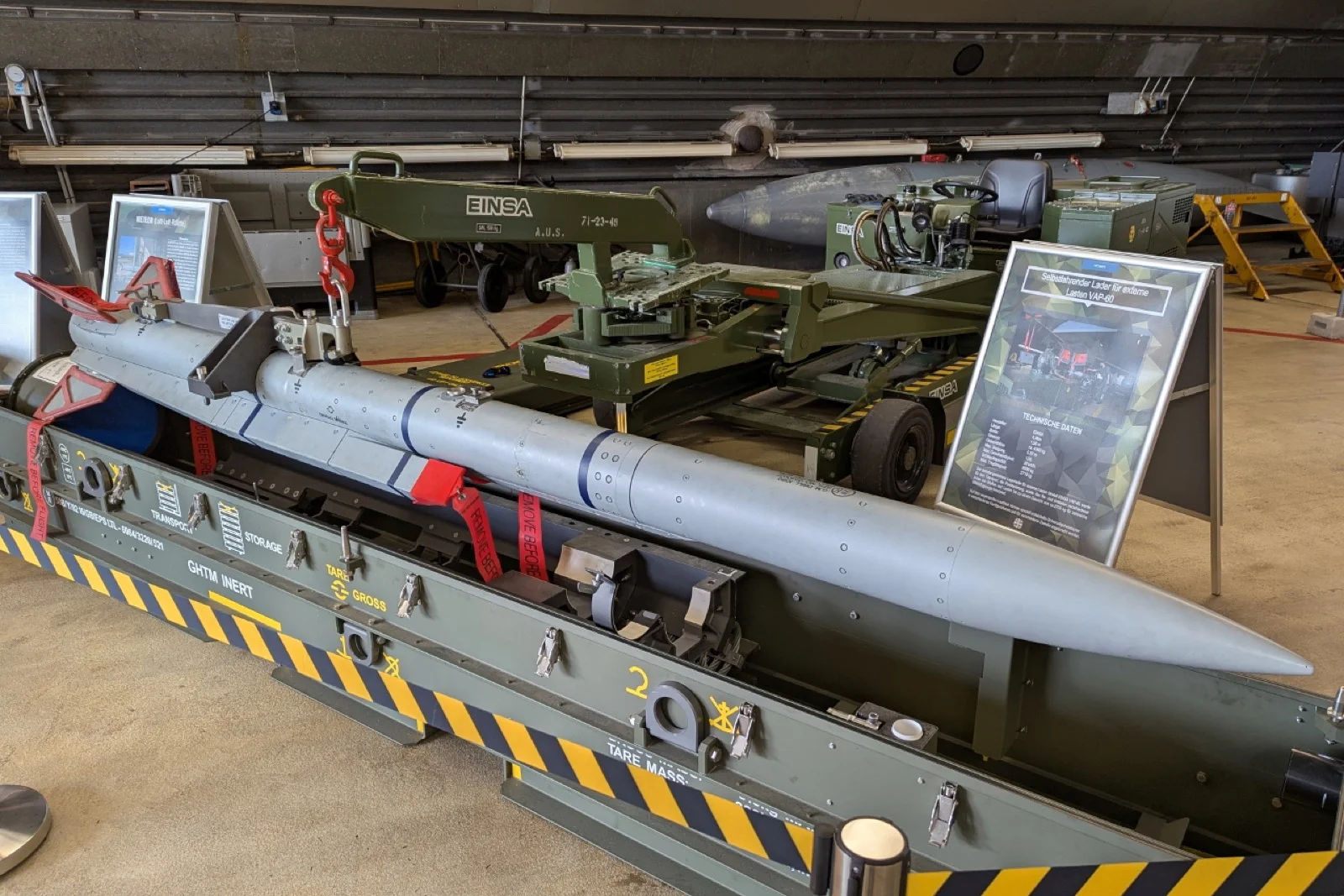
An F-35B Lightning II released an MBDA Meteor missile from its internal weapons bay for the first time on 7 October 2026, during a jettison trial at Naval Air Station Patuxent River, Maryland. The F-35 Joint Program Office (JPO) Public Affairs office confirmed the milestone, describing it as part of the ongoing Meteor integration effort for the United Kingdom’s and Italy’s F-35B fleets.
Last updated: 6 November 2026
What the trial did — and did not — test
According to the account published through DVIDS, the flight was a jettison trial meant to confirm that the missile could separate safely from the aircraft in a complex aerodynamic environment. The test asset’s rocket motor did not fire and its control surfaces did not move. In other words, this was a pure separation and drop test, not a live firing.
The sortie was flown by a U.S. Marine Corps F-35B assigned to test squadron VX-23, with a Royal Navy test pilot from the combined UK-US F-35 Integrated Test Force in the cockpit. Preparing and loading the test weapon required a joint team drawn from the Integrated Test Force, the Royal Navy, the Royal Air Force and industry.
Why the internal bay matters
To preserve the F-35B’s low radar signature, any air-to-air weapon it carries internally must fit inside its weapons bay. The jet currently carries the AIM-120 AMRAAM there as standard. Meteor, built by MBDA, already equips UK and Italian Typhoons as a beyond-visual-range (BVR) missile whose ramjet motor sustains thrust throughout the flight, rather than the boost-then-glide profile of conventional rocket-powered rivals — extending both range and end-game maneuverability. Fitting that same missile inside the F-35B’s narrow bay, without compromising stealth, has been a multi-year engineering problem of geometry and aerodynamics.
What comes next
MBDA said further trials over the coming months will confirm that the missile can clear the aircraft safely across its full operating envelope. The series is set to culminate in live firings that will assess both separation behaviour and how the missile flies once released. Data gathered from this trial will refine the aerodynamic and digital models used to design those more demanding tests.
Background to the integration effort
Integrating Meteor onto the F-35B is not a new ambition. London and Rome, which already field the missile on their Typhoon fleets, have long sought to carry it on the F-35B without losing the aircraft’s stealth advantage. Meteor’s size and fin geometry required re-engineering to fit the jet’s narrow internal bay, so the programme has advanced step by step — first through ground testing, then flight trials. Lockheed Martin and MBDA had previously announced completion of ground tests for the F-35A variant; the F-35B internal-bay trial represents a separate and more demanding engineering stage, since the B-model’s STOVL (short take-off, vertical landing) architecture further constrains bay geometry.
Why it matters beyond the UK and Italy
Türkiye was removed from the F-35 programme in 2019 over its purchase of the Russian S-400 system, so Meteor’s F-35B integration has no direct bearing on the Turkish Air Force, which has instead turned to its own KAAN fighter and to the GÖKDOĞAN/BOZDOĞAN air-to-air missile family developed by TÜBİTAK SAGE. Even so, Meteor’s ramjet-powered BVR architecture remains a reference point for long-range air-to-air missile technology within NATO, shaping the weapons options available to allied fleets and the broader balance of air power within the alliance.
Frequently asked questions
Was Meteor fired from the F-35B?
No. The 7 October 2026 trial was a jettison test; the missile’s rocket motor did not ignite. Live firings are planned for a later phase of the programme.
Which aircraft currently carry Meteor?
Meteor is operational on the Eurofighter Typhoon in UK and Italian service, and is also integrated on the Gripen and Rafale. Integration on the F-35B remains in the trials phase.
Why does this trial matter?
The F-35B’s internal weapons bay is narrow and aerodynamically constrained to preserve the aircraft’s low radar signature. Confirming that a missile as large as Meteor can separate safely from that bay is a prerequisite before the programme can move to live-fire testing.
Sources
- F-35 Joint Program Office Public Affairs, DVIDS, “F-35B completes first Meteor jettison flight trial” (5 November 2026): https://www.dvidshub.net/news/578702/f-35b-completes-first-meteor-jettison-flight-trial
- The Aviationist, “F-35B Releases Meteor BVRAAM for the First Time” (5 November 2026): https://theaviationist.com/2026/11/05/f-35b-releases-meteor-bvraam-for-the-first-time/
- Navy Lookout, “Royal Navy pilot conducts first F-35B Meteor missile release test”: https://www.navylookout.com/royal-navy-pilot-conducts-first-f-35b-meteor-missile-release-test/