Germany Taps MBDA to Build an Airborne Laser Pod for the Luftwaffe

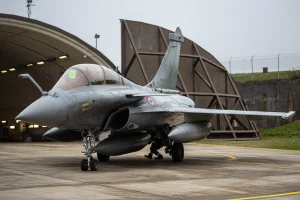
Germany’s federal procurement office BAAINBw has commissioned MBDA Deutschland to build a demonstrator for an airborne laser weapon meant for Luftwaffe combat aircraft. The system, housed in what MBDA calls a “Laser-Pod,” aims to lay the technological groundwork for future laser weapons that could be fitted to German military jets to counter drones and cruise missiles.
MBDA describes the project as an early-stage effort limited to a single prototype for now. In its statement, the company stressed it would prioritize national suppliers and build up domestic technological know-how inside Germany — a framing that lines up with Berlin’s broader push to protect industrial and technological sovereignty in strategic defense fields.
Spanish defense outlet Infodefensa, which first detailed the story, reported the announcement on November 3, 2026, based on an MBDA press statement, but did not disclose the contract’s value or signing date. Which aircraft type the pod is meant for integration with also was not specified; the report refers only generally to the Luftwaffe.
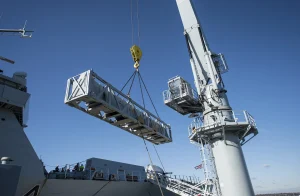
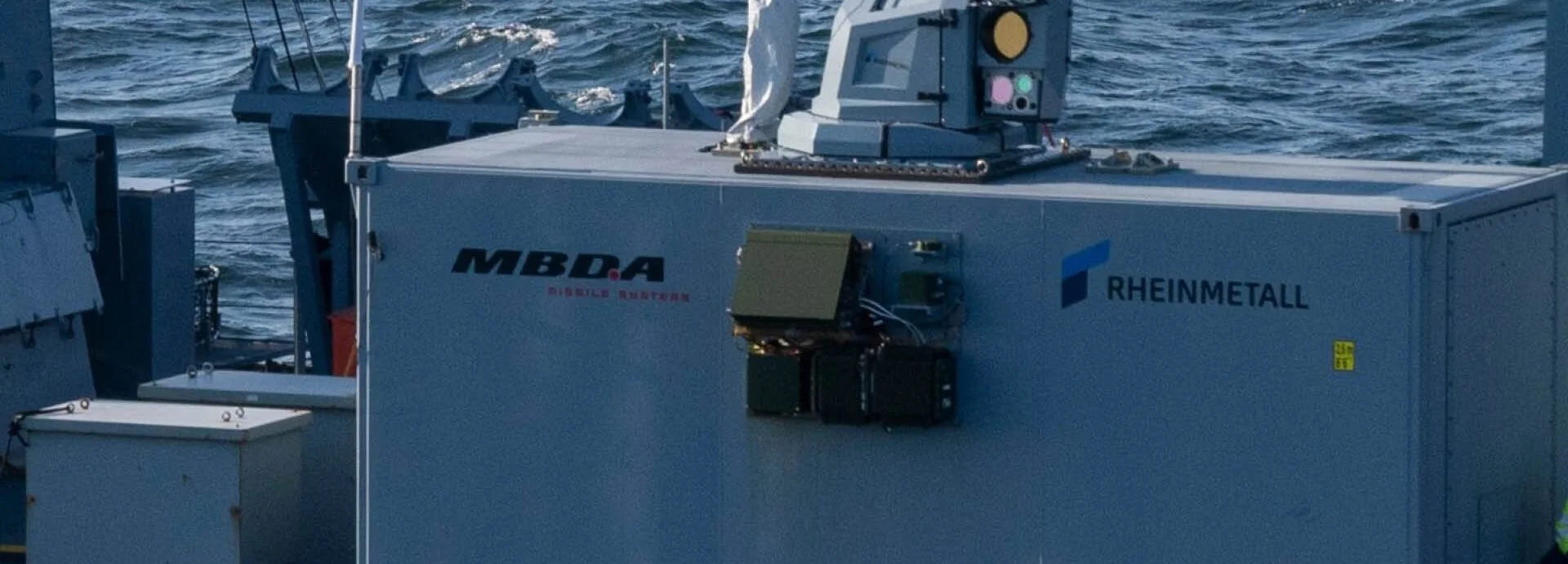
The new award extends Germany’s broader push into directed-energy weapons. In July 2026, BAAINBw awarded ARGE HEL — a joint venture between MBDA Deutschland and Rheinmetall Waffe Munition — a contract to develop a high-energy laser weapon system for the German Navy, targeting operational status by 2029. That naval system has already undergone sea trials aboard the frigate FGS Sachsen. The new airborne “Laser-Pod” effort appears to extend the same underlying technology into aviation, though it runs as a separate program.
Germany has treated directed-energy weapons as an R&D priority since 2019. The naval demonstrator was transferred to the Bundeswehr’s Laser Competence Centre at the WTD 91 test site in October 2025. The new aviation-focused project signals an attempt to extend that same institutional groundwork and engineering base to airborne platforms.
Fitting a laser weapon on an aircraft is a tougher engineering problem than land or sea applications: weight, power supply, cooling and vibration constraints all demand that the system be shrunk down to fit inside an airframe. MBDA’s pod approach tries to get around those constraints by housing the laser in a separate, externally carried unit — a design that could make it easier to adapt across different aircraft types down the line.
On the threat side, drone swarms and cruise missiles — as both the war in Ukraine and conflicts across the Middle East have shown — represent a class of threat that is becoming unsustainable to counter with traditional air-defense munitions on a cost basis. A laser system, with its far lower per-shot cost, offers an economical answer against numerous, relatively cheap targets, and that logic underpins most of Europe’s current laser weapon programs.
Turkey’s own defense industry is pursuing a parallel track: ASELSAN’s ALKA system is already deployed on ground platforms as a counter-drone laser weapon, and the company’s work on airborne laser applications has surfaced in industry reporting as well. Germany’s new airborne-focused step can be read as one more sign that similar technological tracks are advancing in parallel across NATO.
Notably, this airborne contract went to MBDA Deutschland alone, unlike the naval program run jointly with Rheinmetall — suggesting the two firms can take on separate supplier roles across different platform segments within Germany’s defense-industrial ecosystem. Because neither the contract’s size nor its duration has been disclosed, it is not yet possible to gauge how much weight this program carries within BAAINBw’s annual R&D budget.
MBDA is not the only European player working on airborne laser weapons. The UK’s DragonFire program and various US airborne laser trials sit within the same broader technological race, though most current efforts remain concentrated on land and naval applications. The explicit, public framing of an aviation-specific “pod” concept is being read as a sign that Europe’s laser weapon development is now pushing into the aviation segment.
Looking at the Luftwaffe’s current air-defense priorities, the drone and cruise-missile threat — particularly around the security of Germany’s critical infrastructure sites — has featured prominently in recent debate. Unidentified drones spotted near German military bases in 2024 and 2025 pushed Berlin to accelerate both ground- and air-based counter-drone capabilities, and the new laser-pod project can be read as an attempt to close that capability gap from the air.
Sources
- Infodefensa, “Alemania encarga a MBDA el desarrollo de un arma láser aerotransportada para combatir drones y misiles de crucero,” November 3, 2026, based on an MBDA press statement — infodefensa.com — primary basis for this report.