Poland launches ORP Wicher: the first frigate of its biggest naval programme


Poland has launched ORP Wicher, the first of three Miecznik-class frigates that will finally retire its 1970s American-built warships. The roughly 140-metre ship is derived from Babcock’s Arrowhead 140 design and will carry Mk 41 vertical launch cells with CAMM air-defence missiles. The three-ship programme has grown to 15 billion zloty, around $3.5 billion.
At a Glance
- What happened: ORP Wicher, first of the Miecznik class, rolled out and launched
- When: 10-13 August 2026 — roll-out, christening and launch
- Where: PGZ Stocznia Wojenna shipyard, Gdynia, Poland
- How many: Three frigates — Wicher, Burza and Huragan
- Size: About 138-140 m long, 20 m beam, 6,000-7,000 tonnes
- Armament: Mk 41 VLS, CAMM and CAMM-ER, anti-ship missiles, torpedoes
- Cost: Contracted at 8 billion zloty in 2021, revised to 15 billion (~$3.5bn) by late 2023
- Timeline: Wicher in service 2029; final ship 2031-2032
Replacing a Cold War backbone
Poland has lived with an odd imbalance for years. A country fielding one of NATO’s largest land forces on the eastern flank still went to sea in Oliver Hazard Perry-class frigates built in the United States in the 1970s. The ceremony in Gdynia this week marks the beginning of the end of that arrangement.
Built at PGZ Stocznia Wojenna, ORP Wicher was rolled out of its construction hall on 10 August, christened on 12 August and moved onto a semi-submersible vessel for launch. The name carries weight: the original Wicher was a Polish destroyer sunk fighting the German navy in the opening days of the Second World War.
Launching is not completion. Weapons and sensor integration, followed by sea trials, will run over the next three years, with Wicher due in service in 2029. Sister ships Burza and Huragan are expected between 2031 and 2032.
British design, Polish yard
Miecznik is based on Arrowhead 140, the same parent design behind Britain’s Type 31 frigates and Indonesia’s Merah Putih class. Warsaw licensed the design and adapted it to Polish requirements, with construction shared between PGZ Stocznia Wojenna and Remontowa Shipbuilding, and Thales and MBDA supplying sensors and effectors.
The ship is optimised for air defence. Mk 41 cells will host MBDA’s CAMM and the longer-reaching CAMM-ER, alongside anti-ship missiles credited with more than 200 km of range, a main gun reaching around 40 km, and anti-submarine torpedoes. Providing an air-defence umbrella for the fleet and for allied shipping in the Baltic is the stated purpose.
The cost line tells a familiar European story. Contracted at 8 billion zloty in 2021, the programme was revised upward to 15 billion — roughly $3.5 billion — by the end of 2023. At about $1.2 billion per hull, Miecznik sits squarely in the new price band for mid-sized European frigates.
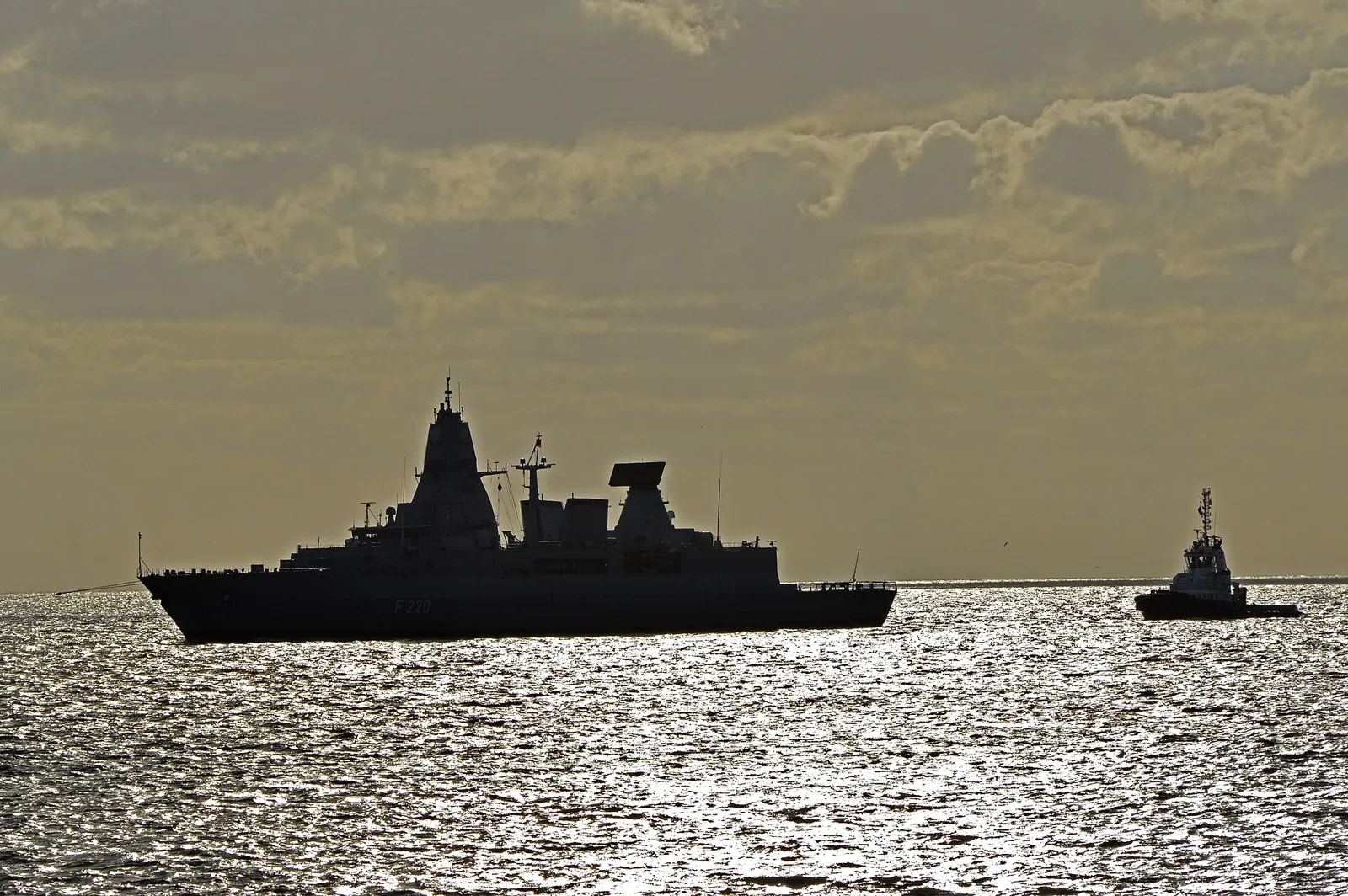
Miecznik Class (ORP Wicher) — Key Data
| Class | Miecznik (Arrowhead 140 derivative) |
| Builder | PGZ Stocznia Wojenna, Gdynia / Remontowa Shipbuilding |
| Ships | 3 — Wicher, Burza, Huragan |
| Length / beam | About 138-140 m / 20 m |
| Displacement | 6,000-7,000 tonnes |
| Air defence | Mk 41 VLS with CAMM / CAMM-ER (MBDA) |
| Anti-ship | Missiles with over 200 km range |
| Gun | Main gun reaching around 40 km |
| ASW | Torpedo systems and sonar suite |
| Key partners | Babcock (design), Thales, MBDA |
| Programme cost | 15 billion zloty (~$3.5 billion) |
| In service | Wicher 2029; final ship 2031-2032 |
A shifting Baltic
Miecznik matters beyond its three hulls. With Sweden and Finland inside NATO, the Baltic has become an alliance sea in practice — yet Russian coastal missile batteries in Kaliningrad and its submarine force keep the water contested. Modern air-defence frigates close a capability gap that covers both the Polish coast and allied resupply routes.
The programme is also the naval leg of Poland’s wider industrial strategy. Warsaw has bought heavily off the shelf on land and in the air — Korean tanks and howitzers, American Abrams and Apaches. Choosing a licensed design built domestically at sea reflects a determination to keep its shipyards alive.
Seen from Ankara, Miecznik is the mirror image of a different route. Poland licensed a mature foreign design and built it at home; Türkiye started with MILGEM, grew it into the ISTIF class, and after TCG Istanbul exported the line to Pakistan and Ukraine. Both answer the same question — how does a mid-sized navy sustain a frigate capability? — with Warsaw buying the shortcut to capability and Ankara paying for design independence.
Sources
- PGZ Stocznia Wojenna — ORP Wicher launch announcement
- Army Recognition — Poland Launches First Miecznik Frigate ORP Wicher
- Notes From Poland — Poland unveils first warship under major naval modernisation programme
- Babcock International — Arrowhead 140 design data