America’s next armoured pair goes to the field: M1E3 Abrams and XM30 head to a real brigade

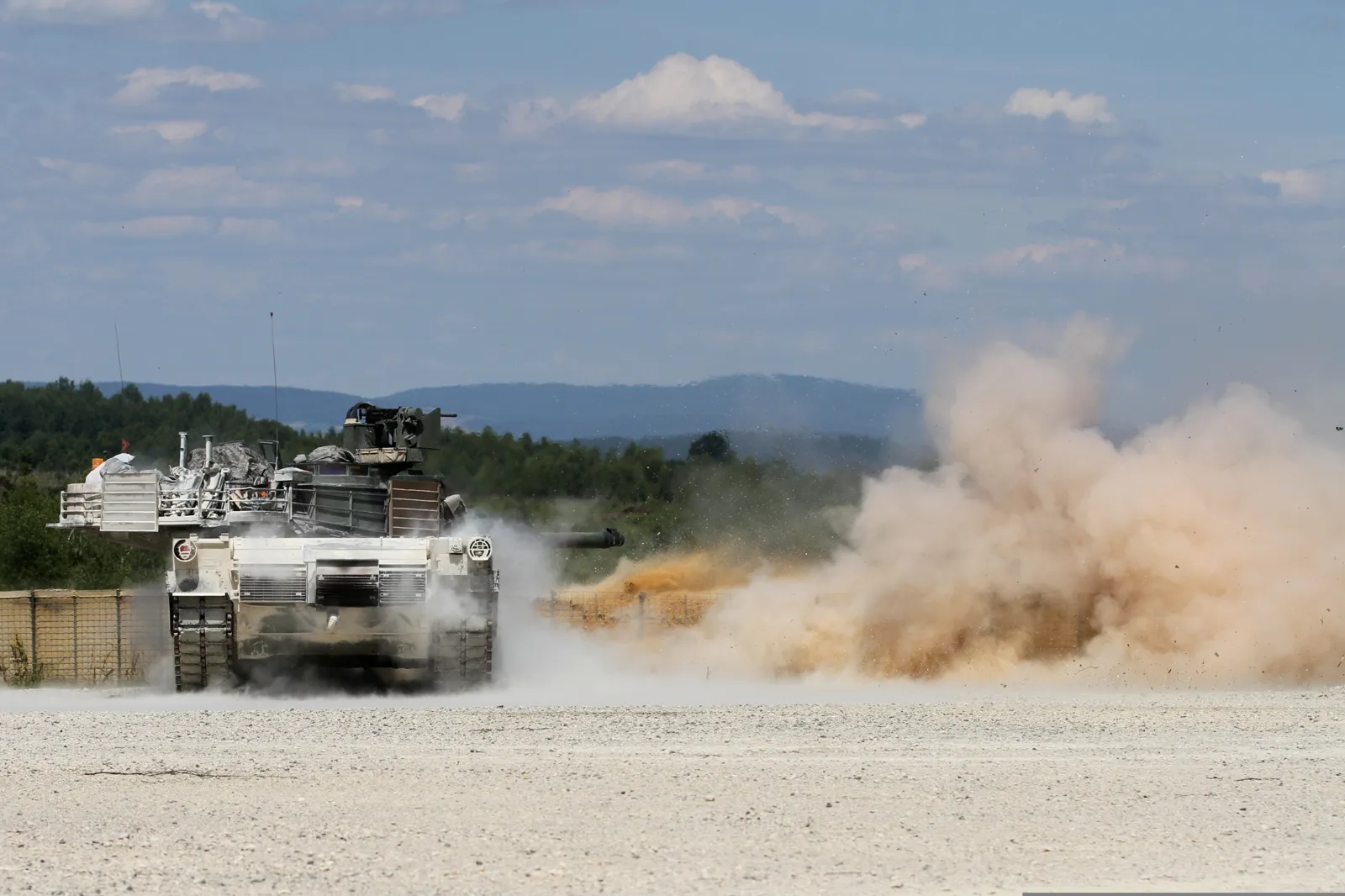
The US Army’s next-generation M1E3 Abrams tank and XM30 infantry fighting vehicle are about to leave the test range for a real brigade. Prototypes go to the 1st Cavalry Division’s “Iron Horse” brigade through October 2026, with a winner potentially picked in late spring 2027 after a National Training Center rotation.
At a Glance
- Who tests it: 1st Armored Brigade Combat Team, 1st Cavalry Division — known as “Iron Horse”.
- When: Prototype deliveries run through October 2026; a winner could be selected in late spring 2027 following a National Training Center rotation.
- M1E3 Abrams: Lighter than the M1A2, a hybrid-electric powertrain cutting fuel consumption by 50 percent, an unmanned turret allowing a three-person crew instead of four, open systems architecture and 360-degree situational awareness.
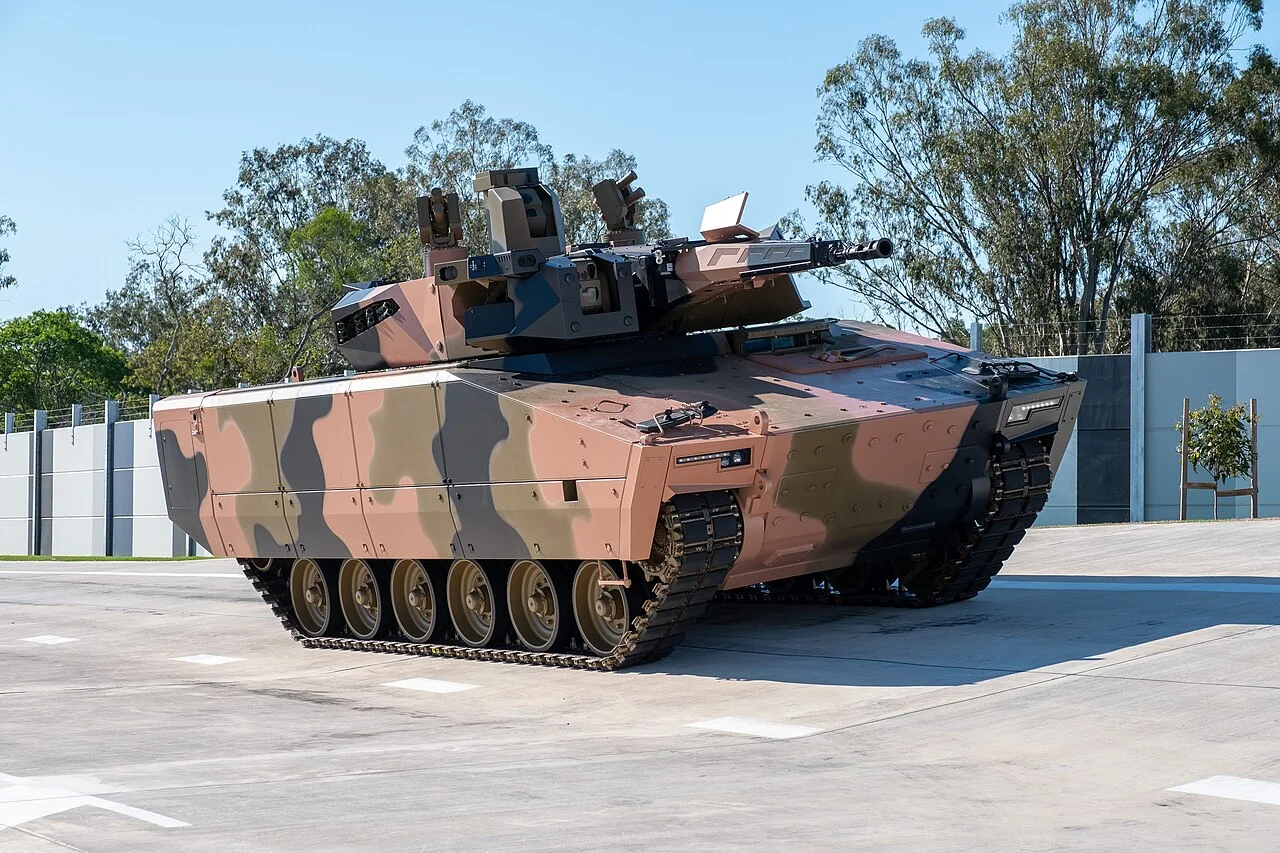
- XM30 competition: General Dynamics Land Systems is offering “Wolf”; American Rheinmetall is offering “Lynx”.
- Shared features: Both XM30 contenders field a 50mm cannon, an unmanned turret, hybrid-electric drive and open architecture.
- Quote: Col. Todd Hertling, Iron Horse commander: “We are extremely excited about the lethality, survivability and mobility that these systems offer.”
Two programmes step off the slide deck
US Army armoured modernisation has spent years living in briefing charts. Now two programmes reach the field at once: the M1E3 Abrams that will succeed the M1A2, and the XM30 infantry fighting vehicle meant to retire the half-century-old M2 Bradley. Prototype deliveries continue through October 2026, split between Aberdeen Proving Ground and the 1st Cavalry Division’s 1st Armored Brigade Combat Team, nicknamed Iron Horse.
That split matters. Proving ground trials measure what a vehicle can do; weeks in a brigade’s hands reveal whether it is actually usable. The decisive gate is a rotation through the National Training Center in California, the Army’s hardest exercise environment. The winning XM30 design is expected to be announced in late spring 2027, once that rotation is complete.
M1E3: lighter, three crew, half the fuel
The M1E3 is the most fundamental change in the Abrams line so far. When the Army cancelled the SEPv4 upgrade in 2023 and started over, the reasoning was plain: the tank had grown too heavy, drank too much fuel, and its logistics tail had become a visible vulnerability. The M1E3 answers all three directly.
The new tank will weigh less than the M1A2. A hybrid-electric powertrain cuts fuel consumption by half — not merely a cost saving but a halving of the fuel convoy requirement, a line item that gained weight once Ukraine demonstrated how readily supply lines become targets. An unmanned turret brings the crew down from four to three, all of them seated in the protected hull. Open systems architecture is meant to keep software updates flowing across the vehicle’s service life, while a 360-degree awareness package addresses the perennial problem of seeing out from a closed-up turret.
XM30: Wolf or Lynx?
The XM30 field has narrowed to two. General Dynamics Land Systems competes with “Wolf”; American Rheinmetall offers a US derivative of the KF41 Lynx already on order in Europe. What stands out is how much the two share: both carry a 50mm cannon, an unmanned turret, hybrid-electric drive and open architecture. The Army is no longer asking which technology, but which company integrated it better.
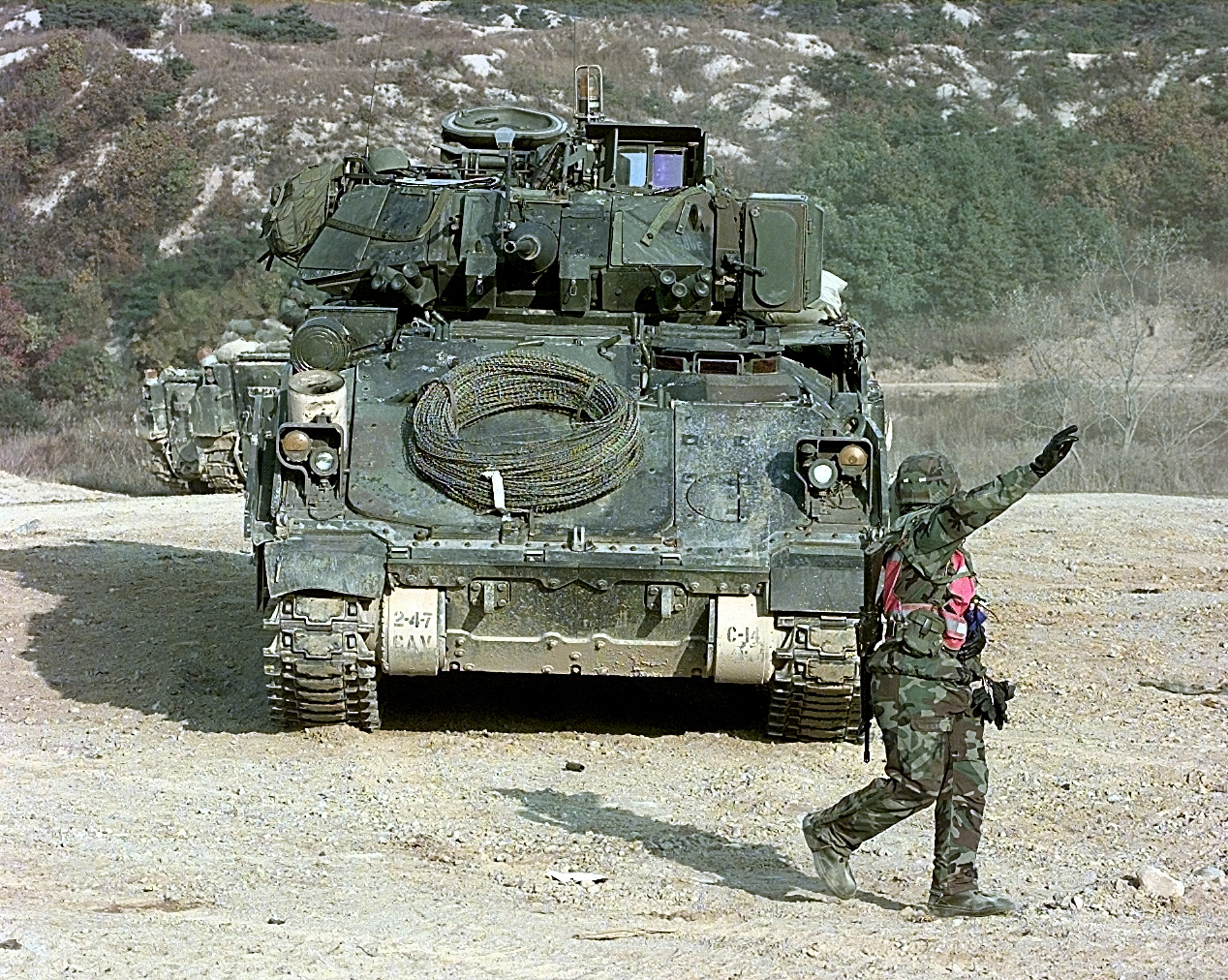
The history behind this competition is bruising. Attempts to replace the Bradley stumbled twice, first as Ground Combat Vehicle and then as the Optionally Manned Fighting Vehicle, whose 2020 solicitation collapsed when only one valid bid survived. XM30 is the third run at the same requirement, this time with looser requirements. Meanwhile the Bradley has been in service since 1981 — every delay adds another year to a forty-five-year-old design.
M1E3 and XM30 — Key Points
| M1E3 role | Next-generation main battle tank replacing the M1A2 Abrams |
| M1E3 weight | Reduced compared with the M1A2 |
| M1E3 powertrain | Hybrid-electric; 50 percent lower fuel consumption |
| M1E3 crew | Three (unmanned turret; four on the M1A2) |
| M1E3 architecture | Open systems architecture, continuous software updates |
| M1E3 awareness | 360-degree situational awareness |
| XM30 role | Infantry fighting vehicle replacing the M2 Bradley |
| XM30 contenders | General Dynamics Land Systems “Wolf” and American Rheinmetall “Lynx” |
| XM30 shared features | 50mm cannon, unmanned turret, hybrid-electric drive, open architecture |
| Prototype delivery | Through October 2026 (Iron Horse brigade and Aberdeen Proving Ground) |
| Selection timeline | Late spring 2027, after the NTC rotation |
Why unmanned turrets
The unmanned turret is the defining trend in armoured design of the past decade. The logic is simple: moving the crew out of the turret and into a protected hull compartment cuts armour weight while placing the most valuable asset — the people — in the best-protected space. An empty turret also shrinks the gun and ammunition handling system and lowers the centre of gravity.
The cost is vision. Instead of a gunner looking out, there is a crew tied to screens; if the system fails or the link degrades under electronic attack, the vehicle risks going blind. That is why 360-degree camera suites and redundant architectures matter as much as the turret concept itself. Russia’s T-14 Armata went first down this road and never reached serial production; in the West, Rheinmetall’s KF51 Panther and South Korea’s K3 concept carry the same approach forward.
The same argument elsewhere
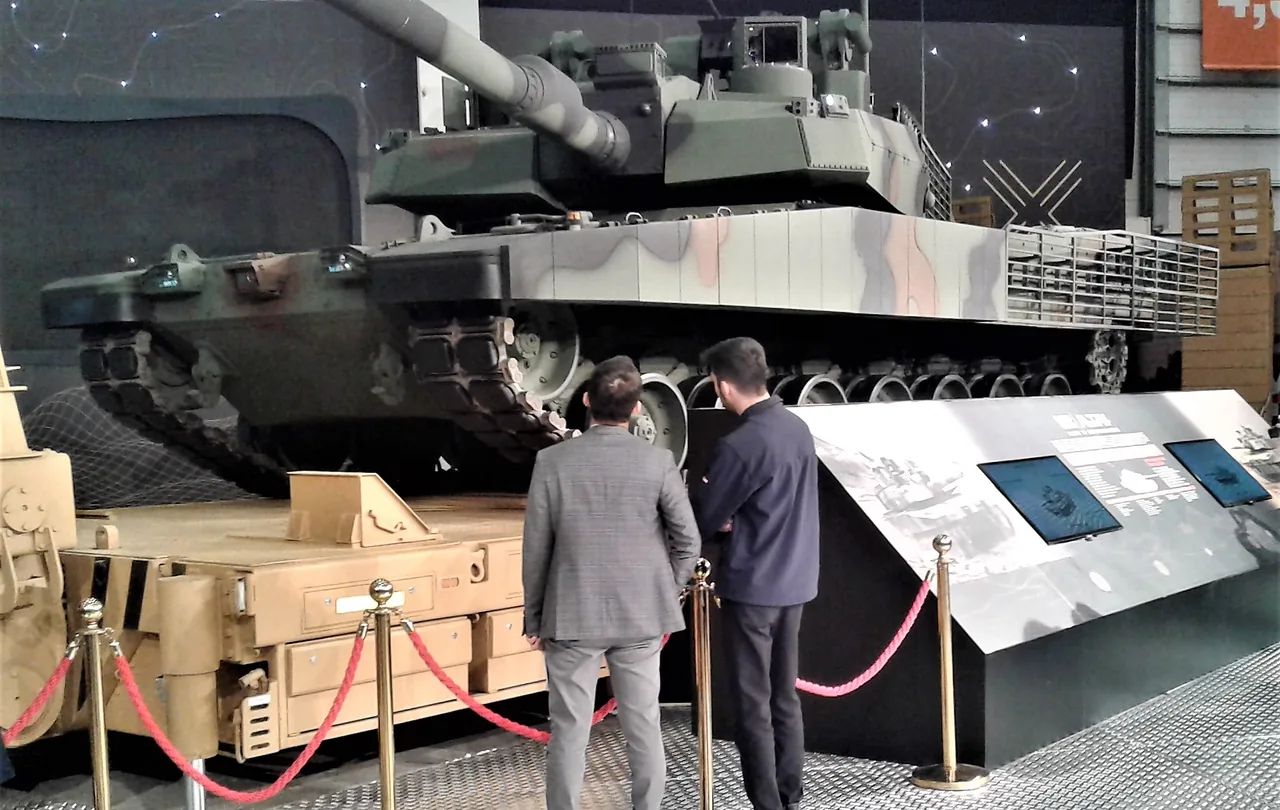
Türkiye is running a parallel conversation. With ALTAY serial production and deliveries under way, work on next-generation capability is concentrating on the power pack, active protection and digital architecture. FNSS’s KAPLAN and TULPAR families cover the requirement the XM30 addresses, and remote-controlled turret options are on the table for both. The decisions Washington takes now will frame export-market competition for the coming decade.
Sources
- Breaking Defense — Iron Horse brigade prototype testing
- US Army M1E3 Abrams programme information
- XM30 (formerly OMFV) programme documents
- General Dynamics Land Systems and American Rheinmetall statements