NATO’s 10 Largest Standing Armies (2026)

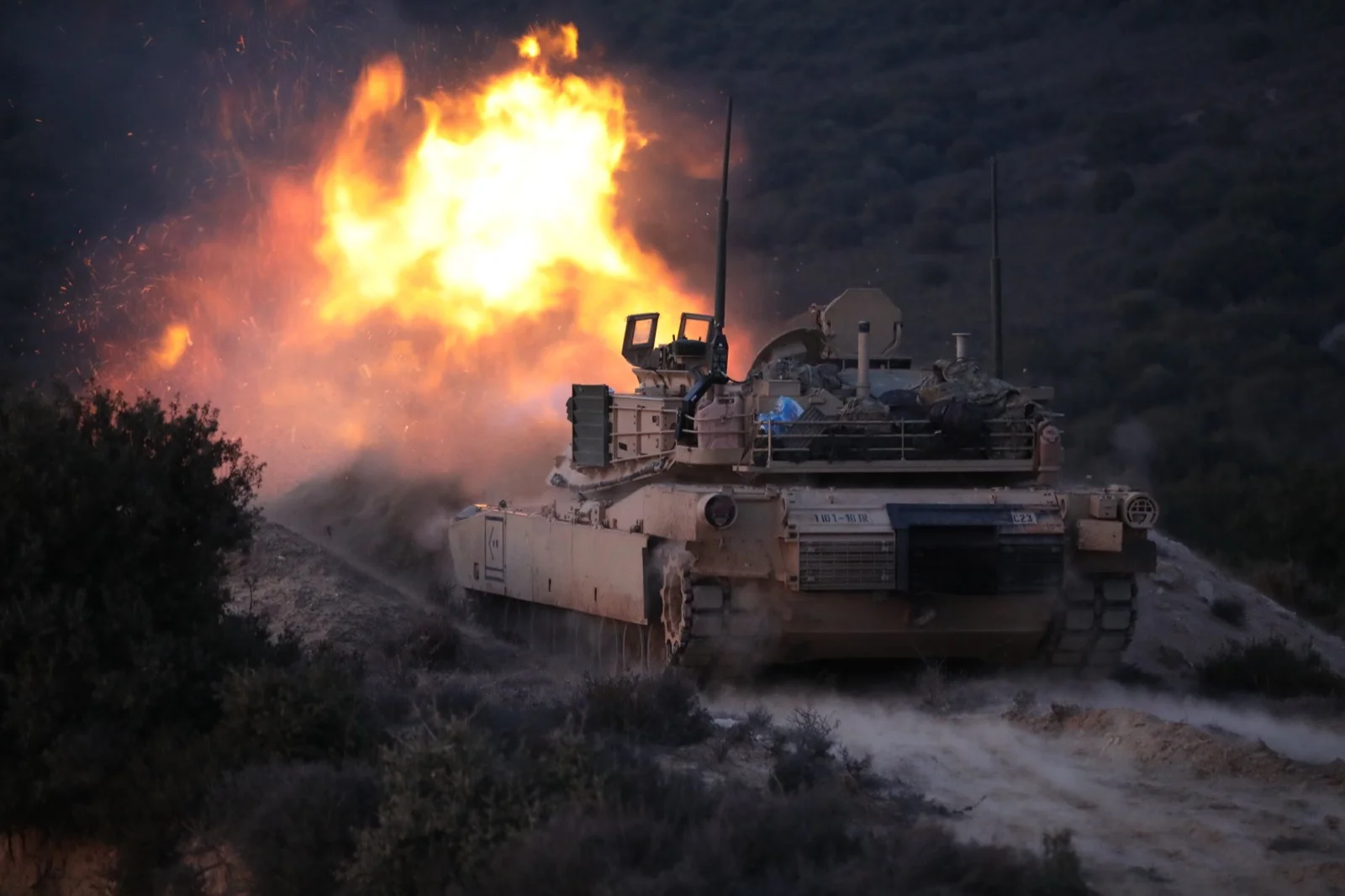
NATO now spans 32 member states, the largest it has ever been. Across the alliance more than 3.3 million personnel serve on active duty — a manpower base no other military bloc comes close to. That total, however, is distributed with striking unevenness.
Some members sustain armies of hundreds of thousands; others field forces measured in brigades. Most Western European states abolished conscription after the Cold War and moved to small professional formations. The war in Ukraine has reopened that debate, and several members have revisited conscription or selective service models.
So which NATO members field the largest standing armies in 2026? Who ranks second behind the United States, which country holds Europe’s biggest ground force, and where exactly does Türkiye sit? The countdown begins at number ten.
The ranking uses GlobalFirepower’s 2026 active military personnel figures. These cover active-duty strength only; reserves, gendarmerie and paramilitary formations are excluded. Headcount alone does not measure combat power, but it remains the most direct indicator of a force’s ability to hold ground and sustain operations.
#10Romania
Active personnel · NATO’s eastern flank
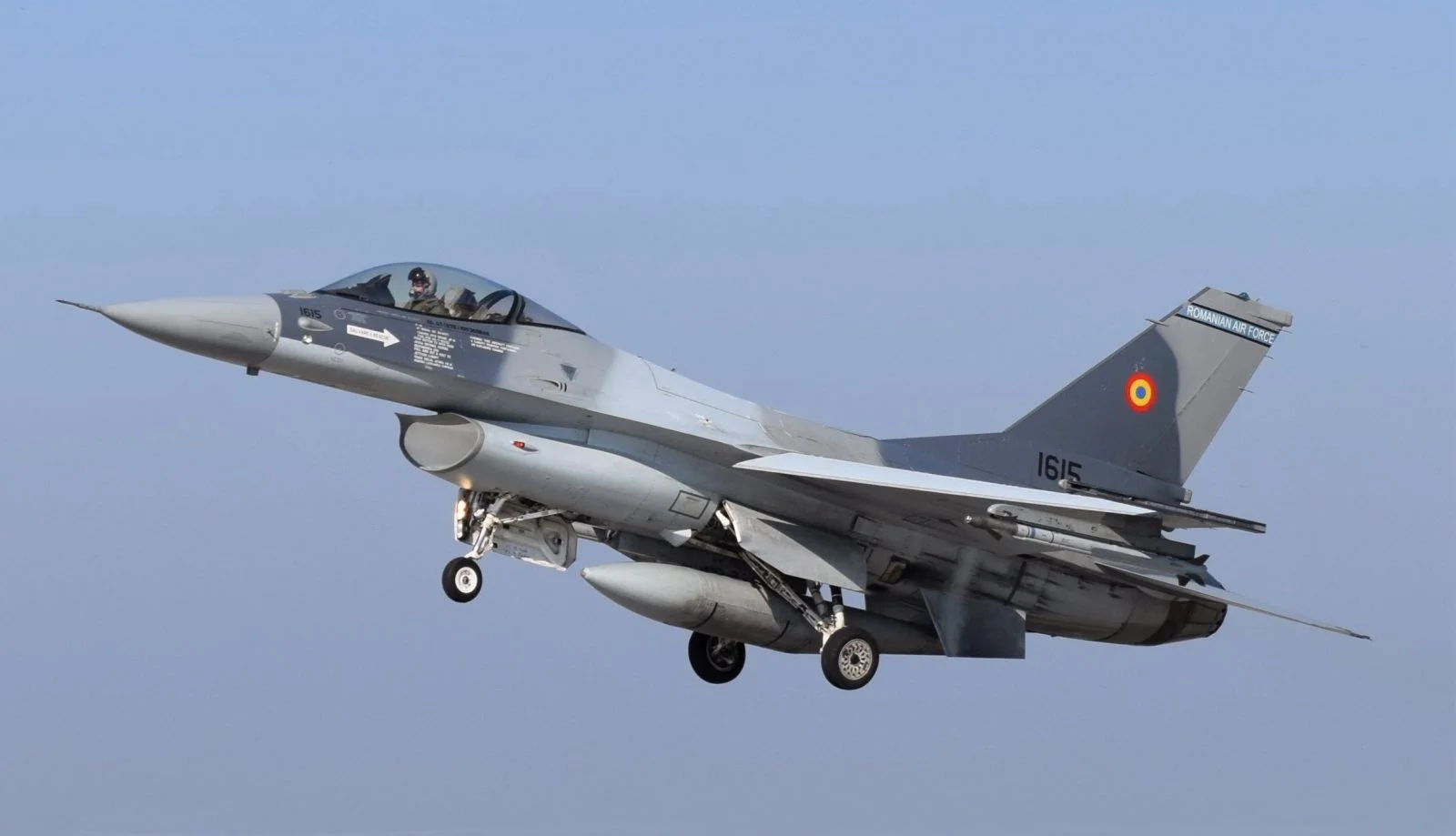
Romania fields the largest army on NATO’s eastern flank. Its 90,000 active personnel account for a substantial share of alliance ground strength around the Black Sea. The country shares more than 600 kilometres of border with Ukraine and has dealt directly with airspace violations and drone debris since the war began.
Bucharest has raised defence spending steadily; at $10.23 billion it now sits above the NATO average relative to national output. Modernisation has accelerated in step: the F-16 fleet is expanding, Patriot and HIMARS systems have been acquired, and Abrams tanks are on order. An inventory of 451 tanks and 148 aircraft gives the eastern flank real ground weight.
At sea Romania is thin, with 18 naval vessels for a demanding Black Sea mission set. Bucharest is compensating through coastal defence missiles and mine warfare capability. Türkiye matters here: the two countries, together with Bulgaria, established a joint Black Sea mine countermeasures task group, and Romania is among the NATO members that have shown interest in Turkish unmanned aircraft.
Romania fields the largest ground force on NATO’s eastern flank outside Poland.
| Capability | Total |
|---|---|
| Active personnel | 90,000 |
| Tanks | 451 |
| Total aircraft | 148 |
| Helicopters | 66 |
| Naval vessels | 18 |
| Defence budget | $10.23bn |
The next country operates one of the largest amphibious ships in the Mediterranean.
#9Spain
Active personnel · Southern flank
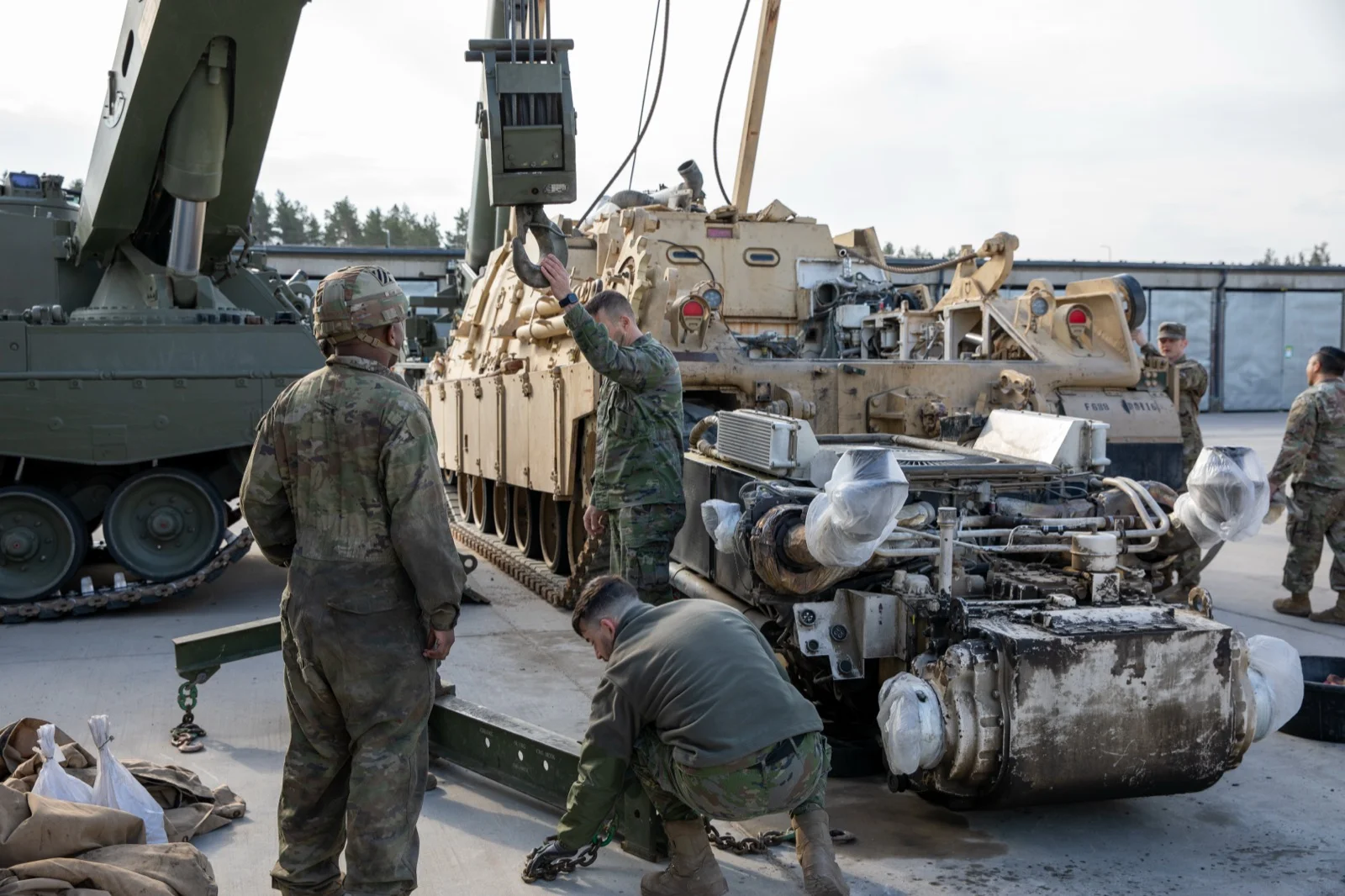
Spain ranks ninth in the alliance with 121,802 active personnel. It abolished conscription in 2001 and moved to a fully professional force; headcount has remained broadly flat ever since.
The centre of gravity is maritime. The multipurpose amphibious ship Juan Carlos I can operate AV-8B Harriers and is one of very few such platforms in Europe. Navantia exported the design to Australia, and TCG Anadolu traces its lineage to the same hull. With 175 naval vessels, Spain maintains a significant presence on the alliance’s southern flank.
Land power is more modest: 298 tanks and a limited armoured inventory. The defence budget has risen to $39 billion, though Madrid spent years as one of NATO’s lowest spenders. Geography largely explains that choice — Spain sits at the alliance’s south-western corner, facing no direct land threat.
Spain fields 32,000 more active personnel than Romania but 153 fewer tanks.
| Capability | Total |
|---|---|
| Active personnel | 121,802 |
| Tanks | 298 |
| Total aircraft | 440 |
| Helicopters | 169 |
| Naval vessels | 175 |
| Defence budget | $39.00bn |
Next comes the alliance’s second-largest defence spender.
#8United Kingdom
Active personnel · Nuclear power
The United Kingdom is NATO’s second-largest defence spender at $88.53 billion, yet fields only 141,330 active personnel — under a third of Türkiye’s total. That is a deliberate choice: fewer platforms, each extremely capable and extremely expensive.
The Royal Navy operates two aircraft carriers, HMS Queen Elizabeth and HMS Prince of Wales, flying F-35Bs and giving Britain genuine global reach. Nuclear deterrence rests on Vanguard-class submarines, with the Dreadnought class due to take over in the 2030s. Ten submarines place the UK among the alliance’s strongest undersea forces.
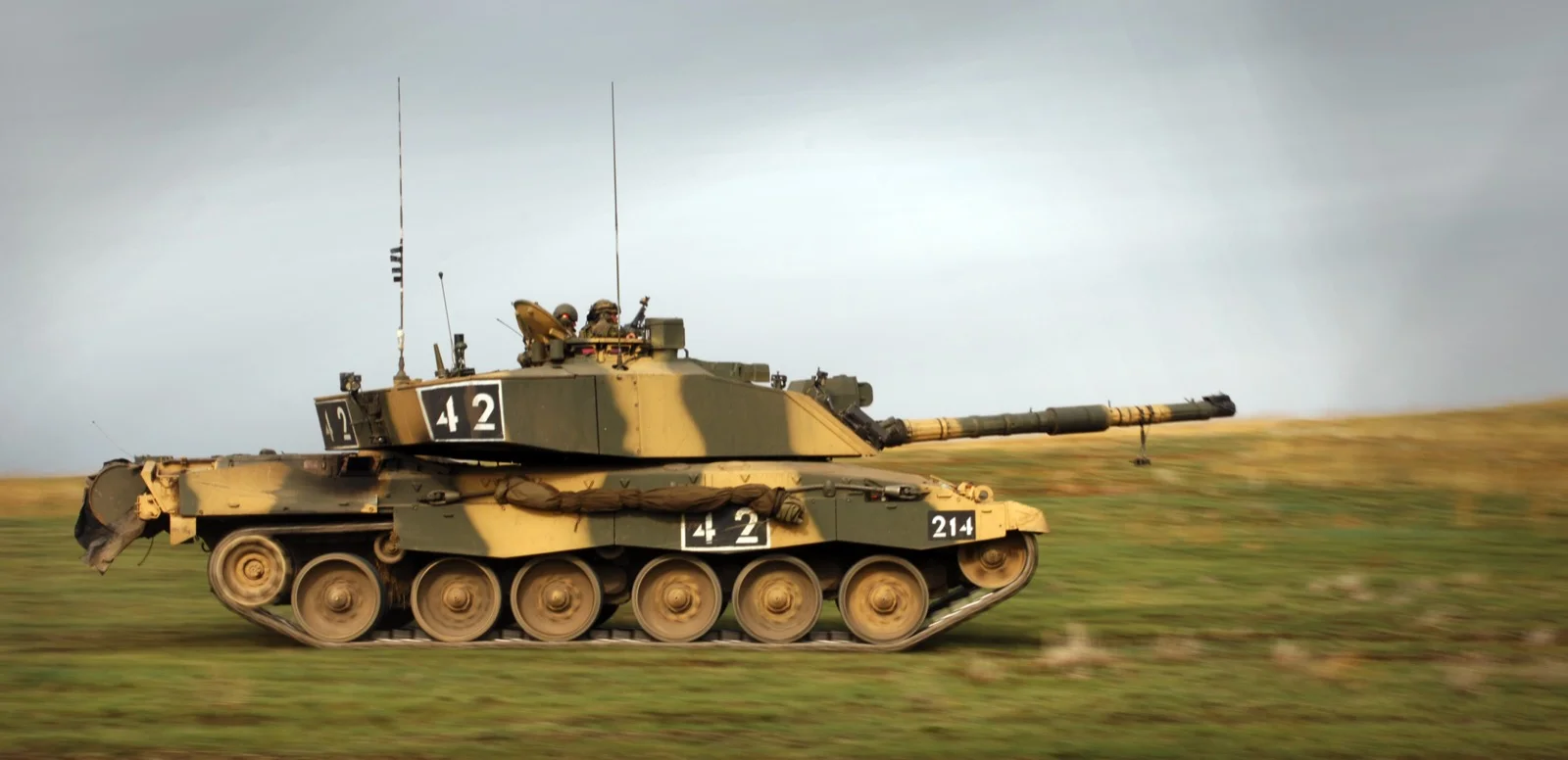
The British Army, by contrast, is at one of its smallest points in modern history. With 288 tanks and a shrinking infantry establishment, recruitment has been a persistent problem. The Challenger 3 upgrade will modernise the tank fleet without enlarging it. London’s strategy is explicit: depth at sea and in the nuclear domain, alliance integration rather than scale on land.
The United Kingdom outspends Türkiye by $37 billion while fielding under a third of its active personnel.
| Capability | Total |
|---|---|
| Active personnel | 141,330 |
| Tanks | 288 |
| Total aircraft | 625 |
| Helicopters | 262 |
| Naval vessels | 116 |
| Defence budget | $88.53bn |
The next country sustains one of NATO’s largest tank fleets on a fraction of that budget.
#7Greece
Active personnel · Eastern Mediterranean
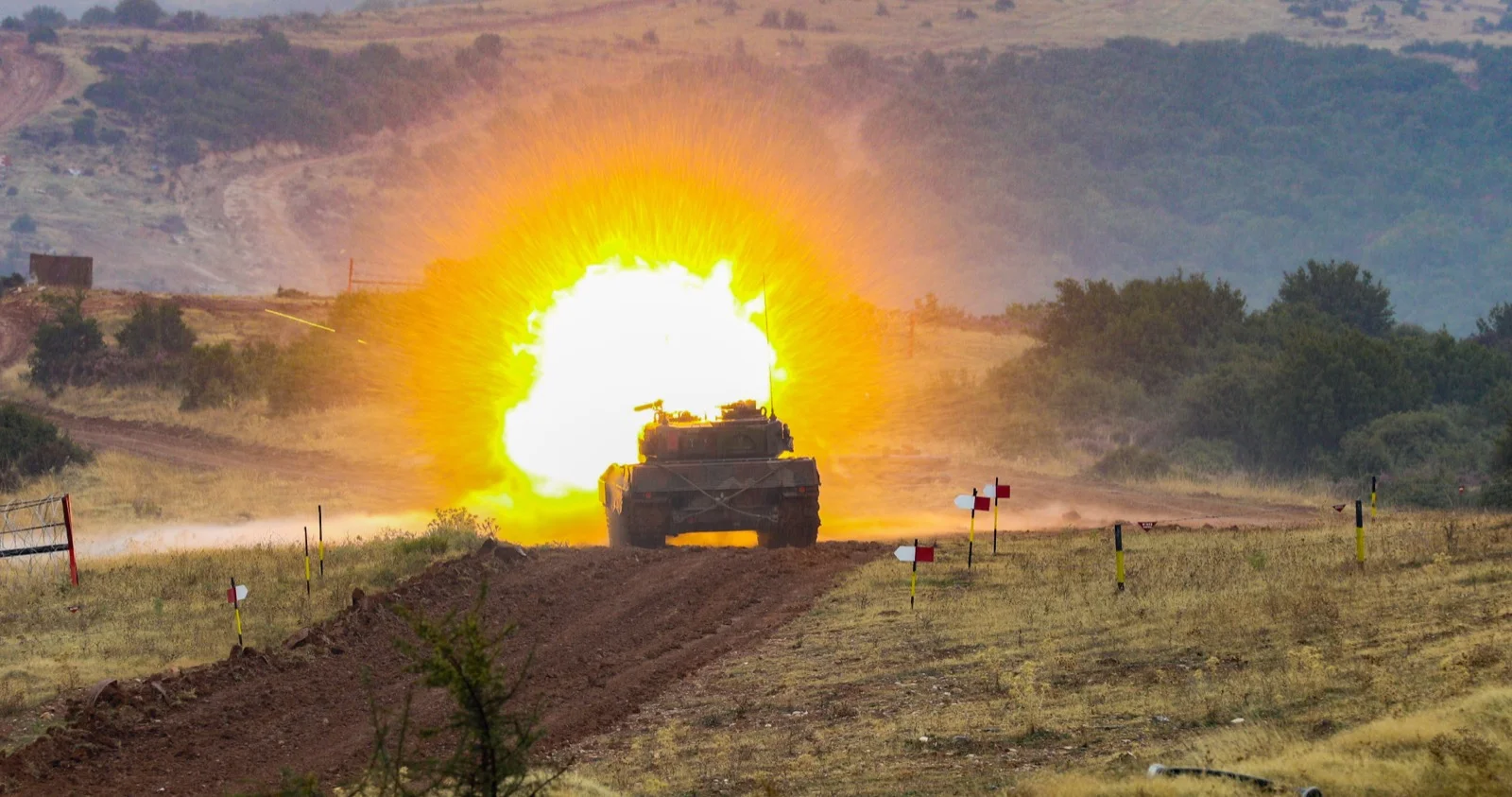
Greece fields 142,700 active personnel — one of the largest forces in NATO relative to population. It is among the few members that still maintains conscription, which is what makes a force of this scale possible for a country of ten million.
The standout figure is armour: 1,344 tanks, more than Germany, France, the United Kingdom, Italy and Spain hold combined. The inventory includes Leopard 2A6, Leopard 1 and M1 Abrams. In the air, Rafale acquisition and the F-16 Viper upgrade have been the major investments of recent years, with an F-35 order under discussion.
The Greek defence budget stands at $8.24 billion — among the heaviest defence burdens in NATO relative to national output, though modest in absolute terms, which constrains sustainment. With 186 naval vessels and nine submarines, Greece maintains a substantial presence in the Aegean and Eastern Mediterranean; the Belharra-class frigate programme is the navy’s largest modernisation effort.
Greece alone fields more tanks than Germany, France, the United Kingdom and Italy combined (1,344 against 1,214).
| Capability | Total |
|---|---|
| Active personnel | 142,700 |
| Tanks | 1,344 |
| Total aircraft | 560 |
| Helicopters | 285 |
| Naval vessels | 186 |
| Defence budget | $8.24bn |
Into the top six — and the next country holds Europe’s largest surface fleet.
#6Italy
Active personnel · Mediterranean
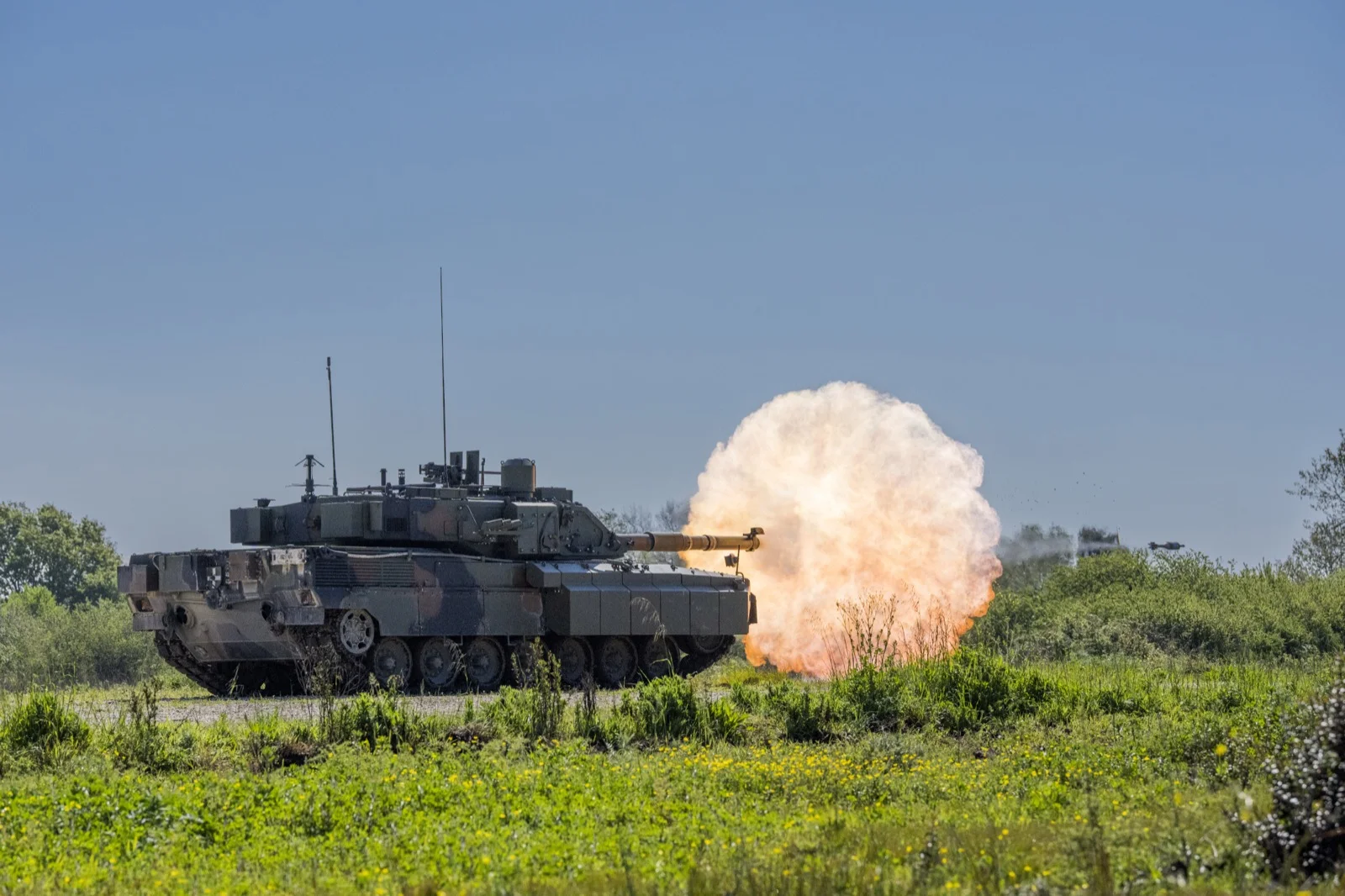
Italy ranks sixth with 165,500 active personnel. Conscription ended in 2005, and today’s force is fully professional and heavily weighted towards maritime and air capability.
With 285 naval vessels, Italy fields the largest fleet in Europe outside Russia. The carrier Cavour operates F-35Bs and the multipurpose amphibious ship Trieste is entering service. FREMM frigates form the navy’s backbone and serve as a global reference design — the US Navy’s Constellation-class frigate programme is based on the same hull.
Land power lags: 203 tanks is less than a sixth of the Greek total. Italian industry, however, is among the alliance’s broadest — Leonardo across helicopters, radar and electronics, Fincantieri across shipbuilding and submarines — and Italy is one of three partners, with the United Kingdom and Japan, in the GCAP sixth-generation fighter programme.
Italy fields 22,800 more active personnel than Greece but roughly a seventh as many tanks.
| Capability | Total |
|---|---|
| Active personnel | 165,500 |
| Tanks | 203 |
| Total aircraft | 714 |
| Helicopters | 352 |
| Naval vessels | 285 |
| Defence budget | $37.33bn |
The next country manages Europe’s largest defence budget.
#5Germany
Active personnel · Central Europe
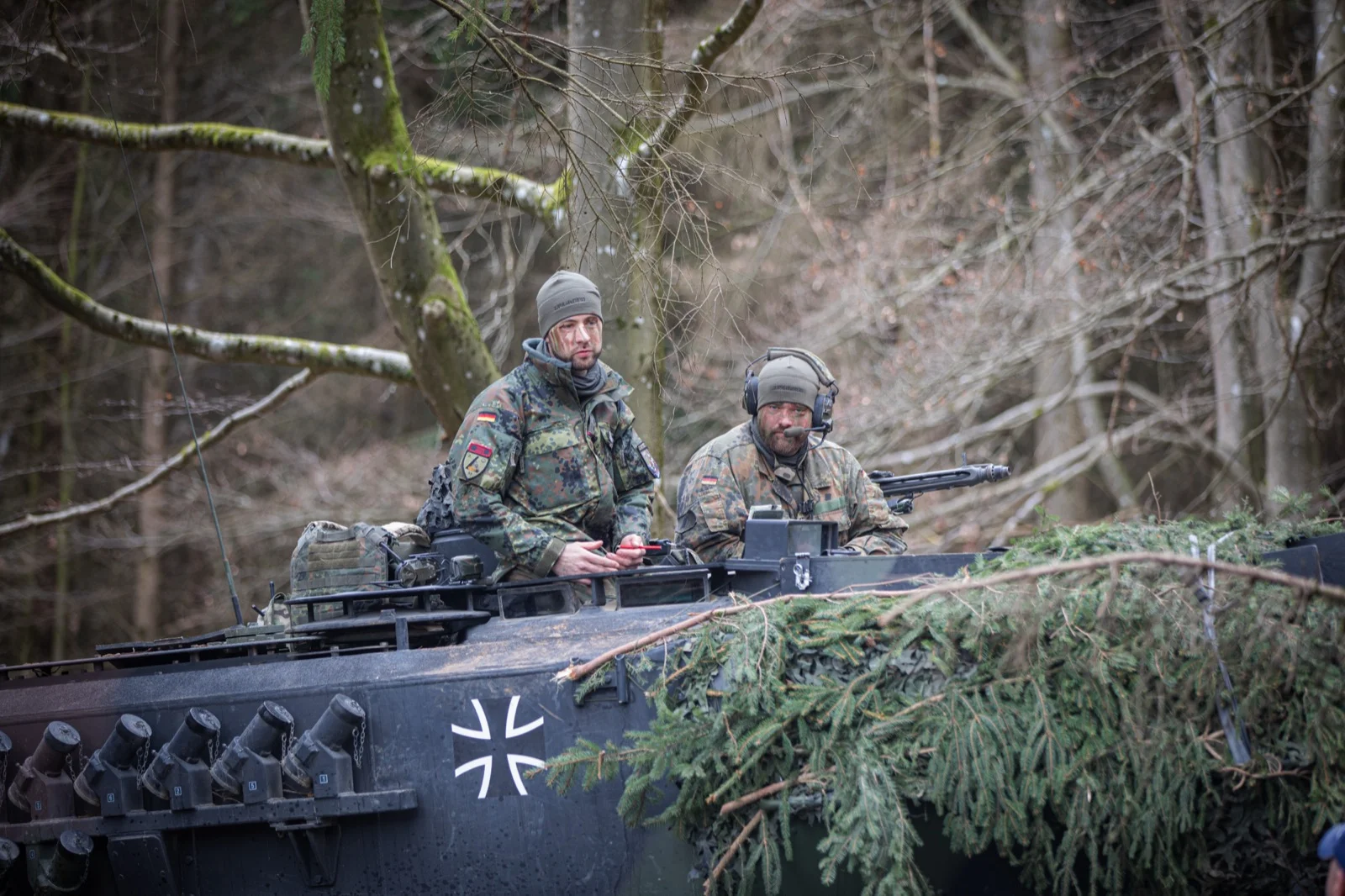
Germany carries Europe’s largest defence budget at $127.4 billion, yet fields only 184,324 active personnel. That contradiction stems from systematic post-Cold War downsizing: the Bundeswehr exceeded half a million in 1990, and conscription was suspended in 2011.
Berlin is now trying to reverse that. The special defence fund is meant to renew the inventory and expand headcount. Recruitment, however, remains the hardest problem — volunteer numbers trail targets, and selective service models are back on the political agenda.
The inventory comprises 296 tanks, 569 aircraft and six submarines. German industry, by contrast, is among the alliance’s strongest production bases: Rheinmetall in armour and munitions, KNDS in armoured vehicles, ThyssenKrupp Marine Systems in submarines. The Type 214 design underpinning Türkiye’s Reis-class boats is German engineering. Berlin’s real test is how quickly money converts into fielded capability.
Germany spends two and a half times Türkiye’s defence budget with under a third of its active personnel.
| Capability | Total |
|---|---|
| Active personnel | 184,324 |
| Tanks | 296 |
| Total aircraft | 569 |
| Helicopters | 292 |
| Naval vessels | 96 |
| Defence budget | $127.40bn |
Into the top four — and the next country has the fastest-growing army in NATO.
#4Poland
Active personnel · Eastern flank
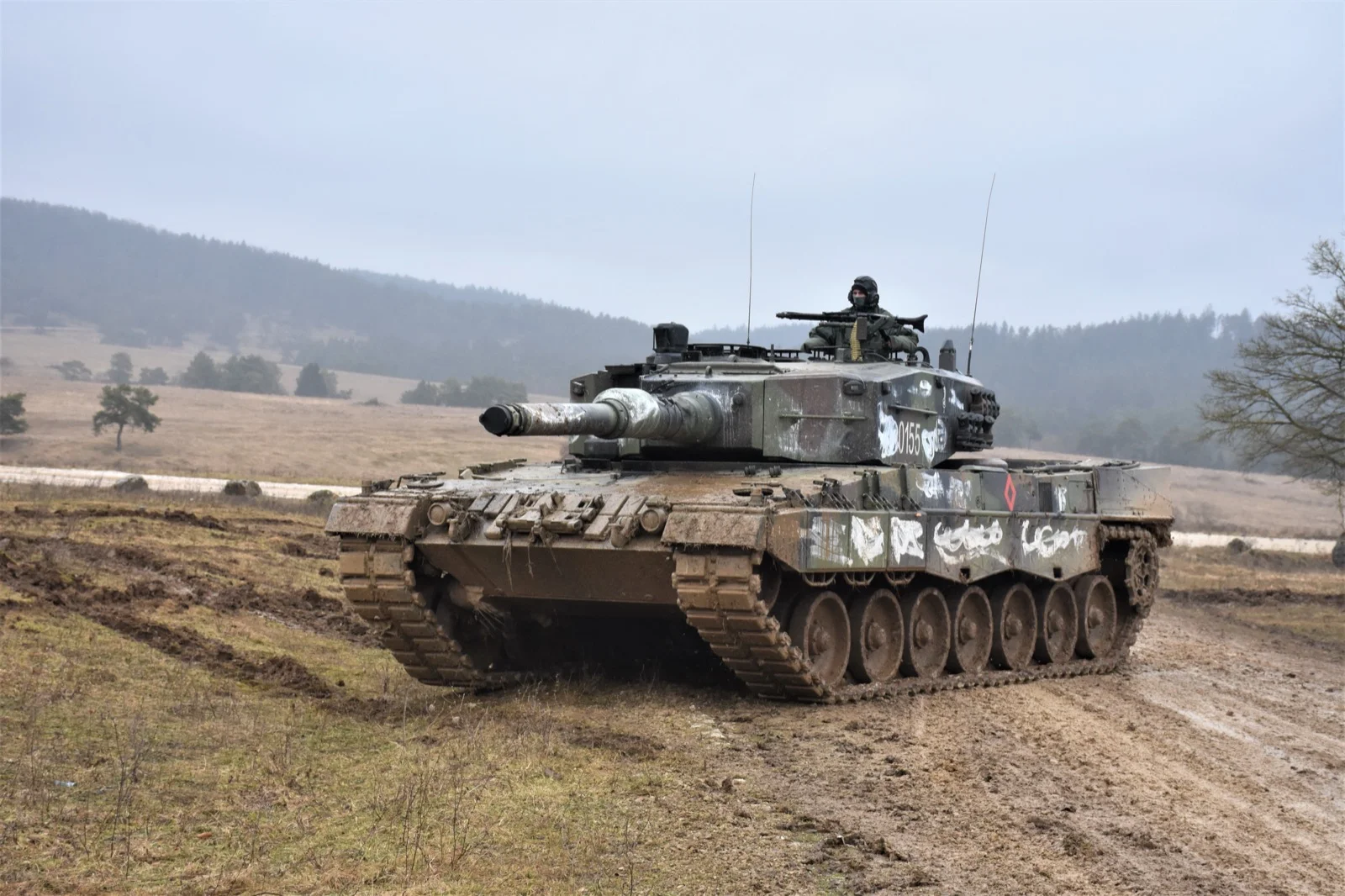
Poland is the most striking military growth story of the past decade. With 250,000 active personnel it now ranks fourth in the alliance, and Warsaw has stated openly that it intends to go further. Its defence budget has climbed to $55.87 billion — more than Türkiye spends.
The scale of procurement is unusual. Poland ordered hundreds of K2 Black Panther tanks and K9 howitzers from South Korea, is acquiring M1A2 Abrams tanks, HIMARS and Apache helicopters from the United States, and has brought FA-50 light combat aircraft into service. The current tank count stands at 798 and is expected to pass a thousand in the coming years.
The logic is geographic. Poland borders both Russia and Belarus, and the war in Ukraine transformed Warsaw’s threat assessment. The country also functions as NATO’s logistics hub for the eastern flank. Its weakness is maritime: 63 vessels and a single submarine constitute thin capacity for the Baltic, a gap Warsaw is addressing through new frigate programmes.
Poland fields 65,000 more personnel and 502 more tanks than Germany on less than half the budget.
| Capability | Total |
|---|---|
| Active personnel | 250,000 |
| Tanks | 798 |
| Total aircraft | 457 |
| Helicopters | 224 |
| Naval vessels | 63 |
| Defence budget | $55.87bn |
Into the top three — and the next country holds Europe’s only fully independent nuclear deterrent.
#3France
Active personnel · Western Europe
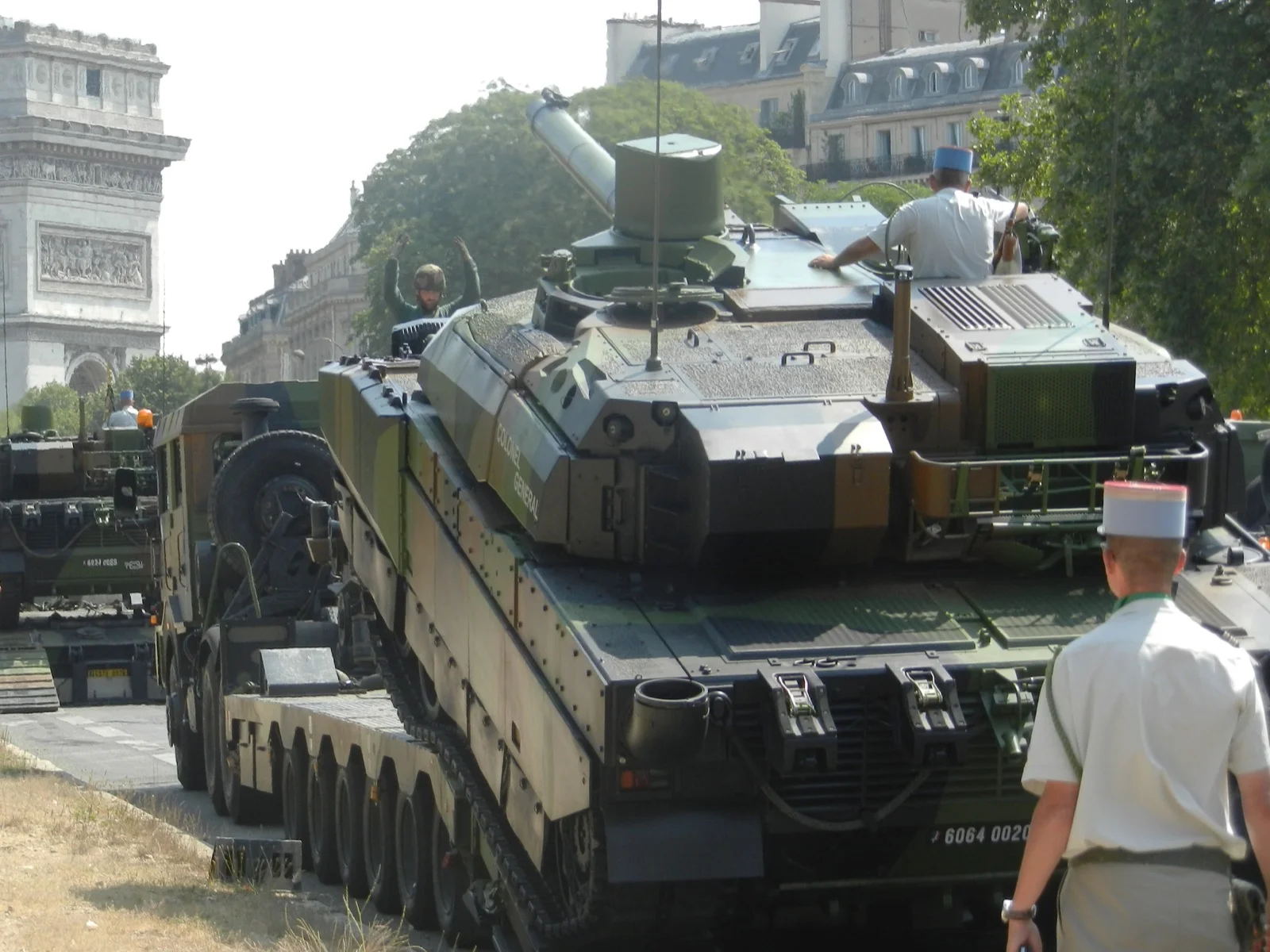
France ranks third with 264,000 active personnel. Its doctrine is built around strategic autonomy — remaining inside the alliance while retaining the capacity to operate alone when required.
Nuclear deterrence is that doctrine’s clearest expression. France operates the only fully independent nuclear force in Europe, resting on Triomphant-class submarines and ASMP-A missiles carried by Rafale aircraft. Charles de Gaulle is Europe’s only nuclear-powered carrier and the only European platform with catapult launch.
French industry is among the most complete in the alliance: Dassault in combat aircraft, Naval Group in ships and submarines, MBDA in missiles, Safran in engines and avionics. The inventory includes 427 tanks, 974 aircraft and nine submarines, funded by the alliance’s third-largest defence budget at $67.23 billion.
France fields 14,000 more active personnel than Poland but barely half as many tanks (427 against 798).
| Capability | Total |
|---|---|
| Active personnel | 264,000 |
| Tanks | 427 |
| Total aircraft | 974 |
| Helicopters | 452 |
| Naval vessels | 166 |
| Defence budget | $67.23bn |
Into the top two — and the next country outnumbers every other European member of the alliance.
#2Türkiye
Active personnel · South-eastern flank
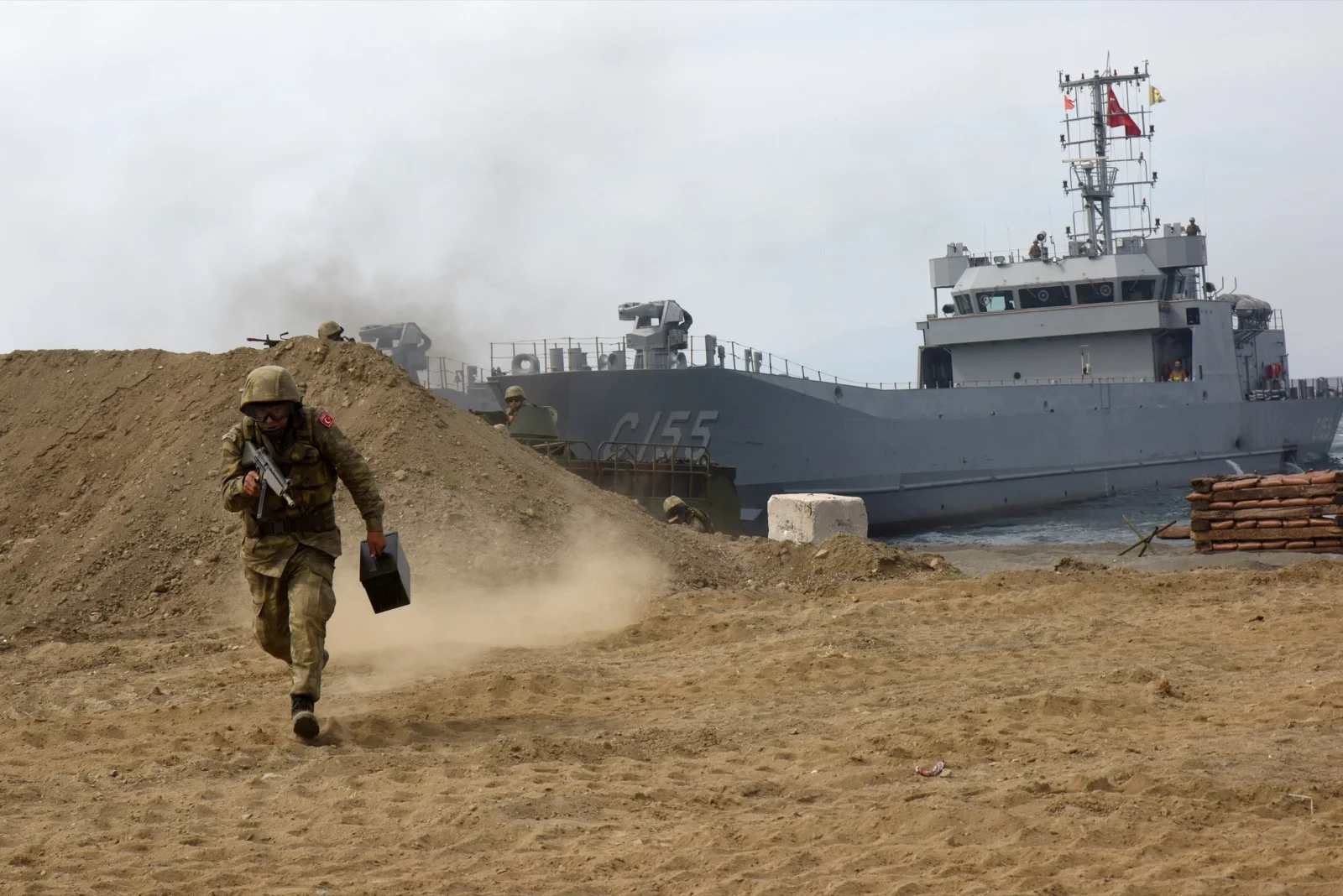
Türkiye fields NATO’s second-largest standing army at 481,000 active personnel — well ahead of France’s 264,000 and Germany’s 184,000, and larger than the two combined. Among European members of the alliance, the Turkish Armed Forces are the largest ground force by a clear margin.
Headcount is only part of the picture. With 2,284 tanks Türkiye holds the alliance’s second-largest armoured force, and its 1,101 aircraft likewise rank second behind the United States. Fourteen submarines represent a substantial share of NATO’s undersea capability in the Mediterranean and Black Sea, while 192 naval vessels carry the burden of maritime security on the south-eastern flank.
Geography sharpens that weight. Türkiye controls the straits linking the Black Sea to the Mediterranean and administers their transit regime under the Montreux Convention. It is also the only member with a direct land border on the Middle East. NATO’s Combined Air Operations and airborne early warning presence at Konya, along with Allied Land Command in İzmir, are the institutional markers of that position.
Türkiye fields a larger army than France and Germany combined (481,000 against 448,324).
| Capability | Total |
|---|---|
| Active personnel | 481,000 |
| Tanks | 2,284 |
| Total aircraft | 1,101 |
| Helicopters | 509 |
| Naval vessels | 192 |
| Submarines | 14 |
| Defence budget | $51.40bn |
And at the top, a single member that outweighs the rest of the alliance.
#1United States
Active personnel · Global power
The United States fields 1,333,030 active personnel — approaching the combined total of every other NATO member. Its $831.5 billion defence budget comfortably exceeds the spending of the other 31 members put together.
The scale of the inventory has no comparison: 13,032 aircraft, 5,913 helicopters, 4,666 tanks, 465 naval vessels and 66 submarines. The US Navy operates 11 aircraft carriers — roughly double the total held by every other country on earth combined. The F-22 and F-35 fleets account for the global majority of fifth-generation combat aircraft.
Washington’s role in the alliance is less about numbers than enablers. Strategic airlift, air-to-air refuelling, satellite intelligence, missile defence and the nuclear umbrella are all areas where European allies remain substantially dependent on the United States. That dependence sits at the centre of the European defence integration debate, and the American strategic pivot towards the Indo-Pacific has sharpened pressure on European members to build their own capacity.
The United States alone outspends the other 31 NATO members combined, with active personnel approaching the alliance’s entire remainder.
| Capability | Total |
|---|---|
| Active personnel | 1,333,030 |
| Tanks | 4,666 |
| Total aircraft | 13,032 |
| Helicopters | 5,913 |
| Naval vessels | 465 |
| Submarines | 66 |
| Defence budget | $831.50bn |
What NATO’s manpower balance reveals
The table exposes the alliance’s most fundamental asymmetry: roughly forty percent of NATO’s active personnel serve in a single country. Even combined, European members only approach American ground strength. This is a long-recognised structural issue that the war in Ukraine pushed back to the centre of alliance politics.
The second finding is the disconnect between budget and headcount. Germany spends $127.4 billion and fields 184,000 active personnel; Greece spends $8.24 billion and fields 142,700. The difference reflects the cost of Western European professional personnel. Members that retain conscription — Türkiye, Greece and several northern states returning to selective service — generate far larger forces from the same money.
Third, the eastern flank is gaining weight. Poland and Romania have been the alliance’s fastest-growing members over the past five years in both budget and manpower. Warsaw reaching 250,000 active personnel, with plans to push its tank fleet past a thousand, signals that NATO’s ground centre of gravity is shifting into Central Europe — and Poland’s large South Korean contracts show that procurement is shifting beyond traditional European suppliers too.
Türkiye occupies a distinct position in this picture. Alongside the alliance’s second-largest army, it is among the few members producing a growing share of its own inventory. That combination of manpower scale and industrial capacity exists in only a handful of NATO countries outside the United States, and on the south-eastern flank there is no substitute for it.
Finally, headcount alone settles nothing. Combat value rests on training, readiness rates, munitions stockpiles, logistics depth and command architecture. Ukraine demonstrated that in prolonged high-intensity war, munitions production capacity matters at least as much as troop numbers. Rebuilding depth in those areas — rather than simply adding personnel — is the real test facing NATO members.
NATO’s ten largest standing armies (2026)
| # | Country | Active personnel | Tanks | Aircraft | Helicopters | Naval vessels | Defence budget |
|---|---|---|---|---|---|---|---|
| 1 | United States | 1,333,030 | 4,666 | 13,032 | 5,913 | 465 | $831.50bn |
| 2 | Türkiye | 481,000 | 2,284 | 1,101 | 509 | 192 | $51.40bn |
| 3 | France | 264,000 | 427 | 974 | 452 | 166 | $67.23bn |
| 4 | Poland | 250,000 | 798 | 457 | 224 | 63 | $55.87bn |
| 5 | Germany | 184,324 | 296 | 569 | 292 | 96 | $127.40bn |
| 6 | Italy | 165,500 | 203 | 714 | 352 | 285 | $37.33bn |
| 7 | Greece | 142,700 | 1,344 | 560 | 285 | 186 | $8.24bn |
| 8 | United Kingdom | 141,330 | 288 | 625 | 262 | 116 | $88.53bn |
| 9 | Spain | 121,802 | 298 | 440 | 169 | 175 | $39.00bn |
| 10 | Romania | 90,000 | 451 | 148 | 66 | 18 | $10.23bn |
A new ranking tomorrow
Coming up: the countries strong on land, air and sea at once, and Europe’s largest standing armies.
Frequently Asked Questions
Which NATO country has the largest army?
The United States, with 1,333,030 active personnel — a total approaching that of every other member combined.
Where does Türkiye rank in NATO?
Second. With 481,000 active personnel Türkiye fields the alliance’s largest standing army after the United States, and the largest of any European member by a clear margin.
Why does Germany rank only fifth despite its budget?
The Bundeswehr was systematically reduced after the Cold War and conscription was suspended in 2011. Today’s 184,324 active personnel reflect that process; the announced defence fund aims to reverse it, but recruitment remains the hardest constraint.
Why does Greece field such a large army for its population?
Greece is among the few NATO members that still maintains conscription, which allows a country of ten million to sustain 142,700 active personnel — alongside 1,344 tanks, one of the alliance’s largest armoured inventories.
Does this ranking include reserve forces?
No. GlobalFirepower’s active military personnel data covers active-duty strength only; reserves, gendarmerie and paramilitary formations are counted separately.
Sources
- GlobalFirepower 2026 active military manpower data and NATO member listing
- NATO defence expenditure and force structure reports
- IISS The Military Balance
- SIPRI Military Expenditure Database
- Defence ministry statements from member states
- Turkish Presidency of Defence Industries programme data
- Source: https://www.globalfirepower.com/