KAAN Fighter Jet and Egypt: Turkey’s Stealth Jet in Africa


Egypt has agreed in principle to join Türkiye’s KAAN fifth-generation fighter jet program, with reports of technology transfer and a future joint production line — but as of September 2026, no contract, jet quantity or delivery date has been publicly confirmed. This guide separates what Ankara and Cairo have actually signed from what is still speculation, covers KAAN’s real specifications, and explains why the program matters for air forces across Africa still flying 1980s-era jets.
Last updated: September 17, 2026
- What Is the KAAN Fighter Jet?
- Timeline: How Egypt’s Involvement Emerged
- What’s Confirmed vs What’s Still Unofficial
- KAAN Technical Specifications
- Why Egypt Wants a Fifth-Generation Fighter
- The Engine Problem: Türkiye’s Own CAATSA-Style Risk
- KAAN vs the Jets African and Middle Eastern Air Forces Actually Fly
- Beyond Egypt: Who Else Is Watching KAAN
- What This Means for African Air Forces
- FAQ
What Is the KAAN Fighter Jet?
KAAN (formerly known as TF-X) is Türkiye’s indigenous fifth-generation, twin-engine combat aircraft, developed by Turkish Aerospace Industries (TUSAŞ) with ASELSAN supplying the radar and mission systems. The program was launched to replace the Turkish Air Force’s F-16 fleet and to give Ankara a fighter that is not subject to a foreign supplier’s export approval — a direct response to Türkiye’s removal from the US F-35 program after its purchase of the Russian S-400 air-defense system.
The KAAN prototype made its maiden flight on February 21, 2024, from TUSAŞ’s facility near Ankara, with test pilot Barbaros Demirbaş at the controls. The 13-minute flight reached roughly 8,000 feet and 230 knots, escorted by a Turkish Air Force F-16D. Türkiye’s stated target is to induct KAAN into its own air force toward the end of this decade, with serial production and export variants following in parallel.
Timeline: How Egypt’s Involvement Emerged
Egypt’s interest in KAAN did not appear overnight — it grew out of the broader normalization between Cairo and Ankara after years of estrangement following 2013.
- September 2024: Egyptian President Abdel Fattah el-Sisi visited Ankara and reportedly expressed interest in the KAAN program during discussions with President Recep Tayyip Erdoğan.
- August 2025: Turkish outlets, followed by international defense media, reported that Egypt had received approval in principle to join the KAAN program, with a bilateral understanding covering technology transfer, a possible joint production line, and an eventual procurement path for the Egyptian Air Force.
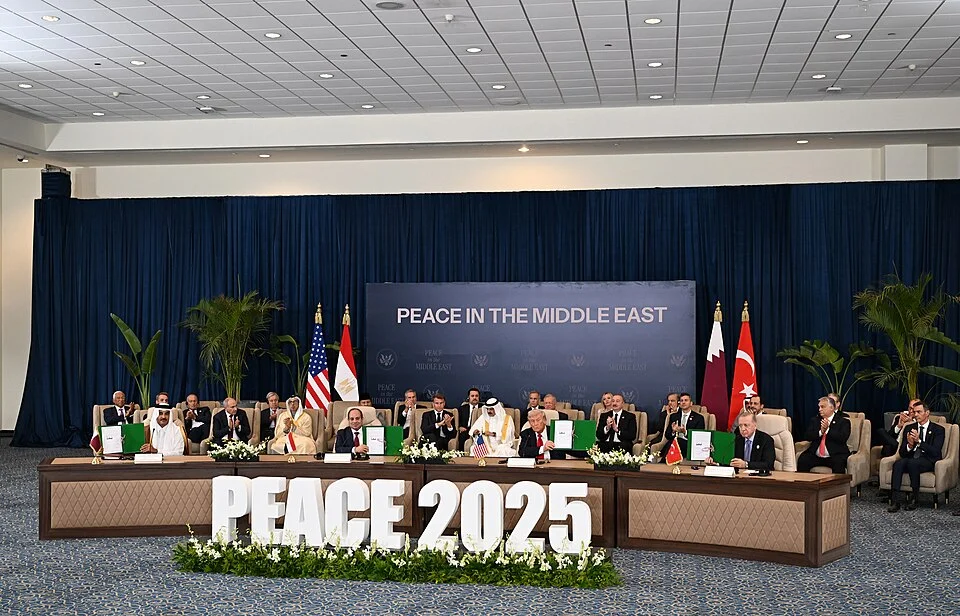
- October 2025: Erdoğan and Sisi met again on the sidelines of the Sharm El-Sheikh Peace Summit, part of a wider run of high-level contacts between the two governments that year.
- February 2026: Erdoğan traveled to Cairo, where Turkish Defense Minister Yaşar Güler and Egyptian officials signed a Military Framework Agreement alongside separate deals reported at roughly $350 million covering air-defense and ammunition production — but without a publicly announced KAAN jet order or unit count. The same trip included talks in Riyadh, where Saudi Arabia discussed possible investment in the KAAN program, again without a signed contract.
No source has published a signed KAAN sales contract for Egypt, a confirmed jet quantity, or a price — which is the key distinction from Türkiye’s one clearly finalized export customer, Indonesia (see below).
What’s Confirmed vs What’s Still Unofficial
| Claim | Status |
|---|---|
| Egypt and Türkiye have a cooperation framework covering the KAAN program | Confirmed (reported by multiple outlets, not denied by either government) |
| Technology transfer is part of the discussion | Confirmed as an agreed principle |
| A joint production line will be built in Egypt | Reported goal — no location, capacity or start date disclosed |
| Egypt will buy a specific number of KAAN jets | Not confirmed — no figure has been officially released |
| Egypt would be the first African nation to co-produce a fifth-generation fighter | Accurate description of what is being discussed, contingent on the deal being finalized |
| A formal KAAN memorandum of understanding has been signed | Reported as expected, timing has slipped in past coverage — treat as pending until an official signing is announced |
| Saudi Arabia is investing in the KAAN program | Preliminary discussion only, no signed deal as of the Erdoğan visit in February 2026 |
KAAN Technical Specifications
Figures below come from TUSAŞ/ASELSAN public disclosures and open-source reporting; Türkiye has not published a full official spec sheet, so some numbers are best treated as design targets rather than certified performance.
| Parameter | KAAN (current data) |
|---|---|
| Manufacturer | Turkish Aerospace Industries (TUSAŞ), radar/avionics by ASELSAN |
| Role | Fifth-generation, twin-engine air-superiority / multirole fighter |
| First flight | February 21, 2024 |
| Engines (current prototypes) | 2 × General Electric F110-GE-129, ~131 kN (29,000 lbf) with afterburner each |
| Planned indigenous engine | TEI TF-35000 (~35,000 lbf), targeted for the early 2030s |
| Radar | ASELSAN AESA radar with air-to-air and SAR ground-mapping modes |
| Speed | Supercruise reported above Mach 1.8 |
| Combat radius | Reported over 1,100 km |
| Service ceiling | Reported above 55,000 ft |
| Maximum takeoff weight | ~27,000 kg (reported) |
| Internal weapons bay payload | ~1,500 kg |
| External payload | Over 6,000 kg (stealth compromised when used) |
| Confirmed operators | None yet — Turkish Air Force is the launch customer, deliveries not yet begun |
| Confirmed export order | Indonesia — 48 aircraft, reported at approximately $10 billion, 10-year delivery plan |
| Unit price | Not publicly disclosed |
Why Egypt Wants a Fifth-Generation Fighter
Egypt operates one of the largest and most diverse air forces in Africa and the Middle East — F-16s, Rafales, MiG-29M/M2s and older Mirage 2000s — but much of that inventory is aging or tied to suppliers that have shown willingness to withhold or delay deliveries for political reasons. Three factors make KAAN attractive to Cairo on paper:
- Diversification after the Su-35 experience. Egypt signed a roughly $2 billion deal for about two dozen Sukhoi Su-35s in the late 2010s, but the order was quietly shelved by 2020 after sustained US pressure under CAATSA sanctions threats and reported technical concerns — a costly lesson in single-supplier dependency that Cairo has not forgotten.
- Industrial development, not just aircraft. Unlike a straight arms purchase, the KAAN framework is pitched around technology transfer and local production — the same model Egypt has pursued with other Turkish programs, and one that builds domestic aerospace capacity rather than a fleet that depreciates with no follow-on industry.
- A hedge against F-35 unavailability. The F-35 remains politically and technically out of reach for Egypt, as it is for almost every African and most Middle Eastern air forces. KAAN is one of a small number of fifth-generation-class programs actively offering both aircraft and a share of the industrial pipeline.
None of this means a signed KAAN contract is imminent — Egypt’s February 2026 agreements with Türkiye were concentrated on air defense and ammunition production, not fighter jets, which suggests the KAAN track is still moving on a slower, separate diplomatic timeline.
The Engine Problem: Türkiye’s Own CAATSA-Style Risk
There is an irony buried in KAAN’s pitch as an “independent” alternative: today’s prototypes fly on two General Electric F110-GE-129 engines — the same engine family used in late-model F-16s and F-15s — built in Türkiye under a US license that still requires Washington’s approval for use and export. In 2025, Turkish Foreign Minister Hakan Fidan publicly blamed US congressional restrictions for slowing engine deliveries and threatening to delay serial production, a statement that triggered domestic criticism when the public realized a supposedly sovereign fighter still depends on an American engine.
Türkiye’s answer is the TEI TF-35000, an indigenous engine rated around 35,000 lbf that is meant to replace the F110 by the early 2030s. Until that engine matures, any Egyptian, Indonesian or other export KAAN delivered in the near term will likely still carry an engine subject to the same category of US export control that killed Egypt’s Su-35 order — a fact that regional buyers evaluating the program should weigh alongside its sovereignty pitch.
KAAN vs the Jets African and Middle Eastern Air Forces Actually Fly
For an Egyptian or other regional air force shopping for a modern fighter today, KAAN is one option among a handful of realistic fifth- and 4.5-generation choices. Türkiye’s real advantages are the technology-transfer offer and a production line potentially inside the buyer’s own country; it does not yet have Rafale’s or the F-15’s combat pedigree or delivery certainty.
| Aircraft | Main role | Production status | Confirmed African/MENA users | Export terms | Technology transfer | Price | Delivery timeline |
|---|---|---|---|---|---|---|---|
| KAAN (Türkiye) | 5th-gen air superiority/multirole | Flight testing, pre-serial | None yet; Egypt in cooperation talks | Offered case-by-case | Actively offered (Indonesia, reportedly Egypt) | Not publicly disclosed | Turkish AF ~2028-2030; Indonesia over 10 years from contract signing |
| Dassault Rafale (France) | 4.5-gen multirole | In production | Egypt (confirmed operator since 2015), Qatar, India | Government-to-government, no restriction on Egypt | Limited, negotiated per contract | ~$95-115M per unit incl. weapons (contract-dependent) | Ongoing deliveries to existing customers |
| Boeing F-15EX/Advanced Eagle (USA) | 4.5-gen air superiority | In production | Reported in discussion with Egypt following Su-35 cancellation; not yet delivered | US government approval required (FMS) | Minimal | Not publicly disclosed for any Egypt package | Not yet scheduled |
| Chengdu J-10C (China) | 4.5-gen multirole | In production | Not currently operated in Africa or by Egypt; Pakistan is the confirmed export customer | Generally fewer political conditions than Western or Turkish deals | Limited | Reported around $40-60M per unit (unverified, varies by source) | Relatively short lead times reported for Pakistan |
Two things stand out. First, Egypt already operates a confirmed, combat-capable 4.5-generation jet in the Rafale — KAAN would not fill a capability gap so much as add a sovereignty and industrial option. Second, no African or Middle Eastern country has yet taken delivery of a fifth-generation aircraft from any supplier; whoever gets there first, including Egypt via KAAN, would set a regional precedent.
Beyond Egypt: Who Else Is Watching KAAN
- Indonesia — confirmed. Jakarta signed the program’s only finalized export contract: 48 KAAN aircraft, reported at roughly $10 billion, with local assembly, technology transfer and MRO hubs over a 10-year delivery plan.
- Saudi Arabia — preliminary discussion. Riyadh has discussed potential investment in the KAAN program with Ankara, including during Erdoğan’s February 2026 visit, but has not signed a contract.
- Pakistan — reported interest. Pakistani officials have expressed interest in the program alongside their existing cooperation with Türkiye on other platforms, without a confirmed order.
Against that backdrop, Egypt’s position is closer to “framework agreement with unresolved numbers” than to Indonesia’s signed contract — a distinction worth keeping in mind when reading headlines that describe Egypt as having simply “joined” the program.
What This Means for African Air Forces
Most African air forces are not shopping for fifth-generation jets at all — the more common need is replacing 1970s-80s MiG-21s, Mirage F1s and early F-16s with anything modern and sustainable, which is why Turkish drones (Bayraktar TB2, AKINCI) and armored vehicles have spread faster across the continent than fighter jets. KAAN’s relevance to Africa today is mostly indirect:
- It signals that Türkiye is positioning itself as a full-spectrum defense supplier — drones, armored vehicles, air-defense systems and now a fighter jet — for markets that have limited access to Western fifth-generation platforms.
- If the Egypt track is finalized with real local production, it would create the continent’s first fifth-generation manufacturing capability, a reference point other African governments may cite in their own defense-industrial planning even if they cannot afford the aircraft itself.
- It adds a third lane — alongside Chinese (J-10C, FC-31/J-35 export variants) and Western options — to the small list of fighter suppliers willing to discuss technology transfer with African and Middle Eastern buyers, rather than aircraft-only sales.
FAQ
Has Egypt officially bought the KAAN fighter jet?
No. Egypt and Türkiye have a reported cooperation framework covering technology transfer and a possible joint production line, but no signed sales contract, jet quantity or price has been publicly disclosed as of September 2026.
How many KAAN jets will Egypt get?
No official number exists. Only Indonesia has a confirmed, numbered export contract (48 aircraft).
When did the KAAN fighter jet first fly?
February 21, 2024, near Ankara, in a 13-minute flight escorted by a Turkish F-16D.
What engine does KAAN use?
Current prototypes use two US-made General Electric F110-GE-129 engines built in Türkiye under license. An indigenous TEI TF-35000 engine is planned to replace it in the early 2030s.
Is KAAN a true stealth fighter?
TUSAŞ designed it with a low-observable airframe and internal weapons bay, standard fifth-generation features. Independent, certified stealth (radar cross-section) data has not been published.
Why did Egypt’s earlier Su-35 deal with Russia collapse?
Egypt signed a roughly $2 billion deal for about two dozen Su-35s in the late 2010s, but shelved it by 2020 under US pressure tied to CAATSA sanctions risk, alongside reported technical concerns.
Would Egypt be the first African country with a fifth-generation fighter?
If the cooperation framework results in actual jets and local production, yes — no African air force currently operates a fifth-generation aircraft from any supplier.
Is KAAN available to other African countries?
No African country besides Egypt has a reported KAAN discussion. Most African air forces are focused on more affordable 4th-generation jets, drones and armored vehicles rather than fifth-generation fighters.
How does KAAN compare to China’s J-10C?
J-10C is in production now with a confirmed export customer (Pakistan) and a lower reported price, but Türkiye’s KAAN pitch centers on technology transfer and local production, which China has offered less consistently.
- Defense News, “Turkey’s fifth-generation fighter plane takes off for maiden flight,” February 2024.
- Army Recognition, “Breaking news: Egypt could become second international client of Turkish Kaan fighter jet,” August 2025.
- Defence Security Asia, “Egypt Joins Türkiye’s KAAN Stealth Fighter Program,” August 2025.
- Defense News, “Erdoğan pitches KAAN fighter jet as an alternative to Western warplanes,” February 2026.
- Turkish Aerospace Industries (TAI), Indonesia KAAN agreement statement, 2025.
- Washington Institute for Near East Policy, “Understanding the Egyptian Military’s Perspective on the Su-35 Deal.”
- Shephard Media, “Suspected collapse of Su-35 deal sees US agree Egyptian F-15 order.”
- Erkan Saka, “A deep dive into the Kaan Fifth-Generation Fighter Jet Project,” field notes, October 2025.