ÇAKIR Cruise Missile Enters Turkish Army Service via SSB-ROKETSAN Deal

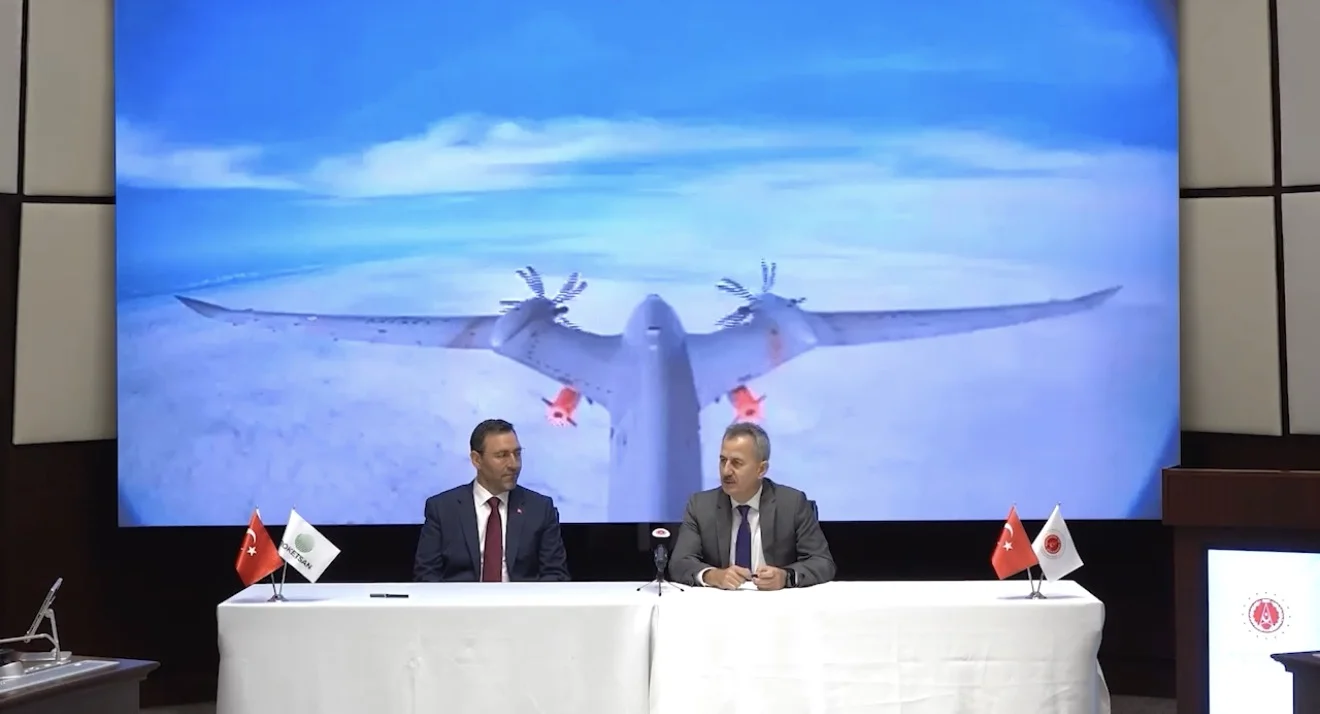
Turkey’s Presidency of Defence Industries (SSB) and missile maker ROKETSAN have signed a procurement contract bringing the domestically developed ÇAKIR cruise missile into service with the Turkish Land Forces Command. The signing ceremony, held at SSB headquarters, brought together SSB President Prof. Dr. Haluk Görgün and ROKETSAN General Manager Murat İkinci.
A multi-platform strike weapon for ground forces
ÇAKIR originated as a ROKETSAN-funded research program before SSB support helped mature it into a fielded weapon family. The missile is designed in both surface-to-surface and air-to-surface configurations, and it is built to engage land and maritime targets alike rather than a single category of objective.
The newly signed contract covers the missile’s initial handover to the Land Forces Command. Görgün used the ceremony to thank the institutions, ROKETSAN staff and subcontractors involved, describing the contracting process as now complete.
Fired from the KARA ATMACA launcher
One of ÇAKIR’s defining traits is that it can be launched from the KARA ATMACA weapon system, which is itself entering the Land Forces inventory. That pairing turns the missile from a weapon tied to one platform into a strike option ground units can call on across a range of mission profiles.
The missile’s dual surface-to-surface and air-to-surface configurations show how a single core design can be adapted to different launch platforms, which simplifies logistics by letting one munitions line serve more than one operational need.
Roughly 200 firms behind the supply chain
Around 200 companies contribute to the program under ROKETSAN as prime contractor. Officials have specifically highlighted domestic content in the missile’s critical subsystems, including its seeker head and turbojet engine, both of which reduce foreign dependency in cruise-missile technology.
The Land Forces Command itself supported the qualification and fielding-readiness phases, meaning the end-user service was directly involved in technical evaluation well before the system’s actual deployment.
A deterrence-focused framing
Görgün said ÇAKIR gives Turkey a “deterrent and highly capable” cruise-missile capability. That framing positions the weapon not merely as another line item in the inventory but as a structural piece of the Land Forces’ deep-strike doctrine.
The contract disclosed no figures on range, warhead characteristics, contract value or delivery schedule. Withholding such operational parameters in strategic missile contracts is standard practice across Turkey’s defense sector, mirroring how comparable programs are handled elsewhere.
Where ÇAKIR sits in ROKETSAN’s cruise-missile lineup
ÇAKIR forms the ground-forces branch of a cruise-missile portfolio that also includes ROKETSAN’s SOM family. While SOM variants are built around air-launched, stand-off strike missions, ÇAKIR’s multi-platform design gives land units a direct option of their own.
Seen this way, the program fits into a broader strategy of spreading cruise-missile capability across land, sea and air rather than concentrating it in a single service branch. The KARA ATMACA integration is the clearest expression yet of that strategy’s ground-forces leg.
Why now, and why the Army?
Turkey’s cruise-missile capability has so far been shaped mainly by the air-launched SOM family. Bringing ÇAKIR into service through a dedicated Land Forces contract marks a stage where that capability is handed directly to ground units, making deep-strike an option written into Army doctrine rather than reserved for the air force.
That shift aligns with planning concepts in which ground formations hold their own long-range precision-strike capability during regional crises, and the missile’s dual configurations give commanders flexibility to adapt the weapon to different operational scenarios.
What comes next
The contract marks a formal milestone on ÇAKIR’s path toward serial production and service entry. A firm timeline for fielding the missile alongside KARA ATMACA has not been set; further details are expected once qualification testing wraps up.
This latest step in ROKETSAN’s cruise-missile line will be watched closely both for its role in domestic Army modernization and for the export potential such systems typically carry once proven in service.
Sources
- Presidency of Defence Industries (SSB) ceremony announcement, via Anadolu Agency, “SSB and ROKETSAN Sign ÇAKIR Cruise Missile Procurement Contract,” October 15, 2026 — timeturk.com (Details on the contracting parties, signatories and scope are drawn from SSB’s official announcement.)