
Korsar or RPG-29: which man-portable anti-armour weapon fits which army?
What does the country actually need?
Anti-armour procurement starts with defining the threat, not the weapon. At what range, against what armour level and in what terrain will the defence be conducted? Engaging a modern reactive-armour main battle tank at 500 m and engaging an armoured personnel carrier at 2 km are not two answers to the same requirement; they are two different requirements.
Personnel structure and cost then decide the mix. Guided systems demand gunner selection, recurring live firing and simulator infrastructure, which is hard to sustain in a short-service conscript force, while a rocket launcher can be issued broadly on basic training. Because guided rounds cost a multiple of rocket ammunition, most armies end up with a two-tier structure: cheap launchers across the force and guided systems in selected anti-tank teams. Framing the choice as one or the other misses that structure.
What is the system?
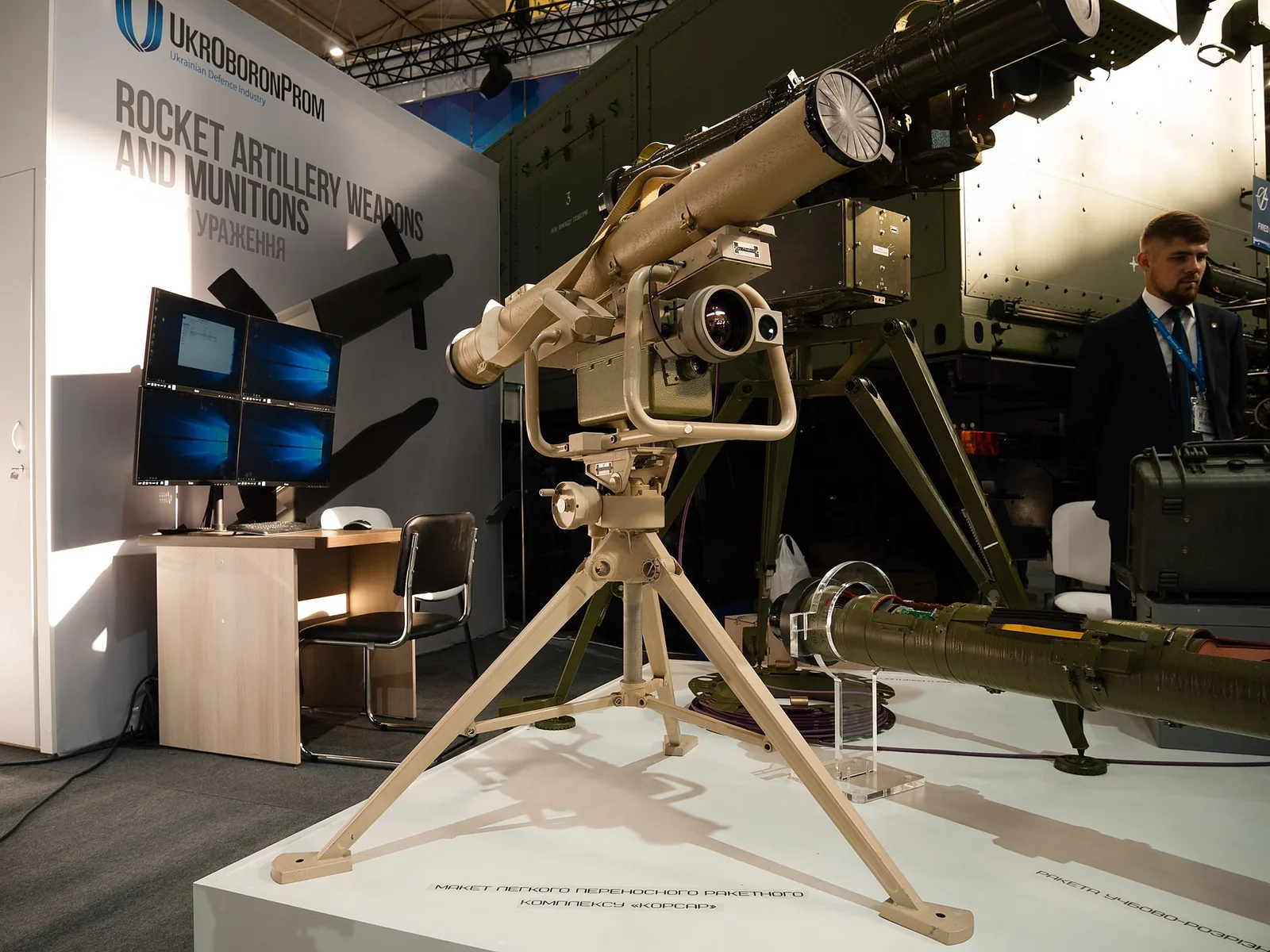
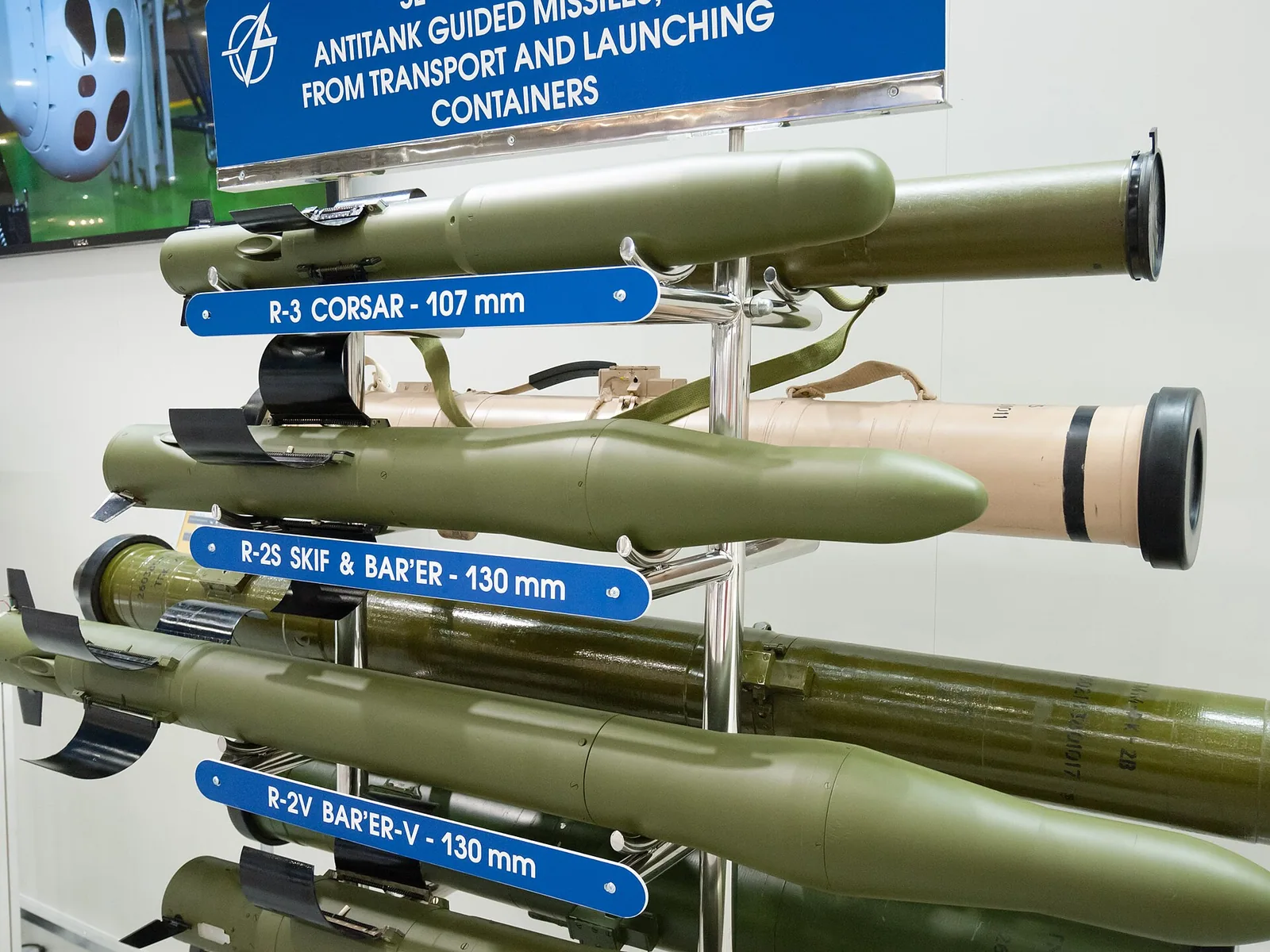
The RK-3 Korsar is a man-portable anti-tank missile system from the Luch State Design Bureau in Kyiv, developed from 2005 and in service since 2017. The missile is 1.16 m long and 107 mm in diameter; the system weighs 35.8 kg, split between a 12 kg launcher and thermal sight, an 8.3 kg mount and a 15.5 kg missile in its container. Guidance is laser beam riding, effective range is 2,500 m, and there are two warheads: the RK-3K tandem shaped charge rated to 550 mm of armour and the RK-3OF high-explosive fragmentation round for fortifications, light armour and helicopters.
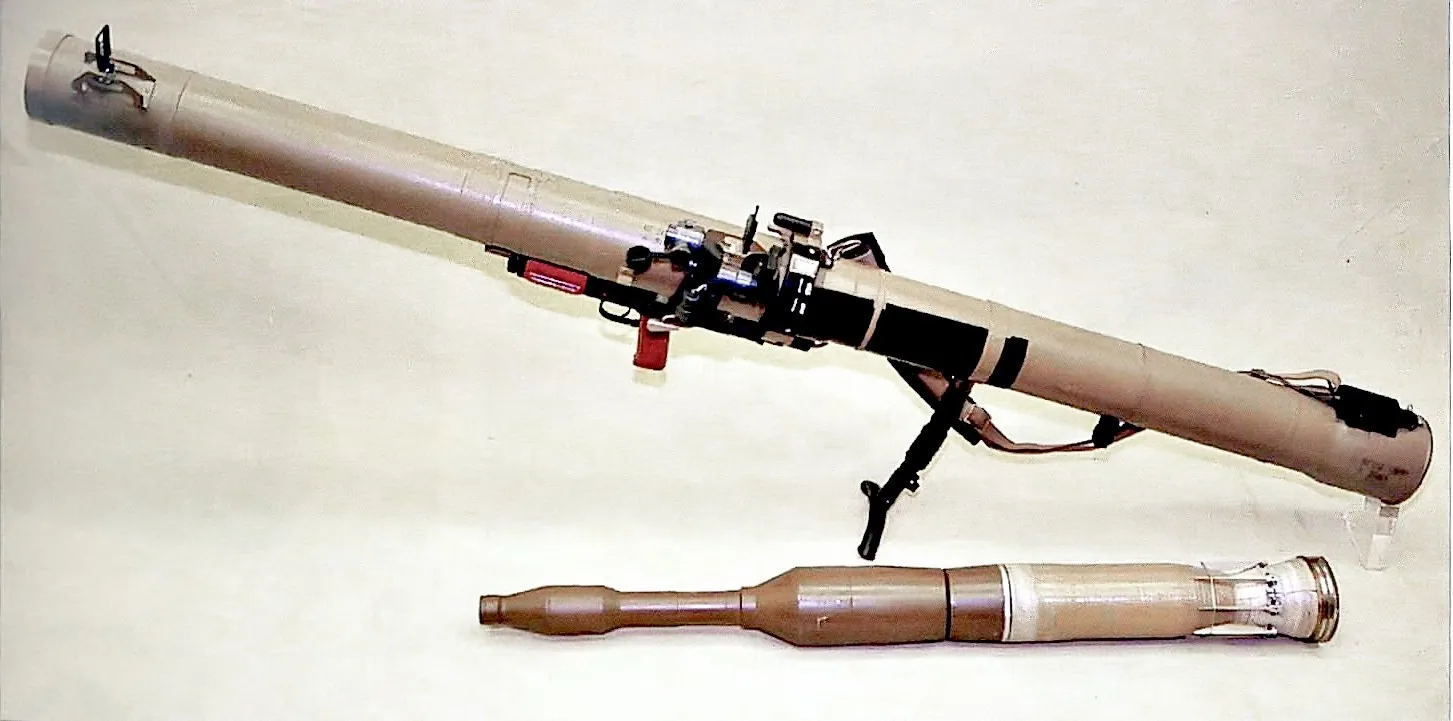
The RPG-29 Vampir is a different class entirely: a Soviet-era, breech-loaded, unguided 105 mm rocket launcher weighing 12.1 kg empty with sight and 18.8 kg ready to fire, 1.85 m long in the firing position, with a 500 m effective range and 280 m/s muzzle velocity. The PG-29V tandem round is credited with over 750 mm of rolled homogeneous armour, or 600 mm behind explosive reactive armour, and a TBG-29V thermobaric round is also available.
| Technical data | |
|---|---|
| RK-3 Korsar, origin | Luch State Design Bureau, Ukraine; in service 2017 |
| RK-3 Korsar, range | 2,500 m |
| RK-3 Korsar, guidance | Laser beam riding |
| RK-3 Korsar, warheads | RK-3K tandem shaped charge to 550 mm; RK-3OF high explosive |
| RK-3 Korsar, weight | 35.8 kg total, 15.5 kg missile in container |
| RPG-29, class | Soviet-Russian design, unguided 105 mm rocket launcher |
| RPG-29, range | 500 m effective |
| RPG-29, weight | 12.1 kg empty, 18.8 kg ready to fire |
| RPG-29, ammunition | PG-29V tandem, 600 mm after ERA; TBG-29V thermobaric |
| RPG-29, muzzle velocity | 280 m/s |
Geography and climate fit
Terrain decides this choice directly. In open plains and steppe with long sight lines, a 500 m weapon forces the defender inside the effective range of the vehicle’s own armament, so a guided system that allows engagement before contact produces a real survivability difference.
In forest, mountain and urban terrain the logic inverts. Sight lines rarely exceed 500 m, so the guided missile’s reach cannot be used, while the continuous line of sight required by beam-riding guidance becomes a serious constraint in fluid fighting. Portability points the same way: 35.8 kg is a two-man load, while the RPG-29 at 18.8 kg ready to fire is a one-man load, and for light infantry on extended foot movement that difference can matter more than penetration figures.
Existing fleet, munitions and logistics
Korsar’s commonality argument is the Luch family. An army already operating the tripod-mounted Skif or Stuhna gets the same guidance philosophy in a shoulder-class package, which is a genuine saving in training and maintenance infrastructure. The RPG-29 needs no such argument: any force that has used the RPG-7 finds the architecture familiar and the training burden minimal, though ammunition sourcing depends on a limited set of producers.
For both, the binding constraint today is production. Ukrainian-origin systems are prioritised for Ukraine’s own armed forces, which leaves export delivery schedules uncertain. Where an army is planning a decade-long anti-armour programme, sustained munitions flow ranks ahead of penetration figures.
Cost and value for money
Neither system has a verified current unit price in the public domain, but the cost structure of the two classes is well understood: guided anti-tank missiles cost a multiple of unguided rocket ammunition, and the gap appears in use rather than at purchase. How many live rounds are fired in training each year drives total cost of ownership more than the acquisition figure does.
The rocket launcher’s cost advantage has to be set against gunner survivability. A team firing from 500 m is inside the target’s effective response range, and that risk is the hidden cost of cheap ammunition. The honest conclusion is that the two systems are complementary rather than competing, and that an army forced to choose between them is usually answering a badly framed question.
Comparison table
- A 2,500 m reach allows engagement before entering the target’s effective response range.
- At 35.8 kg total the system is a realistic two-man load.
- Two warhead options extend engagement beyond armour to fortifications and helicopters.
- Training and maintenance infrastructure is shared with Skif and Stuhna operators.
- The thermal sight provides a night engagement capability.
- Beam-riding guidance requires the gunner to track the target to impact; it is not fire and forget.
- 550 mm of penetration is marginal against modern reactive-armoured main battle tanks frontally.
- Cost per round is a multiple of rocket launcher ammunition.
- Production capacity is committed to Ukraine’s own forces rather than export.
- The 107 mm round shares no commonality with other systems.
- The export record and user base are limited.
Alternatives
Turkish alternatives. Roketsan’s KARAOK is a 125 mm fire-and-forget infrared-guided short-range system weighing under 16 kg including tube and missile with a range above 2,500 m, which places it directly opposite Korsar. Fire-and-forget guidance means the gunner can displace immediately after launch, a clear survivability advantage. In the medium band, OMTAS reaches out to 4,000 m with imaging infrared guidance and addresses the company and battalion level rather than the team.
Western options. Javelin remains the reference for the class with fire-and-forget guidance and a top-attack profile, though unit cost and order backlog are serious constraints for mid-sized forces. NLAW fills the gap between Korsar and the RPG-29 at around 800 m with a low training burden and moderate cost.
Other options. The Spike family is segmented by range band and adapts to both dismounted and vehicle-mounted configurations. The Russian Kornet remains widely used on the strength of long reach and low unit cost, but sanctions exposure and supply channels are now a risk line in their own right.
When it makes sense, when it does not
Scenarios where it works
- The army faces armour in open terrain and wants engagement depth before contact.
- Skif or Stuhna systems are already in service with the training infrastructure in place.
- Anti-armour capability will be concentrated in selected teams rather than issued broadly.
- Night engagement and a secondary warhead for fortifications are required.
Scenarios where it does not
- The threat profile is frontal engagement of modern reactive-armoured main battle tanks.
- Fire-and-forget guidance is a stated requirement; beam riding keeps the gunner in position.
- Broad issue is intended, where round cost is not sustainable at that scale.
- Defence is built in forest or urban terrain where sight lines rarely exceed 500 m.
- A decade-long munitions supply guarantee is a programme precondition.
Frequently asked questions
Which is more powerful, Korsar or RPG-29?
Is the Korsar fire and forget?
How does KARAOK differ from Korsar?
Is the RPG-29 still effective?
Should an army choose one or the other?
Sources
- Army Technology, Corsar Anti-Tank Missile System
- Defense Express on the RK-3 Corsar
- Roketsan, KARAOK Short-Range Anti-Tank Weapon System
- Roketsan, OMTAS Medium-Range Anti-Tank Weapon System


