What is the Pantsir-S1? Russia’s Combined Gun-and-Missile Short-Range Air Defense, Explained
Summary Not Found.
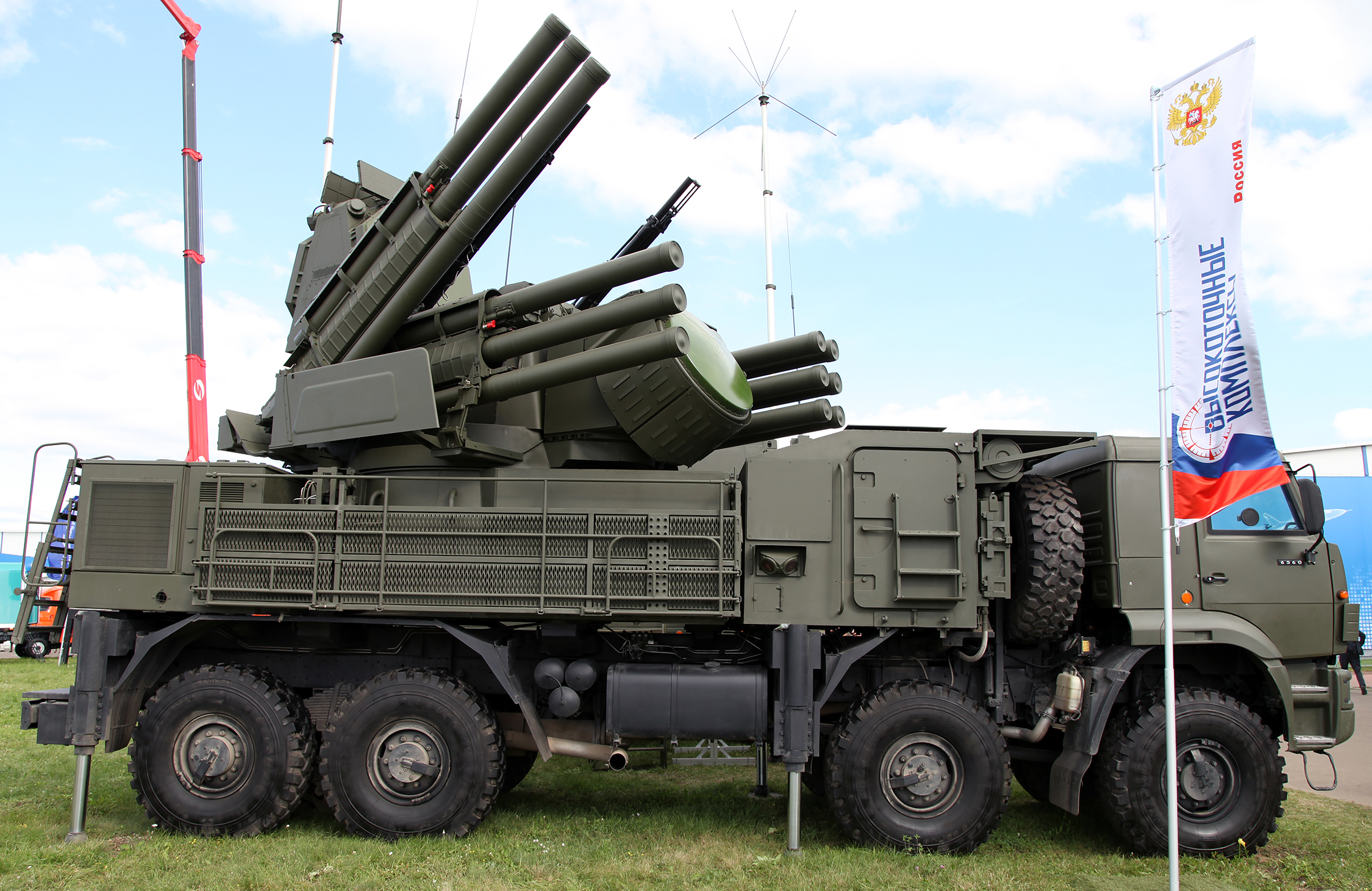
The Pantsir-S1 — NATO reporting name SA-22 Greyhound — is Russia’s combined-arms short-range air-defense system, designed by the KBP Instrument Design Bureau in Tula and manufactured by the Shcheglovskiy Val Plant. The system mates twin 30 mm 2A38M autocannons with twelve 57E6 surface-to-air missiles on a single 8×8 truck or armored chassis, integrated with phased-array search and engagement radars. Designed to provide low-altitude point defense for larger SAM systems (S-300, S-400) and high-value installations against cruise missiles, UAVs and helicopters, the Pantsir-S1 has been combat-tested across Syria, Libya, Ukraine and Armenia — and has acquired a reputation as both an effective point-defense system and a high-value target for opposing precision strikes.
Arctic variant on DT-30PM tracked chassis (no gun)
Pantsir-SM
2019
57E6E-M missile to 30 km; new radar with 75 km detection
Pantsir-ME (naval)
2020
Ship-mounted variant for Russian Navy
Pantsir-S1M / SM-SV
2022
Ukraine-driven upgrade: improved EW protection, anti-loitering munition mode
Combat record
2018–present — Syria. Russian Pantsir-S1 batteries at Khmeimim airbase regularly engaged Israeli, U.S. and Turkish aircraft and munitions. Multiple Pantsir launches were reported during Israeli strikes; effectiveness has been disputed, with several Pantsir-S1 systems destroyed by Israeli F-16I and F-35I strikes.
2019–2020 — Libya. Both Wagner-supported Libyan National Army forces and the UN-recognized Government of National Accord operated Pantsir-S1 systems. Turkish Bayraktar TB2 drones destroyed at least 9 Pantsir-S1 systems in Libya — the first major combat losses of the type to a hostile UAV fleet.
2020 — Nagorno-Karabakh war. Armenian forces lost an estimated 2 Pantsir-S1 systems to Azerbaijani Bayraktar TB2 and Israeli Harop loitering munition strikes.
2022–present — Ukraine. Russian Pantsir-S1 systems are widely deployed in occupied Crimea, southern Russia and along the front line. Confirmed Ukrainian destructions exceed 30 systems — losses caused by HIMARS strikes, Storm Shadow / SCALP missiles, Tochka-U strikes and Ukrainian drone strikes. At the same time, Pantsir-S1 has been credited with intercepting Ukrainian Tochka-U missiles, Switchblade loitering munitions, and Bayraktar TB2 drones.
The MQ-9 paradox
Pantsir-S1 became infamous in 2024–2025 as the principal Houthi air-defense system credited with downing more than 17 U.S. MQ-9 Reaper drones over Yemen and the Red Sea. The combination of Pantsir-S1 gun + SAM against a slow, non-stealth MALE drone proved devastating, and the Pantsir’s mobility allowed Houthi crews to position and reposition before USAF reaction sorties could neutralize the launchers.
Pantsir vs. its peers
Pantsir-S1
Tor-M2
Skyranger 30/35
SPAA Gepard
Gun
2× 30 mm
None
1× 30/35 mm
2× 35 mm
SAM
12× 57E6 (20–30 km)
16× 9M338 (16 km)
2–4× Mistral (6–10 km)
None standard
Targets simultaneously
4
4
4
2
Anti-UAV mode
Yes (since SM)
Yes
Yes
Yes
Combat-proven
Syria, Libya, Ukraine, Yemen
Ukraine
No
Ukraine (Ukrainian use)
Operators
Country
Quantity
Russia
~150 units (multiple variants)
UAE
50 (first export customer)
Algeria
~40
Syria
~36 (some destroyed)
Iran
10 (license-built variant as Bavar-373)
Iraq, Jordan, Oman
3–8 each
Brazil, Equatorial Guinea, Myanmar, Serbia
2–6 each
Belarus
16
Yemen (Houthi-captured)
Several captured from Saudi-aligned Yemeni government
Why Pantsir-S1 matters
The Pantsir-S1 is the most-deployed combined gun-and-SAM short-range air-defense system in the world. Its combat record cuts both ways — credited with extensive intercepts against Houthi, Israeli and Ukrainian threats, but also among the most-destroyed Russian air-defense systems in modern war. As the global threat from cheap UAVs and cruise missiles grows, the Pantsir’s role as the layered-defense innermost ring will keep it in production at the Shcheglovskiy Val plant through at least 2032.