ROKETSAN TEBER: The Guidance Kit That Turns Cold-War Bombs into Three-Metre Precision Weapons, Explained

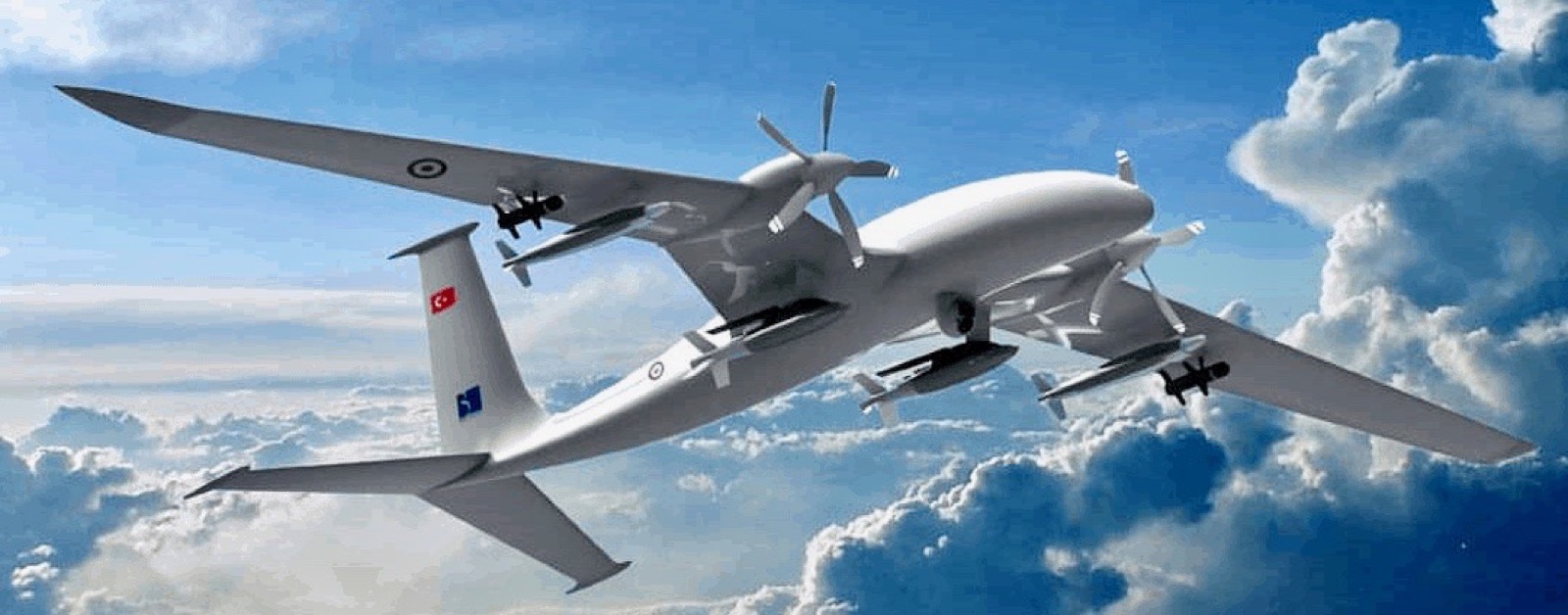
Image: Bayraktar AKINCI — one of the unmanned platforms that carries ROKETSAN TEBER guidance kits. Photo by ArmyInForm, Wikimedia Commons, CC BY 4.0.
The world’s military bomb dumps are full of weapons designed in the 1950s. Iron bombs — Mk-81, Mk-82, Mk-83, Mk-84 — are still the cheapest way to put hundreds of kilograms of explosive on a target. Their problem is that, once released, they obey gravity and nothing else. A pilot has to overfly the target, drop the bomb, and accept that the impact point will be somewhere in a circle drawn by wind, release height, and luck.
ROKETSAN’s TEBER is a solution to that problem made in Türkiye. It is a guidance kit — a tail unit plus a nose seeker — that bolts onto a standard Mk-81 (113 kg) or Mk-82 (227 kg) iron bomb. After fitting, the bomb is no longer dumb. Inertial sensors, a GPS receiver and a laser seeker work together to fly the bomb to the aim point. Circular error probability drops below three metres. Range stretches up to twenty-eight kilometres. The total cost of conversion is a fraction of the price of a brand-new smart bomb. Overnight, Türkiye can take thousands of warehoused iron bombs and turn the whole stockpile into precision weapons.
What TEBER Actually Does
The principle is straightforward. A falling bomb is a single object obeying gravity. TEBER adds a tail with control fins, and a nose unit with a laser receiver. The onboard computer fuses three independent sources of navigation information:
- Inertial measurement unit — a self-contained motion sensor that keeps working even if GPS is jammed.
- GPS — for absolute position fixes when satellite signal is available.
- Laser seeker — the bomb homes onto a laser spot painted on the target by a ground spotter, another aircraft, or a drone.
The result is that the weapon does not fall. It flies. The pilot releases TEBER from twenty-eight kilometres away, banks out of danger, and the bomb glides to the target on its own. Three-metre accuracy means it can hit something the size of a car door — even when that car door is on the move, because the laser seeker tracks vehicles.
At a Glance
Why TEBER Matters
Specifications
| Specification | TEBER-81 | TEBER-82 |
|---|---|---|
| Base bomb | Mk-81 (~113 kg) | Mk-82 (~227 kg) |
| Total weight | 155 kg | 270 kg |
| Length | 2.1 m | 2.6 m |
| Range | 2 – 28 km (both variants, release-altitude dependent) | |
| Accuracy (CEP) | Under 3 metres | |
| Guidance | Inertial + GPS + laser seeker (three modes combined) | |
| Proximity fuze | Optional — air-burst 2–15 m above the target for wider effect | |
Variants and Platforms
- TEBER-81 — fits the Mk-81 (113 kg) general-purpose bomb. Useful when collateral damage has to be limited, especially in urban targets.
- TEBER-82 — fits the Mk-82 (227 kg) bomb. The mainline variant for hardened positions, bunkers, larger structural targets.
- TEBER-83 (in development) — sized for the bigger Mk-83 (454 kg) bomb.
TEBER is integrated on the Turkish Air Force’s F-16 Fighting Falcon and F-4E 2020 Terminator fleets, and is also used on large unmanned platforms — Bayraktar AKINCI and TUSAŞ AKSUNGUR. It has been used operationally in cross-border strikes in northern Syria, in the Pençe series of operations in northern Iraq, and in support missions in Libya.
The Economics
The most valuable thing about TEBER is not technical, it is economic. A guidance kit in the twenty-thousand-dollar bracket does the job of a hundred-thousand-dollar smart bomb. That changes the maths of any large strike campaign. In a war that needs thousands of precision releases per week — as Ukraine has demonstrated since 2022 — paying full smart-bomb price for each round is unsustainable. TEBER and its peers worldwide are the answer: cheap iron bomb plus cheap kit equals affordable precision at scale.
How TEBER Compares Internationally
| Kit | Country | Notes |
|---|---|---|
| TEBER | ROKETSAN — Türkiye | INS + GPS + laser hybrid; Mk-81/82 |
| JDAM | Boeing — USA | The category-defining INS+GPS kit |
| Paveway IV | Raytheon — UK | Laser + GPS hybrid — closest peer |
| AASM Hammer | Safran — France | Longer-range powered kit |
| Spice | Rafael — Israel | Image-matching seeker variant |
Place in the Turkish Guidance-Kit Ecosystem
TEBER is one part of a wider Turkish family that, between TÜBİTAK SAGE and ROKETSAN, covers every common bomb size in service:
- HGK (SAGE) — INS+GPS kit for the larger Mk-83/Mk-84 (454–907 kg) class.
- KGK (SAGE) — winged glide kit reaching 100+ km.
- LGK (SAGE) — laser-guidance kit.
- TEBER (ROKETSAN) — INS+GPS+laser hybrid for Mk-81/Mk-82.
- LAÇİN / L-POD (ROKETSAN) — targeting pod and bomb kit.
- ELÇİN (ROKETSAN) — laser-guidance kit.
- BOZOK (SAGE) — mini smart bomb for unmanned aircraft.
Summary
| Name | ROKETSAN TEBER |
|---|---|
| Class | Guidance kit for legacy iron bombs (turns dumb bombs smart) |
| Builder | ROKETSAN |
| Range / Accuracy | 2–28 km / under 3 m CEP |
| Guidance | Triple-mode INS + GPS + laser |
| Platforms | F-16, F-4E 2020, Bayraktar AKINCI, AKSUNGUR |
Sources: