Four NATO Nations to Buy Up to Five MQ-4C Triton Drones for the Alliance

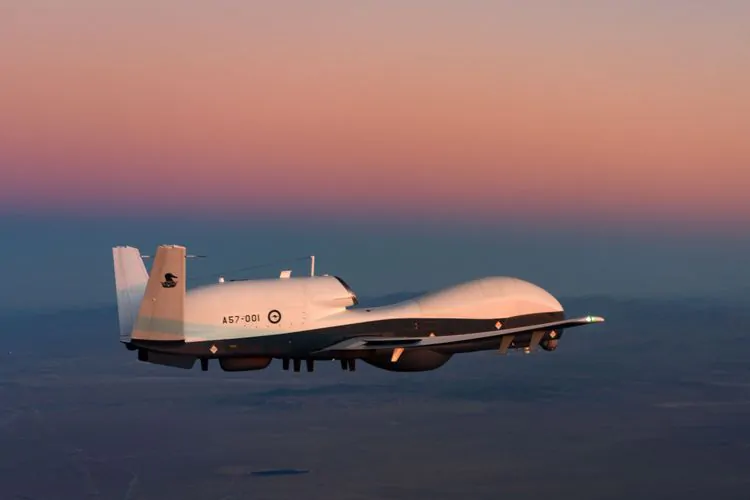
Denmark, Finland, Germany and Norway announced the procurement of up to five Northrop Grumman MQ-4C Triton HALE drones to strengthen NATO’s intelligence, surveillance and reconnaissance force.
Denmark, Finland, Germany and Norway have announced the procurement of up to five Northrop Grumman MQ-4C Triton uncrewed aircraft to strengthen NATO’s owned intelligence, surveillance and reconnaissance (ISR) force. The decision was announced on 7 July at the NATO Summit Defence Industry Forum in Ankara.
The MQ-4C Triton is a high-altitude, long-endurance (HALE) drone designed specifically for maritime surveillance, able to sustain flights of up to 24 hours at altitudes above 15 km.
A persistent eye over the sea
Equipped with long-range sensors, Triton is meant to boost allies’ ability to detect threats early, protect sea lines of communication and support operations in demanding regions such as the Arctic and the High North. Its endurance lets it monitor large sea areas continuously, mapping surface traffic and potential threats.
The new aircraft will complement NATO’s Alliance Ground Surveillance (AGS) fleet operated from Sigonella air base in Italy, moving the alliance a step closer to merging land and maritime surveillance under a single intelligence picture.
Industrial split
Northrop Grumman will build the Triton aircraft, while Airbus Defence and Space and other European companies will provide the ground segment, data management, command and control, infrastructure and mission support. The arrangement keeps much of the support ecosystem in Europe even though the platform is US-origin.
Regional context
Together with NATO’s parallel selection of the GlobalEye early-warning aircraft, the decision is part of a drive to move the alliance’s air and maritime surveillance onto an uncrewed, multinational footing. The investment in maritime surveillance suggests deepening situational awareness in seas of NATO interest, including the Black Sea and Eastern Mediterranean, in the years ahead.
Sources: official NATO statement and public defence outlets.