UK and Netherlands Sign £2.4 Billion Deal for Next-Generation Amphibious Ships

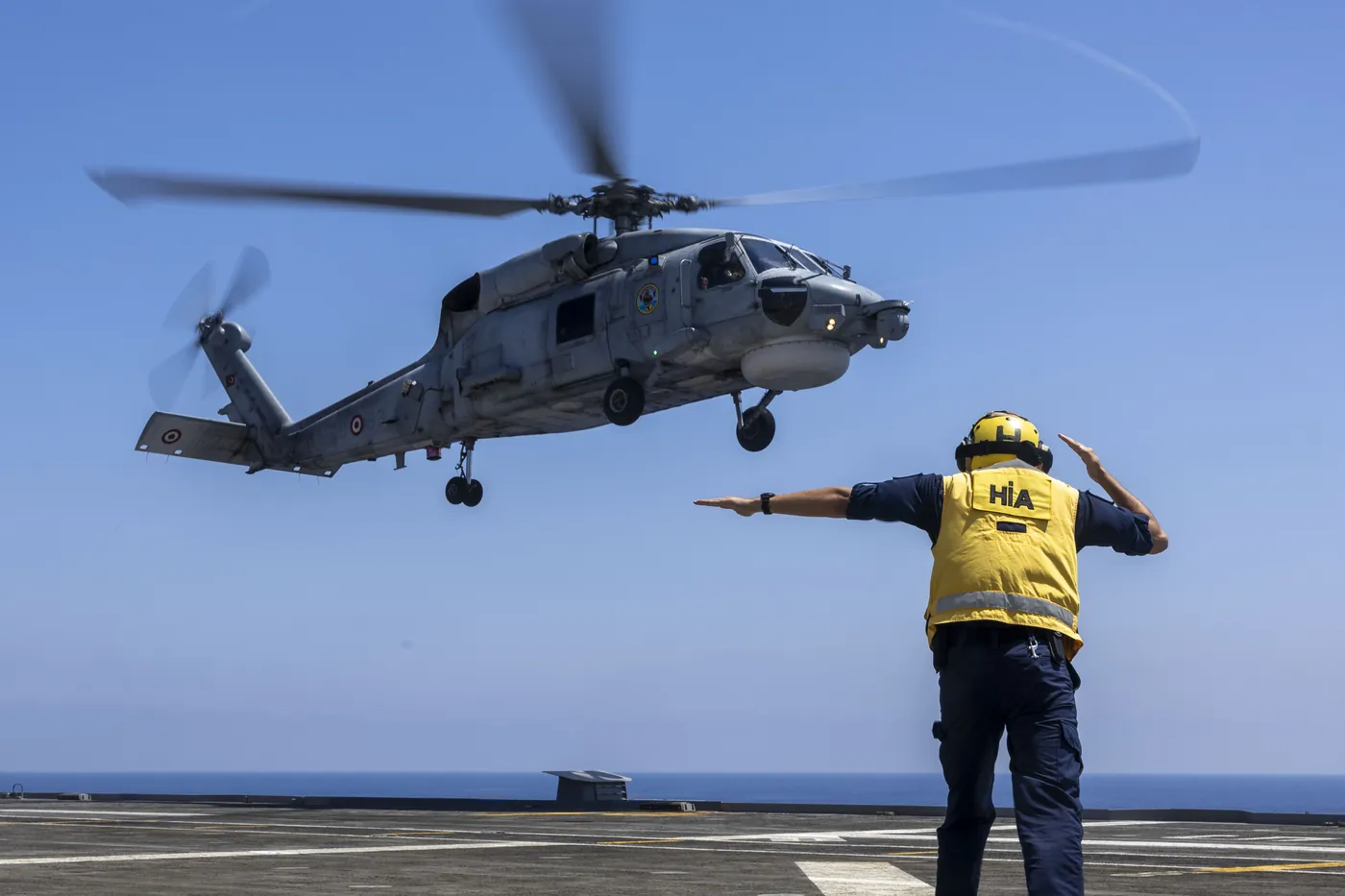
Britain and the Netherlands signed a £2.4 billion agreement at the NATO summit in Ankara to jointly build eight next-generation amphibious transport ships designed for hybrid, drone-ready operations.
The United Kingdom and the Netherlands have signed a £2.4 billion agreement to jointly build eight next-generation amphibious transport ships. The deal was signed by both prime ministers at the NATO summit held in Ankara on 7 July.
Each roughly 160 metres long and displacing 15,000 tonnes, the ships are designed to move troops, vehicles and equipment as well as uncrewed systems. Their flight decks will be sized to operate current and future long-range drones and autonomous systems.
A shared fleet
The vessels will form the backbone of a strengthened UK-Netherlands amphibious force, with each nation operating four ships. Based on a Dutch design, they will be built in UK shipyards alongside Dutch industry, a programme expected to support hundreds of skilled jobs in Britain.
Amphibious transport ships move marines and heavy equipment to shore while also serving as bases for helicopters and landing craft. Beyond classic amphibious work, the new ships are envisaged as motherships that push uncrewed air and surface vehicles into the field.
Hybrid-navy vision
The project is presented as part of the Royal Navy’s shift toward a hybrid fleet combining crewed and uncrewed systems. Flight decks scaled for long-range drones aim to make the ships platforms not only for logistics but also for reconnaissance and strike roles.
The agreement also frames deeper industrial and military cooperation on autonomous and uncrewed technology, positioning the effort as a long-term capability partnership between two NATO navies rather than a single procurement line.
NATO and regional context
Amphibious capability spans a broad mission set, from rapid deployment and evacuation to landing operations. By pooling fleet and design, the UK and Netherlands offer a concrete example of Europe’s search for cost-sharing and interoperability. For Türkiye, which runs an intensive indigenous naval-shipbuilding programme, the direction of allied amphibious doctrine is worth close attention.
Sources: official UK and Dutch government statements and international maritime outlets.