MBDA ASRAAM Block 6: High-Agility Short-Range Air-to-Air Missile
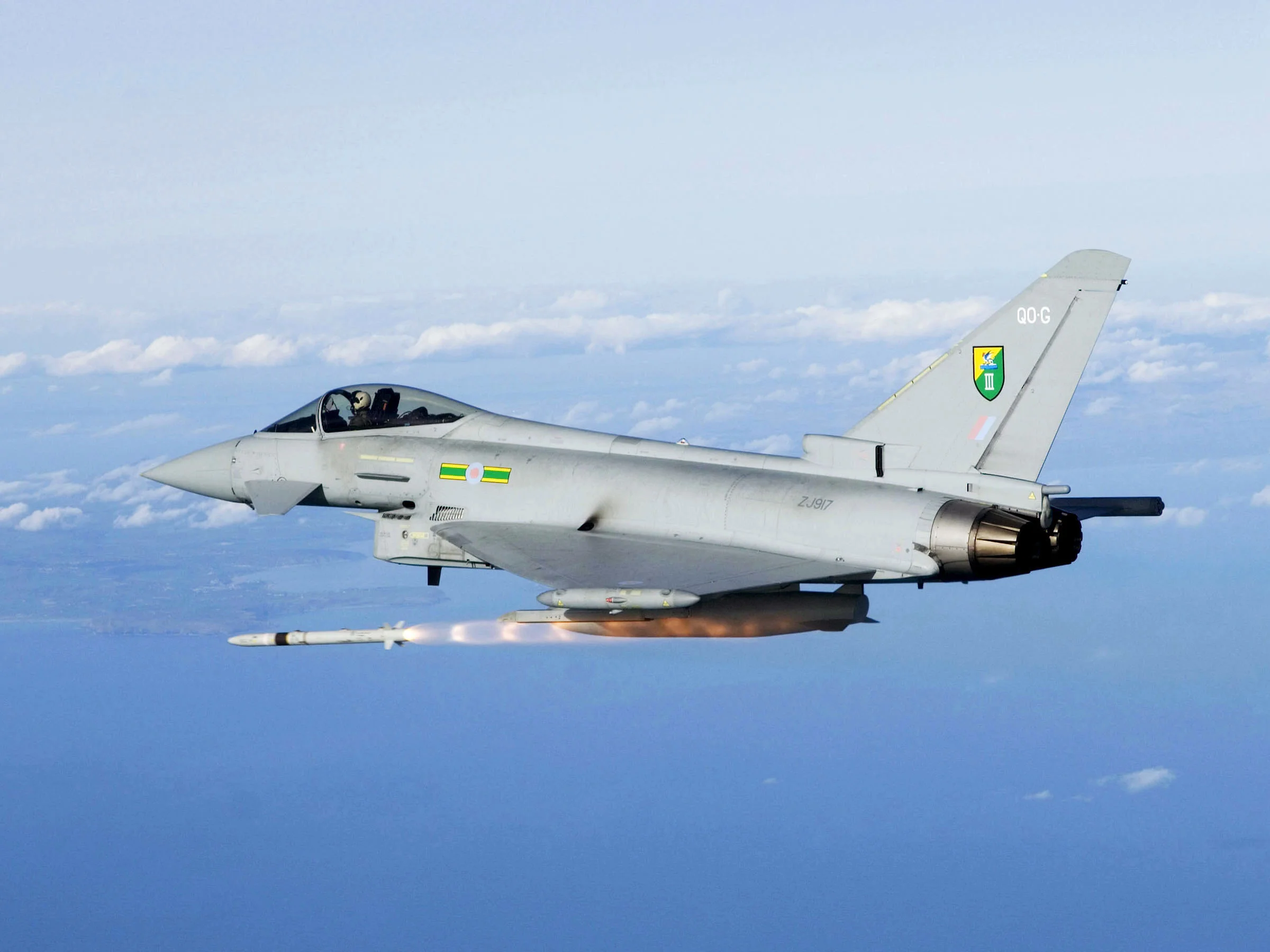
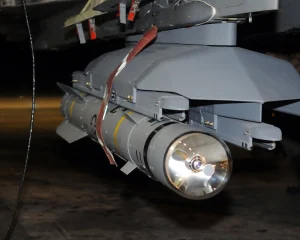
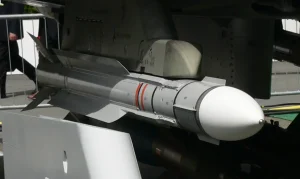
ASRAAM (Advanced Short Range Air-to-Air Missile) is MBDA UK’s primary within-visual-range (WVR) air-to-air missile. Its imaging infrared (IIR) seeker, ±90° off-boresight capability, and Mach 3+ speed make it a leading close-combat weapon for the RAF Typhoon fleet. The Block 6 upgrade adds resistance to directed infrared countermeasures (DIRCM) and improved counter-countermeasure (CCM) algorithms.
1. Development History
ASRAAM emerged from the 1970s NATO SRAAM programme. After Germany withdrew from the joint effort, the UK continued development independently through British Aerospace (later MBDA). The system entered RAF service in 1998 on Tornado and Harrier platforms, later transitioning to Typhoon.
| Block | Year | Key Change |
|---|---|---|
| Block 1 | 1998 | Initial production; IIR seeker |
| Block 2 | 2000s | Software upgrades; Typhoon integration |
| Block 3 | 2008 | India export (BDL licence production) |
| Block 5/5i | 2015+ | Enhanced CCM; network data-link |
| Block 6 | 2020s | DIRCM resistance; F-35B compatibility |
2. Technical Specifications
| Specification | Value |
|---|---|
| Length | 2.87 m |
| Diameter | 166 mm |
| Wingspan | ~450 mm |
| Weight | 87 kg |
| Speed | Mach 3+ |
| Range | 0.3–25 km (kinematic max ~50 km) |
| Guidance | IIR fire-and-forget; INS mid-course |
| Warhead | ~10 kg blast-fragmentation ring; proximity fuse |
| Off-boresight | ±90° |
| Block 6 IRCCM | DIRCM-resistant seeker |
| Platforms | Typhoon (RAF/Saudi), F/A-18 (RAAF), F-35B (future) |
3. IIR Seeker Technology
ASRAAM uses an uncooled imaging infrared seeker — a focal-plane array rather than a point detector. Because the seeker forms a full image of the target, it can discriminate aircraft body heat from flares based on shape and spectral content rather than intensity alone. Combined with ±90° off-boresight and helmet-mounted sight (HMS) cueing, the pilot can designate a target by turning the head, not the aircraft — enabling so-called “look-and-shoot” tactics regardless of aircraft nose position.
4. Operators
| Country | Platform | Block | Notes |
|---|---|---|---|
| UK (RAF) | Typhoon | Block 5/6 | Primary operator; replacing Tornado |
| Saudi Arabia | Typhoon | Block 5 | Part of Typhoon package |
| India (IAF) | Jaguar, MiG-21 Bison | Block 3 | BDL licence; 2,500+ production target |
| Australia (RAAF) | F/A-18F Super Hornet | Block 5 | Phased out upon F-35A transition |
5. Turkish Counterpart: TÜBİTAK SAGE Bozdoğan
| Feature | ASRAAM Block 6 | Bozdoğan B+ |
|---|---|---|
| Range | 0.3–25 km | 20–30 km (target) |
| Weight | 87 kg | ~90 kg |
| Guidance | IIR fire-and-forget | Dual-band IIR |
| Off-boresight | ±90° | ±90° (target) |
| Platform | Typhoon, F-35 | F-16, KAAN (planned) |
| Combat record | None (actual engagement) | Not yet operational |
Turkey’s Bozdoğan programme targets performance comparable to ASRAAM Block 6. The dual-band IIR seeker and integration plan with KAAN are well-conceived. The critical gap remains operational maturity: Bozdoğan must complete qualification and accumulate live-firing data. AIM-9X covers the near-term requirement while Bozdoğan matures.
6. Assessment
ASRAAM Block 6 is a mature, well-engineered within-visual-range weapon with a clear upgrade path. Its India and Australia export wins validated the concept commercially, and its F-35B integration path keeps it relevant through the 2030s. The absence of a live combat engagement record remains its most significant open question against rivals like Python-5 (with multiple kill confirmations). Block 6’s DIRCM resistance addresses the growing DIRCM proliferation on frontline fighters — a capability gap that earlier blocks were increasingly exposed to.