MBDA MICA NG: The Dual-Mode Air-to-Air Missile That Makes Rafale’s Armament Package Complete

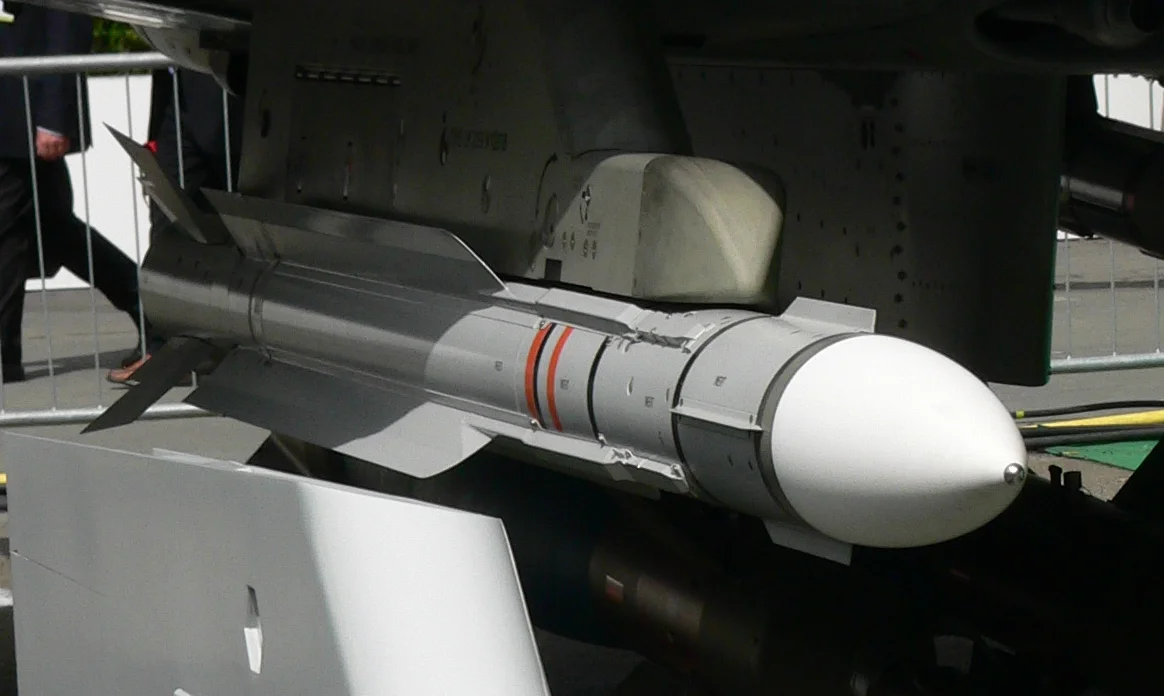
France’s Rafale is defined as much by its weapons as by its airframe — and at the core of that weapons suite is the MICA NG, the latest generation of MBDA’s air-to-air missile family. With a range exceeding 80 km, dual active radar and IIR seeker modes, and 360° engagement capability through thrust vector control, MICA NG represents MBDA’s answer to the central question of modern air combat: what does a single missile look like if it must be equally lethal in both WVR and BVR engagements?
1. Technical Specifications
| Specification | MICA EM | MICA NG |
|---|---|---|
| Length | 3.1 m | 3.1 m |
| Diameter | 160 mm | 160 mm |
| Weight | ~112 kg | ~112 kg |
| Speed | Mach 4 | Mach 4+ |
| Range (BVR) | ~60 km | ~80 km+ |
| Guidance | Active radar (EM seeker) | Active radar + IIR dual mode |
| All-aspect | Yes | Yes, enhanced |
| TVC | Yes | Yes, improved |
2. Dual-Mode Seeker Architecture
The defining innovation in MICA NG is the combination of active radar and imaging infrared (IIR) seekers in a single airframe. The operational logic:
- Active radar primary: Handles standard BVR engagements autonomously. The launch aircraft goes to post-shot manoeuvre immediately; the missile homes on its own radar return
- IIR terminal mode: Engages when radar jamming is dense, when the target is in a clutter-heavy background, or when a cold/stealthy target has a reduced radar cross section. The IIR channel cannot be jammed electromagnetically
- Fusion advantage: An adversary must simultaneously defeat two spectrally separate seekers — a task that single-channel ECM systems are not designed for
3. Thrust Vector Control and 360° Engagement
MICA NG uses thrust vector control (TVC) — deflecting exhaust to steer the missile independently of aerodynamic control surfaces at high angle of attack. This enables:
- Rear-hemisphere engagement: the launching aircraft can fire at a target behind it without turning
- High-off-boresight (HOBS): combined with a helmet-mounted sight (HMS) the pilot can cue the missile to a target 90°+ from the aircraft nose
- Minimum range reduction: TVC allows target acquisition at extremely short notice and within ranges where conventional aerodynamic missiles cannot manoeuvre effectively
4. Rafale Export Context
MICA NG’s operational profile is inseparable from the Rafale export story:
- Egypt (2015): First Rafale export. Egyptian Air Force integrated MICA alongside the SCALP/Meteor package
- Qatar (2021): 36 Rafale F3-R order — MICA NG primary within-visual and beyond-visual weapon
- UAE (2021): 80 Rafale F4 order — largest Rafale export to date, MICA NG across the fleet
- India (2016/2021): IAF Rafale with full MBDA package including MICA NG and Meteor
The common thread: every Rafale customer buys MICA NG as part of the weapons package. MBDA has effectively bundled its air-to-air missile future to one of the most commercially successful fighter programmes of the 2010s and 2020s.
5. MICA NG vs AIM-120D AMRAAM
| Feature | MICA NG | AIM-120D AMRAAM |
|---|---|---|
| Range | ~80 km+ | ~180 km |
| Guidance | Active radar + IIR dual mode | Active radar (single mode) |
| All-aspect/360° | Yes (TVC) | Limited |
| WVR + BVR combined | Single missile both roles | Separate AIM-9X required for WVR |
| Platform requirement | French/MBDA platform optimised | NATO-wide integration |
AIM-120D outranges MICA NG significantly. The comparative advantage of MICA NG is load-out flexibility: a Rafale can configure a mixed air superiority load without dedicating separate pylons to WVR and BVR roles.
6. Assessment
MICA NG is the missile that makes the Rafale a self-contained air superiority package — not merely a platform that needs separately specced WVR and BVR missiles to complete its kill chain. The dual-mode seeker represents a genuine step change over MICA EM; the extended range puts it in credible BVR territory; and the TVC-enabled 360° capability means no target geometry is inherently safe. For nations that buy Rafale, MICA NG is not optional — it is the system. For everyone else, it is the benchmark against which European air-to-air alternatives are measured.