Portugal’s FREMM EVO frigates cost far more per hull than Italy’s
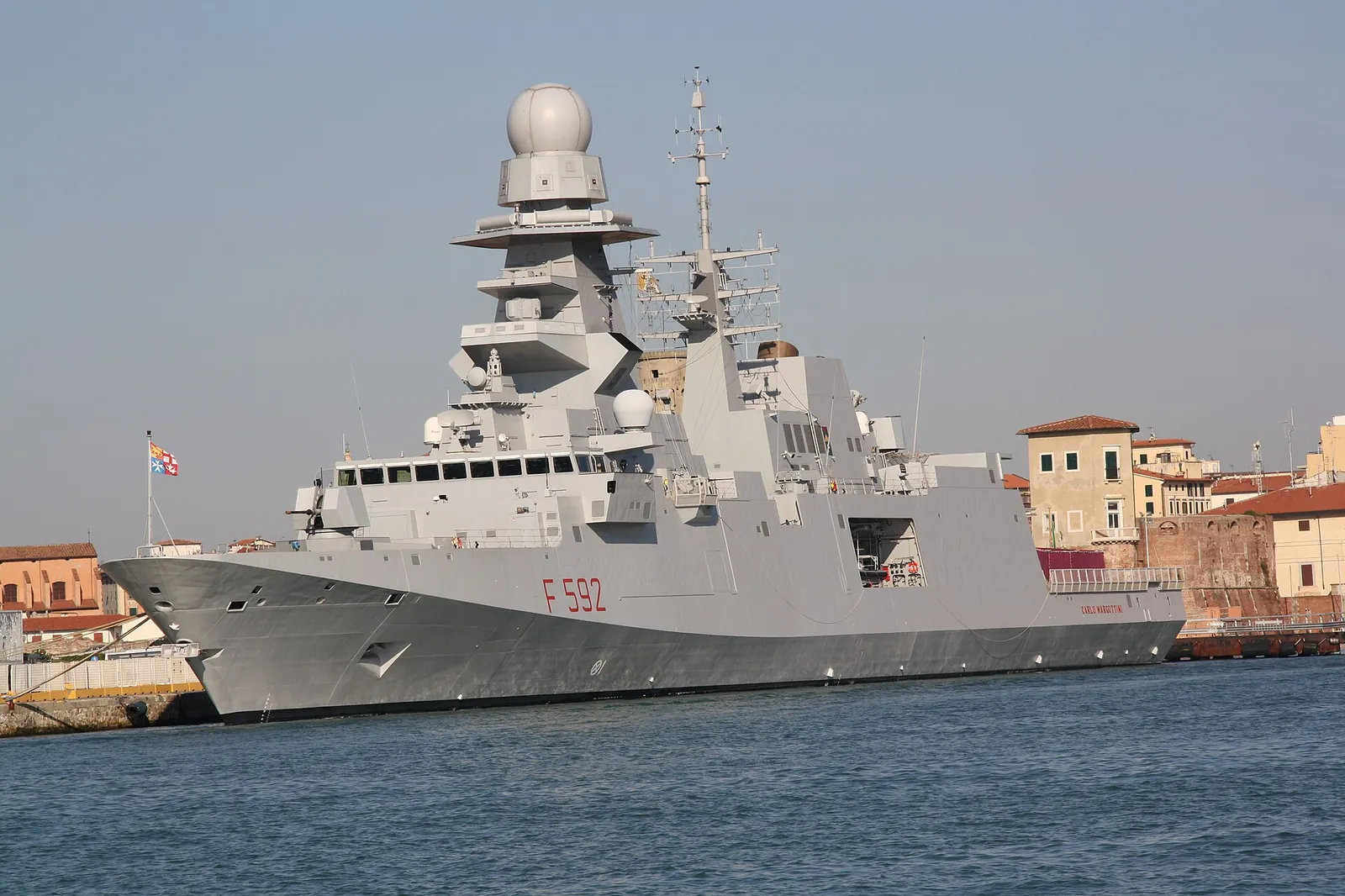
The contract Portugal signed to renew its surface fleet has turned into a domestic argument about price. Lisbon’s order for three FREMM EVO frigates from Italy’s Fincantieri is worth roughly €3.9 billion — about €1.3 billion per hull.
The comparison that stings
The figure stands out against what other customers of the same class have paid. When Italy ordered two FREMM EVO ships from the same industrial consortium in 2024, it agreed to roughly €750 million per vessel. That gap has become the focus of scrutiny in the Portuguese parliament and press.
Portugal’s Ministry of Defence argues the two numbers cannot be compared directly, citing three points:
- The contract is fixed-price, so inflation over the years to delivery is priced in up front.
- The ships will carry Portugal-specific systems and equipment.
- The design is being adapted for Atlantic operating conditions.
Deliveries are planned for 2029 and 2030, with financing expected through the European Union’s SAFE defence lending mechanism.
The French bid lost
Lisbon’s choice matters for the European frigate market. Portugal selected the Italian offer over an alternative centred on France’s Naval Group. FREMM began as a joint Franco-Italian programme, but the two national lines diverged over time — the French branch into the Aquitaine class, the Italian into the Bergamini class. EVO is the newest evolution of the Italian branch, with a larger hull, an updated sensor suite and a modular weapons fit.
What is driving European frigate prices
Portugal is not an outlier. Surface combatant costs across Europe have risen sharply over the past five years, for several converging reasons:
- Loss of scale. Small orders spread development and yard preparation costs across few hulls. A three-ship buy is far more expensive per unit than a ten-ship buy.
- The combat system share. Much of a modern frigate’s cost now sits in radar, sonar, electronic warfare and combat management software rather than steel.
- Supply chain and energy costs. Post-2021 increases in steel, cabling and electronic components have fed through into contracts.
- The fixed-price premium. A yard absorbing inflation risk over a long build prices that risk in from the start.
Fixed price, or long-term exposure?
The ministry’s fixed-price argument cuts both ways. Under a fixed-price contract the yard carries cost-growth risk and charges for it. Under a variable-price contract the headline figure looks lower, but invoices grow through the build and the final bill often lands well above the original number.
Two decades of European naval programmes suggest variable-price structures are more prone to overruns, which makes Lisbon’s choice defensible in principle. The open question is whether the premium is proportionate — and that is exactly where the parliamentary debate has settled.
Where Türkiye fits
This is a direct market signal for the Turkish naval sector. Türkiye is one of a small number of countries exporting in the corvette and frigate segment through the MİLGEM family: Babur-class corvettes have been delivered to Pakistan, an Ada-class hull was built for Ukraine, and discussions continue with several other navies.
That is precisely the space Turkish platforms compete in. When a European frigate reaches €1.3 billion per hull, a comparable mission set at a lower price point becomes a realistic option for navies with constrained budgets. Price alone is not decisive — combat management system maturity, weapons integration flexibility and after-sales support networks all shape the decision — but the cost gap is now wide enough to change shortlists.
The Portuguese case also underlines the effect of EU financing. Mechanisms such as SAFE are designed to steer member states toward intra-European procurement. That narrows direct access for non-EU suppliers and raises the value of joint production and local partnership models for Turkish industry.
Sources
- Portuguese Ministry of Defence statements
- Fincantieri corporate announcements
- European Commission public documents on the SAFE mechanism