Thales and Systematic team up on command and control for Danish air defence
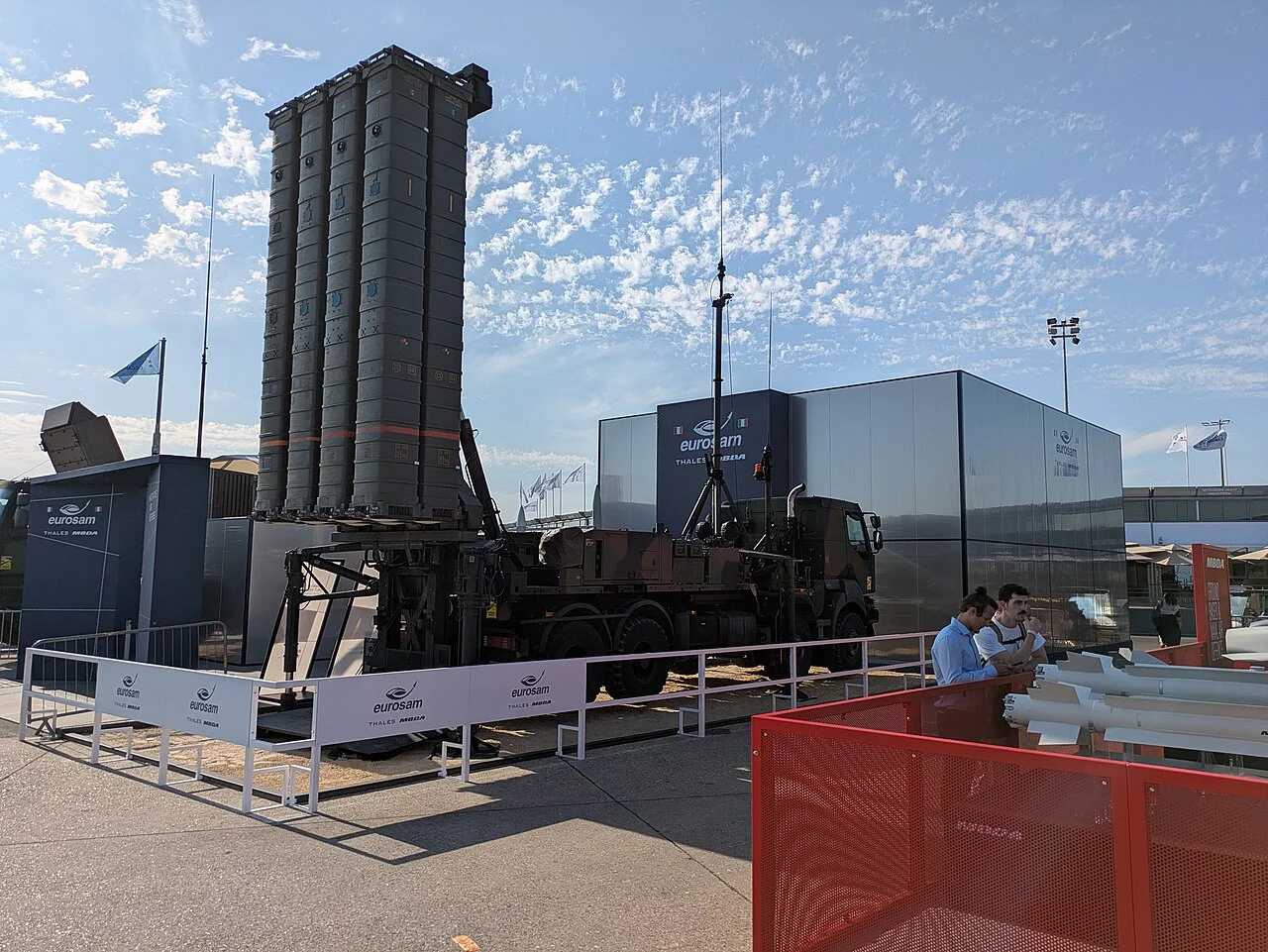
In Europe’s air defence build-up, the software that ties systems together is becoming as contested as the systems themselves. France’s Thales and the Danish software house Systematic have announced a strategic alliance to offer a joint command and control (C2) solution for Danish air defence. The announcement was made at industry days hosted by the Danish Ministry of Defence’s procurement agency.
The division of labour
The split is straightforward. Systematic contributes battle management and C2 software expertise; Thales brings air defence sensor and fire-control capability. The stated technical objective is to let the SAMP/T NG long-range air and missile defence system work under a single picture alongside the rest of Denmark’s air defence inventory.
Systematic’s contribution builds on its SitaWare C4ISR product family. Founded in 1985 and headquartered in Aarhus, the company is Denmark’s largest private software developer and a NATO trusted supplier with roughly 50 customers worldwide.
Systematic’s Klaus H. Qvist described the partnership as an important step toward strengthening Danish air defence “with trusted European technologies.” Thales said the cooperation would contribute to NATO’s Air Command and Control (ACCS) and surface-based air and missile defence (SBAMD) programmes.
Denmark’s rapid rebuild
Denmark was among the European states that effectively dismantled ground-based air defence after the Cold War. That choice has been reversed at speed, with Copenhagen acquiring several layers more or less simultaneously:
- VL MICA and IRIS-T SLM — short and medium range
- NASAMS — medium range
- SAMP/T — long range, with ballistic missile defence capability
- TPY-4 surveillance radars from Lockheed Martin
Denmark has also received US approval to buy Northrop Grumman’s Integrated Battle Command System (IBCS) for roughly €3 billion, though no contract has been signed for that item.
The real problem: one picture from many vendors
That shopping list creates a genuinely difficult engineering problem. French, German, Norwegian and American systems arrive with different sensor architectures, data formats and fire-control logic. Without a common air picture binding them, the result is not a layered defence but a set of mutually unaware islands.
This is where cost discipline lives in modern air defence. Two systems engaging the same target and wasting interceptors, or a low-altitude leaker slipping through a seam between layers, are failures of the C2 layer rather than the launchers. Ukraine’s experience made the point plainly: automating the decision of which layer engages which threat is what makes finite interceptor stocks last.
There is a procurement-politics dimension too. A NATO member fielding its C2 layer on a European solution rather than the US-origin IBCS is a concrete instance of the strategic autonomy debate. Buying sensors and effectors from several countries is broadly accepted; where the software that commands them is written is treated as a separate question of sovereignty.
Why SAMP/T NG is at the centre
SAMP/T NG is the next generation of the Franco-Italian long-range air and missile defence system, and the only fully European long-range solution with ballistic missile defence capability. The new-generation configuration pairs a rotating AESA radar with the improved Aster 30 B1NT interceptor, widening coverage and raising engagement performance against faster and manoeuvring targets.
Denmark’s choice of SAMP/T over Patriot adds to a small but growing European group. But the buy is only technically complete once the system operates under the same command chain as NASAMS, IRIS-T SLM and VL MICA — precisely the gap this alliance targets.
Türkiye faces the same problem
Unifying layers under one command is central to Turkish planning as well. The STEEL DOME concept answers exactly this need: bringing HİSAR-A+, HİSAR-O+, SİPER and KORKUT — different ranges, different mission profiles — under a shared air picture and centralised engagement management.
The difference is the starting point. Copenhagen buys systems off the shelf and sources the integration layer externally. Türkiye develops most of the chain from sensor to effector domestically, so the integration software sits inside the same ecosystem. That is a harder development path, but it allows the whole architecture to be exported as a single package.
Sources
- Thales corporate statement, 19 August 2026
- Systematic A/S corporate statement, 19 August 2026
- Danish Ministry of Defence procurement agency industry days programme