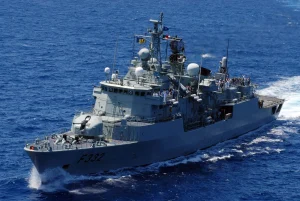
Pirates seize another ship off Somalia as coastal states stand up their own task force
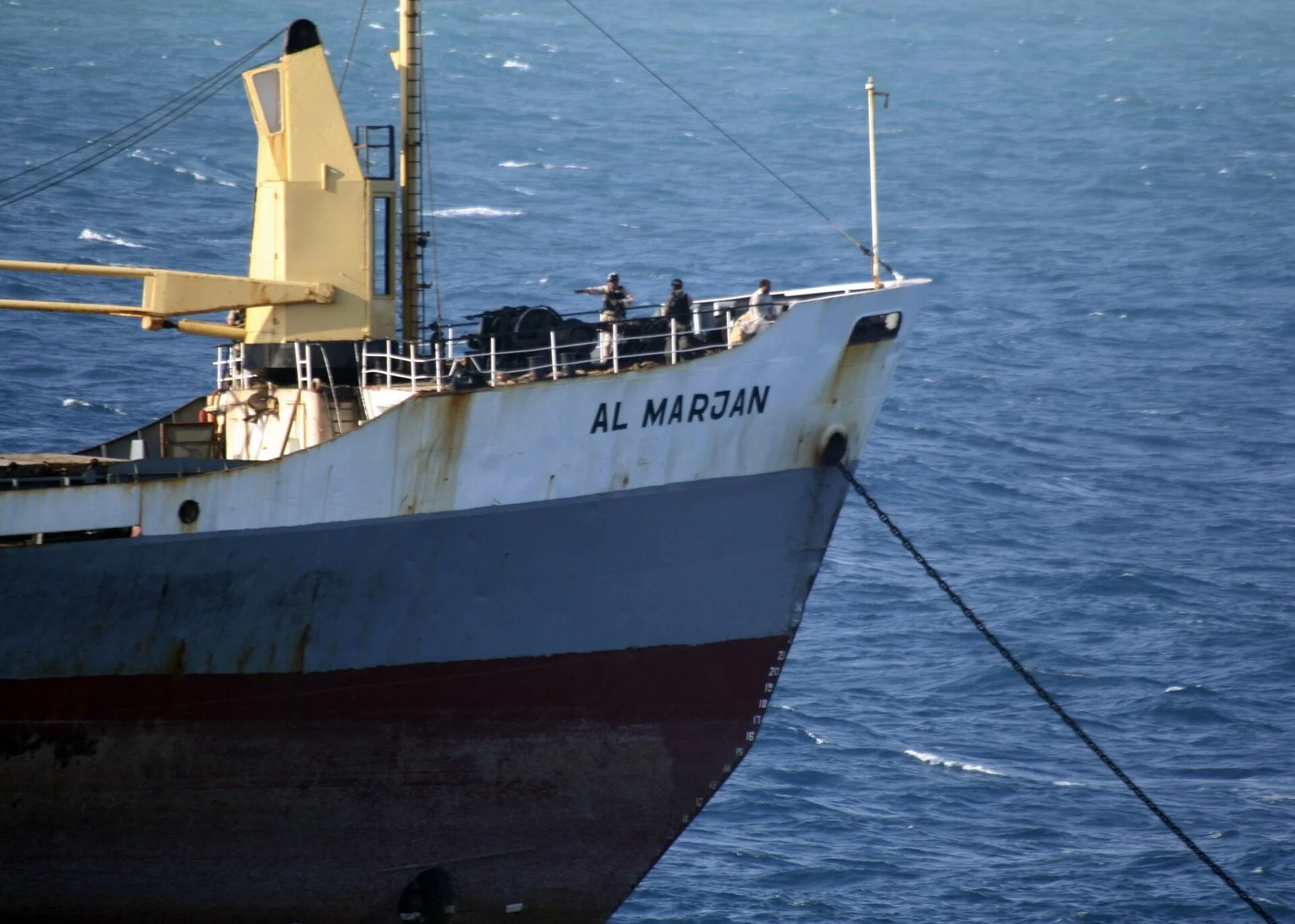
Commercial shipping off the Horn of Africa is living through its most dangerous stretch in more than a decade. On 17 August, armed men boarded the Cameroon-flagged general cargo ship MV Lutuf roughly four nautical miles off Mareeyo on the Somali coast. Eight crew members were aboard: six Indians, one Georgian and one Turkish national.
Armed guards were on board — and it did not stop the boarding
Regional maritime security reporting puts the attacking party at eight armed pirates. The uncomfortable detail is that the ship carried an embarked armed security team and was still taken. Since the early 2010s, privately contracted armed security has been the single most effective deterrent against Somali piracy; no vessel with an armed team aboard had been successfully hijacked for years. That record no longer holds.
The Lutuf had sailed from Tekirdağ, Türkiye, on 23 July and was bound for Dar es Salaam, Tanzania. In other words, a cargo ship that left the Sea of Marmara was seized in the western Indian Ocean after clearing Suez, the Red Sea and the Gulf of Aden.
A captured ship became the launch platform
The attack was mounted from MV Sward, a vessel the same network hijacked in April 2026 and has since operated as a mother ship. Sward has also been used to seize Iranian fishing dhows.
This is classic Somali piracy tradecraft rather than an innovation. A captured merchant hull solves the fuel, food and endurance problems that otherwise confine skiffs to coastal waters. With a mother ship, small fast boats can be delivered hundreds of miles offshore, directly onto the main east–west trade lanes.
Five ships since April, 44 sailors still held
The Lutuf is the fifth commercial vessel taken off Somalia since April 2026. Four ships and 44 crew remain in pirate hands:
- Honour 25 — hijacked 21 April 2026
- Sward — 26 April 2026
- Eureka — 2 May 2026
- Asana — 17 July 2026
Five hijackings in four months is a tempo not seen since 2011–2012, when Somali piracy peaked before being ground down by sustained naval patrols, armed teams aboard merchant ships, industry best-management practices and pressure ashore.
Why the deterrent eroded
At least two of those four pillars have weakened. The Red Sea security crisis that began in late 2023 pulled the bulk of available warships north toward Bab el-Mandeb and the southern Red Sea, thinning patrol density across the western Indian Ocean. Ashore, drought, collapsing fishing income and illegal foreign trawling have restored the economic logic that made piracy attractive in the first place.
Season matters too. The calm inter-monsoon window makes small-boat operations far offshore practical, and the cluster of attacks since April tracks that pattern closely.
Coastal states build their own force
The regional answer is now taking shape. Under the Djibouti Code of Conduct / Jeddah Amendment (DCoC/JA), participating states voted on 29 July to establish a new maritime task force; the decision was announced publicly on 13 August.
Its defining feature is the embarkation of sea-riders — officers from relevant coastal states placed aboard participating warships. That is a legal mechanism as much as an operational one. Having a coastal-state representative on board strengthens the basis for boarding, detention and eventual prosecution inside regional jurisdictions, closing the gap that has historically let suspects be released for want of a forum. A comparable model already operates in the Gulf of Guinea.
The new force is explicitly designed to complement, not replace, the Combined Maritime Forces and the European Union’s EUNAVFOR Atalanta.
The hostage equation
Somali piracy differs from the Gulf of Guinea model in one decisive respect: the target is the ship and its crew, not the cargo. West African attackers frequently siphon fuel and leave. Off Somalia, vessels are taken to anchorages near the coast and ransom negotiations can run for months.
Those talks are usually handled by owners, insurers and specialist negotiators rather than governments, which also constrains the rescue option — crew safety is the limiting factor on any military intervention.
Where Türkiye sits in this
Ankara is exposed on more than one axis. The Turkish Navy has maintained a rotating frigate presence in the Gulf of Aden and off Somalia for years and has commanded CTF-151, the counter-piracy task force under Combined Maritime Forces, on multiple occasions. The TURKSOM training facility in Mogadishu and the defence and maritime agreements signed with Somalia make Türkiye a direct stakeholder in the region’s security architecture rather than a distant contributor.
There is a commercial dimension as well. Turkish-owned and Turkish-crewed vessels use this corridor heavily, and a ship loaded in Tekirdağ being seized en route to East Africa makes the risk concrete: insurance premiums, routing decisions and armed-escort costs all move with it.
Neither the operational start date of the new DCoC/JA task force nor the list of contributing navies has been made public. The fate of the four ships and 44 sailors still held will be the practical measure of whether the region’s naval presence can re-establish deterrence.
Sources
- Djibouti Code of Conduct / Jeddah Amendment secretariat announcement, 13 August 2026
- Regional maritime security reporting centres, 17–19 August 2026
- EUNAVFOR Atalanta and Combined Maritime Forces public mission statements