Portuguese Navy Begins UAS Flight Trials From a Frigate Deck
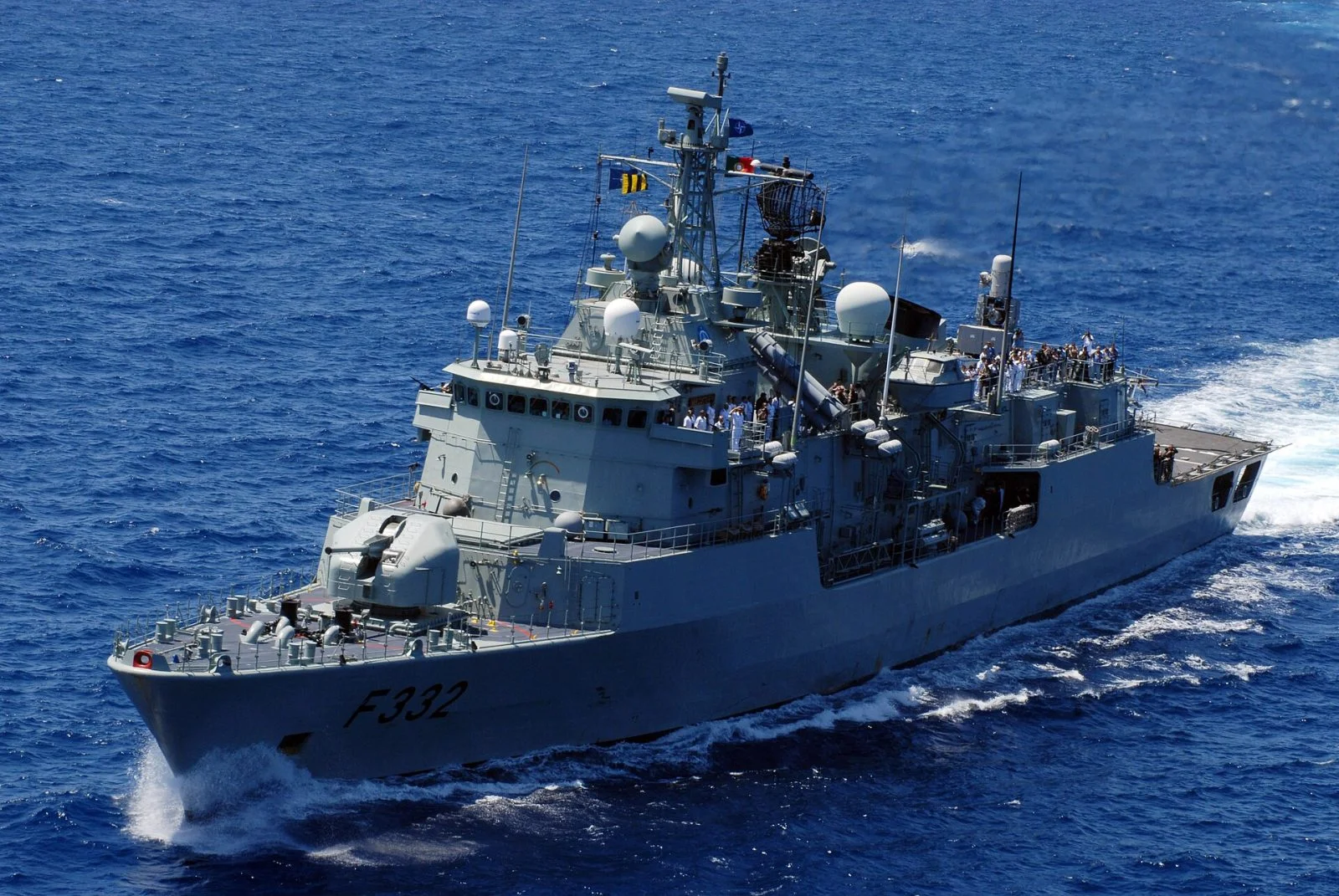
The Portuguese Navy has moved to a new stage in bringing unmanned aircraft onto the decks of its combatants. Flight trials aboard the Vasco da Gama-class frigate NRP Álvares Cabral (F331) tested how unmanned systems integrate into shipboard operations under real conditions at sea.
The trials were run by X31, the navy’s specialist unmanned systems unit, as part of the Iniciativa Mar Aberto 2026 deployment — the Portuguese Navy’s annual cooperation and training cruise with partner navies in the Gulf of Guinea and West African waters.
What the trials measured
According to the navy, the aim was to validate operating procedures, safety arrangements and interoperability for unmanned aircraft in demanding naval conditions. The areas covered included deck operations, launch and recovery coordination, airspace management, communications, and the integration of command-and-control flow into ship operations.
Every one of those headings points to a problem set distinct from simply flying the aircraft. A frigate flight deck is a confined space designed around a helicopter. Operating a second air vehicle from it while the ship is under way demands its own procedural set — for fuel and ordnance safety and for how deck crews are organised. Airspace management is just as critical: the ship’s helicopter, the unmanned aircraft and any patrol aircraft on task share the same volume.
The types of unmanned aircraft used in the trials and their manufacturers were not disclosed.
The Vasco da Gama class and what comes next
NRP Álvares Cabral is the second of the Portuguese Navy’s three Vasco da Gama-class ships. Derived from the German MEKO 200 design family, the class entered service in the early 1990s and forms the backbone of the surface combatant force. The ships carry a flight deck and hangar; re-evaluating that infrastructure for unmanned systems sits neatly with the logic of extending hull service life.
The real target of the trials, though, is a future platform. The Portuguese Navy launched the Multifunctional Naval Platform NRP D. João II, ordered from Dutch shipbuilder Damen, in April 2026. The vessel is designed to operate manned and unmanned aircraft alongside uncrewed surface and underwater vehicles. Procedural and safety lessons accumulated on the frigate will underpin that ship’s operating manual.
A shared European trend
Portugal is not alone on this path. A number of European navies are working to turn existing frigates and corvettes into unmanned systems carriers without building new platforms. The reasoning is twofold: new construction is slow and expensive, and unmanned systems expand the search radius available per hull comparatively cheaply.
The Gulf of Guinea is a natural proving ground for that capability. Piracy, illegal fishing and smuggling are spread across a wide maritime area; a frigate limited to its own radar horizon detects a fraction of it. An air vehicle with long endurance gives the same ship a search area several times larger.
The comparison with Türkiye
Türkiye has approached the same problem from a different scale. The Turkish Naval Forces configured TCG Anadolu as an unmanned aircraft carrier, and the Bayraktar TB3 became the first fixed-wing unmanned aircraft to take off from and land on a ship’s deck. The Bayraktar Kızılelma is being evaluated on the same platform.
That difference in scale flows from two different requirement definitions. For Portugal the question is extracting maximum surveillance output from a limited number of combatants. For Türkiye, unmanned aviation at sea is the route to power projection without a ship that carries crewed fighters. Underneath, though, the agenda is shared: deck procedures, airspace management and command-and-control integration. The data Portugal is gathering on a frigate deck applies to every navy trying to solve the same problems.
Sources
- Portuguese Navy (Marinha Portuguesa) — briefing on unmanned system flight trials aboard NRP Álvares Cabral, August 2026
- Portuguese Navy — Iniciativa Mar Aberto 2026 deployment programme
- Damen Shipyards / Portuguese Navy — launch announcement for the NRP D. João II Multifunctional Naval Platform, April 2026