What is the Eurofighter Typhoon? Europe’s Four-Nation Multi-Role Combat Aircraft, Explained

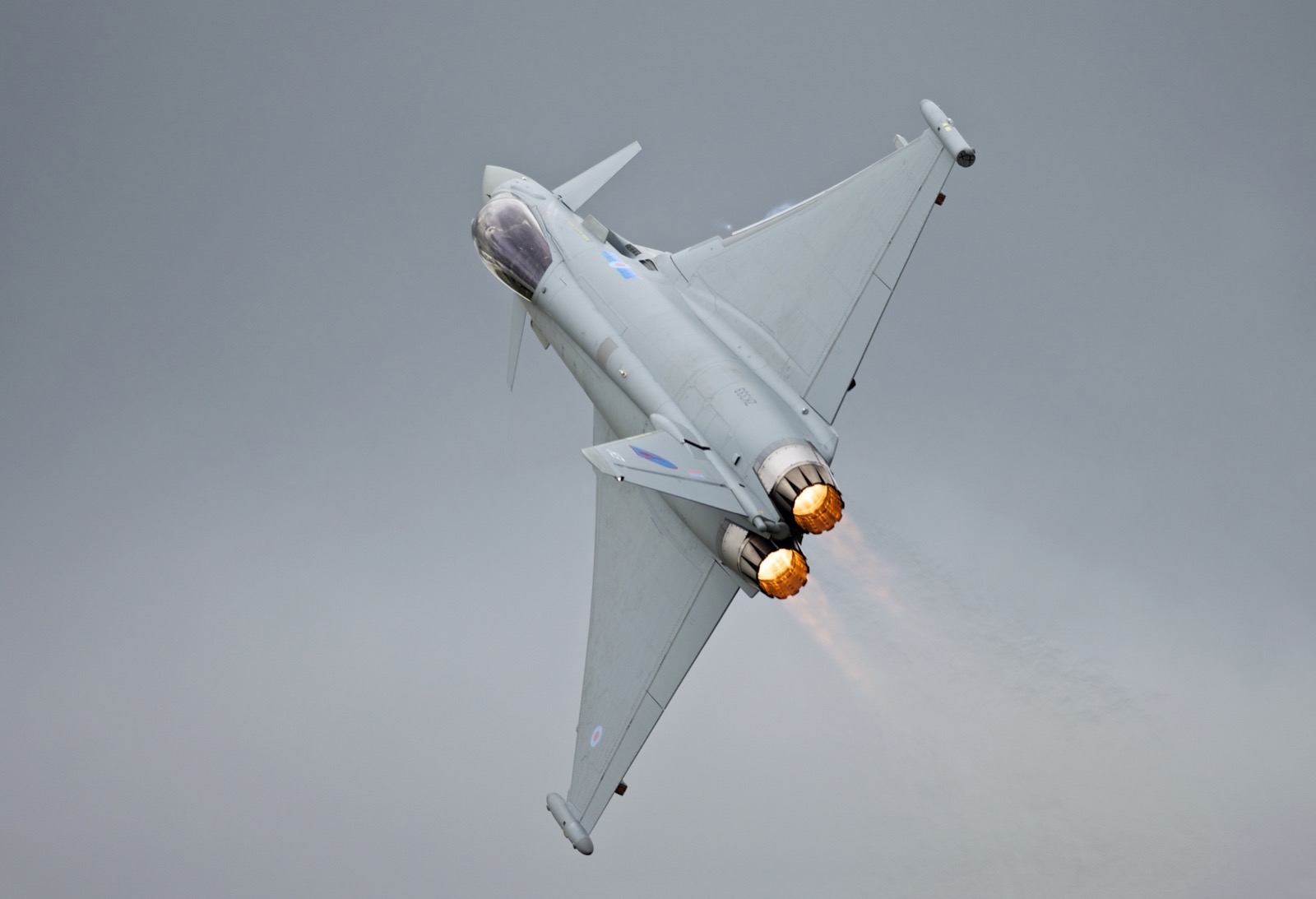
The Eurofighter Typhoon is a twin-engine, canard-delta multi-role combat aircraft built by the four-nation consortium Eurofighter GmbH, comprising BAE Systems (UK), Airbus Defence and Space (Germany and Spain) and Leonardo (Italy). Conceived in the 1980s as Europe’s answer to the U.S. F-15 and the Soviet Su-27, the Typhoon entered front-line service in 2003 and is now operated by nine air forces with more than 700 airframes delivered. The current Tranche 5 standard incorporates the ECRS Mk 2 AESA radar, MBDA Meteor BVR missile, and the integration roadmap toward the future GCAP / Tempest sixth-generation fighter that will succeed it in the 2040s.
Key facts at a glance
| Attribute | Value |
|---|---|
| Type | 4.5-generation multi-role combat aircraft |
| Manufacturer | Eurofighter GmbH (BAE Systems, Airbus, Leonardo) |
| First flight | 27 March 1994 |
| Service entry | 2003 |
| Crew | 1 (single-seat) or 2 (twin-seat trainer) |
| Engines | 2× Eurojet EJ200 turbofans, 90 kN with afterburner each |
| Length | 15.96 m |
| Wingspan | 10.95 m (canard delta) |
| Empty weight | 11,150 kg |
| MTOW | 23,500 kg |
| Max speed | Mach 2.0 |
| Supercruise | Mach 1.5 (clean configuration, no afterburner) |
| Combat radius | 1,389 km (air-to-air); 601 km (air-to-ground low altitude) |
| Service ceiling | 16,765 m |
| Internal cannon | 1× 27 mm Mauser BK-27 |
| Hardpoints | 13 |
| Operators | UK, Germany, Italy, Spain, Austria, Saudi Arabia, Oman, Kuwait, Qatar |
| Unit cost (Tranche 4) | ~ USD 124 million |
From ECF to Tempest: 40 years of European combat aviation
The Typhoon’s origins trace to the 1979 European Combat Fighter (ECF) study. After France’s departure to develop the Rafale, the remaining partners — UK, Germany, Italy and Spain — signed the Eurofighter contract in 1988. First flight took place at Manching, Germany in 1994. Series production began in 2002; deliveries to the RAF, Luftwaffe, Aeronautica Militare Italiana and Ejército del Aire began in 2003. As of late 2025, total deliveries had reached approximately 711 aircraft.
Tranches
| Tranche | Years | Key feature |
|---|---|---|
| Tranche 1 | 2003–2008 | Initial air-to-air; CAPTOR-M radar |
| Tranche 2 | 2008–2013 | Multi-role; integration of AGM-65, Paveway IV, ALARM |
| Tranche 3 | 2014–2020 | Storm Shadow / SCALP, Meteor, Brimstone 2, conformal-tank-ready |
| Tranche 4 (Quadriga / EK) | 2020–2025 | CAPTOR-E AESA radar (Mk 1); German EK ECR (electronic combat role) |
| Tranche 5 (LTE) | 2025– | ECRS Mk 2 AESA, IRIS-T integration with future MAWS |
Weapons
The Typhoon’s 13 hardpoints can carry a wide range of munitions integrated across the multi-nation customer base:
| Role | Weapons |
|---|---|
| BVR air-to-air | MBDA Meteor (UK, Italy, Germany, Spain), AIM-120D AMRAAM (all) |
| WVR air-to-air | IRIS-T (Germany, Italy, Spain), ASRAAM (UK), AIM-9X (export) |
| Air-to-surface | Paveway IV, Paveway II/III, GBU-48/49, Brimstone 2, Storm Shadow / SCALP, RBS-15 (anti-ship) |
| Electronic warfare | SPEAR-EW (UK, planned), Sky Shadow ALQ-202 jamming pods |
Operators
| Country | Number | Notes |
|---|---|---|
| UK (RAF) | 137 | Replacing Tornado GR4 and Tornado F3 |
| Germany | 138 | Includes Tranche 4 Quadriga and Eurofighter EK ECR |
| Italy | 96 | Includes AESA upgrade fleet |
| Spain | 72 | +25 ordered as “Halcon” |
| Austria | 15 | Tranche 1 (under modernization) |
| Saudi Arabia | 72 | Salam contract (Tranche 2/3) |
| Oman | 12 | |
| Kuwait | 28 | Italian-built; Tranche 3 standard |
| Qatar | 24 |
Türkiye is currently negotiating a 40-aircraft purchase following Germany’s withdrawal of its block in 2024; signature is expected in 2026.
Combat record
- 2011 — Libya. RAF and Italian Typhoons conducted Operation Ellamy strikes against Libyan regime targets.
- 2015–present — Iraq / Syria. RAF Typhoon FGR4 deployed under Operation Shader against Islamic State.
- 2015–present — Yemen. Saudi Tornado and Typhoon strikes against Houthi targets.
- 2018 — Syria. RAF Typhoons participated in the 14 April joint strike with Storm Shadow.
- 2024 — Houthi conflict. RAF Typhoons launched Paveway IV strikes against Houthi missile sites in Yemen.
- 2024 — Iran strikes (October). RAF Typhoons supported the U.S. and Israeli response with QRA and Mediterranean air-defense.
Typhoon vs. its peers
| Typhoon Tranche 5 | Dassault Rafale F4 | Saab Gripen E | F-35A | |
|---|---|---|---|---|
| Generation | 4.5 | 4.5 | 4.5 | 5 |
| Engines | 2× EJ200 | 2× Snecma M88-4 | 1× GE F414G | 1× F135 |
| Max speed | Mach 2.0 | Mach 1.8 | Mach 2.0 | Mach 1.6 |
| Supercruise | Mach 1.5 | Mach 1.4 | Mach 1.2 | Mach 1.2 |
| Combat radius | 1,389 km | 1,852 km | 1,500 km | 1,240 km |
| Radar | ECRS Mk 2 AESA | RBE2-AA AESA | Raven ES-05 AESA | AN/APG-81 AESA |
| BVR missile | Meteor + AMRAAM | Meteor + MICA | Meteor + AMRAAM | AMRAAM + AIM-260 |
Tempest / GCAP successor
The Typhoon’s successor is being developed under the Global Combat Air Programme (GCAP), a UK-Italy-Japan industrial partnership announced in 2022, integrating the UK Tempest and Japanese F-X programs. GCAP will field a sixth-generation fighter with adaptive-cycle engines, optionally manned operations, integrated loyal-wingman teaming, and stealth shaping. First flight is planned for 2027 with operational service from 2035. The Typhoon will continue to serve in the front line through the 2040s alongside the new aircraft.
Why the Typhoon matters
The Typhoon was Europe’s industrial proof that four nations could deliver a competitive front-line fighter without U.S. partnership. Two decades later it remains the only large 4.5-generation aircraft in continuous Western production, anchors the air-defense forces of all four manufacturing partners plus five export customers, and provides the industrial bridge to the GCAP / Tempest sixth-generation successor. The Tranche 5 upgrade — with ECRS Mk 2 AESA radar and Meteor — keeps the airframe competitive against any current 4.5-generation rival for at least another decade.