First Fully US-Made Tamir Interceptor Delivered to Israel as Arkansas Line Opens

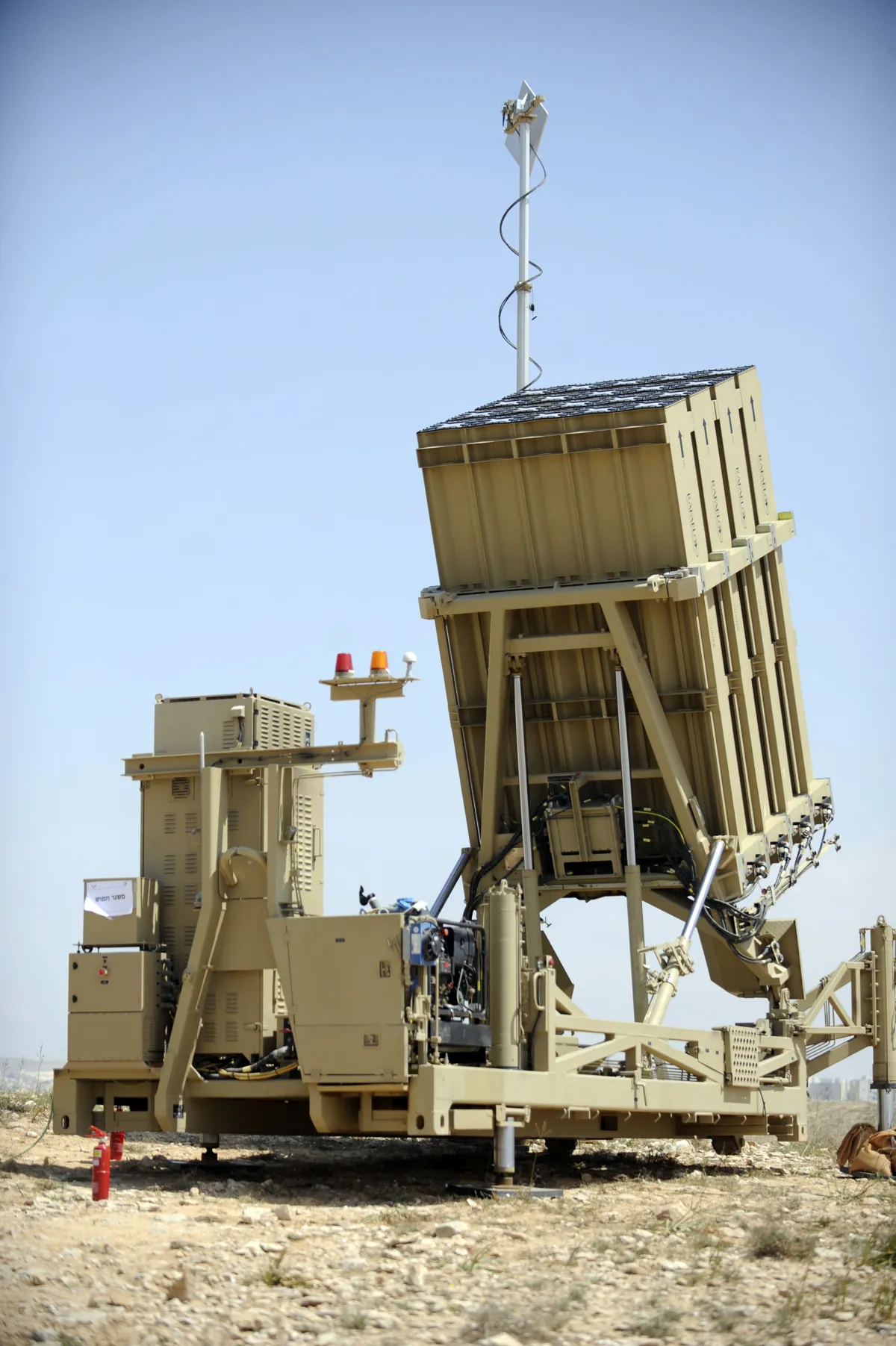
Quick take: The first Tamir interceptor built and assembled entirely on US soil has been delivered to Israel’s Missile Defense Organization from a Raytheon-Rafael joint venture (R2S) facility in East Camden, Arkansas. It is the first site outside Israel to produce complete Tamir interceptors from start to finish.
The facility and its timeline
The East Camden production line opened in November 2025. Reporting from 2024 described a roughly $33 million investment in setting up the line, with operations originally expected to begin in 2025. The plant is expected to create up to 60 new regional jobs.
Built on an earlier partnership
The facility grew out of the existing partnership between Raytheon and Rafael Advanced Defense Systems. The two companies had already cooperated on components tied to the Iron Dome batteries fielded for US Army testing; the new Arkansas line extends that partnership for the first time to the full Tamir interceptor itself.
Why manufacture it in the United States?
The move is meant to strengthen the US-Israeli missile defense supply chain and speed up deliveries. Israeli officials have warned that depleted stockpiles and delays in new procurement orders could affect future readiness. A second production source in the United States is meant to reduce that risk. Relying on a single production base in Israel during periods of intensified regional conflict had created a supply vulnerability; the Arkansas line now spreads that production geographically.
Tamir’s technical profile
Tamir intercepts rockets and similar short-range threats at ranges of roughly 4 to 70 kilometers, using radar guidance, a command datalink and a blast-fragmentation warhead. It serves as the interceptor component of Israel’s Iron Dome system and is considered one of the most operationally tested short-range air defense missiles in the world. The US Army itself purchased two Iron Dome batteries in 2020 for testing in its own coastal and base-defense role, an earlier point of direct contact between the US and the system that predates the Arkansas production line.
The SkyHunter connection
The same plant will also build SkyHunter, the US-specific version of Tamir, developed for the US Marine Corps’ Medium-Range Intercept Capability (MRIC) system, which is meant to protect forward-deployed Marine units from drones and rockets. Producing SkyHunter on the same line means the facility now serves both US domestic demand and Israeli export demand from a single site, a dual-use model that is becoming increasingly common in the defense industry.
Why it matters for Turkey and NATO
Iron Dome remains the global reference point for rocket and mortar counter-fire systems, and Turkey’s own Çelik Kubbe architecture — which unifies SİPER, HİSAR, KORKUT and SUNGUR under one framework — is frequently compared to it in public discussion. The US decision to build a second Tamir production base shows how central allied co-production and supply-chain diversification have become in the defense industry, offering a direct reference point for Turkey’s own localization and potential co-production plans. KORKUT and SUNGUR, which form Çelik Kubbe’s lowest tier, target largely the same rocket, mortar and artillery threat profile Iron Dome was built for, making the Arkansas expansion a precedent worth watching for a competing Turkish system eyeing serial production and export. NATO’s growing focus on short-range air defense and counter-drone capability since Russia’s war in Ukraine has only sharpened comparisons between systems like Iron Dome and Çelik Kubbe across the alliance.
Sources
- Army Recognition, ‘U.S. delivers first American-made Iron Dome Tamir missile to expand Israel’s interceptor supply,’ 2026 — used for the facility, delivery and supply-chain context.
- KATV (Arkansas local news), ‘Camden-made Tamir missiles delivered, launching Iron Dome production in Arkansas,’ 2026 — used for facility location, job figures and local confirmation.
- EDR Magazine, ‘First Iron Dome Tamir interceptor fully produced in the U.S. delivered to Israel,’ 2026 — used to cross-verify the SkyHunter connection and technical details.