Lockheed Martin Unveils PAC-3 Edge: New Patriot Interceptor Targets 2031 Fielding

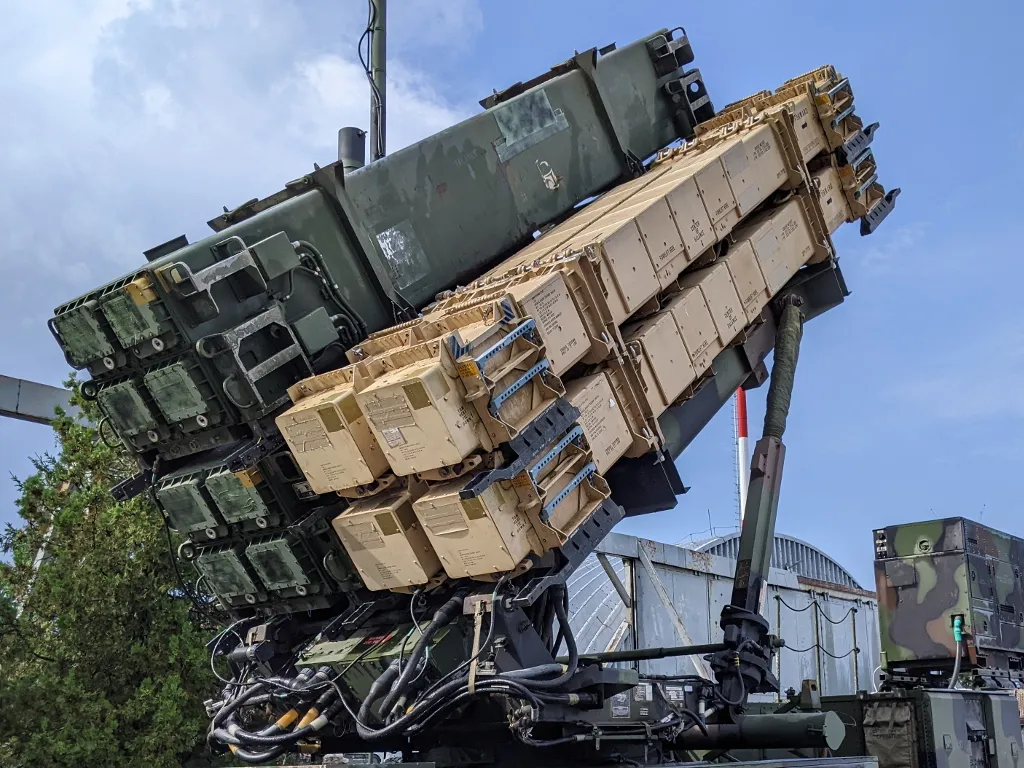
Quick take: Lockheed Martin unveiled a new Patriot interceptor called PAC-3 Edge on October 9, 2026, ahead of the US Army’s annual AUSA meeting. The company is pitching it as its entry into the Army’s new Future Interceptor program, with a stated goal of fielding the missile by 2031 against hypersonic and advanced missile threats.
Built on the proven PAC-3 MSE airframe
Rather than starting from a clean sheet, Lockheed built PAC-3 Edge on the existing PAC-3 Missile Segment Enhancement (MSE) architecture already in service. The company added a new seeker, upgraded flight controls and a more capable rocket motor to the established production line and airframe, an approach meant to shorten development time while keeping unit cost close to the existing MSE.
A new seeker and a stronger motor
Lockheed says it has invested $250 million in the new seeker, designed at its Strigo Product Center. Propulsion comes from a multi-pulse (some reports say three-pulse) solid rocket motor built by Northrop Grumman. Together, the company says this combination extends range and altitude beyond the MSE, which it frames as the key differentiator against hypersonic and highly maneuverable threats.
The Future Interceptor program and a crowded field
According to Breaking Defense, the Army picked Lockheed Martin and one undisclosed second company to advance to the next phase of this previously unannounced Future Interceptor effort. PAC-3 Edge is not Lockheed’s only low-cost pitch: the company separately unveiled PAC-3 ACE at the Farnborough Airshow in July 2026, priced at roughly half the MSE’s cost. In May 2026, the Army had already opened a separate search for a Patriot-compatible interceptor priced under $1 million per unit. During the same AUSA week, defense startup Anduril added another competitor by unveiling its modular Steelfin missile family, aimed at the same low-cost interceptor segment.
Cost and production targets
Tim Cahill, president of Lockheed Martin’s Missiles and Fire Control business, said PAC-3 Edge’s unit cost is meant to stay comparable to the existing MSE. Under a January 2026 framework agreement, the company plans to raise annual PAC-3 production capacity from roughly 600 units to about 2,000, a target PAC-3 Edge’s full-rate manufacturing plan is designed to match.
Launcher compatibility and schedule
The missile is designed to work with the Integrated Battle Command System (IBCS), the M903 launcher, containerized launch systems and HIMARS Flex. Cahill has stressed that PAC-3 Edge is meant to supplement the MSE rather than replace it. Flight testing is scheduled to begin in 2027, with fielding targeted for 2031.
Why it matters for NATO and Turkey
Patriot batteries sit in the inventories of numerous NATO members, including Germany, the Netherlands, Poland, Romania and Spain, forming a core part of the alliance’s integrated air and missile defense posture. Turkey does not operate Patriot itself — allied Patriot batteries were temporarily deployed along its Syrian border between 2013 and 2015 — and has instead built its own layered architecture around SİPER, HİSAR and the unifying Çelik Kubbe framework. The low-cost, high-volume manufacturing logic behind PAC-3 Edge offers a direct point of comparison for Turkey’s own serial-production and export ambitions in the SİPER and HİSAR families.
Sources
- Lockheed Martin press release, ‘Lockheed Martin Debuts PAC-3 Edge for the U.S. Army’s Innovative Future Interceptor Program,’ October 9, 2026 — used for product architecture, the Strigo investment and program framing.
- Defense News, ‘Lockheed Martin unveils PAC-3 Edge interceptor designed to counter hypersonic threats,’ October 10, 2026 — used for independent confirmation and Future Interceptor program details.
- Military Times, same headline, October 10, 2026 — used for cross-verification of cost and production figures.