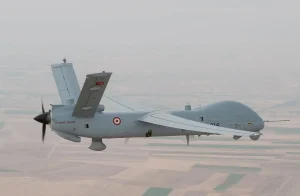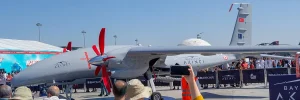






Why Did Poland Buy the Bayraktar TB2? Inside NATO’s First Turkish Drone Deal

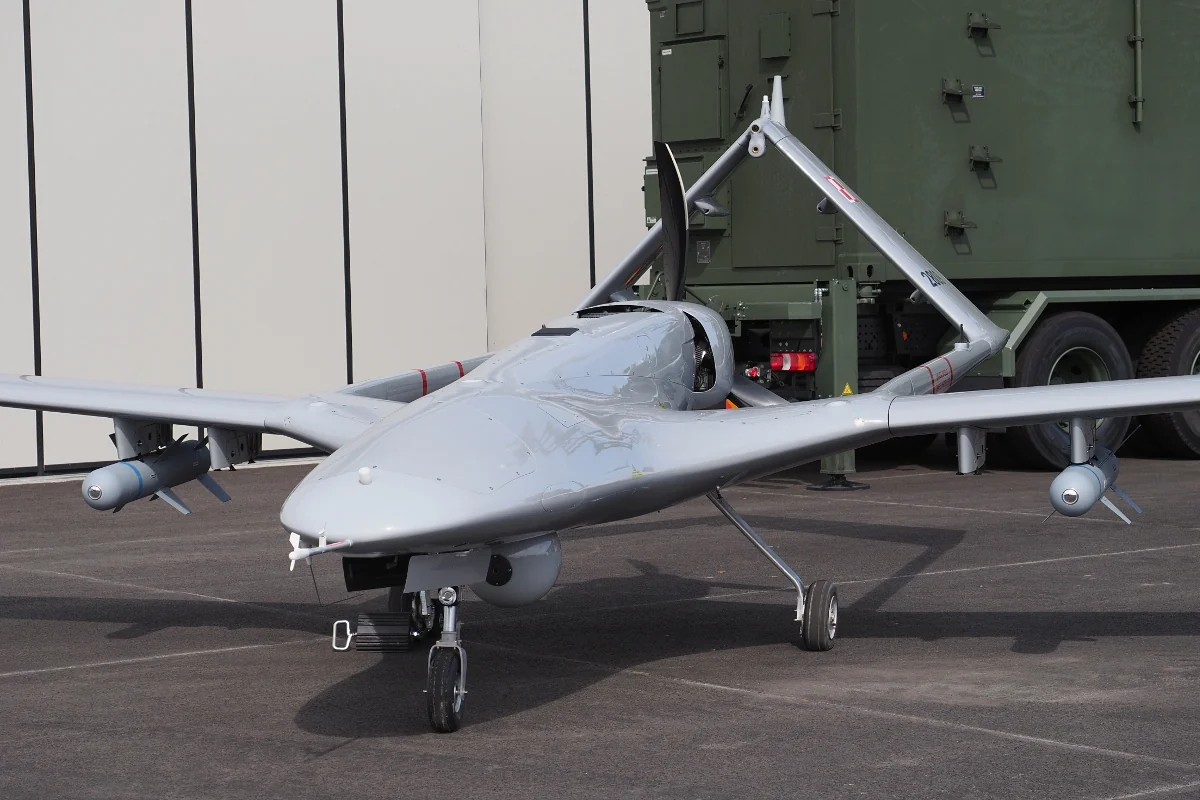
Poland was the first NATO and European Union member state to buy the Bayraktar TB2. The roughly $270 million contract was never a bare platform purchase: munitions, radar, simulators, training and depot-level maintenance rights went into the same package. This file examines the military requirement behind the decision, what else was on the table, and what the contract actually contained.
The short answer
Poland did not buy the TB2 to replace its long-term unmanned programmes. According to the defence minister’s own statement in June 2021, the purchase was run separately from the Gryf and Zefir efforts, under an urgent operational requirement. Four things shaped the decision: there was no armed unmanned system in the inventory; the air force needed something that could actually arrive within a reasonable period after signature; the munitions and ground support had to come in a single package; and the surveillance burden along the eastern border had risen sharply by 2021.
What the decision was not is equally important. Explaining it purely as a price choice does not survive contact with the evidence, because eighteen months later Poland leased MQ-9As for unarmed long-endurance surveillance. The country was filling two different gaps in parallel — not picking one aircraft over another.
What did Poland actually need?
Procurement decisions only make sense from the buyer’s side of the table. Poland covers 312,700 square kilometres, making it the sixth largest country in the European Union. It has 440 kilometres of Baltic coast to the north and land borders with Belarus, Ukraine and the Russian exclave of Kaliningrad to the east. Outside the Carpathians and Sudetes in the south, the terrain is largely plain and low hill country with few natural barriers. In practical terms that means a wide land frontier that has to be watched continuously.
By 2021 the Polish unmanned inventory sat almost entirely in the tactical and mini classes: FlyEye systems from WB Group, Orbiter families and the Warmate loitering munition. None of these was a medium-altitude, long-endurance platform able to stay up, find a target and then engage it with its own weapon. The distinction matters more than the shared label suggests — a reconnaissance aircraft and an aircraft that can strike what it finds are not the same category of tool.
| Class | System | Role | Armed? | Endurance |
|---|---|---|---|---|
| Mini | FlyEye (WB Group) | Battalion/brigade recce | No | ≈2.5 hours |
| Tactical | Orbiter family | Short-range surveillance | No | ≈3-4 hours |
| Loitering munition | Warmate (WB Group) | Single-use strike | Is itself the weapon | ≈1 hour |
| MALE / armed | Gap | Sustained recce plus strike | — | — |
What the country was missing
The shortfall in 2021 was not “a drone”. It was a single platform combining sustained surveillance with precision strike. The minister’s stated reasoning in May 2021 pointed the same way: no Polish company was producing an armed unmanned aircraft in that capability band. The claim was debated domestically, and the fair summary is that Polish industry was genuinely strong in the tactical class but had no serial production line for an armed MALE-class system.
What was the Bayraktar TB2 offering?
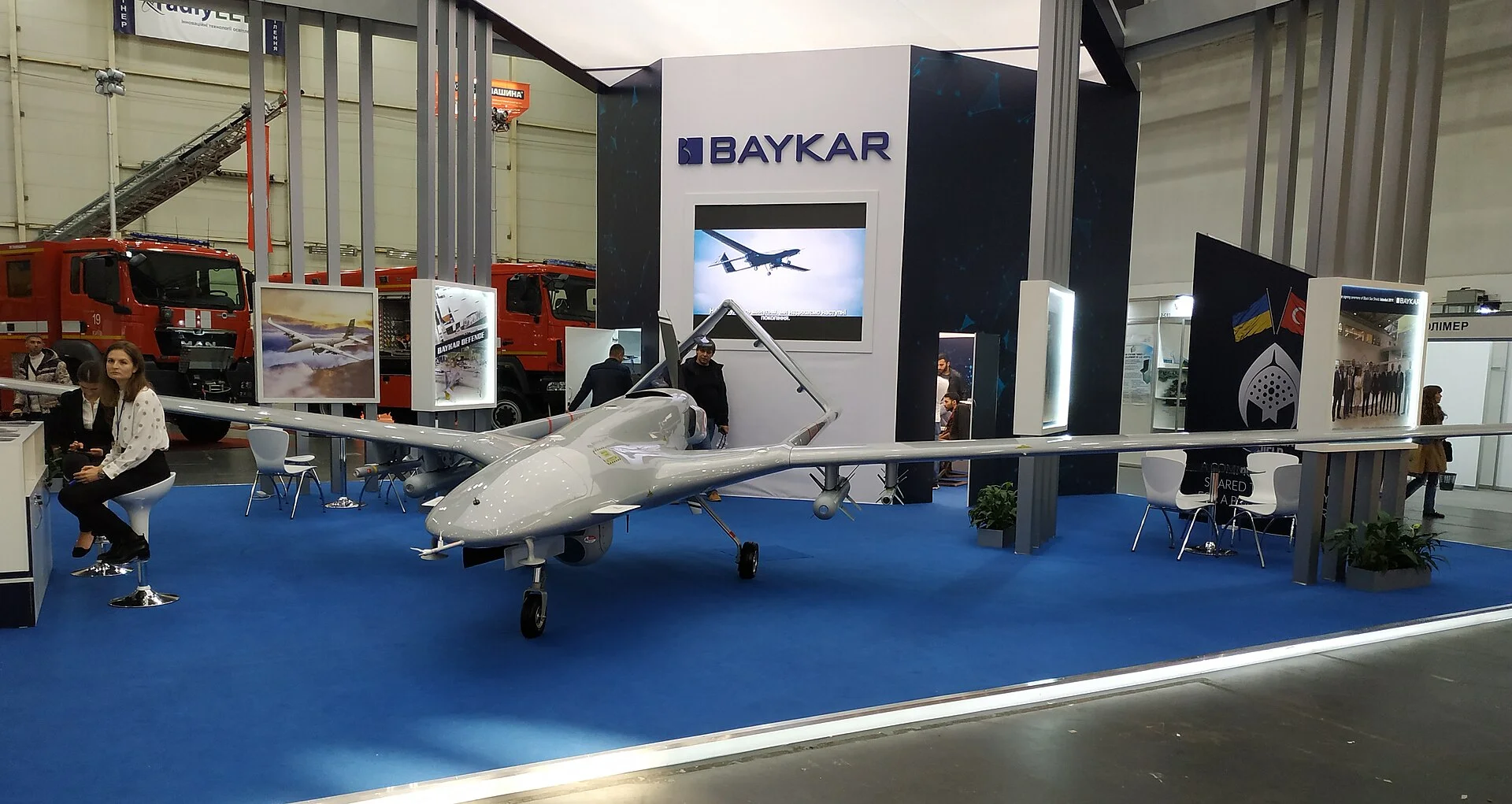
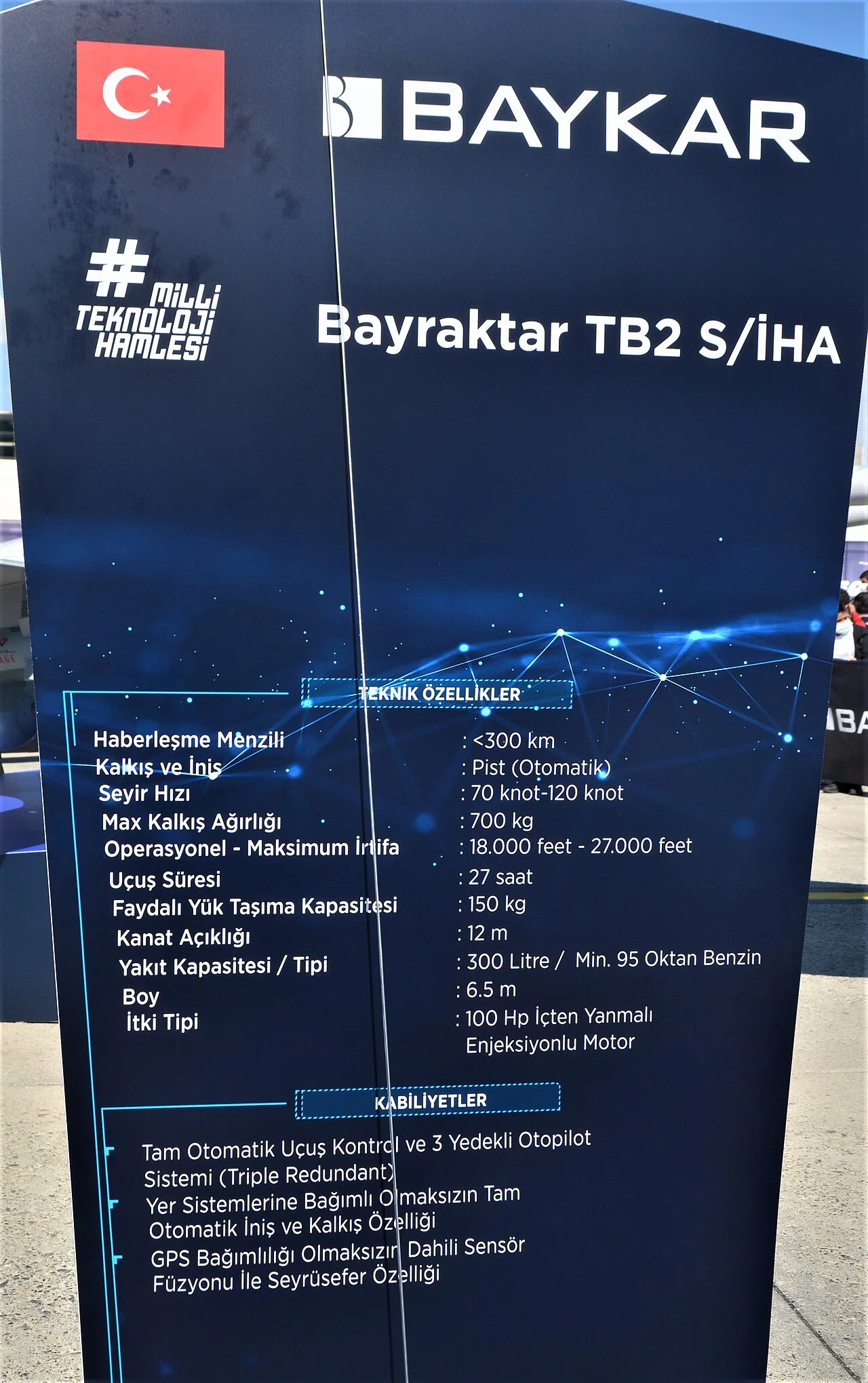
The TB2 is a tactical-class armed unmanned aircraft developed by Baykar. It has a 12-metre wingspan, a 6.5-metre fuselage, carries up to 150 kilograms of payload and operates to a ceiling around 27,000 feet, with endurance reaching 27 hours depending on configuration. Its data link range is in the order of 150 kilometres — the single most important technical boundary separating it from satellite-controlled strategic systems, and a point this file returns to.
The distinguishing feature of the Polish configuration was that the platform was not sold on its own. The contract covered NATO-compatible ground control stations, synthetic aperture radar, simulators, a training package, spares, and the MAM-L and MAM-C smart munitions produced by Roketsan. Anyone who has watched a capability sit grounded waiting on a separate weapons contract will recognise why that packaging matters.
| Component | Detail | Source status |
|---|---|---|
| Air vehicle | 4 sets × 6 = 24 Bayraktar TB2 | Announced contract scope |
| Ground control station | 4 sets × 3 = 12 stations | Announced contract scope |
| Sensor | Electro-optical / infrared turret | Announced contract scope |
| Radar | Synthetic aperture radar | Announced contract scope |
| Munitions | MAM-L and MAM-C smart munitions | Announced contract scope |
| Training | Delivered by Baykar at two separate sites | Announced contract scope |
| Simulators | Operator training simulators | Announced contract scope |
| Maintenance rights | Depot-level transfer for engine, ground station and EO/IR | Announced contract scope |
| Per-item pricing | Cost broken down by line | Never officially released |
Why was the Turkish system a candidate at all?
Before any defence product can win a competition it has to clear a duller test: can it be bought now? In spring 2021 the armed MALE segment was thin on options that were simultaneously in serial production, exportable to Poland without a long approval chain, and available with weapons attached.
The American MQ-9 family was mature but sat inside an export approval process with its own timeline, and the armed configuration carried additional conditions. Israeli systems were technically strong, though the armed variants faced their own export considerations. Chinese platforms in the class, widely exported elsewhere, were not a realistic option for a NATO member integrating into alliance command and communications architecture — a constraint that has shaped procurement well beyond Poland, as the comparison of Turkish and Chinese drones in the Sahel illustrates from the opposite direction.
That left a short list, and on it the TB2 had a specific profile: in production, already flying with multiple operators, offered with its munitions, and deliverable on a timeline measured in months rather than years.
Why did Poland choose the Bayraktar TB2?
Separating verified contract facts from editorial assessment
Sources: Polish Ministry of National Defence statements, Baykar announcements, NSPA releases and international defence press. Boxes marked “ASSESSMENT” are Envanter Medya interpretation.
What else was on the table?
Comparing candidate aircraft on maximum altitude and endurance alone misses how the decision was actually framed. The table below ranks them on the criteria that governed this particular purchase.
| System | Origin | Available in 2021? | Munitions included? | Export chain |
|---|---|---|---|---|
| Bayraktar TB2 | Türkiye | Yes, in serial production | Yes, MAM-L / MAM-C | Direct, bilateral |
| MQ-9 family | United States | Yes | Separate process | Government approval chain |
| Heron TP class | Israel | Yes | Configuration dependent | Case-by-case approval |
| Wing Loong / CH class | China | Yes | Yes | Not viable for NATO integration |
| Eurodrone | European consortium | No, in development | In definition | Multinational programme |
Read that table as a snapshot of 2021 rather than a verdict on the aircraft. On raw performance the ranking would look different — the AKINCI and MQ-9B SkyGuardian comparison shows how the picture changes once satellite control and heavier payloads enter the frame. Poland was not shopping for the most capable aircraft in the world. It was shopping for the most capable aircraft it could have flying, armed, within about a year and a half.
From announcement to NATO deployment
The Polish TB2 programme, 2019 to 2026
Two entries in that chart deserve a second look. The first is the gap between 22 and 24 May 2021 — two days between public announcement and signature. Contracts do not move that fast unless the negotiation is essentially finished before the announcement, which is consistent with an urgent-requirement route rather than an open competition. The second is October 2022, where the MQ-9A lease appears on the other track. That is the entry most commentary gets wrong.
The MQ-9A lease: not a correction, a second gap
When Poland leased MQ-9A aircraft in October 2022 for roughly $70.6 million, the move was widely read as a signal about the TB2. It was not. The two systems were acquired for different missions, and treating one as a verdict on the other misreads both.
| Dimension | Bayraktar TB2 | MQ-9A (leased) |
|---|---|---|
| Primary role | Armed tactical reconnaissance | Unarmed long-endurance ISR |
| Weapons | MAM-L / MAM-C carried | Not in the lease configuration |
| Control link | Line of sight, order of 150 km | Satellite capable |
| Ownership | Purchased outright | Leased |
| Sustainment | Depot-level rights transferred | Contractor supported |
| What gap it fills | Find and strike in one sortie | Persistent wide-area watch |
Reading procurement signals correctly
A follow-on purchase of a different aircraft is not automatically a judgement on the earlier one. Air forces layer capabilities: a line-of-sight armed platform and a satellite-linked surveillance platform coexist in many inventories precisely because neither substitutes for the other. The analytical error is assuming a single requirement where there were two.
What the deal did not include
An honest procurement file has to state the limits as clearly as the wins. Three things are absent from this contract.
There is no local production. No part of the TB2 is manufactured in Poland. Compared with countries that negotiated assembly lines or licensed production — the licensed-production route taken with the Karayel-SU is one example of how that can be structured — Poland took the fastest path, not the deepest one.
There is no design transfer. The maintenance rights cover sustaining the system, not modifying or reproducing it. Poland can keep its aircraft flying without returning them to the manufacturer for routine depot work; it cannot develop a national variant.
There is no published price breakdown. The $270 million figure covers the whole package. Any per-aircraft number in circulation is derived, not official, and this file does not treat derived figures as procurement data.
EM-PFI assessment
The Envanter Medya Procurement Fit Index scores how well a procurement decision can be explained across ten criteria, out of 100. It is an editorial instrument, not an official rating, and it is deliberately unforgiving where a package is thin.
Poland × Bayraktar TB2 — EM-PFI breakdown
Distribution by criterion, out of 100
EM-PFI is an Envanter Medya editorial assessment, not an official index.
| Criterion | Score | Reasoning |
|---|---|---|
| Operational fit | 18 / 20 | A clearly stated capability gap, filled by exactly the class of system missing |
| Technical suitability | 12 / 15 | Strong in role, but the line-of-sight link caps the mission envelope |
| Geography and climate | 8 / 10 | Wide flat frontier suits sustained patrol |
| Existing inventory fit | 8 / 10 | New class rather than a replacement; NATO-compatible stations helped |
| Logistics | 8 / 10 | Depot rights reduce dependence on the manufacturer |
| Cost effectiveness | 9 / 10 | Complete package at a contained figure for the capability delivered |
| Delivery and production | 8 / 10 | 17 months to first set, 36 to completion |
| Technology transfer | 4 / 5 | Sustainment knowledge, not manufacturing |
| Local production | 1 / 5 | No Polish industrial content in the package |
| Upgrade potential | 3 / 5 | Configuration largely fixed at delivery |
| Total | 79 / 100 | Second rung: purchase plus maintenance rights |
Where this sits on the cooperation ladder
Across this series we score procurement decisions on a six-step scale measuring how much of the industrial relationship transfers to the buyer. Poland sits on the second step. That is not a criticism — it is the step the country deliberately chose, and the trade-off is visible in the delivery schedule.
| Step | What happens | Who owns the production? | Example in this series |
|---|---|---|---|
| 1. Direct purchase | Product is bought | The seller | Estonia, Malaysia |
| 2. Maintenance rights | Buyer performs defined depot work | The seller | Poland |
| 3. Co-production | Manufacturing takes place in the buyer’s country | The seller | Saudi Arabia, Romania |
| 4. Equity partnership | A joint company is founded in the buyer’s country | Shared | United Arab Emirates |
| 5. Design transfer | Design knowledge passes to the buyer | Shared | Pakistan |
| 6. Joint development | The product is designed together | Joint from the start | Indonesia |
The pattern that emerges across the series is consistent: the deeper the transfer, the slower the delivery. Poland had armed aircraft on the flight line within roughly a year and a half of signature and gained no manufacturing base. Countries that negotiated joint development waited the better part of a decade and ended up with an industrial capability. Both are legitimate answers to different questions.
What each side gained
For Poland the gain is straightforward: an armed unmanned capability that did not exist in the inventory, delivered on a schedule that matched the urgency, sustainable at home without shipping aircraft back to the manufacturer.
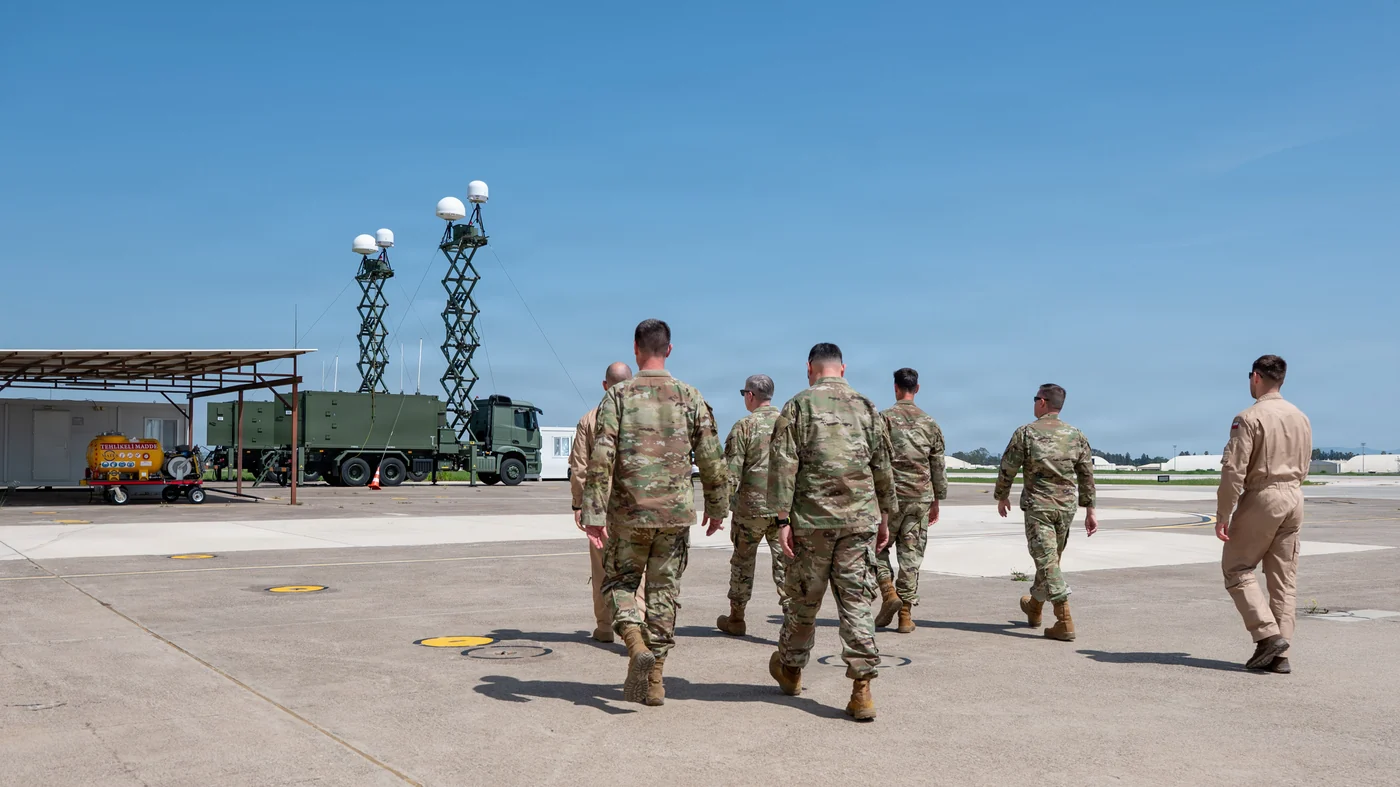
For the Turkish side the contract value is arguably the smaller half of the story. The larger half is that a NATO and European Union member state now operates the type under alliance procedures, deploys it on alliance tasking, and sustains it through the NATO Support and Procurement Agency. For an exporter, that reference answers the interoperability question before a prospective customer has to ask it — a point that shows up repeatedly in later export files, from confirmed AKINCI operators in Africa to industrial footprints being built on the continent.
The finding in one sentence
Poland did not buy the cheapest armed drone or the most capable one. It bought the one it could have flying, armed and sustainable soonest — and accepted zero industrial participation as the price of that speed.
Frequently asked questions
How many Bayraktar TB2s did Poland buy?
Twenty-four aircraft, delivered as four sets of six. Each set also came with three ground control stations, giving twelve stations in total.
How much did Poland pay?
The announced contract value is roughly $270 million. That figure covers the complete package, not the airframes alone. Poland has not published a line-by-line breakdown, so any per-aircraft price quoted elsewhere is an estimate rather than an official number.
When was the contract signed?
On 24 May 2021, two days after the defence minister announced the decision publicly. The short gap between announcement and signature is itself a signal that this was handled as an urgent requirement rather than a normal competition.
Were deliveries completed?
Yes. The first set arrived in October 2022 and the fourth and final set was handed over on 16 May 2024, completing all 24 aircraft in roughly 36 months from contract.
Which munitions came with the aircraft?
MAM-L and MAM-C smart munitions, produced by Roketsan. Including the weapon in the original contract mattered: an unarmed delivery would have left Poland waiting on a separate munitions procurement before the system was operationally useful.
Did Poland get technology transfer?
Partially. The contract included depot-level maintenance rights covering the engine, the ground control station and the electro-optical/infrared sensor. That is a sustainment transfer, not a manufacturing licence — no TB2 is built in Poland.
Why did Poland not buy a European or American system instead?
In spring 2021 the armed MALE segment offered few systems that were both available quickly and exportable to Poland without a long approval chain. The TB2 was in serial production, already combat-proven with several operators, and offered with its munitions attached. Availability, not headline performance, drove the shortlist.
If the TB2 was the answer, why did Poland lease MQ-9As a year later?
Because the two aircraft answer different questions. The MQ-9A lease, announced in October 2022 at about $70.6 million, covered unarmed long-endurance surveillance with satellite reach. The TB2 covers armed tactical reconnaissance inside line-of-sight range. Poland filled two gaps in parallel rather than replacing one with the other.
What is the TB2’s main technical limitation?
Its data link. With a line-of-sight range in the order of 150 km, the TB2 depends on ground stations positioned within that radius. Systems with satellite control loops operate at intercontinental distance. This is the clearest dividing line between the TB2 and strategic-class platforms.
Did the Gryf and Zefir programmes get cancelled?
No. The minister stated explicitly in June 2021 that the TB2 buy sat outside those programmes. Gryf and Zefir address the medium and long-term Polish requirement, including domestic industrial participation; the TB2 filled the gap in the meantime.
Is Poland still operating the type?
Yes. In October 2024 a three-year support arrangement was concluded through the NATO Support and Procurement Agency, and in January 2025 a TB2 element deployed abroad for a NATO task, still operating from Incirlik as of April 2026.
Was this Türkiye’s first sale to a NATO member?
Poland was the first NATO and European Union member state to purchase the Bayraktar TB2. That is the single most consequential fact in this file: it moved the platform from an export success into an alliance-internal reference customer.
Does Poland produce any part of the system?
No. Local production scores 1 out of 5 in our index precisely because the package contains no manufacturing element. Poland bought capability and the right to sustain it, not the right to build it.
What did Türkiye gain beyond the contract value?
A NATO and EU reference customer operating the type under alliance procedures. For an exporter, that reference is worth more than the contract line itself, because it answers the interoperability question for every subsequent European enquiry.
How does this compare with other countries in the series?
Poland sits on the second rung of our six-step cooperation ladder — purchase plus maintenance rights — scoring 79. Countries that negotiated co-production or joint development score higher but waited far longer for delivery.
Related reading
This is the first file in the Why They Chose the Turkish Defence Industry series. Related English coverage: AKINCI vs MQ-9B SkyGuardian, the most widely operated armed drones, Turkish versus Chinese drones in the Sahel, AKINCI operators in Africa, the Karayel-SU licensed production model, ROKETSAN ownership structure, ROKETSAN subsidiaries and affiliates, how a modern missile is developed and fielded, ASELPOD vs Sniper ATP, ATMACA vs Exocet MM40 Block 3, Altay vs K2 Black Panther, Turkish armoured vehicles in Africa, Europe’s most powerful navies, what a Polish Neptune purchase would mean and Poland’s F-35A Husarz deliveries.
The Turkish original of this file: Polonya Neden Bayraktar TB2 Aldı?
Order values, quantities and dates in this file are compiled from Polish Ministry of National Defence statements, Baykar announcements, NATO Support and Procurement Agency releases and international defence press. Orders and deliveries are reported separately, and figures that could not be verified are not presented as inventory. The EM-PFI score is an Envanter Medya editorial assessment.