




What would it mean if Poland bought the Neptune?

What does the country actually need?
Poland’s Baltic coastline runs roughly 440 km, and the corridor between the Gulf of Gdansk and Swinoujscie carries the country’s seaborne trade and its liquefied natural gas imports. Protecting that corridor from the sea is a first-order task, not a secondary one.
Poland identified this requirement long ago and has already answered it. The Naval Missile Unit became the world’s first NSM coastal defence customer in 2008, a second squadron followed in 2014, and the November 2023 Kongsberg contract covers four more with deliveries into the 2030s. The open capability gap is no longer at sea. It is in long-range land attack, which is what Poland’s own cruise missile effort is intended to close, and that is the only heading under which the Neptune family plausibly enters the Polish conversation.
What is the system?
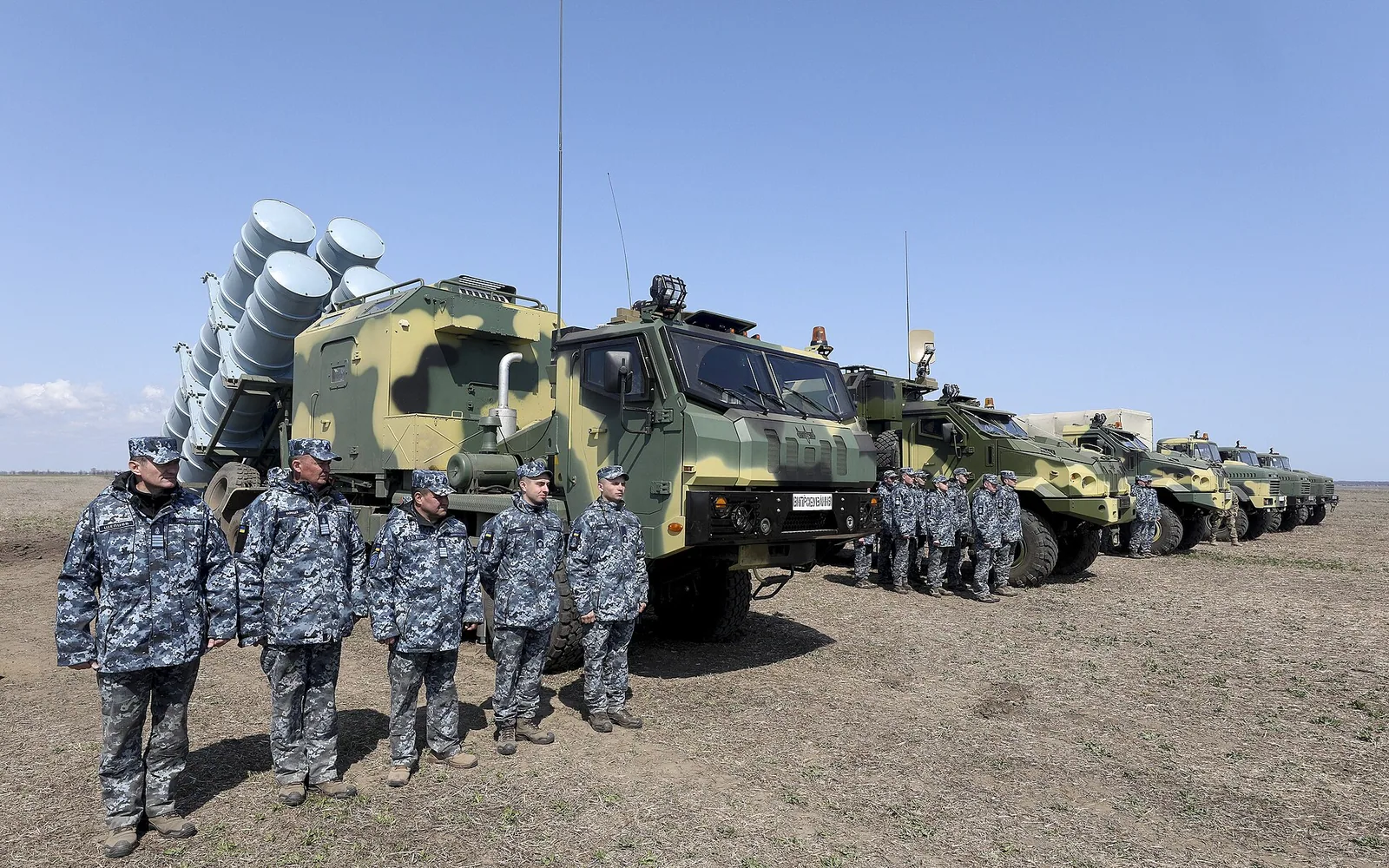
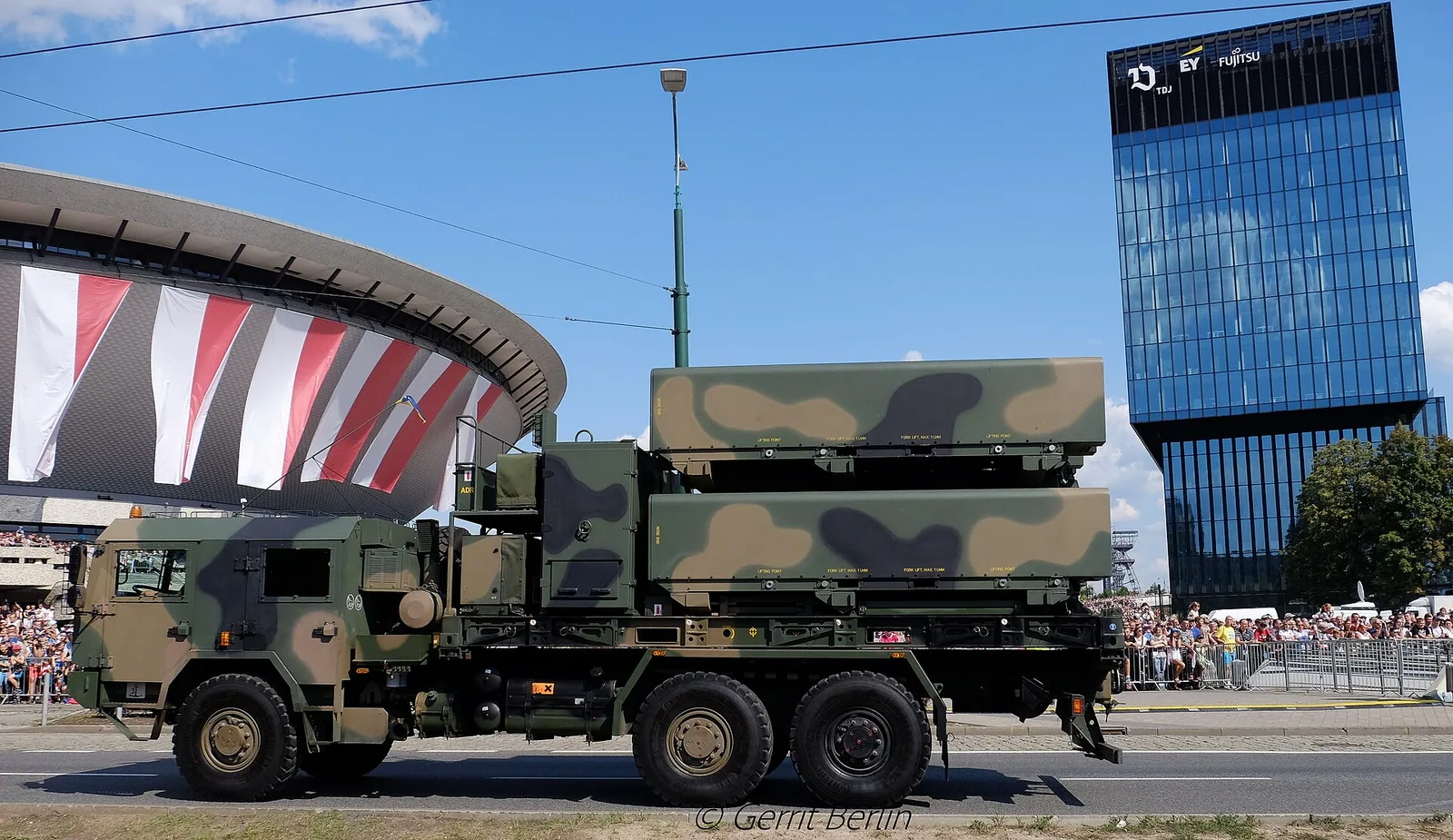
The R-360 Neptune is Luch Design Bureau’s coastal anti-ship cruise missile, in Ukrainian Navy service since March 2021. It weighs 870 kg, carries a 150 kg warhead and exceeds 280 km in the baseline version. A battery consists of the USPU-360 launcher, the TZM-360 transloader and the RCP-360 command vehicle.
What makes the family interesting is that it has outgrown the anti-ship role. The extended-range variant announced in 2025 claims up to 1,000 km with a 260 kg warhead, aimed at land targets. The memorandum signed between MBDA and Luch at Eurosatory on 16 June 2026 to develop Neptune-2 turned that trajectory into a European industrial question for the first time, and it is that question, not a procurement decision, that matters to Warsaw.
| Technical data | |
|---|---|
| Manufacturer | Luch State Design Bureau, Ukraine |
| Class | Coastal anti-ship cruise missile |
| Missile weight | 870 kg |
| Warhead | 150 kg; 260 kg on the extended-range variant |
| Range | over 280 km; up to 1,000 km claimed for the extended-range variant |
| Propulsion | Motor Sich MS-400 turbofan |
| Guidance | Inertial navigation with terminal active radar seeker |
| Battery components | USPU-360 launcher, TZM-360 transloader, RCP-360 command vehicle |
| Polish equivalent in service | Kongsberg NSM coastal defence system, operational since 2008 |
| Poland’s 2023 contract | Four additional NSM squadrons, approximately NOK 16 billion |
Geography and climate fit
Geography is not the obstacle. A 280 km weapon covers Poland’s entire 440 km coastline, and two batteries generate a threat envelope reaching towards Gotland. Inland siting up to 25 km suits Poland’s mix of forest and farmland behind the coast.
Climate is equally unproblematic. Baltic winter conditions are not materially different from the environment in which the system was developed and is used. Salt air, icing and cold storage pose the same engineering problems in both places. What drags the fit score down is not terrain but the fact that Poland solved this problem years ago and has committed the next decade to that solution.
Existing fleet, munitions and logistics
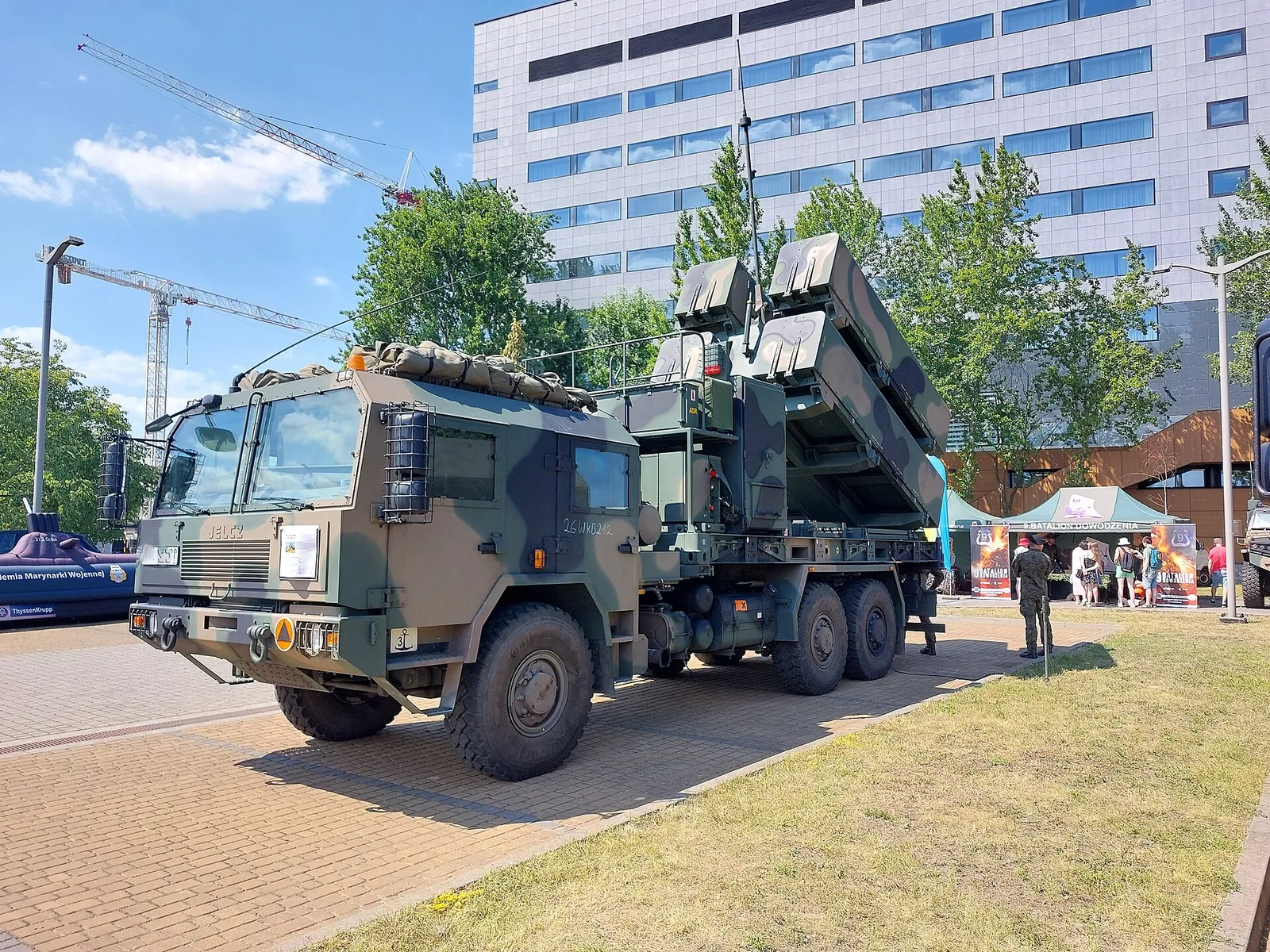
The Polish Naval Missile Unit is built around NSM, and not only around the missile. Launchers ride on Polish Jelcz chassis, the communications system and part of the command and control suite are domestically produced, and training, maintenance facilities and the munitions storage regime are all configured around that family. The 2023 contract locks the structure in through the 2030s.
Introducing Neptune would mean a second missile test regime, a second storage standard, a second spares chain and a second training pipeline, in exchange for a capability that overlaps almost entirely with what is already fielded. The industrial argument runs the other way, however. Poland’s adjacency to Ukraine, its manufacturing base and its role in NATO make it one of the most realistic locations for European production of Ukrainian-origin systems. In that scenario Poland is not a customer but a co-producer, and Neptune arrives as a technology base rather than a product.
Cost and value for money
Poland’s NSM figures are public: the November 2023 Kongsberg contract is worth approximately 16 billion Norwegian kroner and covers four coastal defence squadrons. It is a package price covering missiles, launchers, command and control, vehicles, integration and the Polish industrial share, and cannot be reduced to a per-round figure.
No comparable export price exists for Neptune. More importantly, the decisive number for Poland is marginal cost: adding a fifth squadron to an installed NSM structure costs far less than standing up a Neptune infrastructure from zero. This is the clearest illustration of why a low unit price does not, by itself, produce a procurement decision.
Comparison table
- Range above 280 km covers Poland’s entire 440 km coastline.
- Inland siting up to 25 km suits the terrain behind the Polish coast.
- The extended-range variant addresses Poland’s genuine gap in long-range land attack.
- The MBDA partnership raises the prospect of European production of Ukrainian missile technology.
- Combat-proven in operational service.
- Polish coastal defence is built on NSM, with four more squadrons contracted in 2023.
- A second family requires separate test, storage, training and spares regimes.
- Ukraine cannot offer a binding export delivery schedule today.
- The domestic industrial share achieved in the NSM programme would have to be rebuilt from scratch.
- No published export price or package offer exists.
- Two systems in the same role directly weaken economies of scale.
Alternatives
The incumbent. Poland’s NSM programme is a completed answer to the coastal defence requirement. The 2008 squadron, the 2014 addition and the four squadrons contracted in 2023 make Poland one of the largest land-based users of the system in the world, and marginal cost logic argues for growing capability inside that family.
The Turkish option. ATMACA, with a 220 kg warhead from a NATO member producer, clears most of the integration hurdles Neptune faces in Poland. This is not a purchase scenario, since Poland has no near-term coastal defence requirement, but Roketsan’s land-attack and cruise missile work intersects with Poland’s deep-strike agenda and could support a technology partnership.
Regional options. Saab’s RBS-15 Mk4 has gained ground as a Baltic common-pool option following Swedish and Finnish NATO accession; with over 300 km of range and a land-attack capability it connects to Poland’s deep strike agenda more easily than Neptune does. Poland’s own cruise missile programme is intended to close that gap domestically over the longer term.
When it makes sense, when it does not
Scenarios where it works
- The objective is joint development of cruise missile technology rather than buying a finished product.
- Neptune-2 is drawn into a European supply chain and Polish industry takes a production share.
- A framework agreement is signed for licensed European manufacture of Ukrainian-origin systems.
- Poland makes reducing single-source dependency in coastal defence a strategic priority.
Scenarios where it does not
- The decision is framed as adding coastal defence capability, which the NSM programme already provides.
- Economies of scale and a single munitions regime are core procurement principles.
- A delivery commitment and guaranteed spares flow are contract preconditions.
- The domestic industrial share is expected to match the level achieved in the existing programme.
Frequently asked questions
Has Poland bought the Neptune?
What does Poland’s NSM contract cover?
Why does Poland not need the Neptune?
Is there no Polish angle on Neptune at all?
Sources
- Kongsberg Defence and Aerospace, NSM coastal defence system contract with Poland
- MBDA, NEPTUNE 2 development with Luch, 16 June 2026
- IISS analysis of Poland’s naval strike missile acquisition
- Polish Ministry of National Defence and Polska Zbrojna statements on the Naval Missile Unit