Poland–Türkiye Defence Industry Relations: A Line Built Inside NATO (2021–2026)

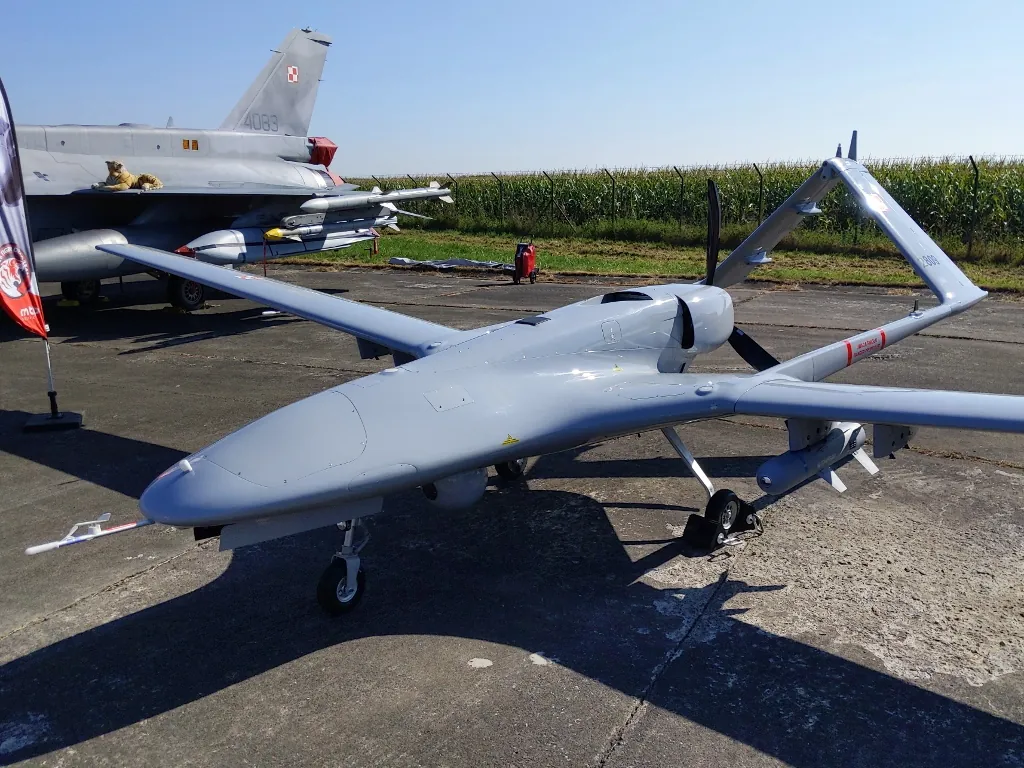
The defence industry line between NATO’s two largest European armies opened in 2021 with a single product: 24 Bayraktar TB2s. Five years later the same line carries a NATO support contract, a $410 million electronic warfare tender, a Turkish reconnaissance system built into a Polish armoured vehicle and a Polish munition flowing the other way. This file reads those five years in one table.
This is the series’ second bilateral file. Poland’s TB2 decision was examined in the first file as a single procurement; that data is not repeated. What is added is the rest: support contract, electronic warfare, reconnaissance integration, air-defence memorandum, intergovernmental agreement, allied operation at Incirlik and reverse flow. Every item carries its status — contract, memorandum, talks, statement — as in the Pakistan file. The Turkish original is here.
Short answer: opened by a product, deepened by subsystems
The first contract on the Poland–Türkiye line in 2021 was a product sale; none of the three big steps of 2024–2026 was. ARSUS is a subsystem integrated by Poland’s AMZ Kutno into its Kleszcz vehicle; Aselsan’s $410 million contract is for electronic warfare systems entering Poland’s own architecture; the MKE–PGZ memorandum concerns integrating TOLGA components into Polish air defence. The line grows not by platform sales, as in the Gulf and Balkans, but by Turkish subsystems entering the buyer’s own platforms and architecture — a new component this series adds to the Turkish package.
| Domain | Item | Turkish company | Date · value | Status |
|---|---|---|---|---|
| UAV | 24 Bayraktar TB2 (4 systems) | Baykar | May 2021 · $270m | In service; 24/24 delivered 16 May 2024 |
| UAV | TB2 maintenance and logistics support | Baykar via NSPA | Oct 2024 · 3 years (+2 option) | In force |
| Electronic warfare | EW systems (content undisclosed) | Aselsan | 19 Dec 2025 · $410m | Contract, by tender |
| Reconnaissance | ARSUS integrated on Kleszcz | Aselsan → AMZ Kutno | Framework 2024 (to 2035); +24 sets 8 Sep 2026 | Delivering; first vehicles late 2025 |
| Air defence | TOLGA components, non-kinetic interception | MKE ↔ PGZ | 8–11 Sep 2026 | Memorandum (not a contract) |
| Framework | Intergovernmental defence cooperation agreement | MoND ↔ Polish MON | 15 Dec 2025 | Signed |
| Operation | Polish contingent at Incirlik with TB2 | — | NATO Tailored Assurance Measures | Continuing by rotation |
| Reverse | WARMATE loitering munition → Turkish Land Forces | WB Group (Poland) | Date and quantity undisclosed | WB Group statement |
Three things the table says. Four of eight items were signed after 2024: the line accelerated after TB2 deliveries ended. Four belong to companies other than Baykar: the line is not tied to one maker. And the last row is the second reverse flow in the series after Pakistan — this time the buyer is the Turkish Land Forces.
What did Poland need?
Poland was Europe’s largest arms importer after Ukraine in 2021–2025 and its inventory backbone is American: HIMARS, Patriot, F-35, Abrams. The Turkish line is a niche layer, opened in four places. In tactical UCAVs the ready, combat-proven import option in 2021 was the TB2 — the TB2 combat record was the argument — while the domestic Gladius programme was early. In electronic warfare Poland ran a tender and Aselsan won. In armoured reconnaissance the Polish integrator chose Aselsan’s sensor mast for the 286-vehicle Kleszcz programme. In low-level air defence the line is at memorandum stage with MKE. The common thread: Poland buys the main platform itself or from the US; the Turkish line supplies what goes into it.
TB2: product, then support
The May 2021 contract covered four systems — 24 aircraft, 12 ground control stations — with munitions, simulators, training and logistics for $270 million. The first six arrived in October 2022 and the last on 16 May 2024 at Mirosławiec: three years from contract to full delivery. The novel element came afterwards: in October 2024 the NATO Support and Procurement Agency and Baykar signed a three-year maintenance and logistics contract for the fleet, with a two-year option. A Turkish system is supported for the first time through the alliance’s own procurement agency — a template for TB2 fleets in Europe. In December 2025 Kosiniak-Kamysz said TB2 upgrades were under discussion; the file records that as talks.
Incirlik: Turkish system, allied operator, NATO mission
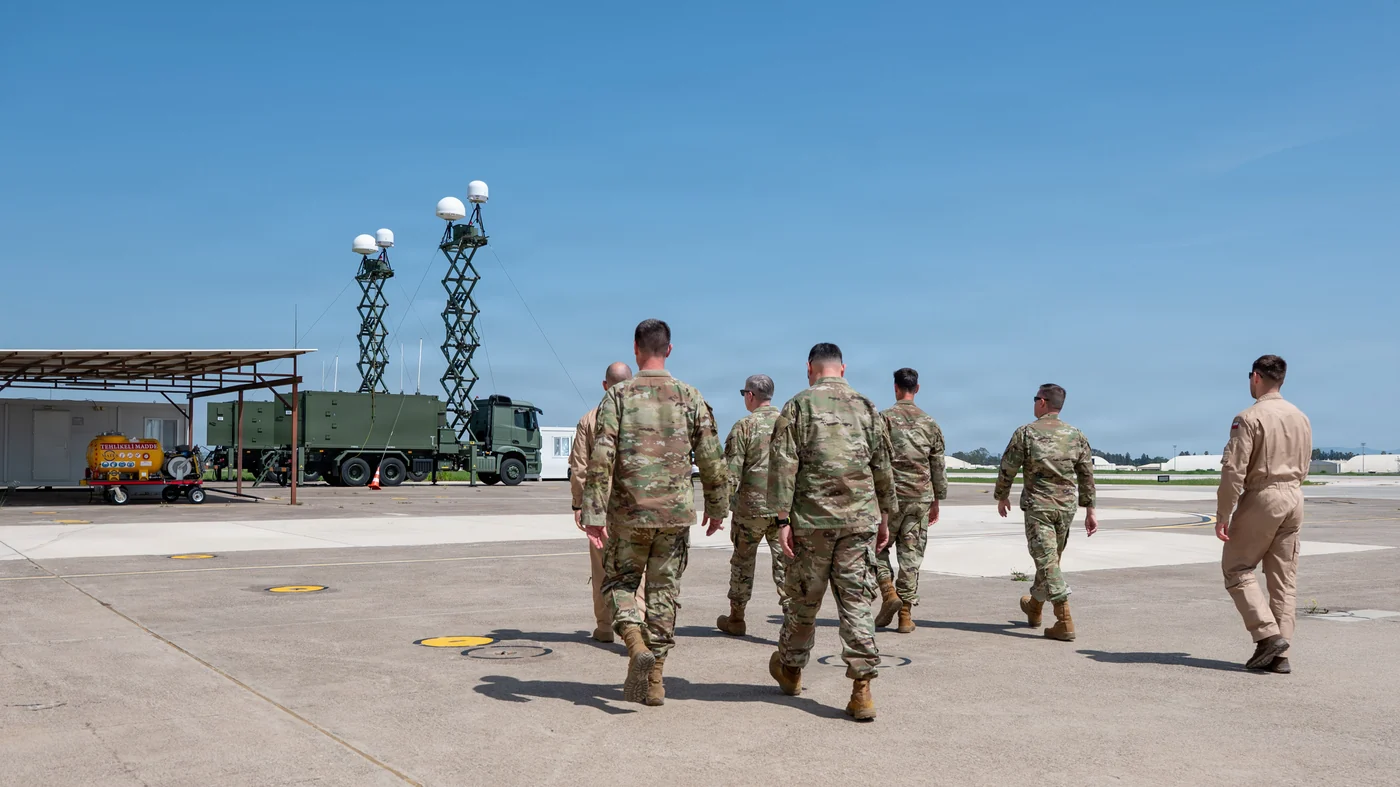
The Polish Military Contingent serves at Incirlik under NATO’s Tailored Assurance Measures for Türkiye. Its eighth rotation, mandated by a presidential decision of 18 December 2024 to the end of June 2025, deployed with TB2s; the contingent conducts reconnaissance over the eastern Mediterranean and Black Sea and shares data with NATO. Kosiniak-Kamysz spent the first day of his December 2025 visit with it. Nothing else in the series resembles this: a Turkish-made system operated by an allied army on Turkish soil on an alliance mission — the operational version of the “in-alliance reference” component.
Electronic warfare: $410 million won by tender
On 19 December 2025 Aselsan signed a $410 million electronic warfare contract with Poland’s Armament Agency. The company said it had won a tender against international rivals; the agency did not name the rivals or the systems, and this file names none. The contract matters less for its size than for its method: the TB2 decision was a direct purchase, the EW contract was won in the open tender of one of Europe’s largest armies. Among Aselsan’s export markets, Poland is the company’s largest single NATO contract.
ARSUS: a Turkish sensor mast on a Polish vehicle
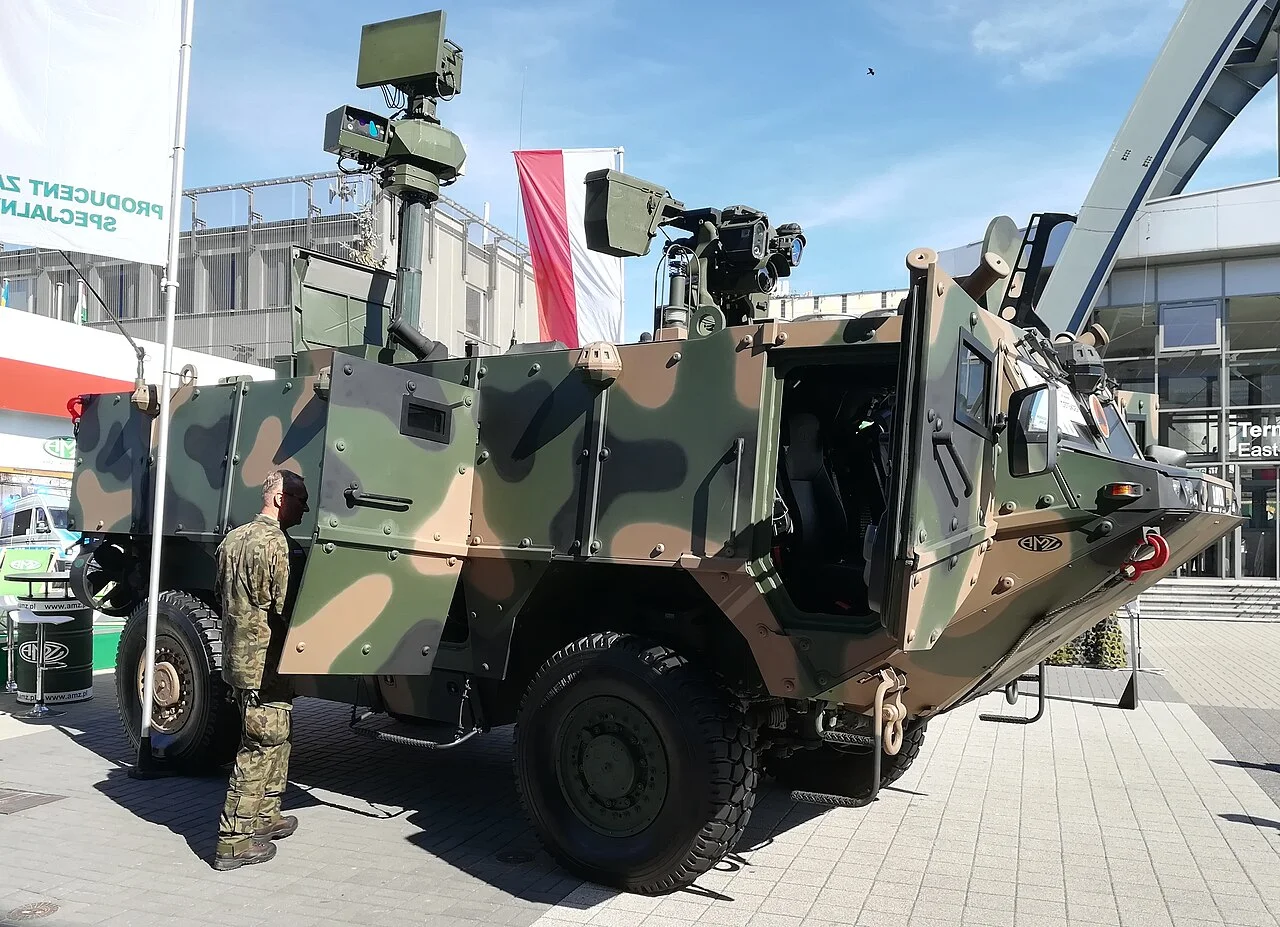
ARSUS combines radar, an electro-optical sensor and inertial navigation on a single mast. In 2024 Poland’s AMZ Kutno signed a framework agreement with Aselsan providing deliveries to 2035 and integrated the system on the LOTR Kleszcz armoured reconnaissance vehicle on the Bóbr-3 chassis; Poland ordered 286 Kleszcz the same year and the first ARSUS-equipped vehicles were delivered in late 2025. On 8 September 2026, 24 more sets were ordered at MSPO for 2028–2029. This row is the most concrete example of the new pattern: the Turkish company sells no platform; it supplies the system inside the Polish one.
TOLGA: memorandum, not contract
On 8–11 September 2026 at MSPO in Kielce, MKE and PGZ signed a memorandum on the TOLGA close-in air defence system: joint work on integrating short-range components and non-kinetic interception into Poland’s architecture, covering Türkiye, Poland and third countries. It is MKE’s second European country partnership for TOLGA after Hungary in 2026. PGZ and MKE also discussed ammunition programmes and critical raw materials in Warsaw. A memorandum is not a contract, and the file writes it so.
Why prices differ
Poland’s $270 million TB2 package is the most-cited figure in the series. For the same family, Kuwait paid $367 million for 18 aircraft with three years of support and Croatia 67 million euros excluding VAT for six. The three cannot be compared line by line: Poland’s package holds four full systems, munitions, simulators and training; Kuwait’s long support; Croatia’s spares for 4,000 flight hours. Per-aircraft figures sit in one band, and the difference comes from support and munitions items. No unit price can be derived for the EW and ARSUS contracts: Aselsan disclosed $410 million as a total, and the ARSUS value was not disclosed.
Alternatives and complements
| Item | Turkish offer | Other line | Outcome |
|---|---|---|---|
| Tactical UCAV | Bayraktar TB2 | Domestic Gladius (WB Group + PGZ), early stage | TB2 as bridge capability; Gladius continues |
| HALE UAV | — | MQ-9A lease (2023), 3 MQ-9B (Dec 2024, ~$310m) | US line; a different class from TB2 |
| Electronic warfare | Aselsan | International rivals (unnamed) | Aselsan, by tender |
| Recce sensor | ARSUS | Alternative undisclosed | ARSUS, AMZ Kutno’s choice |
| Low-level air defence | TOLGA (MoU) | Domestic Piorun/Poprad line | Memorandum; no decision |
| Loitering munition | — | Polish WARMATE | Türkiye the buyer (WB Group statement) |
The second row is the most carefully written in the file. Poland operates the US MQ-9 line alongside the TB2: leased MQ-9As since February 2023, three MQ-9Bs ordered in December 2024 for delivery by early 2027. The two are not in the same class — the Akinci–MQ-9B comparison explains the class gap — and Poland runs both. This file writes the two lines not as rivals but as two layers of one army.
Reverse flow: WARMATE
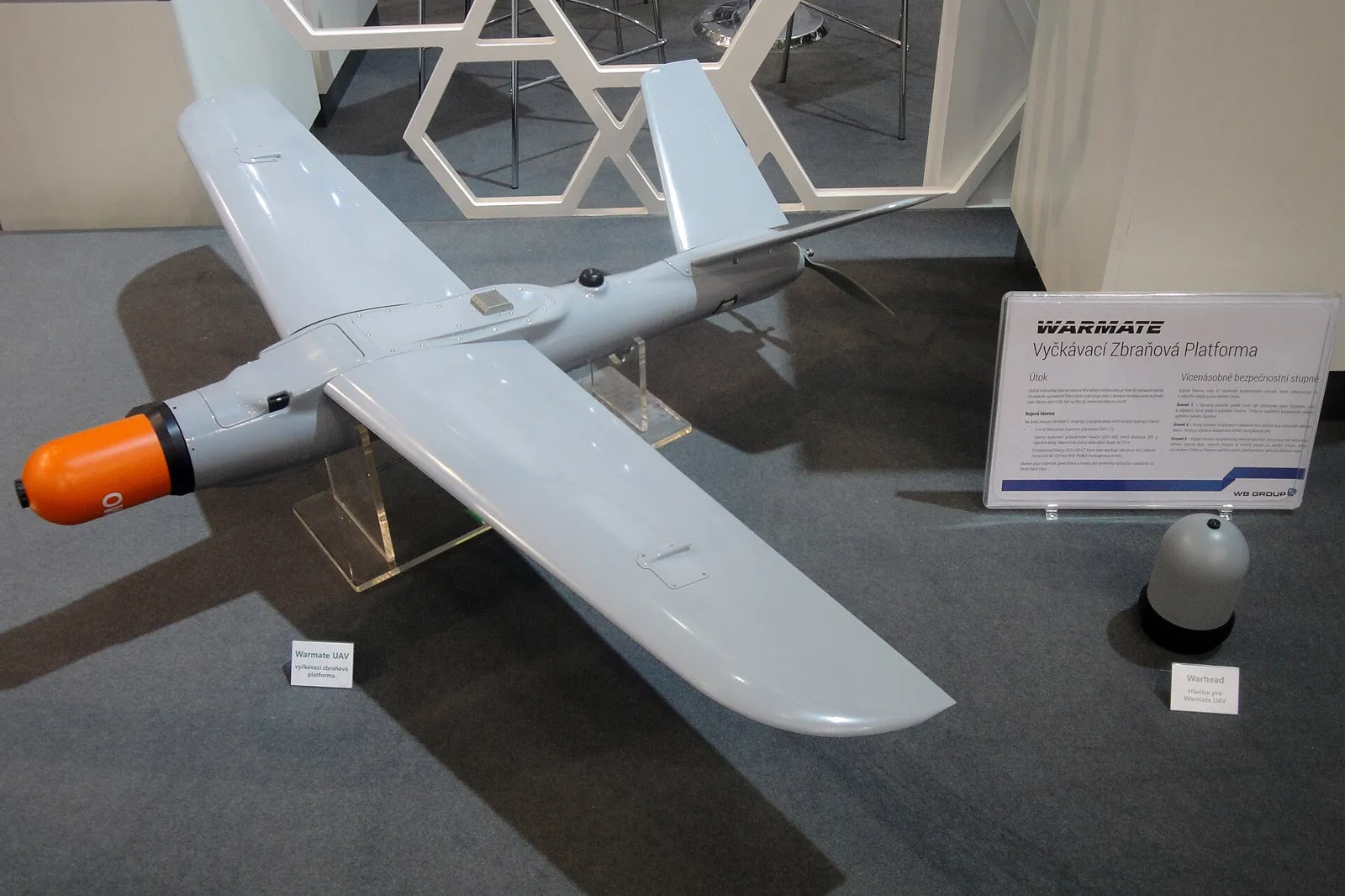
WB Group states that its WARMATE loitering munition has been supplied to the Turkish Land Forces; quantity and date were not disclosed and there is no official Turkish confirmation. The file keeps the row as a WB Group statement. It is nonetheless the second reverse flow in the series after Pakistan’s Super Mushshak, and it matters for Poland’s own export ambitions: Turkish industry is not only a seller to Poland but a customer.
The Poland version of the Turkish package
In the Gulf we counted four components: record, munitions, licence, production share. The Balkans added donation and the in-alliance reference, Central Asia the full catalogue, Pakistan the buyer’s yard and reverse flow. Poland adds two more: subsystem integration and alliance logistics.
Subsystem integration
The ARSUS and EW contracts show how the Turkish line grows in a buyer with an advanced industry: not by selling platforms, but by supplying systems to the platform the buyer builds itself. Poland’s technology-transfer programmes with the US and Korea are at platform level; the Turkish line enters beneath and inside those platforms. That is a different step from Estonia’s ready-vehicle purchase and from Romania’s joint venture: no industrial share, but industrial integration.
Alliance logistics
The NSPA contract ties the Turkish system’s maintenance to NATO’s own agency; the Incirlik contingent flies the Turkish system on a NATO mission on Turkish soil. Together they show, for the first time in the series, a Turkish product living not between buyer and seller but inside the alliance structure. The “licence from one capital” element of the Ukraine and Azerbaijan files still applies; the difference is that alliance logistics sits on top of it.
Five years of change
The timeline shows two phases: 2021–2024 product and delivery, 2024–2026 subsystems, support and memoranda. December 2025 is the turning point: within four days an intergovernmental agreement and a $410 million contract were signed.
Official versus under discussion
| Item | Source | Status | Note |
|---|---|---|---|
| TB2 24 aircraft + NSPA support | Baykar, NSPA, Polish MON | Official | Fleet complete; support to 2027 (+2 years) |
| Aselsan EW $410m | Aselsan statement, 19 Dec 2025 | Contract | System content undisclosed |
| ARSUS framework + 24 sets | Aselsan, AMZ Kutno | Contract | Framework to 2035; 24 sets 2028–29 |
| Intergovernmental agreement | MoND, Polish MON, 15 Dec 2025 | Official | Industry, exercises, intelligence cooperation |
| TB2 upgrades | Kosiniak-Kamysz, Dec 2025 | Talks | No scope or schedule |
| MKE–PGZ TOLGA | MKE statement, MSPO Sep 2026 | Memorandum | Not a contract |
| PGZ–MKE ammunition | PGZ statement, Warsaw | Talks | Joint production and raw materials discussed |
| WARMATE → Türkiye | WB Group statement | Statement | No quantity, date or Turkish confirmation |
The table shows where the next step lies: if the TOLGA memorandum and the ammunition talks turn into contracts, the Polish line moves from subsystem integration to co-production and reaches Romania’s step. Today both are memorandum and talks.
EM-PFI assessment
The score assesses the relationship as a whole, not one contract. The TB2 decision scored 79 in the first file; the whole relationship sits four points higher on the EW tender, ARSUS integration and the NSPA chain.
| Criterion | Weight | Score | Rationale |
|---|---|---|---|
| Operational need | 20 | 18 | Eastern-flank ISR-strike, electronic warfare, armoured recce, low-level air defence |
| Technical fit | 15 | 14 | NATO standard; ARSUS on a Polish platform; EW tender won |
| Geography and climate | 10 | 9 | Central European climate; no issues reported |
| Inventory compatibility | 10 | 8 | US-heavy inventory; Turkish systems at subsystem level |
| Logistics | 10 | 9 | Land route; NSPA support chain; allied operation at Incirlik |
| Cost-effectiveness | 10 | 9 | TB2 $270m; EW won by tender; ARSUS value undisclosed |
| Delivery and production | 10 | 9 | TB2 complete in three years; first ARSUS deliveries on schedule |
| Technology transfer | 5 | 3 | Integration in Poland; no design transfer |
| Local production | 5 | 2 | AMZ Kutno integration; Turkish product built in Türkiye |
| Modernisation path | 5 | 4 | TB2 upgrades in talks; TOLGA at memorandum stage |
| Total | 100 | 83 | Strong choice |
Risks and limits
This section exists to make the file usable, not to weaken the product.
| Item | Status | What it means |
|---|---|---|
| EW contract content | Which systems the $410m covers is undisclosed | No capability analysis possible; the file names no system |
| WARMATE statement | WB Group statement only | No Turkish confirmation, quantity or date |
| TOLGA and ammunition | Memorandum and talks | May not become contracts; not written even as forecast |
| Weight of the US line | Backbone of Polish imports is American; MQ-9B in 2027 | Turkish line is a niche; no rival on main platforms |
| Domestic industry priority | Gladius, Piorun, Poprad programmes | Turkish product stays where the domestic programme complements it |
| TB2 upgrades | Ministerial-level talks | No scope or schedule |
| Industrial share | No production transfer | Relationship at the integration step; co-production depends on TOLGA |
The view from Brussels and Washington
For a reader who follows NATO, the Polish line is the series’ cleanest case of a Turkish product absorbed by alliance machinery. The NSPA contract means TB2 spares and maintenance move through the same agency that supports allied fleets; the Incirlik contingent means Turkish drones fly under NATO assurance measures with Polish crews. Neither required a third-country licence, and neither depended on a bilateral favour. That is the practical meaning of “NATO standard” — and the reason the Polish line grew faster after the TB2 deliveries than during them.
For Washington the relevant fact is the electronic warfare tender. Poland, the most US-aligned importer in Europe, chose a Turkish EW supplier in open competition and put a Turkish sensor mast on its own reconnaissance vehicle. The US line keeps the main platforms — F-35, Patriot, MQ-9B — and the Turkish line fills what goes beneath them. Whether that division holds depends on the TOLGA memorandum: if a Turkish air-defence component enters Poland’s architecture, the Turkish line moves one layer up. Today it is a memorandum, and this file scores only what exists.
Poland took from Turkish industry the niches the US line and its own industry did not fill — tactical UCAV, electronic warfare, a reconnaissance sensor — and placed them inside its own platforms. In return it brought the Turkish system into NATO logistics and a NATO mission, and sold Türkiye a munition. It is the widest relationship inside NATO in the series. The next step depends on two talks: TOLGA integration becoming a contract, and PGZ–MKE ammunition talks reaching co-production. The full series, and the story of the TB2 as an export product, sit on the Turkish defence exports hub; KORKUT’s users show where MKE’s Turkish air-defence peers already stand.
Frequently asked questions
What has Poland bought from Türkiye?
24 Bayraktar TB2s (four systems, May 2021, $270 million; deliveries October 2022 to 16 May 2024), a three-year TB2 support contract through NSPA (October 2024), $410 million of Aselsan electronic warfare systems (19 December 2025, by tender) and Aselsan ARSUS reconnaissance systems (2024 framework with deliveries to 2035; 24 more sets in September 2026). The MKE–PGZ TOLGA memorandum (September 2026) is a cooperation framework, not a contract.
What has Türkiye bought from Poland?
WB Group states that its WARMATE loitering munition has been supplied to the Turkish Land Forces; quantity and date were not disclosed. This file records it as a WB Group statement; there is no official Turkish confirmation.
What did Poland’s TB2 contract include?
The $270 million contract of May 2021 covered four systems — 24 aircraft and 12 ground control stations — with munitions, simulators, training and logistics. Poland became the first NATO and EU member to buy the TB2. The first six arrived in October 2022 and the last on 16 May 2024 at the 12th Unmanned Aerial Vehicle Base at Mirosławiec. Details in the first file of this series.
What is the NSPA contract?
A contract signed in October 2024 between the NATO Support and Procurement Agency and Baykar providing three years of maintenance and logistics support for Poland’s TB2 fleet, with a two-year extension option. One of the first cases of a Turkish system supported through NATO’s own supply chain.
What does Aselsan’s $410 million contract cover?
Signed with Poland’s Armament Agency on 19 December 2025, it covers the direct sale of electronic warfare systems; Aselsan said it won a competitive tender against international rivals. The systems were not named; this file names none.
What is ARSUS and where does Poland use it?
Aselsan’s reconnaissance and surveillance system combining radar, an electro-optical sensor and inertial navigation on one mast. Poland’s AMZ Kutno integrates it on the LOTR Kleszcz armoured reconnaissance vehicle on the Bóbr-3 4×4 chassis; Poland ordered 286 Kleszcz in 2024. The first ARSUS-equipped vehicles were delivered in late 2025; 24 more sets were ordered on 8 September 2026 for 2028–2029.
Is the MKE–PGZ TOLGA memorandum a contract?
No. The memorandum signed at MSPO in Kielce on 8–11 September 2026 provides for joint work on integrating TOLGA short-range air defence components and non-kinetic interception systems into Poland’s architecture, covering the Turkish, Polish and third-country markets. It is MKE’s second European country partnership for TOLGA after Hungary.
What is the 15 December 2025 agreement?
An intergovernmental defence cooperation agreement signed in Ankara by Defence Minister Yaşar Güler and Poland’s Deputy Prime Minister and Defence Minister Władysław Kosiniak-Kamysz: information exchange, joint exercises, defence industry development and intelligence cooperation. Kosiniak-Kamysz said drone cooperation including TB2 upgrades was discussed.
What does the Polish contingent do in Türkiye?
The Polish Military Contingent serves at Incirlik under NATO’s Tailored Assurance Measures for Türkiye; its eighth rotation deployed with Bayraktar TB2s and conducts reconnaissance over the eastern Mediterranean and Black Sea. It is the first case of a Turkish-made system operated by an allied army on Turkish soil on a NATO mission.
Why does Poland operate both TB2 and MQ-9?
They are different classes: TB2 tactical, MQ-9 high-altitude long-endurance. Poland has leased MQ-9As since February 2023 and ordered three MQ-9Bs for about $310 million in December 2024 (delivery by the first quarter of 2027). This file treats the two lines as complementary, with no superiority claim.
What were Poland’s alternatives?
In tactical UCAVs the only ready, combat-proven import option in 2021 was the TB2; the domestic Gladius programme was at an early stage. In electronic warfare Aselsan won a tender against international rivals whose names the Armament Agency did not publish. In reconnaissance, ARSUS was the choice of the Polish integrator AMZ Kutno.
Is there Turkish production in Poland?
No. ARSUS is integrated on the vehicle in Poland by AMZ Kutno, but the system is built in Türkiye. The TOLGA memorandum provides for work on integration and possible joint production; no production decision has been taken.
Where does this relationship sit in the series?
The second bilateral file. Unlike Pakistan, the line runs inside NATO, over a land route and through alliance instruments such as NSPA; its depth comes from subsystem integration rather than design transfer. EM-PFI 83/100, ‘strong choice’; the TB2 decision alone scored 79 in the first file.
What does the EM-PFI score mean?
The Poland × Turkish defence industry relationship scores 83/100: high on technical fit, logistics, delivery and cost, low on technology transfer and local production — fast and alliance-standard but without an industrial share. It is Envanter Medya’s editorial assessment.
What comes next?
On the verified calendar: ARSUS deliveries (2028–2029 and the framework to 2035), Aselsan EW deliveries and the NSPA support period. TB2 upgrades and TOLGA integration are at talks and MoU stage. This file recorded only what was signed and delivered.
Sources and method
- Polish Ministry of National Defence (gov.pl) — TB2 delivery ceremony (16 May 2024); Ankara visit and intergovernmental agreement (14–15 December 2025); Polish Military Contingent in Türkiye
- Baykar statements — Polish deliveries (October 2022 – May 2024); NSPA — TB2 support contract (October 2024)
- Aselsan statements — $410m EW contract (19 December 2025); ARSUS framework (2024) and 24-set contract (8 September 2026, MSPO)
- MKE statement — TOLGA memorandum with PGZ (MSPO, 8–11 September 2026); PGZ — Warsaw talks with MKE
- WB Group statements — WARMATE supplied to the Turkish Land Forces; PGZ cooperation (2 September 2025)
- General Atomics — Polish MQ-9B contract (16 December 2024); Polish MON — MQ-9A lease (2023)
- SIPRI, March 2026 — European import ranking
- International defence press — items at talks status marked in the table
Method note. Every item is written with its status — contract, memorandum, talks, statement; memoranda and talks are not presented as contracts. No system is named for the EW contract because its content is undisclosed. The WARMATE row rests only on a WB Group statement. The MQ-9 line is written as a different class, not a rival; no superiority claim is made. EM-PFI is Envanter Medya’s editorial assessment, not an official index.