FRT-200 and TCG Derya: TAIS replenishment ships

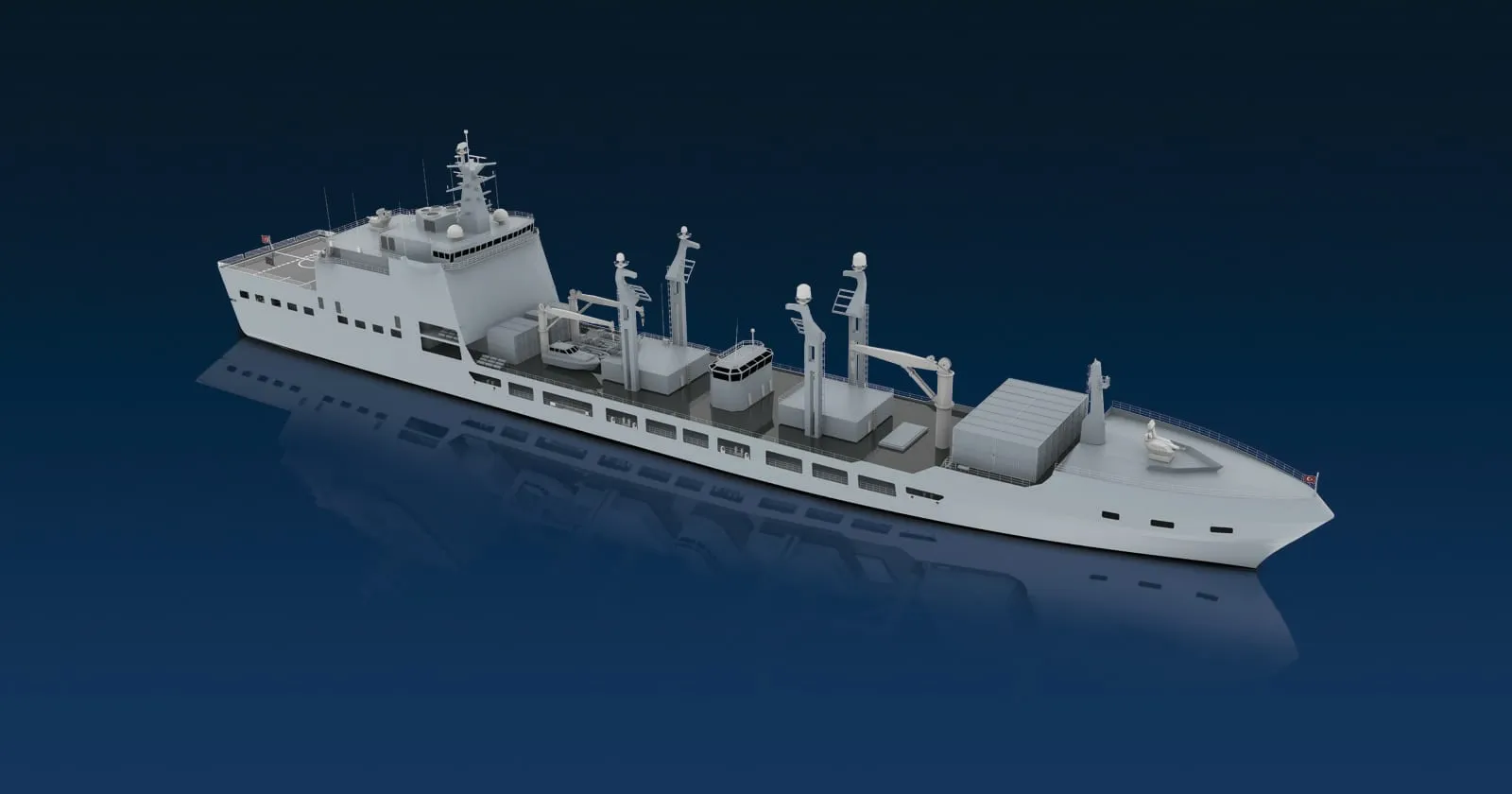
Quick answer: The FRT-200 is the fleet replenishment tanker design in the TAIS Shipyards catalog: 195 meters in length, 22,500 tons displacement and capacity for 319 personnel. Behind the design stands a completed reference by consortium partner Sefine Shipyard: TCG Derya, the Turkish Navy’s underway replenishment combat support ship, was built at Sefine under a contract signed in 2018 and delivered in January 2024. This file examines the logistics ship line along the axis of reference project and catalog design.
What does a fleet replenishment ship do?
Fleet replenishment ships transfer fuel, water, food, ammunition and spare parts to the combatants of a task group while underway. This capability determines how long a fleet can stay on station without returning to port. For countries aiming at a blue-water navy, the replenishment ship is an infrastructure element as critical as the combatants themselves. In the TAIS catalog this mission band is covered by the FRT-200 and by the MPSRS-95 multipurpose support and rescue vessel.
Reference project: TCG Derya (DİMDEG)
According to program information compiled by Mavi Vatan, the DİMDEG contract was signed between the SSB and Sefine Shipyard on 28 June 2018; the ship was launched in October 2021 and delivered to the Naval Forces as TCG Derya on 19 January 2024. Roughly 194 meters long and in the 22,000-ton band, the ship was designed, per the same source, to replenish at least four ships simultaneously, and is described as the navy’s largest ship after TCG Anadolu. Sefine’s position within the consortium is described in the who owns TAIS file.
| Feature | FRT-200 (catalog) | TCG Derya (delivered) |
|---|---|---|
| Length overall | 195 m | ~194 m |
| Displacement | 22,500 t | 22,000-ton band |
| Speed | 20 kn | Not officially disclosed. |
| Personnel | 319 | 326 capacity |
| Construction | Design/proposal | Sefine Shipyard, 2018-2024 |
The closeness of the two columns shows the FRT-200 positioned as an export design resting on the DİMDEG production experience; the official website, however, draws no direct link between the two designs, and whether the FRT-200 is a one-to-one export version of DİMDEG is not officially disclosed.
Other hulls in the support line
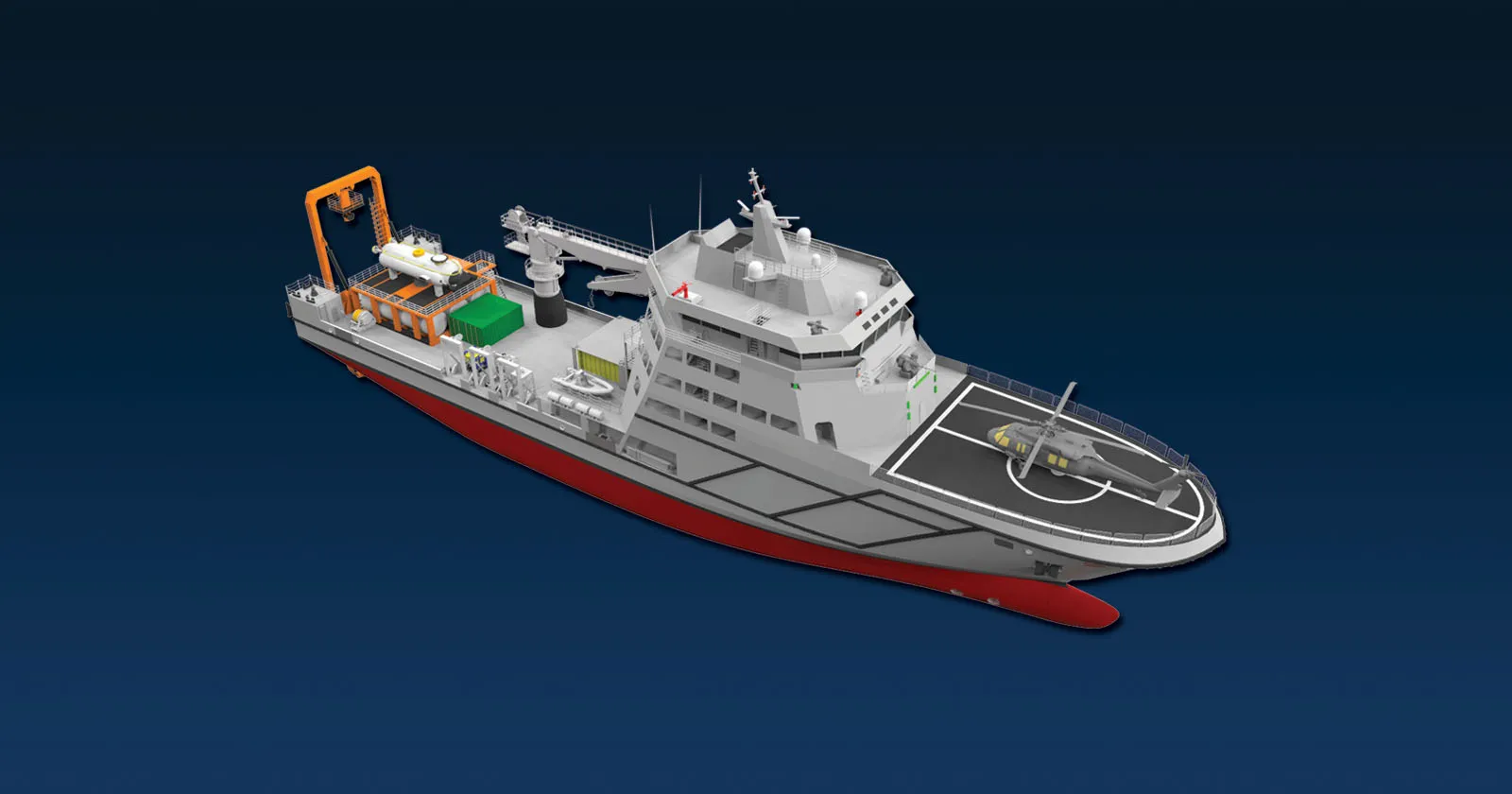
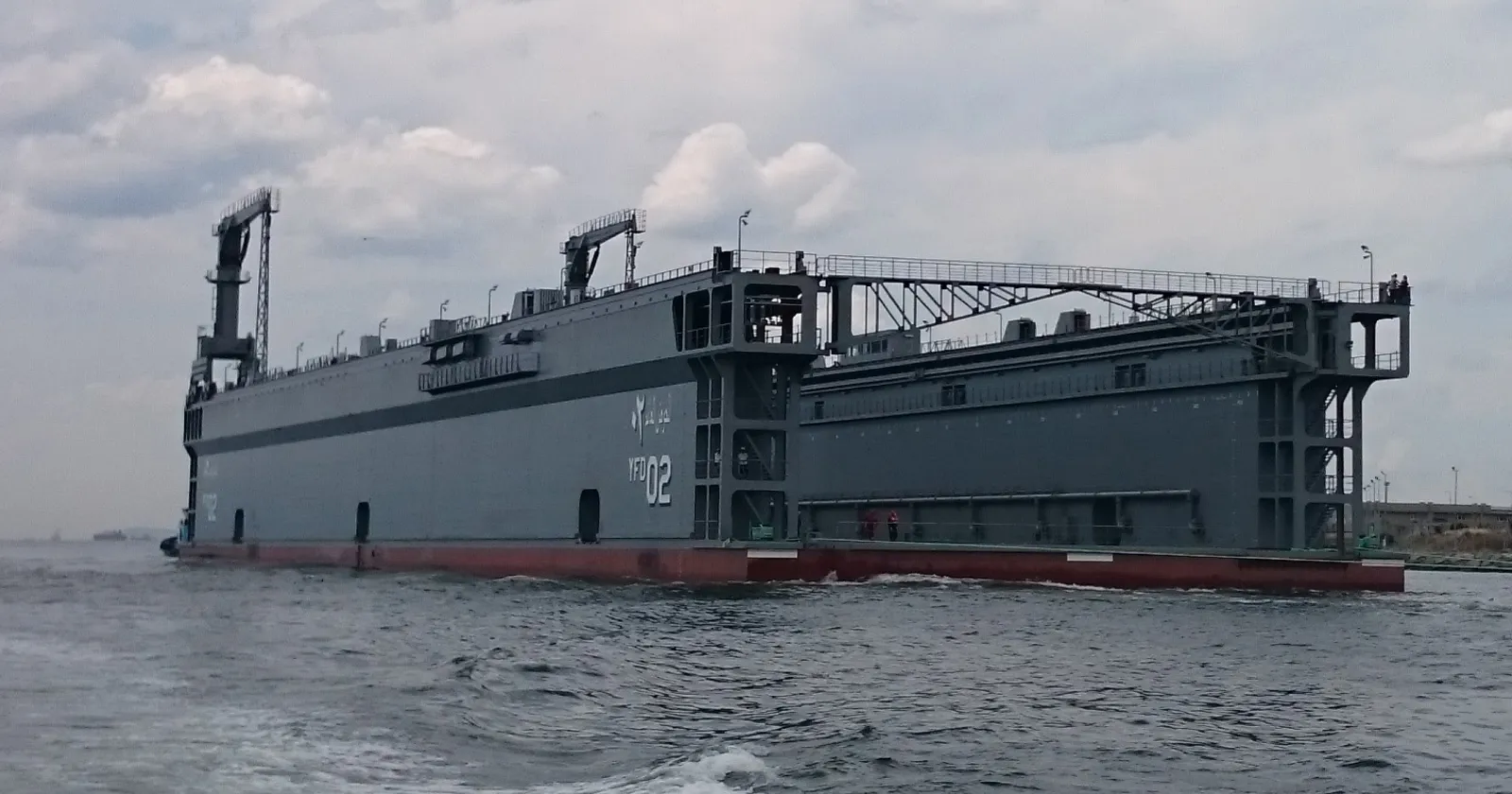
Alongside the FRT-200, the catalog lists the MPSRS-95 multipurpose support and rescue vessel, the ERV-90 emergency response vessel, and floating dock designs (FD-160, FD-170) for port and shipyard infrastructure. The ERV-90 is detailed in the training and support ships file. Floating docks are products that extend a military fleet’s maintenance and repair capability without dependence on a shore facility.
Why underway replenishment is a hard engineering field
Replenishment at sea requires two ships to hold a fixed distance in a moving seaway while running a fuel line and cargo rig between them. For the replenishment ship this means precise maneuvering, powerful winch and rig equipment, a wide deck arrangement and communications compatible with the combatant. Civilian tanker experience alone is not enough; the ship is laid out to military standards, with compartmentalized design in vital zones and naval procedures. That Sefine carried the DİMDEG program from contract to delivery at its own facility is the example showing this engineering layer can be completed at a private Turkish yard; the FRT-200 enters the catalog on top of that experience.
Market context: the India process
TAIS’s largest outward move in the logistics ship field was India’s program for five 45,000-ton fleet support ships; the consortium was selected as design and engineering partner through the tender it won in 2019, and the process ended in 2024 with India’s decision to switch to a fully indigenous model. The record of that process is set out with sources in the export file. The experience shows the consortium can bid in international tenders for large-tonnage auxiliary ship design; no new customer has been officially announced.
Frequently asked questions
Has the FRT-200 been built?
No; it is a catalog design. TCG Derya, completed by Sefine Shipyard, is the delivered reference project in the same mission band.
Who built TCG Derya?
Sefine Shipyard. The contract was signed with the SSB on 28 June 2018; delivery took place on 19 January 2024.
How many ships can the FRT-200 replenish?
The official page does not publish a simultaneous replenishment figure; this detail is not officially disclosed. For the reference project TCG Derya, a figure of at least four ships is reported.
What is the MPSRS-95?
The multipurpose support and rescue vessel design in the catalog; a hull oriented toward support tasks such as submarine rescue and towing. Detailed technical data on the page is limited.
Are floating docks a military product?
Floating docks provide maintenance and repair infrastructure to both military and civilian fleets; the TAIS catalog lists the FD-160 and FD-170 designs.
Sources and verification note
Catalog data comes from official product pages; TCG Derya program information comes from independent Turkish-language sources. Accessed: August 13, 2026.
- TAIS, FRT-200 Fleet Replenishment Tanker: https://www.taisshipyards.com/en/frt-200-fleet-replenishment-tanker
- TAIS, product index (MPSRS-95, FD-160/170): https://www.taisshipyards.com/en/products
- Mavi Vatan, “(A-1590) TCG Derya Denizde İkmal Muharebe Destek Gemisi”: https://mavivatan.net/a-1590-tcg-derya-denizde-ikmal-muharebe-destek-gemisi/
- Deniz Haber, “TCG Derya, Türk Deniz Kuvvetleri’ne teslim edildi”: https://www.denizhaber.net/tcg-derya-turk-deniz-kuvvetlerine-teslim-edildi-haber-116614.htm
- Army Recognition, “India signs deal with Turkey’s TAIS Shipyards for five fleet support vessels” (2020): https://armyrecognition.com/news/navy-news/2020/india-signs-deal-with-turkey-s-tais-shipyards-for-five-fleet-support-vessels
- ANI, “No role for Turkish firms in Indian Navy’s mega Fleet Support Ship project” (11.04.2024): https://www.aninews.in/news/national/general-news/no-role-for-turkish-firms-in-indian-navys-mega-fleet-support-ship-project20240411174220/