Why Are Central Asian States Turning to Turkish Drones? A Third Supplier, a Full Catalogue and the First ANKA Line Abroad


For thirty years the five Central Asian republics bought their weapons from two places: Moscow and Beijing. After 2021 a third column appeared in the table. This file examines how that column opened, who bought what, and why a Turkish drone will be built outside Turkey for the first time in this region.
The file covers Kazakhstan, Kyrgyzstan, Uzbekistan, Turkmenistan and Tajikistan. Azerbaijan, in the Caucasus, was examined separately in the eighth file and appears here only for comparison. Four countries have verified Turkish drones; the fifth, Tajikistan, is an unconfirmed row and is written as such. As in the Gulf and Balkan files, empty and uncertain rows count as evidence. The Turkish original is here; an earlier overview of Turkish defence in Central Asia set the scene.
Who bought what
The table contains only items verified by official statements, manufacturer announcements or presidential imagery. No Central Asian contract has an official price; no press figure was substituted.
| Country | System | Quantity | Source | Status |
|---|---|---|---|---|
| Kazakhstan | ANKA + Aselsan products | 3 ANKA | Contract late 2021; Turkish Aerospace | Delivered 2023; joint venture 14 May 2026 |
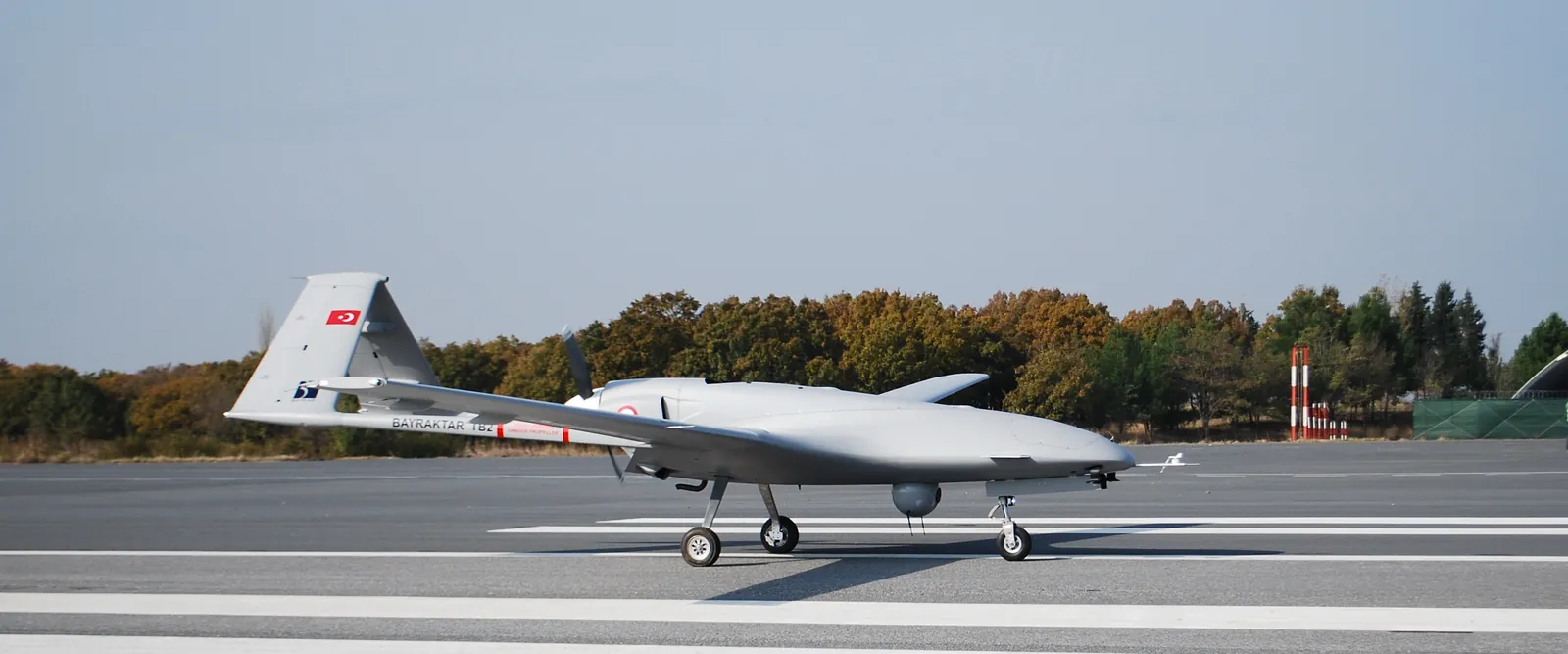
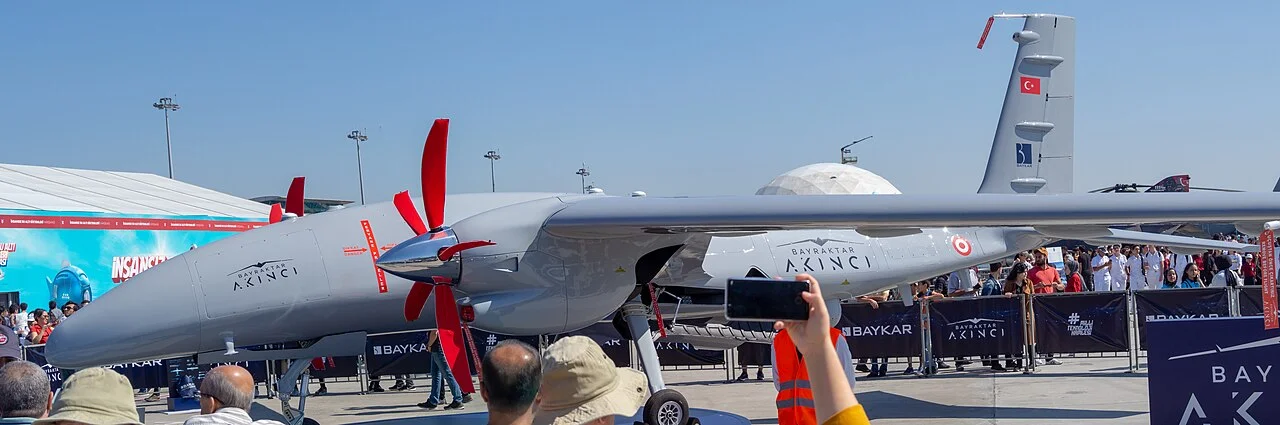
| Kyrgyzstan | TB2 + Akinci + Aksungur + ANKA | Undisclosed | Presidential press service, 17 January 2023 | TB2 since December 2021; Akinci and Aksungur delivered November 2023 |
| Uzbekistan | TB2 + ANKA | At least 4 TB2 (imaged) | Presidential office, 16 November 2023 | TB2 in service; ANKA contract January 2025, no numbers |
| Turkmenistan | Bayraktar TB2 | At least 3 (parade) | 27 September 2021 parade | In service; $37m total imports July 2021 |
| Tajikistan | — | — | Press, April 2022 | UNCONFIRMED; 2023 framework ratified 2024 |
The first thing the table says: the widest catalogue in the region belongs to the smallest budget. Kyrgyzstan spends about $654 million on defence — the least in the Organization of Turkic States — yet fields four Turkish drone types. The second: the deepest relationship belongs to the largest budget; Kazakhstan bought only three ANKAs but will get the production line. The third: no contract has a price. Those three observations are the skeleton of the rest of the file.
The real question: were two suppliers not enough?
Central Asian armies are built on the Soviet inheritance; the backbone of the Kazakh and Uzbek inventories is still Russian. In the 2010s China became the second source: Kazakhstan took its first Wing Loongs in June 2016, Uzbekistan brought Wing Loong I and II into service, Turkmenistan bought CH-3 and WJ-600. So the claim that “without Turkish drones there would be no armed drones in the region” is false. The right question is: why did countries with two suppliers add a third?
The Russian line: reconnaissance, no armed MALE
The Russian line gave the region reconnaissance drones — the Orlan series serves in Kazakhstan and Kyrgyzstan — but offered no export-ready product in the armed MALE class. The sanctions regime after 2022 also clouded that line’s subcomponent supply. This is an assessment; no official procurement rationale was published. The comparison of Turkish and Russian drone programmes explains how the two paths diverged.
The Chinese line: present, but not left alone
The Chinese line caused no access problem and is still growing: Uzbekistan received six J-10CE fighters in August 2026 and Kazakhstan ordered Y-9E transports. What is certain is that the three countries with Chinese drones did not retire them; they added Turkish systems alongside. The Turkish and Chinese drone export models are compared in a separate file; what matters here is that the two lines sit side by side, not in competition.
| Line | Example | Regional users | Armed MALE | Constraint |
|---|---|---|---|---|
| Russia | Orlan-10 | Kazakhstan, Kyrgyzstan | Not exported | Sanctions regime, subcomponent uncertainty (assessment) |
| China | Wing Loong, CH-3 | Kazakhstan, Uzbekistan, Turkmenistan | Yes | Retained; a second source added alongside |
| United States | MQ-9 | — | Yes | No armed drone sales to the region |
| Turkey | TB2, Akinci, Aksungur, ANKA | Four countries | Yes | No land link; logistics by air bridge |
Why no price is known
In earlier regional files at least one contract had a known value: Croatia in the Balkans, Kuwait in the Gulf. Central Asia has none. Three reasons. Disclosure of defence procurement is not the regional habit; Uzbekistan revealed its TB2s not with a contract but with a photograph a year later. Kyrgyzstan runs its purchases through the National Security Committee, whose budget lines are not itemised. And Turkey publishes export data as monthly country totals; Turkmenistan’s $37 million in July 2021 is such a total, contents unknown. The file therefore makes no comparative cost analysis and derives no regional unit price from Poland or Kuwait.
Three sources side by side
| Country | Russian line | Chinese line | Turkish line | Sources |
|---|---|---|---|---|
| Kazakhstan | Orlan-10E (recce) | Wing Loong (2016–) | ANKA (2023); co-production 2026 | 3 |
| Kyrgyzstan | Orlan series (recce) | — | TB2, Akinci, Aksungur, ANKA | 2 |
| Uzbekistan | ZALA 421 (recce) | Wing Loong I and II | TB2; ANKA contract | 3 |
| Turkmenistan | — | CH-3, WJ-600 | TB2 | 2 |
| Tajikistan | — | WJ-100 | Unconfirmed | 1 |
The Turkish line is the sole source in no country. Buyers did not replace a supplier; they added one. That supports the thesis and explains the low inventory score in the EM-PFI.
The Turkic framework: a platform, not a contract
Four of the five countries are members of the Organization of Turkic States; Tajikistan is not. The organisation provides joint exercises, training and high-level contact — the 2026 informal summit in Astana fell in the same week as the ANKA joint venture. But no contract was signed at organisation level; each ran bilaterally, with a separate company and schedule. The military strength of the member states is compared elsewhere. This file records the political framework without presenting it as the main driver: non-member Turkmenistan was the region’s first buyer, while member Kazakhstan placed the smallest order.
The Central Asian version of the Turkish package
In the Gulf we counted four components: record, munitions, licence and production share. All four are present in Central Asia, and a regional fifth is added: the full catalogue.
Licence from one capital
The region’s two traditional suppliers are also its two large neighbours. The attraction of a third source lies less in its product than in where its licence comes from: the export licence for a Turkish drone is issued in Ankara alone. A buyer can plan delivery without reference to its neighbours’ politics. The same element led in the Azerbaijan file.
The full catalogue: Kyrgyzstan
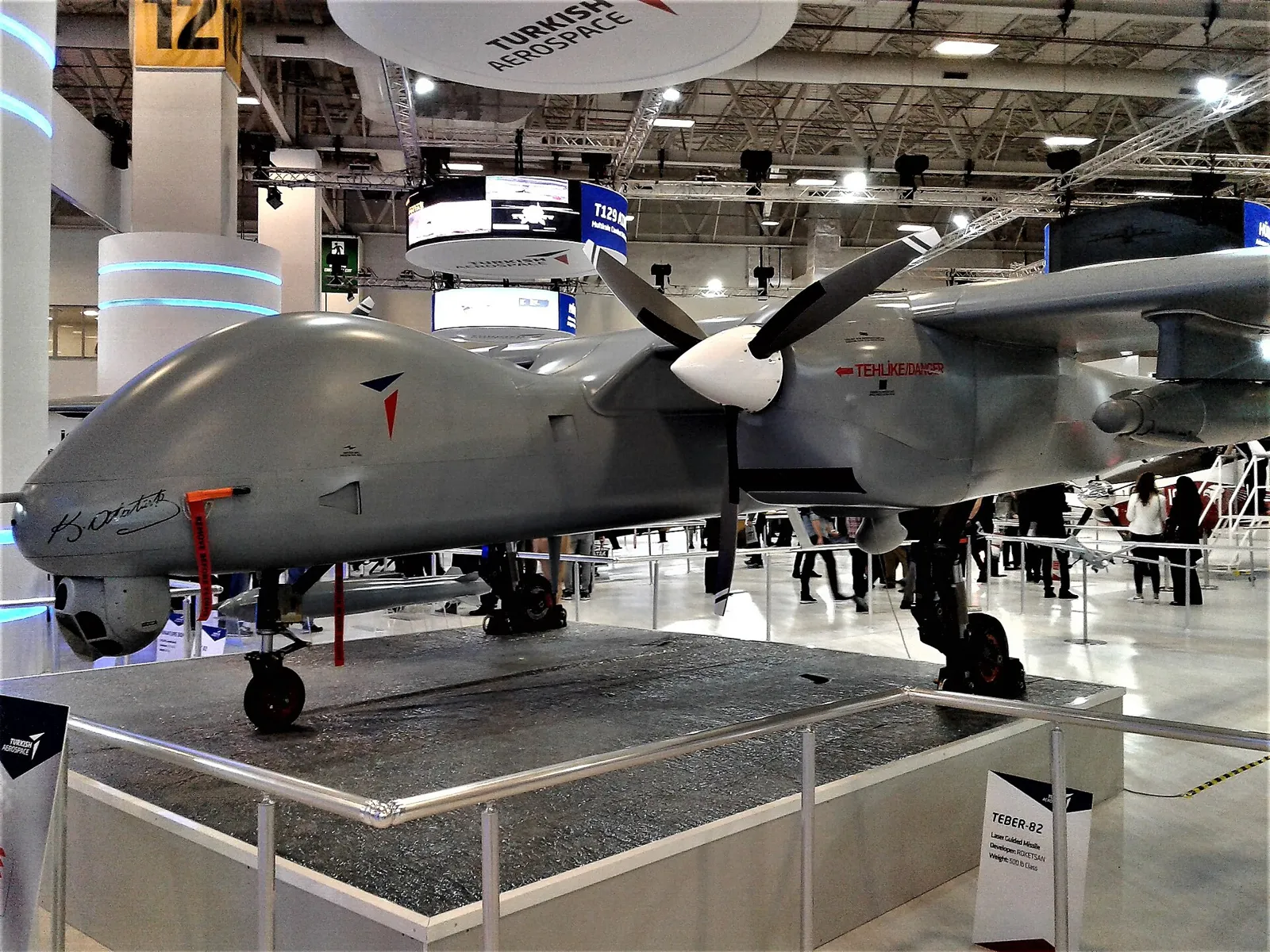
Kyrgyzstan announced its TB2 order in October 2021 and operated the type from December 2021; in October 2022 National Security Committee chairman Tashiev announced the Akinci purchase; on 17 January 2023 the presidential press service confirmed Aksungur and ANKA as well. In November 2023 Akinci and Aksungur were handed over at the Border Service’s drone base in a ceremony attended by President Japarov, Tashiev and Baykar CEO Haluk Bayraktar. Kyrgyzstan is the only country outside Turkey to operate all four MALE types from Turkish Aerospace and Baykar. Numbers and prices were not disclosed; Japarov said the purchases were financed from the state budget.
Munitions in the package
The TB2s on Turkmenistan’s 2021 parade carried MAM-L and MAM-C; in Uzbekistan’s November 2023 image each of four TB2s carried four Roketsan munitions. Aircraft and munitions come from the same line, as on the Chinese line; the Russian line raises no such question because it has no armed MALE on offer.
Training and logistics: the air bridge
There is no land link between Turkey and Central Asia; logistics across the Caspian run through the Caucasus or by air. That makes the training and maintenance leg different from other regions. Kyrgyzstan built a dedicated base under the Border Service; operators trained in Turkey. In Kazakhstan maintenance authority is part of the 2022 memorandum and the 2026 venture. Arrangements in Uzbekistan and Turkmenistan are not public. As fleets grow, maintenance capacity will need to be built in the region; today Astana is the only base for that. The difference from Azerbaijan is exactly here: Azerbaijan has a road, Central Asia does not.
Production share: only Kazakhstan
One of four buyers asked for it and got it. Kazakhstan’s Aselsan joint venture was founded in 2011 and its Astana plant opened in December 2013 — Aselsan 49 per cent, Kazakhstan Engineering 50, SSB 1 — producing night-vision, thermal cameras and remote weapon stations; it is one of the markets in Aselsan’s export map. On the drone side came the contract for three ANKAs in late 2021, the technology-transfer memorandum of 11 May 2022, completion of deliveries in 2023, and on 14 May 2026 a joint venture in Astana for ANKA production and maintenance. Kazakhstan will be the first country to build ANKA outside Turkey; shares and schedule were not disclosed. The ANKA delivery file lists the type’s other export customers.
Fifteen years of change
The timeline shows that the Turkish line entered the region not with drones but with electronics: the 2011 Aselsan venture came a decade before the 2021 drone wave. The turning point is 2021: Turkmenistan’s parade, Kyrgyzstan’s order and Kazakhstan’s contract all fell between September and December of that year.
Four buyers, three relationship types
| Buyer | Pattern | Price | Transfer | Step on the scale |
|---|---|---|---|---|
| Kazakhstan | Small purchase + production transfer | Undisclosed | Aselsan plant (2013) + ANKA venture (2026) | 3. Co-production |
| Kyrgyzstan | Full catalogue, ready systems | Undisclosed | Training; drone base | 1. Direct purchase |
| Uzbekistan | Tiered: TB2 then ANKA | Undisclosed | None known | 1. Direct purchase |
| Turkmenistan | Ready systems | $37m total imports (2021) | None | 1. Direct purchase |
Kazakhstan: fewest aircraft, deepest relationship
Kazakhstan’s three ANKAs are the smallest drone order in the region, yet with the 2026 venture it is the deepest relationship. That confirms the backbone of this series once more: as in Indonesia and Saudi Arabia, a buyer that wants production buys the line, not the number. Kazakhstan’s difference is that the ground was laid a decade earlier with Aselsan; the Astana plant is Aselsan’s only production partnership in Central Asia. The ANKA venture attaches not to that plant but to Kazakhstan Engineering — the same state holding.
Kyrgyzstan: small budget, wide catalogue
Kyrgyzstan’s choice is one of the most instructive in the series. Its defence budget is little more than twice Poland’s single TB2 contract, yet it took four types in two years. The logic is not quantity but layers: TB2 for border patrol, ANKA for long-endurance reconnaissance, Aksungur for twin-engine heavy payload, Akinci for high altitude and heavy munitions. Had a small army bought four types from four makers it would run four training lines, four ground stations and four supply chains; buying from two Turkish makers reduced that to two. The price is unknown but the structure is clear: the buyer purchased a border-surveillance architecture, not a system. Next to the three-to-six-aircraft packages of the Balkans, Kyrgyzstan’s catalogue is a regional exception; the TB2 delivery record shows how unusual it is.
Uzbekistan: the quiet buyer
Uzbekistan’s TB2 purchase was never announced as a contract; it surfaced through the presidential office’s image of 16 November 2023. The January 2025 ANKA contract, too, is known only from the manufacturer. President Mirziyoyev visited Turkish Aerospace in Ankara in June 2024; the 2026 military cooperation plan was signed in Ankara. In the same period Uzbekistan enlarged the Chinese line — six J-10CE in August 2026. The region’s most populous country runs both lines together.
Turkmenistan: the early buyer
Turkmenistan was the first Central Asian state to show a Turkish drone: three TB2s at the 27 September 2021 parade. The $37 million of imports in July 2021 was not itemised; whether the TB2s were inside that figure is unknown. Turkmenistan’s larger Turkish relationship is at sea — the ready-hull pattern in the naval file.
Why Tajikistan stays unconfirmed
In April 2022 Tajik Defence Minister Sherali Mirzo visited Ankara, was photographed at Baykar’s facilities and TB2 talks were reported. Kyrgyzstan objected openly. Neither Dushanbe nor Baykar has since announced a contract; the military cooperation agreement signed at IDEF in July 2023 was ratified in April 2024 and provides 50 million lira over five years for Turkish defence purchases. This file leaves the Tajikistan row as “unconfirmed”. Bishkek stated that it used TB2s in the September 2022 Kyrgyz–Tajik border clashes; the file takes no side in that clash and relays only the official Kyrgyz statement.
EM-PFI assessment
As a regional file, the score assesses the Central Asian line as a whole, not one country’s decision. Azerbaijan’s own score in the eighth file was 81; the regional line sits in the same band.
| Criterion | Weight | Score | Rationale |
|---|---|---|---|
| Operational need | 20 | 17 | Long mountainous borders; surveillance and border security first |
| Technical fit | 15 | 13 | Tiered catalogue from TB2 to Aksungur; Kyrgyzstan took all four |
| Geography and climate | 10 | 9 | High altitude and hard winters; in use, no issues reported |
| Inventory compatibility | 10 | 6 | Mixed with Russian and Chinese systems; three separate ground stations |
| Logistics | 10 | 7 | No land link; air bridge and on-site training |
| Cost-effectiveness | 10 | 9 | Scaled to regional budgets; no official price disclosed |
| Delivery and production | 10 | 8 | Kyrgyzstan four types in two years; Kazakhstan three ANKAs in two |
| Technology transfer | 5 | 4 | Kazakhstan’s ANKA line; none in the other three |
| Local production | 5 | 4 | Astana Aselsan plant producing; ANKA venture signed |
| Modernisation path | 5 | 4 | Higher classes from the same makers; Akinci in the region |
| Total | 100 | 81 | Strong choice |
Risks and limits
This section exists to make the file usable, not to weaken the product.
| Item | Status | What it means |
|---|---|---|
| Price transparency | No official value in any of the four contracts | No comparative cost analysis possible |
| Quantity transparency | Kyrgyzstan and Uzbekistan disclosed no numbers | Fleet size can only be inferred from imagery; the file infers nothing |
| Logistics line | No land link | Maintenance and munitions resupply depend on the air bridge |
| The Tajikistan row | April 2022 reports never confirmed | Regional spread incomplete; a neighbour’s objection on record |
| The Kazakh venture | Agreement May 2026; no shares or schedule | Production transfer still on paper |
| Growth of the Chinese line | Uzbekistan J-10CE, Kazakhstan Y-9E (2026) | Competition continues beyond drones; the Turkish line is drone-only here |
| Neighbour sensitivity | Kyrgyzstan objected to the Tajikistan talks | Selling to two neighbours from one supplier can carry political cost |
The view from the West
For a Western reader Central Asia is the region where the Turkish drone line faced no Western competitor at all. Washington never offered an armed MALE to any of the five republics; European programmes were not on the market. The choice was therefore not “Turkish or American” but “a third source or none”. That is why the region looks different from the Gulf, where the Turkish package answered a closed US door, and from the Balkans, where it answered a small budget. Here it answered a strategic wish not to depend on two neighbours — the multi-vector policy that Kazakhstan and Uzbekistan describe in their own doctrine.
Two implications follow. First, sanctions on Russia did more for the Turkish line in Central Asia than any marketing: they made the Russian option uncertain at exactly the moment the Turkish catalogue reached four types. Second, the Kazakh ANKA venture is the first case of a NATO-member manufacturer building a combat drone inside a CSTO member state. Whether that becomes a pattern or remains a single plant is the question the emerging-markets drone story will answer over the next two years.
Central Asian buyers chose Turkish drones to avoid depending on two neighbouring suppliers alone. The package answered with the Gulf’s four components and a regional fifth, the full catalogue. The line, as Tajikistan shows, is bounded by the balance among neighbours. Its permanence rests on two variables: whether the Kazakh venture moves into production, and whether maintenance capacity is built in the region. Both are forecasts; this file recorded only what was signed and delivered. The full series sits on the Turkish defence exports hub; the TB2–Wing Loong II comparison covers the class the two lines share.
Frequently asked questions
Which Central Asian countries operate Turkish drones?
Four with verified evidence: Kazakhstan (ANKA, delivered 2023; joint venture 2026), Kyrgyzstan (Bayraktar TB2, Akinci, Aksungur, ANKA), Uzbekistan (TB2; ANKA contract 2025) and Turkmenistan (TB2, 2021). April 2022 reports that Tajikistan bought TB2s were never officially confirmed.
What did Kazakhstan buy from Turkey?
Three Turkish Aerospace ANKAs under a contract signed in late 2021, delivered by 2023. On 11 May 2022 Turkish Aerospace and Kazakhstan Engineering signed a memorandum on technology transfer and maintenance; on 14 May 2026 a joint venture for ANKA production and maintenance was signed in Astana. Separately, Kazakhstan Aselsan Engineering, a joint venture founded in 2011, produces night-vision, thermal-camera and remote weapon station equipment in Astana.
Which Turkish drones did Kyrgyzstan acquire?
All four: Bayraktar TB2 (ordered October 2021, in service from December 2021), Bayraktar Akinci (announced October 2022), Turkish Aerospace Aksungur and ANKA (confirmed by the presidential press service on 17 January 2023). Akinci and Aksungur were handed over in November 2023 at the Border Service’s drone base; ANKA was planned for the first quarter of 2024. Numbers and prices were not disclosed.
Why did Kyrgyzstan buy four different Turkish drones?
The official rationale is border security; President Japarov said the purchases were financed from the state budget. The four types cover tactical (TB2), heavy (Akinci), twin-engine long-endurance (Aksungur) and MALE reconnaissance (ANKA) layers from one supplier country. Kyrgyzstan is the only country outside Turkey to operate all four.
Does Uzbekistan operate the TB2?
Yes. On 16 November 2023 the presidential office published a photograph, taken during a visit to Surxondaryo, showing four TB2s each carrying four Roketsan munitions; no contract date or price was disclosed. In January 2025 Turkish Aerospace was reported to have signed an ANKA contract with Uzbekistan; numbers and schedule were not disclosed.
Does Turkmenistan operate Turkish drones?
Yes. Three TB2s in Turkmen markings, armed with MAM-L and MAM-C munitions, were shown at the 27 September 2021 independence parade. Turkmenistan imported $37 million of defence and aerospace goods from Turkey in July 2021; the itemisation was not disclosed. Turkmenistan’s Turkish naval platforms are covered in the fourteenth file.
Did Tajikistan buy Turkish drones?
Unconfirmed. In April 2022 Defence Minister Sherali Mirzo visited Ankara and TB2 talks were reported; Kyrgyzstan objected. A military cooperation agreement signed at IDEF in July 2023 was ratified in April 2024 and provides 50 million lira over five years for Turkish defence purchases. No drone delivery has been confirmed.
What were the alternatives in Central Asia?
Two lines already existed. Chinese: Kazakhstan took Wing Loong in 2016, Uzbekistan operates Wing Loong I and II, Turkmenistan CH-3 and WJ-600. Russian: Orlan-series reconnaissance drones in Kazakhstan and Kyrgyzstan. The Turkish line entered as the third option in the armed MALE class; the US line sold no armed drone in the region.
Why will ANKA be produced abroad for the first time in Kazakhstan?
Kazakhstan has had a production joint venture with Aselsan since 2011; the 2022 memorandum and the 2026 joint venture sit on that base. Kazakhstan Engineering is the state defence holding; the venture with Turkish Aerospace covers ANKA production and maintenance. Kazakhstan will be the first foreign country to manufacture ANKA. Shares and schedule were not disclosed.
Did the Organization of Turkic States drive these purchases?
It provides a platform: joint exercises, training and the 2026 Astana summit. But every contract was signed bilaterally with a separate company; there is no organisation-level procurement. This file does not present the political framework as the main driver.
Are the prices of Central Asian contracts known?
No. None of the Kazakh, Kyrgyz, Uzbek or Turkmen contracts has an official value. The only known figure is Turkmenistan’s $37 million total import in July 2021, without itemisation. The file therefore makes no comparative cost analysis.
Is there local production in Central Asia?
In Kazakhstan: the Kazakhstan Aselsan Engineering plant in Astana has been producing since 2013 (Aselsan 49%, Kazakhstan Engineering 50%, SSB 1%). The ANKA joint venture was signed in 2026 and has not started production. The other three countries have no local production.
What does the EM-PFI score mean?
The Central Asian line scores 81/100, in the ‘strong choice’ band. The score is Envanter Medya’s editorial assessment. High on geography and technical fit, low on inventory compatibility and logistics: the region has no land link to Turkey and fleets come from three sources.
Why is Azerbaijan not in this file?
Azerbaijan is in the Caucasus and was examined alone in the eighth file: a formal alliance, TB2 and Akinci, a land link. Its two basic differences from Central Asia are the land link and partly known contract values. It appears here only for comparison.
What comes next on the Central Asian line?
The Kazakh ANKA venture moving into production, Uzbekistan’s ANKA deliveries and Kyrgyzstan’s ANKA delivery are on the calendar. The Tajikistan row stays open. The file recorded only verified items; forecasts are marked.
Sources and method
- Kyrgyz presidential press service (17 January 2023) and National Security Committee statements (October 2021, October 2022); November 2023 handover ceremony
- Office of the President of Uzbekistan, image of 16 November 2023; Turkish Aerospace statement on the ANKA contract (January 2025); 2026 military cooperation plan
- Kazakhstan Engineering and Turkish Aerospace statements — ANKA contract (2021), memorandum (11 May 2022), joint venture (14 May 2026); Aselsan 2024 Annual Report — Kazakhstan Aselsan Engineering
- Turkmenistan independence day parade (27 September 2021); Turkish export data (July 2021)
- Tajik parliament ratification (April 2024); Defence Minister Mirzo’s Ankara visit (April 2022)
- Kazakh Ministry of Defence — Wing Loong delivery (June 2016); defence press on Chinese deliveries (2026)
- International defence press — unconfirmed items marked in the text
Method note. Orders and deliveries, official statements and press reports are kept apart. No figure was written for a contract without a disclosed value; no estimate was made for a fleet without disclosed numbers. The Tajikistan row is left unconfirmed. The Kyrgyz–Tajik border clash is mentioned only through the official Kyrgyz statement and without taking sides. The Turkic framework is not presented as the main driver. EM-PFI is Envanter Medya’s editorial assessment, not an official index.