Why Is the Turkish Defence Industry Growing in the Balkans? Scale, Donations and Five Empty Rows

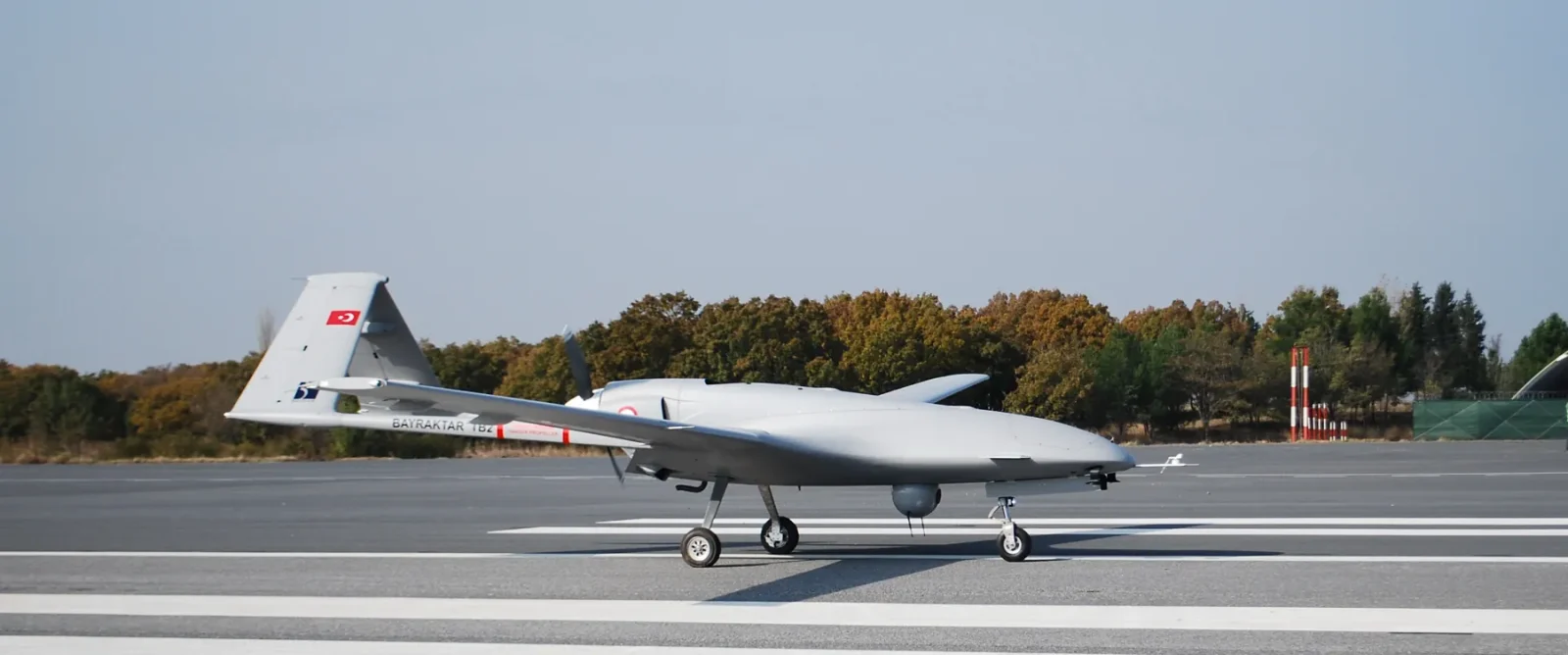
Six of the eleven countries on the Balkan peninsula operate Turkish defence equipment. What they have in common is not the size of their budgets but the smallness of them. In the Gulf the answer to “why Turkish?” was access. In the Balkans the answer sits elsewhere: in a small army’s need to acquire an alliance-standard capability quickly and with limited money.
This file reads the Turkish defence line in the Balkans in a single table. Romania’s armoured-vehicle decision was examined in the fifth file of this series and is not repeated here; Romania appears only through its TB2 row. The focus is five buyers — Kosovo, Albania, Croatia, Bosnia and Herzegovina, North Macedonia — and five empty rows: Serbia, Montenegro, Bulgaria, Greece and Slovenia. As in the Gulf file, the empty rows count as evidence. The Turkish original is here.
Who bought what, and who did not
The table contains only contracts, deliveries and donations verified through public sources. Where a price was not disclosed, no press figure was substituted; donations and sales are marked separately.
| Country | System | Quantity | Pattern | Status |
|---|---|---|---|---|
| Kosovo | TB2 + Cobra + Vuran/Alkar + FPV drones | 5 TB2; vehicle numbers undisclosed | Sale + production transfer | TB2 delivered July 2023; MKE plant deal December 2024 |
| Albania | Bayraktar TB2 | 3 | Sale | Delivered February 2024; at NATO’s Kucova base |
| Croatia | Bayraktar TB2 | 6 | Sale · 67.01m euros (ex VAT) | First aircraft August 2025 |
| Romania | TB2 + Cobra II | 18 TB2; 1,059 vehicles | Sale + joint venture | First TB2 system June 2024; Cobra II in file five |
| Bosnia and Herzegovina | Kirpi II + TB2 + Kangal | 32 Kirpi II (4 delivered); 2 TB2 | Donation | First handover 29 June 2025 |
| North Macedonia | Drones, comms, night vision | Undisclosed | Donation | Ceremony 30 August 2024; no sales contract |
| Serbia | — | — | — | TB2 plan shelved by Belgrade in 2023 |
| Montenegro | — | — | — | No verified Turkish system |
| Bulgaria | — | — | — | No verified Turkish system |
| Greece | — | — | — | No verified Turkish system |
| Slovenia | — | — | — | No verified Turkish system |
The first thing the table says is scale. The largest single contract in the Balkans is Romania’s 18-aircraft package, and even that sits below Kuwait’s deal in the Gulf. The other four buyers took between three and six aircraft. The second thing is variety: commercial sale, donation and production transfer sit side by side in one region. The third is how many rows are empty — five of eleven — and that one of them, Serbia, was once a prospective buyer.
The decisive variable: scale
In earlier files price was rarely at the centre of the decision. Gulf buyers had money; in Africa price mattered but mine protection and delivery speed decided. The Balkans change the equation. Most armies in the region number eight to ten thousand; North Macedonia’s 2025 defence budget is about $388 million and Kosovo’s entire force is around five thousand. For an army of that size a six-aircraft UCAV fleet is a measurable share of the budget.
The one contract with a known price
Most Balkan TB2 contracts have no disclosed value. The single known figure is Croatia’s: six aircraft, a command-and-control station, simulators, spares for 4,000 flight hours and training for 67.01 million euros excluding VAT. That number sets the regional scale. Poland’s 2021 contract was $270 million for 24 aircraft; Croatia’s per-aircraft figure sits in the same band. Romania’s 18-aircraft package came to about $321 million including munitions, logistics and training.
The other end of the region provides the comparison. Serbia signed a $335 million package with Israel’s Elbit Systems in January 2025 covering Hermes 900 drones, PULS rocket launchers, missiles and electronic warfare, with deliveries expected to run until mid-2028. The two packages do not contain the same items — Serbia’s includes artillery and EW — so they cannot be compared line by line. But the difference in magnitude stands on its own: what Croatia paid for six combat-proven UCAVs is less than a quarter of Serbia’s first Israeli package.
| Buyer | Aircraft | Price | Contract | First delivery | Lead time |
|---|---|---|---|---|---|
| Kosovo | 5 | Undisclosed | Late 2022 | July 2023 (announced) | ≈6 months |
| Albania | 3 | Undisclosed | 20 December 2022 | February 2024 | ≈14 months |
| Romania | 18 | ≈$321m | April 2023 | June 2024 | ≈14 months |
| Croatia | 6 | 67.01m euros (ex VAT) | 21 November 2024 | August 2025 | ≈9 months |
| Bosnia and Herzegovina | 2 (donation) | — | April 2025 (decision) | 29 June 2025 | ≈2 months |
Delivery speed: the region’s second criterion
A buyer with a small budget has a second priority: time. Kosovo’s late-2022 order was delivered in summer 2023; Croatia signed in November 2024 and paraded its first aircraft in Zagreb in August 2025. Those lead times — see the TB2 delivery record — sit in the same band as Estonia’s twelve-month armoured-vehicle delivery and confirm the recurring finding of this series: where transfer stays shallow, delivery stays fast. None of the Balkan buyers — Kosovo’s ammunition line apart — asked for an industrial share; all of them received aircraft within a year.
What were the alternatives?
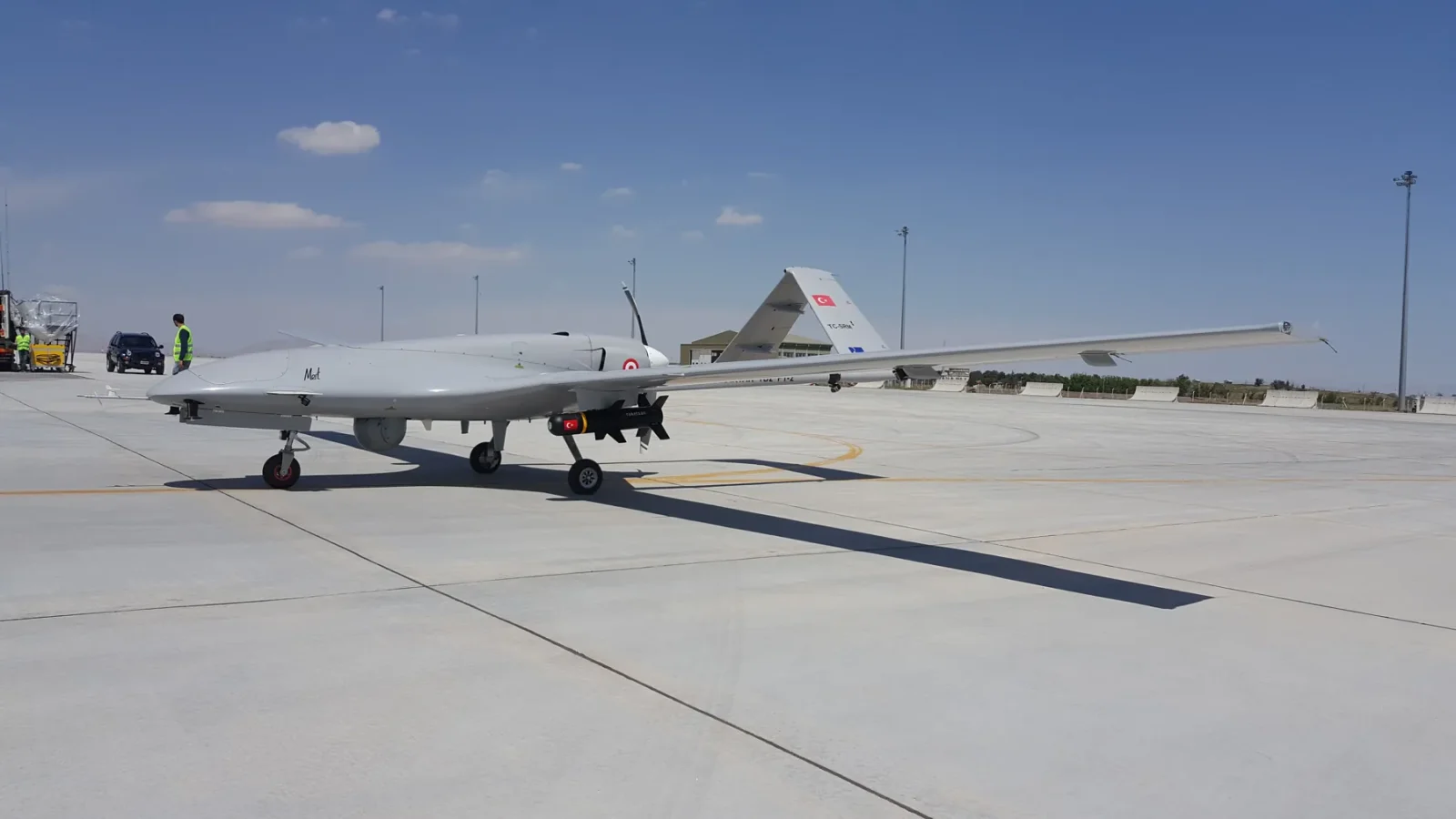
Balkan armies had four lines to choose from in the armed-drone class. The US line — the MQ-9 family — stayed out of reach for armies of this size on unit cost and congressional approval time; the access problem described in the Gulf file shows up here as a cost problem. The Chinese line did not arise for NATO members and candidates on political and inventory grounds; the TB2–Wing Loong comparison explains why the two export models diverge. The Israeli line became Serbia’s choice, with the outcome above: higher price, longer schedule and an export version sold mostly unarmed. The Turkish line was the fourth option, first tested in the region by Kosovo.
| Line | Example | Entry price | Approval | Regional outcome |
|---|---|---|---|---|
| United States | MQ-9 | High | Congress + control regime | No Balkan buyer |
| China | Wing Loong | Low | Open | Not on the table for NATO members and candidates |
| Israel | Hermes 900 | High | Israeli licence | Serbia: $335m, deliveries to 2028 |
| Turkey | Bayraktar TB2 | Low | Single capital | In service or on calendar in five countries |
The armoured-vehicle picture is more mixed. North Macedonia, having transferred its tank fleet to Ukraine, bought wheeled armour from the United States (Stryker, JLTV); the Turkish line there stayed at donations. Kosovo chose Otokar Cobra and BMC Vuran; Bosnia received Kirpi II by donation. Turkey’s armoured-vehicle range gives the region product breadth, but the Balkan armour line is nowhere near the scale of Africa or the Baltics; the Serbian and Romanian fit studies on this site show what remains open.
The Balkan version of the Turkish package
In the Gulf we counted four components: record, munitions, licence and a production share. The first three apply unchanged in the Balkans; the fourth exists only in Kosovo. Two regional components are added: the donation pattern and an in-alliance reference.
The donation pattern
The 32 Kirpi II and two TB2s going to Bosnia and Herzegovina are not a sale but a military-assistance package agreed in Antalya in April 2025 by the two defence ministers. The first four vehicles and two aircraft were handed over on 29 June 2025; Aselsan’s Kangal counter-drone system followed the same route in May 2025. The drones, communications and night-vision equipment delivered to North Macedonia on 30 August 2024 were donations too. This is the first time the pattern appears in the series and it has two consequences: no burden on the recipient’s budget, and no price to compare. It also enlarges the product’s regional reference: Bosnia’s army now sits among the European users of the Kirpi family.

An in-alliance reference
Albania’s three TB2s were shown on 4 March 2024 at Kucova, opened that day as NATO’s first tactical air base in the Western Balkans — the first regional case of a Turkish system stationed at an alliance facility. Romania and Croatia are NATO members; North Macedonia joined in 2020. The element the Poland file called “the first in-alliance reference” is now spread across four Balkan countries, and the interoperability question is answered in advance for every subsequent buyer.
Munitions and subsystems
Munitions are inside every Balkan contract. Albania’s covers laser-guided munitions; Croatia’s an initial weapons set. As in the Gulf, munitions from the same contract remove a separate approval cycle. Kosovo’s armoured vehicles carry Aselsan Sarp turrets and Roketsan OMTAS anti-tank missiles, so the Kosovo line gathers the products of four Turkish companies in one inventory; the Skydagger FPV line added a further layer in October 2025.

Five years of change
The timeline shows a line that began with a small vehicle contract in 2021 and spread to four countries between 2023 and 2025. The turning point is 2023: Kosovo’s delivery, Romania’s large contract and Serbia’s decision to shelve its plan all fall in the same year.
Three patterns: sale, donation, production
One region, three relationship types — the land-and-air version of the four contract patterns found in the naval file.
| Pattern | Countries | Price | Transfer | Step on the six-step scale |
|---|---|---|---|---|
| A · Commercial sale | Albania, Croatia, Romania (TB2) | Disclosed or undisclosed | Training + on-site technicians | 1. Direct purchase |
| B · Donation | Bosnia and Herzegovina, North Macedonia | — | Training package | 1. Direct purchase (no price) |
| C · Sale + production transfer | Kosovo | Undisclosed | Ammunition plant, machinery, training | 3. Co-production (being set up) |
Kosovo: the deepest relationship in the region
Kosovo is both the first and the broadest Balkan buyer on the Turkish line. A BMC Vuran contract reported in 2021 became visible at the Kosovo Security Force inventory ceremony in May 2023: Vurans with Aselsan’s Alkar 120 mm mortar, Cobras with Sarp turrets and OMTAS. Five TB2s arrived in July 2023; FPV drones followed in October 2025. The real threshold is 16 December 2024: Prime Minister Kurti and MKE general manager Ilhami Keles signed for a plant producing NATO-standard ammunition, delivered turnkey with machinery, staff training, maintenance and test equipment and run as a Kosovo public enterprise. In Kurti’s words, “we have purchased what Turkey produces, and now it is time to produce together.” On this series’ six-step scale that is step three, and the only example in the Balkans — a small-scale version of the production-line exports seen on the European ammunition line.
Croatia and Albania: the standard package
Both bought ready systems and asked for no industrial share. The detail of Croatia’s contract shows what a “standard Turkish UCAV package” looks like for the region: six aircraft split between two command centres, Baykar technicians in-country for the two-year warranty, spares sized to 4,000 flight hours. Croatia is replacing Soviet-era artillery with South Korea’s Chunmoo in the same period; the Turkish line is only the drone leg of that modernisation. In Albania the TB2 was defined for civil tasks as well — border surveillance, police operations, wildfire tracking — an example of a MALE platform used for many purposes in a small country.
Bosnia and North Macedonia: the limits of donation
In both countries the line was built on donations and, for now, stays there. When the 32-vehicle Kirpi II package is complete, a significant part of Bosnia’s armoured fleet will be Turkish-built; the two TB2s came with a training package. Press reports in autumn 2024 spoke of a six-TB2 purchase, but that line is not officially confirmed and is kept apart from the two donated aircraft. In North Macedonia the Military Cooperation Framework Agreement signed by Defence Minister Misajlovski at SAHA EXPO on 23 October 2024 gives training and industrial cooperation a legal basis; the Baykar file has been at the level of interest since 2023, with no contract.
Why is Serbia not on the list?
Serbia is the most instructive verified negative. Belgrade showed interest in the TB2 from late 2020; President Vucic said he had asked President Erdogan for the system, and talks continued in 2022. After Turkey sold TB2s to Kosovo, Vucic said in 2023 that Serbia had cancelled the planned purchase. The decision was not technical: the platform’s performance, price and delivery schedule were never in dispute. Serbia then turned to the Israeli line for the same class, at the price and on the schedule reported above, and the joint drone plant with Elbit was scheduled to open in September 2026.
This row tests the file’s thesis. If the Turkish package is attractive in the Balkans on price and speed, why did a country that saw the same attraction not buy? The answer lies in a political context that this series does not present as the main driver. Serbia shows that the limit of the Turkish line in the region is the relationship, not the product. The Montenegro, Bulgaria, Greece and Slovenia rows are different: no known talks about Turkish systems; Montenegro meets its naval need through France’s Kership, Bulgaria and Greece their air and naval needs through US and European lines. The Black Sea military balance is covered separately.
EM-PFI assessment
Because this is a regional file, the score assesses the Balkan line as a whole, not one country’s decision. Romania’s own score in file five was 82; Kosovo on its own would score higher for production transfer, North Macedonia lower.
| Criterion | Weight | Score | Rationale |
|---|---|---|---|
| Operational need | 20 | 17 | Border and airspace surveillance; one system, many tasks for small armies |
| Technical fit | 15 | 13 | TB2 as the single class; no demand for a heavier class |
| Geography and climate | 10 | 9 | Temperate, mountainous; no issues reported in use |
| Inventory compatibility | 10 | 7 | First UCAV in mixed Soviet–US inventories; separate ground station |
| Logistics | 10 | 8 | Reachable by road; two years of on-site technicians in Croatia |
| Cost-effectiveness | 10 | 10 | Lowest entry price scaled to regional budgets; Serbia comparison |
| Delivery and production | 10 | 9 | Six to fourteen months to first delivery; donation in two |
| Technology transfer | 5 | 3 | Only Kosovo’s ammunition line |
| Local production | 5 | 2 | Kosovo plant being set up; none in the other five |
| Modernisation path | 5 | 4 | Higher class from the same maker; FPV layer added in Kosovo |
| Total | 100 | 82 | Strong choice |
The breakdown confirms the backbone of the series once more: near full marks on cost and delivery, lowest marks on technology transfer and local production. Balkan buyers chose speed; only Kosovo asked for depth. Indonesia made the opposite choice, and both are consistent at their own scale.
Risks and limits
This section exists to make the file usable, not to weaken the product.
| Item | Status | What it means |
|---|---|---|
| Price transparency | Only two of five contracts have a disclosed value | Regional cost comparison rests on two data points |
| Continuity of donations | The Bosnia and North Macedonia lines were built on donations | Unclear whether they convert to sales; maintenance and resupply depend on contracts |
| Small fleets, small support base | No in-country maintenance base for fleets of three to six | Two years of on-site technicians in Croatia; afterwards open |
| The six-TB2 claim for Bosnia | Press report; no official confirmation | This file records only the two donated aircraft delivered |
| Kosovo plant timeline | Agreement December 2024; opening date not announced | Production transfer still on paper; progress to be tracked |
| The Serbia row | Belgrade shelved its plan in 2023 and turned to the Israeli line | Regional spread incomplete; the reason is not technical |
| Armour competition | North Macedonia bought wheeled armour from the US | The Turkish line in the region is drone-heavy; armour share limited |
The view from the alliance
For a reader who follows NATO, the Balkan line answers a question the alliance has struggled with for a decade: how its smallest members acquire the unmanned strike capability that larger allies take for granted. The US line has never been priced for an army of five thousand. European MALE programmes remain years away from export. What Albania, Croatia and Romania have done is fill that gap with an allied product that is already combat-proven, arrives within a year and is stationed, in Albania’s case, on a NATO base. The same logic runs through the list of the most-used UCAVs: the type that spreads is the one a small budget can afford.
The second alliance-level point is industrial. Kosovo’s ammunition plant and the MKE–PGZ air-defence memorandum in Poland belong to the same trend: Turkish manufacturers exporting production capacity into NATO’s eastern and southern flank at a time when the alliance is asking members to rebuild stocks. For the Balkans that trend is still one plant on paper. Whether it becomes a pattern is the question the next two years will answer.
Balkan buyers chose the Turkish defence industry to acquire alliance-standard capability quickly on a small budget. The package answered with the Gulf’s four components plus two regional ones — the donation pattern and the in-alliance reference. The line built in five countries is limited, as Serbia shows, by relationships rather than by product. Its growth depends on two variables: whether donations convert into commercial support contracts, and whether Kosovo’s plant opens. Both are forecasts; this file recorded only what was signed and delivered. Regional profiles are available for Serbia, with fit studies on electronic warfare and border security; the full series sits on the Turkish defence exports hub.
Frequently asked questions
Which Balkan countries use Turkish defence equipment?
Six with verified contracts, deliveries or donations: Kosovo (Bayraktar TB2, Otokar Cobra, BMC Vuran, FPV drones), Albania (TB2), Croatia (TB2), Bosnia and Herzegovina (Kirpi II and TB2 donations), North Macedonia (equipment donation) and Romania (TB2 and Otokar Cobra II). Serbia, Montenegro, Bulgaria, Greece and Slovenia have no verified Turkish system.
What did Kosovo buy from Turkey?
Five Bayraktar TB2s with a ground control station (2023); BMC Vuran 4×4 vehicles with Aselsan’s Alkar 120 mm mortar, Otokar Cobra vehicles with Aselsan Sarp turrets and Roketsan OMTAS anti-tank missiles (shown at the Kosovo Security Force inventory ceremony in May 2023); and FPV drones in October 2025. In December 2024 Kosovo signed with MKE for a NATO-standard ammunition plant.
When did Kosovo receive its TB2s?
Prime Minister Albin Kurti announced the delivery on 16 July 2023; Turkish media reported five aircraft. The contract value was not disclosed. With the order placed in late 2022, the contract-to-delivery time was roughly six months, among the fastest in this series.
How many TB2s did Albania buy, and for how much?
Three. The contract was signed on 20 December 2022; Baykar said Albania was the 27th country to sign a TB2 export contract. The price was not officially disclosed. The package includes laser-guided munitions and training for about 30 personnel. The aircraft arrived in February 2024 and were shown at the 4 March 2024 opening of Kucova as NATO’s first tactical air base in the Western Balkans.
What does Croatia’s TB2 contract include?
Signed on 21 November 2024 by Defence Minister Ivan Anusic and Baykar CEO Haluk Bayraktar, the contract covers six armed aircraft, a command-and-control station, simulators, ground surveillance and airspace management stations, spares for up to 4,000 flight hours, an initial weapons set and operator training. The price is 67.01 million euros excluding VAT. Baykar technicians stay in Croatia for the two-year warranty. The first aircraft was shown at the Zagreb parade in August 2025.
Did Romania buy TB2s from Turkey?
Yes. In April 2023 Romania ordered three systems (18 aircraft) for about $321 million; the first system reached the 93rd Air Base at Timisoara in June 2024, with the remaining two scheduled for September 2024 and January 2025. Romania’s Otokar Cobra II decision is covered in the fifth file of this series.
What did Bosnia and Herzegovina receive from Turkey?
Under a package agreed in April 2025 in Antalya by Defence Ministers Yasar Guler and Zukan Helez, the first four BMC Kirpi II vehicles and two Bayraktar TB2s were handed over on 29 June 2025; 32 Kirpi II are planned in total. This is a donation, not a sale. Aselsan’s Kangal counter-drone system was also donated in May 2025. Press reports in 2024 mentioned a purchase of six TB2s; that line is not officially confirmed.
Has North Macedonia bought Turkish equipment?
There is no purchase contract. A ceremony in Skopje on 30 August 2024 marked the delivery of Turkish-donated drones, communications, night-vision and protective equipment; a Military Cooperation Framework Agreement was signed at SAHA EXPO on 23 October 2024. Interest in Baykar has been reported since 2023, without a contract.
Why did Serbia not buy Turkish drones?
Serbia showed interest in the TB2 from late 2020 and talks continued in 2022. After Turkey sold TB2s to Kosovo, President Vucic said in 2023 that Serbia had cancelled the planned purchase. In January 2025 Serbia signed a $335 million package with Israel’s Elbit Systems for Hermes 900 drones and PULS launchers, with deliveries expected to run until mid-2028.
What were the alternatives in the Balkans?
In the armed-drone class the US line (MQ-9 family) was out of reach for armies of this size on cost and approval time; the Chinese line was not on the table for NATO members and candidates; the Israeli line, in Serbia’s case, came at a far higher price and a longer schedule. In armoured vehicles, the US (JLTV, Stryker) won North Macedonia.
How long did Balkan buyers wait for delivery?
Kosovo about six months (late 2022 to July 2023), Croatia about nine (November 2024 to August 2025), Albania and Romania about fourteen. Bosnia’s donation package was agreed in April 2025 and delivered in June 2025.
Is there local production in the Balkans?
Only in Kosovo, and only at the set-up stage: the 16 December 2024 agreement between Kurti and MKE general manager Ilhami Keles covers a plant producing NATO-standard ammunition in several calibres, with machinery, training, maintenance and test equipment. It will operate as a public enterprise. The other five countries have no production.
What is the difference between a donation and a sale?
Equipment delivered to Bosnia and North Macedonia came as military assistance. That places no burden on the recipient’s budget, but it also produces no contract value and no comparable cost data. This file keeps the two patterns apart.
What does the EM-PFI score mean?
The Balkan line scores 82/100, in the ‘strong choice’ band. The score is Envanter Medya’s editorial assessment, not an official index. It is near full marks on cost and delivery and low on local production and technology transfer.
What comes next on the Balkan line?
Croatia’s remaining five TB2s, Bosnia’s remaining 28 Kirpi II and the set-up of Kosovo’s ammunition plant are on the calendar. In North Macedonia the Baykar file remains at the level of interest. This file recorded only verified items; forward-looking lines are marked as such.
Sources and method
- Croatian Ministry of Defence (MORH) — TB2 contract, 21 November 2024; Zagreb parade, August 2025
- Office of the Prime Minister of Kosovo — TB2 delivery (16 July 2023), MKE ammunition plant agreement (16 December 2024); Kosovo Security Force inventory ceremony (May 2023)
- Albanian Ministry of Defence and manufacturer statements — TB2 contract (20 December 2022), Kucova base opening (4 March 2024)
- Romanian Ministry of National Defence and Baykar — TB2 contract (April 2023), first system (June 2024)
- Bosnia and Herzegovina and Turkish Ministries of Defence — Kirpi II and TB2 handover (29 June 2025), Kangal donation (May 2025)
- North Macedonian Ministry of Defence — donation ceremony (30 August 2024), SAHA EXPO framework agreement (23 October 2024)
- Office of the President of Serbia — TB2 plan shelved (2023); Elbit Systems contract (January 2025)
- International defence press — press-based items for undisclosed values, marked in the text
Method note. Orders and deliveries, sales and donations, official statements and press reports are kept apart. No figure was written for a contract whose value was not disclosed. The Serbia row rests on official statements only; political context is not presented as the main driver. Forward-looking sentences are marked as forecasts or assessments. EM-PFI is Envanter Medya’s editorial assessment, not an official index.