Black Sea Military Power 2026: How Turkiye, Russia and Ukraine Compare

The Black Sea is the world’s most tightly enclosed sea. Six countries share its coastline. One of them fields the world’s second-largest military; another holds the key to the only way in. The remaining four have spent three years rewriting their defence planning from scratch.
Using Global Firepower’s 2026 dataset, we compared all six littoral states capability by capability – tanks, combat aircraft, helicopters, warships, submarines, active personnel and defence budgets. The order follows each country’s overall power index (PwrIndx), where a lower score means greater strength.
We start at sixth and work up. Read to the end for where Turkiye sits in this picture, and why the country at the top is far less comfortable in these waters than its global ranking implies.
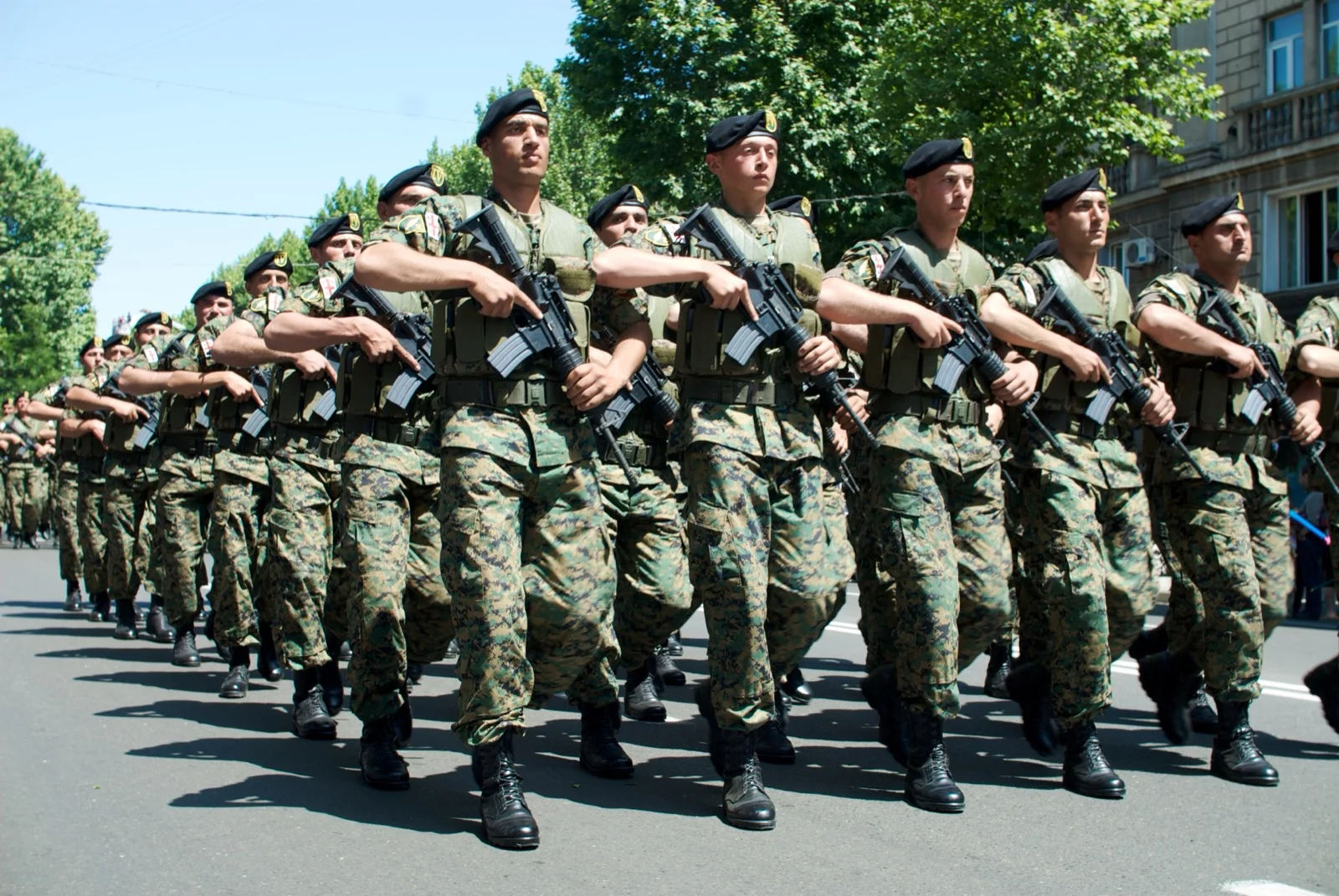
Georgia closes the Black Sea table. Ranked 95th out of 145 countries in Global Firepower’s 2026 index, it fields 37,000 active personnel on a defence budget of $680 million – less than a third of one percent of what the country at the top of this list spends.
The shape of the Georgian military today is a direct legacy of the five-day war of 2008. Since then Tbilisi has moved away from heavy armoured mass and towards NATO-standard professional infantry, reconnaissance and special forces. The inventory still lists 132 tanks, mostly upgraded T-72 variants. The glaring gap sits in the air: Georgia has no combat-ready fighter jets at all. What remains of the Su-25 fleet – an aircraft actually assembled at the country’s own Tbilaviamsheni plant – is now used for training and limited close support.
Ground vehicles are where the domestic industry still shows. State-owned Delta produces the Didgori armoured personnel carrier and the Lazika infantry fighting vehicle. On the coast, Poti and Batumi matter far more commercially than militarily; a 19-vessel, coast-guard-weighted flotilla is all that protects them.
Georgia’s strategic equation rests on partnerships rather than hardware. NATO accession is effectively frozen. Defence cooperation with Turkiye, run partly through a trilateral format that also includes Azerbaijan, provides training and exercise continuity. Abkhazia and South Ossetia keep the entire planning cycle locked onto a single scenario.
For scale: Georgia’s defence budget is less than a quarter of neighbouring Bulgaria’s.
| Capability | Figure |
|---|---|
| Tanks | 132 |
| Total aircraft | 61 |
| Fighter jets | 0 |
| Helicopters | 44 |
| Warships | 19 |
| Active personnel | 37,000 |
| Defence budget | $680 million |
Next up: a NATO member replacing its entire fighter fleet.
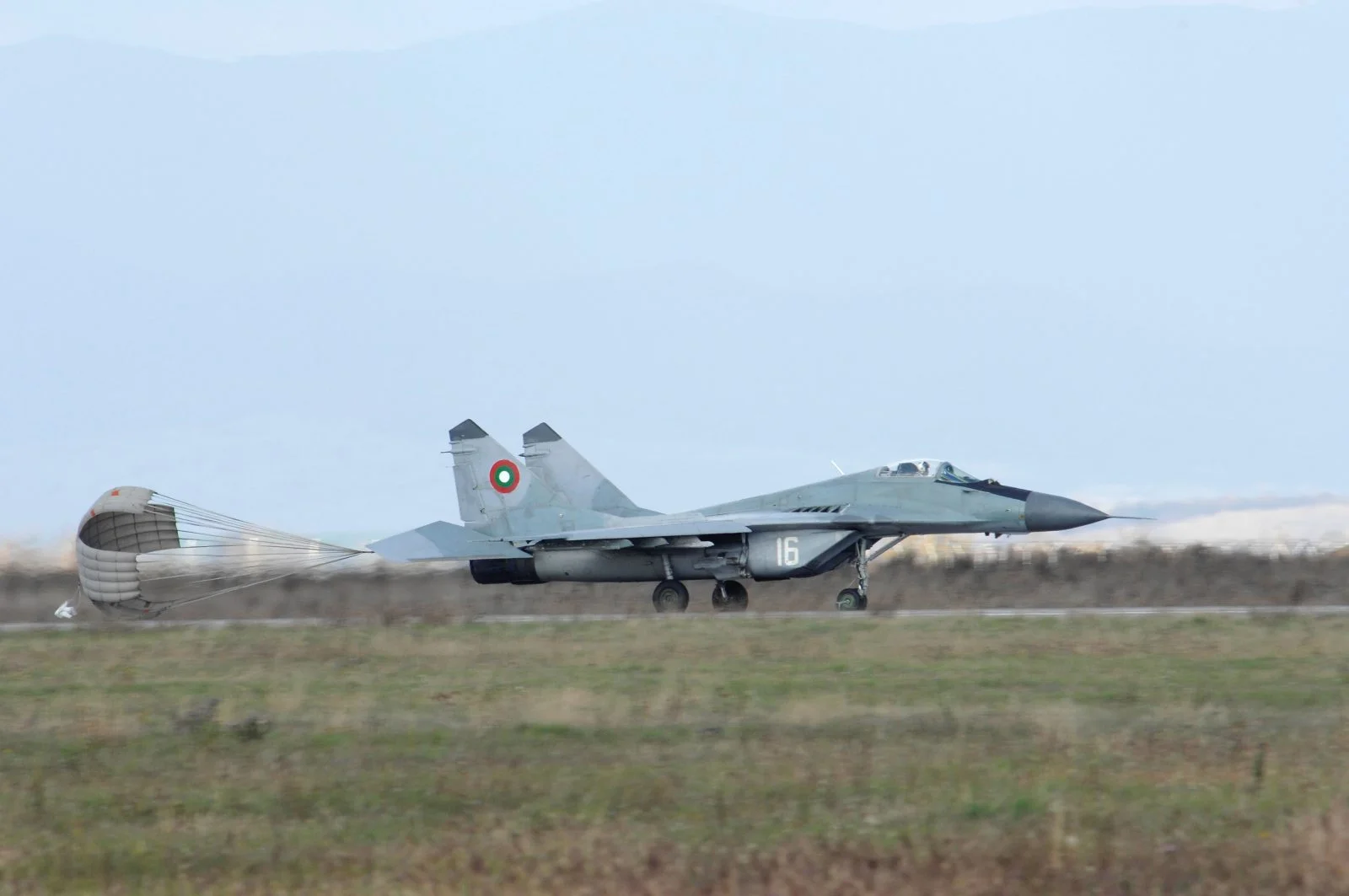
Bulgaria sits 62nd in Global Firepower’s 2026 ranking, with 36,950 active personnel and a $2.49 billion budget. The numbers look modest, but no littoral state is going through a sharper transition.
For decades the Bulgarian Air Force held its airspace with Soviet-era MiG-29s. Once the maintenance and spares chain running through Russia became untenable after 2022, Sofia’s answer was the F-16 Block 70: 16 aircraft across two contracts, with deliveries phased in from 2025. It is a qualitative jump rather than a numerical one – the inventory still shows just 11 combat jets.
On the ground, 334 tanks are on the books, but a large share are T-72M1s in storage. The real modernisation money is going into wheeled armour, where a Stryker-based purchase is meant to pull the mechanised brigades into NATO’s logistics ecosystem.
At sea, Varna anchors a 45-vessel fleet whose value lies less in frigates than in mine countermeasures. The MCM Black Sea standing task group, formed by Turkiye, Romania and Bulgaria, gives Bulgarian minehunters a direct role in keeping the sea lanes open. Burgas and Varna also underpin NATO’s logistical depth in the region.
For scale: Bulgaria spends about a quarter of what Romania does on defence.
| Capability | Figure |
|---|---|
| Tanks | 334 |
| Total aircraft | 71 |
| Fighter jets | 11 |
| Helicopters | 23 |
| Warships | 45 |
| Active personnel | 36,950 |
| Defence budget | $2.49 billion |
The next country has already committed to fifth-generation fighters.
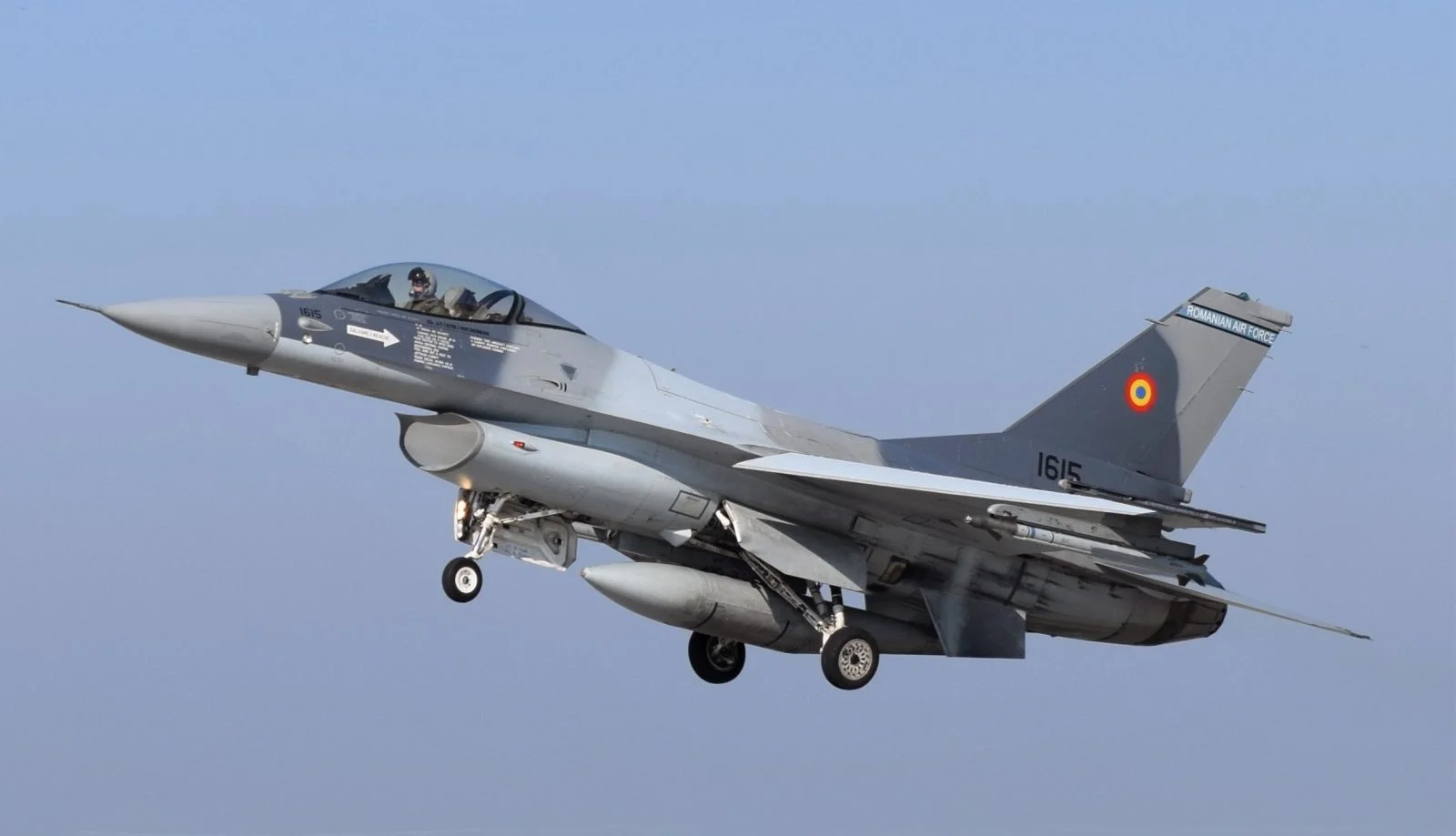
Romania ranks 52nd in the 2026 index and has become the centre of gravity for NATO’s eastern flank on the Black Sea, with 90,000 active personnel and a $10.23 billion budget.
Bucharest’s air force transition runs in two stages. Second-hand F-16s from Portugal and Norway retired the MiG-21 Lancer fleet outright. Stage two is a commitment to 32 F-35As, which will make Romania the first Black Sea littoral state to operate a fifth-generation fighter. The 29 combat jets currently on the books are therefore a snapshot of a moving picture.
Patriot batteries, HIMARS launchers and a new infantry fighting vehicle programme dominate land and air-defence spending. Most of the 451 tanks are domestically upgraded TR-85M1 Bizonul, though an Abrams purchase has started renewing the heavy armour class.
Romania’s real asset is geography. Constanta is the Black Sea’s largest port and became the principal outlet for Ukrainian grain during the war. The Aegis Ashore site at Deveselu is the fixed leg of NATO’s missile defence architecture in the region. Drone debris falling near the Danube ports has pushed Bucharest to thicken air defence along the entire coastline. Romania is also the third partner in the MCM Black Sea task group.
For scale: Romania outspends Bulgaria fourfold, but spends about a quarter of what Ukraine does.
| Capability | Figure |
|---|---|
| Tanks | 451 |
| Total aircraft | 148 |
| Fighter jets | 29 |
| Helicopters | 66 |
| Warships | 18 |
| Active personnel | 90,000 |
| Defence budget | $10.23 billion |
Third place belongs to a country whose ranking rests on combat experience, not inventory size.
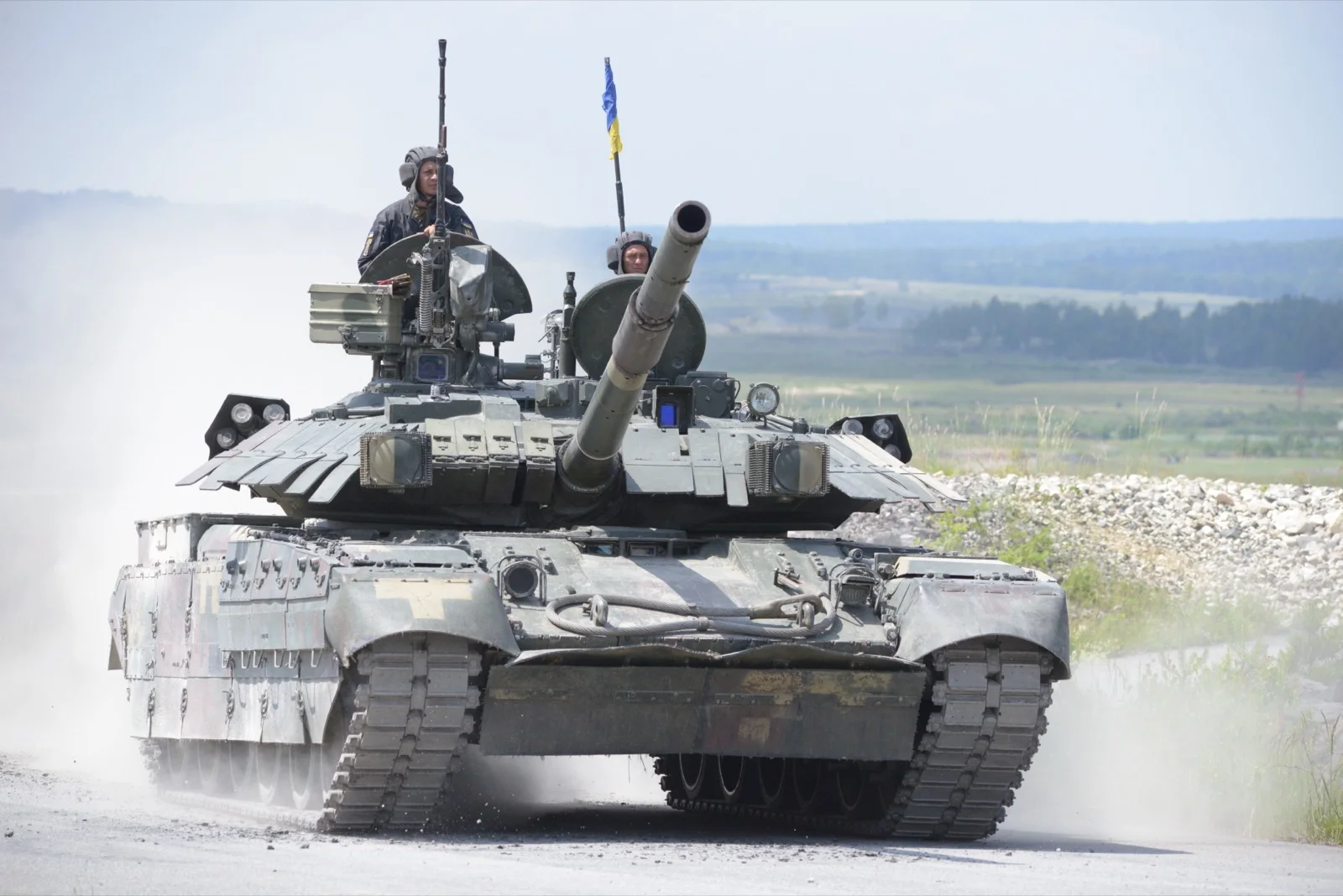
Ukraine is 20th in the 2026 index and fields the Black Sea’s largest army: 900,000 active personnel on $45 billion of defence spending. These are the figures of a war economy, not a peacetime force.
The air force lists 88 combat jets in an increasingly mixed fleet – Soviet-era MiG-29s and Su-27s now flying alongside transferred F-16s and French Mirage 2000-5s. Pilot conversion and maintenance infrastructure mean the transition moves far more slowly than the headline number suggests.
The navy is the striking entry. Ukraine has almost no conventional battle fleet left, yet it is the side that changed the naval balance in the Black Sea. Magura and Sea Baby uncrewed surface vessels, paired with cruise missiles, inflicted heavy losses on Russia’s Black Sea Fleet and forced it to relocate from Sevastopol to Novorossiysk. Early in the war, Bayraktar TB2 strikes around Snake Island and against naval targets were part of the same asymmetric line of effort.
On land, 1,121 tanks are listed, but that figure is a moving account: Kyiv loses vehicles, captures others and absorbs Western transfers simultaneously. The domestic industry has grown inside the war, and long-range strike drones and demining systems are now discussed as export items.
For scale: Ukraine has nearly twice Turkiye’s active personnel but roughly a third of its total aircraft.
| Capability | Figure |
|---|---|
| Tanks | 1,121 |
| Total aircraft | 347 |
| Fighter jets | 88 |
| Helicopters | 140 |
| Warships | 169 |
| Active personnel | 900,000 |
| Defence budget | $45 billion |
Second place holds the key to the straits – and with it, the regional balance.
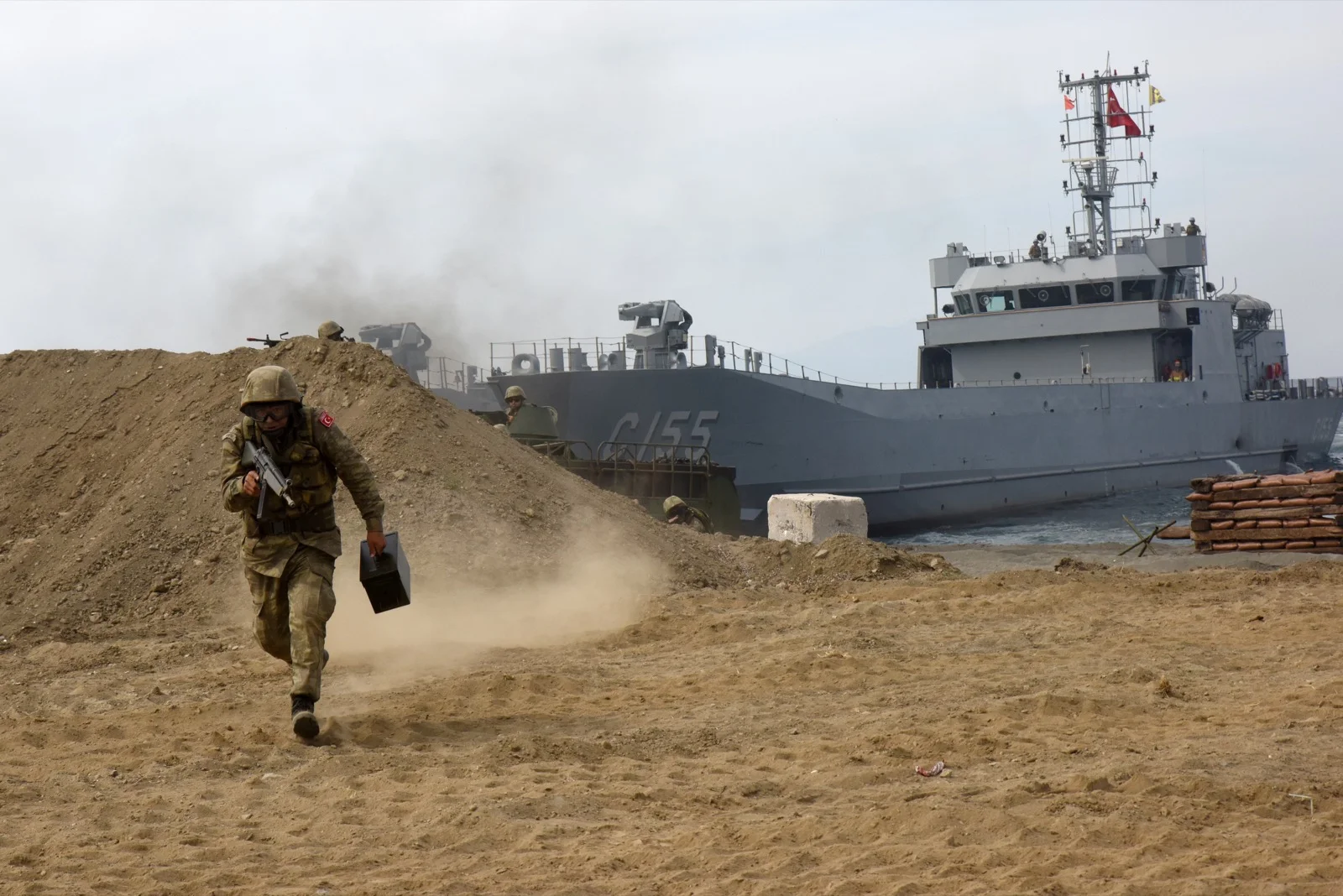
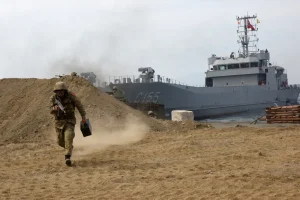
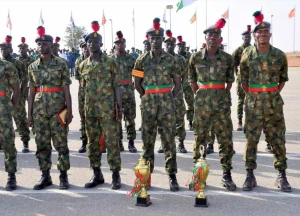
Turkiye ranks 9th of 145 countries in Global Firepower’s 2026 index and second among Black Sea littoral states. With 481,000 active personnel, 2,284 tanks, 1,101 aircraft, 509 helicopters, 192 warships and a $51.4 billion budget, it fields the most balanced force structure in the region.
Numbers are only half the story. As the custodian of the 1936 Montreux Convention, Ankara holds the authority to close the straits to warships of non-littoral states in wartime – a provision applied in practice since 2022, and one that shapes the naval balance more than any single platform. No other littoral state holds legal leverage on that scale.
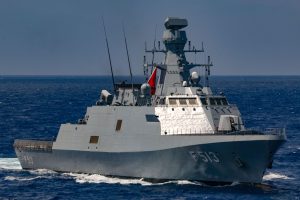
The navy is layering domestic designs onto its 192-platform inventory. The MILGEM programme has grown from Ada-class corvettes into Istif-class frigates, and TCG Anadolu made Turkiye the first country to operate uncrewed aircraft from an amphibious assault ship. New Reis-class submarines are progressively renewing a 14-boat submarine force.
In the air, 201 combat jets are backed by the Ozgur upgrade, which moves the F-16 fleet onto Turkish avionics and munitions. Longer term, KAAN, KIZILELMA and HURJET will reshape the inventory. On land, ALTAY serial production and new-generation armoured vehicles are raising the quality behind the 2,284-tank figure. Turkiye also leads the MCM Black Sea standing mine countermeasures group it founded with Romania and Bulgaria.
For scale: Turkiye’s 509 helicopters outnumber the combined fleets of every other littoral state except Russia by more than two to one.
| Capability | Figure |
|---|---|
| Tanks | 2,284 |
| Total aircraft | 1,101 |
| Fighter jets | 201 |
| Helicopters | 509 |
| Warships | 192 |
| Submarines | 14 |
| Active personnel | 481,000 |
| Defence budget | $51.4 billion |
The country at the top ranks second worldwide – but its Black Sea position has changed fundamentally since 2022.
Russia ranks 2nd in the world in Global Firepower’s 2026 index and leads the Black Sea littoral by a wide margin: 1.32 million active personnel, 5,630 tanks, 4,237 aircraft, 747 warships, 66 submarines and $212.6 billion in defence spending.
That global snapshot does not translate cleanly into regional advantage. The Black Sea Fleet, Moscow’s principal instrument in these waters, has lost numerous platforms since 2022, including its flagship Moskva, and was forced to shift its main basing from Sevastopol to Novorossiysk – degrading both operating radius and maintenance infrastructure.
Replacing those losses is not straightforward. With the Montreux regime applied throughout the war, Russia cannot move replacement warships in from its Baltic or Northern fleets. The country with the world’s second-largest navy is therefore operating with a capped force in a sea on its own coastline.
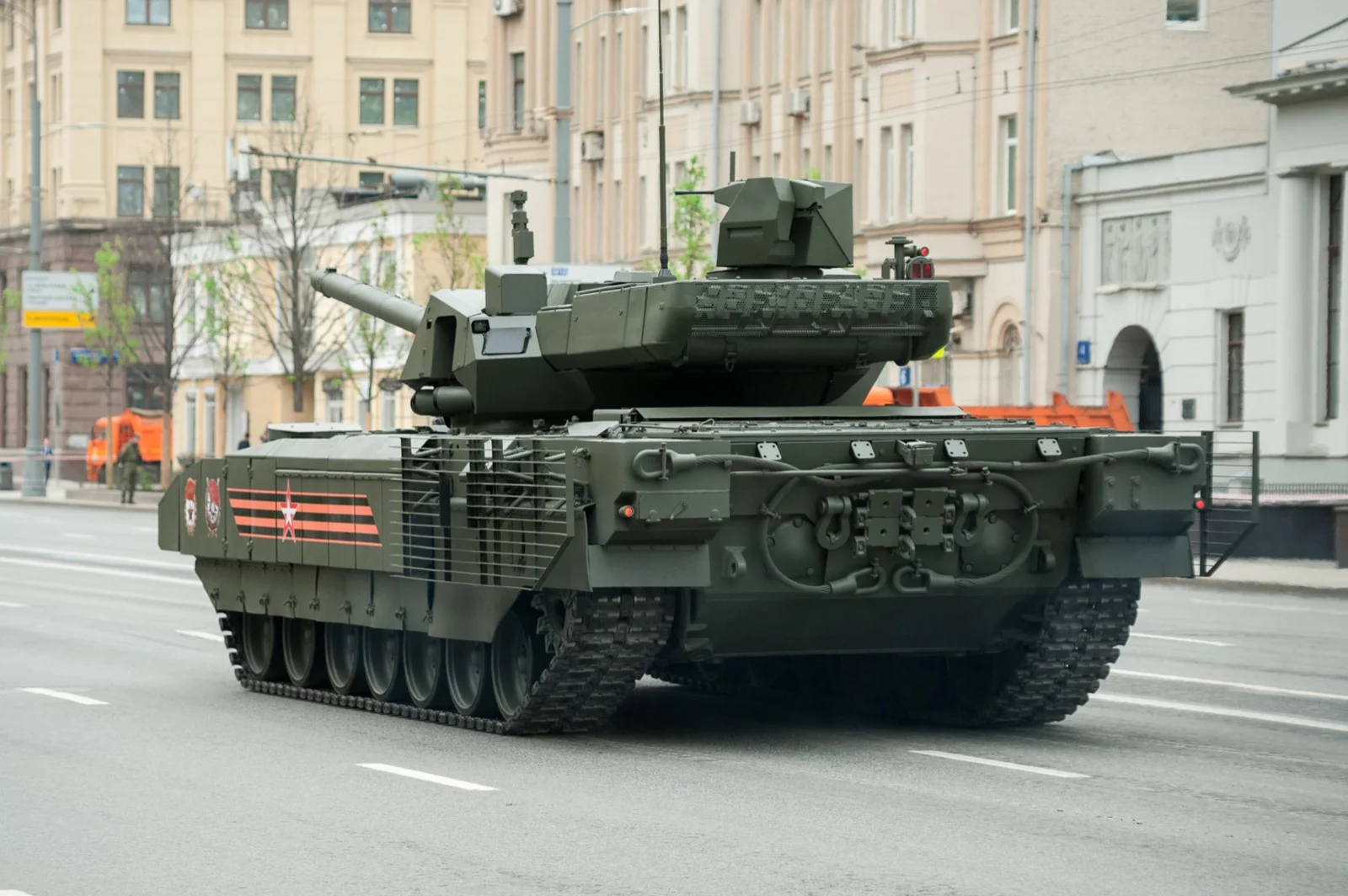
Russian power in the region is not confined to hulls, however. Air bases in Crimea, S-400 batteries, coastal defence missiles and Kalibr-armed submarines keep the Black Sea a high-risk body of water regardless of surface losses. The 5,630-tank land inventory, attrited as it is, still exceeds the combined holdings of every other littoral state.
For scale: Russia’s defence budget is roughly double the combined budgets of the other five littoral states.
| Capability | Figure |
|---|---|
| Tanks | 5,630 |
| Total aircraft | 4,237 |
| Fighter jets | 861 |
| Helicopters | 1,643 |
| Warships | 747 |
| Submarines | 66 |
| Active personnel | 1,320,000 |
| Defence budget | $212.6 billion |
The verdict: does inventory or geography decide the Black Sea?
Global Firepower’s 2026 table produces a clear hierarchy: Russia, then Turkiye, then Ukraine, with Romania, Bulgaria and Georgia at a distance. But that ranking alone does not explain the actual military balance in an enclosed sea – and the Black Sea is precisely where raw inventory depreciates fastest.
Russia itself is the clearest proof. The country with the world’s second-largest navy lost its flagship in waters off its own coast, had to abandon its principal base, and cannot bring reinforcements in from other fleets because of Montreux. Globally first-tier, regionally capped.
The second lesson comes from Ukraine. A country with virtually no conventional battle fleet made sea control genuinely contested by combining uncrewed surface vessels with cruise missiles. Asymmetric naval capability has moved from a secondary line item to a primary one – which is why every littoral state is now accelerating investment in uncrewed vessels and counter-drone systems.
Turkiye combines two distinct advantages. The first is structural balance: 2,284 tanks, 201 combat jets, 509 helicopters and 192 warships leave no empty column. The second is legal position. Administering the Montreux Convention gives Ankara authority over the entry of external naval power into the Black Sea – a gatekeeping role that no procurement budget can replicate.
Within NATO, the weight keeps shifting east. Romania’s F-35 decision and Patriot batteries make it the alliance’s largest investor on this coastline; Bulgaria’s F-16 Block 70 buy takes it out of the Soviet maintenance ecosystem. The MCM Black Sea mine countermeasures group, established under Turkish leadership, is the most concrete multinational military mechanism the region has produced since the war began.
Georgia remains the most fragile link: no fighter aircraft, a $680 million budget and unresolved territorial disputes leave it outside the deterrence equation, though the trilateral format with Turkiye and Azerbaijan provides a degree of continuity.
In short: on paper the strongest military on the Black Sea is Russia’s. Weigh freedom of movement in an enclosed sea, legal leverage and force balance together, however, and Turkiye remains the decisive variable in the regional equation.
Black Sea littoral states: comparison table
| # | Country | GFP world | Tanks | Fighters | Helicopters | Warships | Personnel | Budget |
|---|---|---|---|---|---|---|---|---|
| 1 | Russia | #2 | 5,630 | 861 | 1,643 | 747 | 1,320,000 | $212.6bn |
| 2 | Turkiye | #9 | 2,284 | 201 | 509 | 192 | 481,000 | $51.4bn |
| 3 | Ukraine | #20 | 1,121 | 88 | 140 | 169 | 900,000 | $45bn |
| 4 | Romania | #52 | 451 | 29 | 66 | 18 | 90,000 | $10.23bn |
| 5 | Bulgaria | #62 | 334 | 11 | 23 | 45 | 36,950 | $2.49bn |
| 6 | Georgia | #95 | 132 | 0 | 44 | 19 | 37,000 | $0.68bn |
Next in the series
Europe’s largest fighter fleets, Asia’s strongest submarine forces and the Middle East’s biggest helicopter inventories.
Frequently Asked Questions
How many countries border the Black Sea?
Six: Turkiye, Russia, Ukraine, Romania, Bulgaria and Georgia.
Which Black Sea country has the strongest military?
By Global Firepower’s 2026 overall power index, Russia (2nd worldwide) leads and Turkiye (9th) is second. The regional naval balance is a different picture, shaped by the Montreux regime and the losses sustained by Russia’s Black Sea Fleet.
How does the Montreux Convention affect the balance?
The 1936 convention allows Turkiye to restrict the passage of warships belonging to non-littoral states in wartime. In practice it blocks both external navies and Russian reinforcement from other fleets.
Which littoral state spends most on defence?
Russia, at $212.6 billion, well ahead of Turkiye ($51.4 billion) and Ukraine ($45 billion).
Which Turkish systems matter most in the Black Sea?
MILGEM corvettes and frigates, Reis-class submarines, TCG Anadolu, the Bayraktar TB2/TB3 and Akinci uncrewed aircraft, and the ALTAY main battle tank. KAAN, KIZILELMA and HURJET will reshape the air inventory over the coming decade.
Sources
- Global Firepower 2026 country profiles and regional rankings
- NATO statements and MCM Black Sea task group announcements
- SIPRI Military Expenditure Database
- IISS The Military Balance
- Source: https://www.globalfirepower.com/