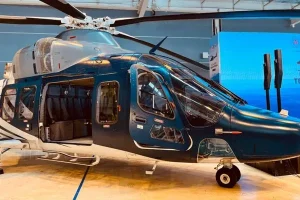
The Caracal in Combat: France’s H225M and the Global Special Operations Mission


In the pre-dawn hours of August 2013, a French Caracal helicopter — the H225M designation not yet fully established in public consciousness — extracted a French special operations soldier from a compound in northern Mali after a hostage rescue mission that had gone wrong. The soldier, Denis Allex, had been held captive by al-Shabaab-linked militants for three years. Despite the mission’s tragic outcome for the hostage, the helicopter’s performance demonstrated something important: France’s commitment to a dedicated special operations aviation platform had created a capability that could attempt the most demanding rescue missions in the world’s most austere environments.
The H225M Caracal — the military variant of the commercial EC225 Super Puma — occupies a specific and important niche in the European rotary-wing ecosystem. It is not a gunship, not a light utility helicopter, and not an anti-submarine warfare platform. It is purpose-designed for Combat Search and Rescue (CSAR), special operations insertion and extraction, and casualty evacuation in contested, hostile environments. In that specific mission envelope, it has established itself as one of the most capable and widely deployed platforms of its type globally.
Technical Specifications
| Specification | Value |
|---|---|
| First Flight | February 6, 2004 (military) |
| Entry into Service | 2006 (France) |
| MTOW | 11,200 kg |
| Maximum Speed | 262 km/h |
| Cruise Speed | 234 km/h |
| Range | 857 km (internal fuel) |
| Ferry Range | ~1,050 km |
| Service Ceiling | 6,096 m |
| Engines | 2× Turbomeca Makila 2A1 |
| Engine Power (each) | 2,382 shp |
| Troop Capacity | 29 troops (CSAR: 10–14) |
| Crew | 2 pilots + crew |
| Unit Cost | ~€35–45 million |
The CSAR Mission: Why Caracal Was Built for This
Combat Search and Rescue demands specific capabilities that distinguish genuine CSAR platforms from general utility helicopters pressed into the role. The most important is range combined with survivability: a CSAR helicopter must reach the survivor, survive in a contested threat environment long enough to complete the rescue, and return with sufficient fuel margins to accommodate operational uncertainty. The H225M’s ~1,050 km ferry range, combined with provision for two 780-liter auxiliary tanks that extend range further, provides the operational reach that CSAR planners require.
The aircraft’s CSAR equipment suite includes a Forward Looking Infrared (FLIR) system for survivor location in low visibility, a rescue hoist capable of lifting 270 kg, and an integrated defensive aids suite that includes radar warning receivers, missile approach warning, and chaff/flare dispensers. French Caracals have additionally been equipped with chin-mounted GIAT 20mm cannon for self-defense suppression during extraction operations.
Brazil: Latin America’s Largest Caracal Operator
The most significant H225M export outside Europe is Brazil, which operates 16 aircraft across both the Brazilian Army Aviation Corps (CAVEX) and the Brazilian Air Force. The Brazilian H225M program, which began deliveries in 2010, has been used extensively for troop transport, CSAR, and official transport in the Amazon region — missions that exploit the aircraft’s endurance and hot-high performance in conditions broadly comparable to the Sahel environments where French Caracals have been tested.
The Brazilian procurement established a template for Latin American H225M interest. Chile subsequently acquired 5 aircraft for the Chilean Air Force’s search and rescue mission. Mexico operates 8 H225Ms in military and law enforcement configurations. These Latin American fleets collectively represent the second-largest regional Caracal concentration after Europe, and the platform’s commercial derivatives (EC225 Super Puma) are extensively used by the region’s offshore oil industry — creating a secondary maintenance and aircrew pipeline that reduces sustainment costs for military operators.
Global Operator Summary
| Nation | Quantity | Primary Mission |
|---|---|---|
| France | 26 | CSAR, SOF, HRF |
| Brazil | 16 | Transport, Amazon ops, CSAR |
| Mexico | 8 | Military/law enforcement |
| Kazakhstan | 5 | Presidential transport + VIP |
| Chile | 5 | SAR, transport |
| Kuwait | 3 | CSAR, special operations |
| Germany | 3 (order under review) | SOF (CH-53 interim) |
| Malaysia | 12 | Transport, SAR |
| Thailand | 6 | Royal transport, maritime SAR |
Competition: The AW101 and CH-47 Alternatives
The H225M’s primary competitor in the CSAR/special operations heavy utility segment is the Leonardo AW101 Merlin — an aircraft with similar mission profiles but substantially higher payload capacity (55 troops vs. 29) and higher unit cost. The AW101 has prevailed in markets where raw capacity is the primary discriminator, including Portugal and Denmark. The H225M has prevailed in markets where cost efficiency, maneuverability, and range are prioritized.
The CH-47 Chinook, though technically a tactical transport rather than a CSAR platform, offers capabilities that overlap with the H225M’s transport mission at significantly higher payload capacity. The Chinook’s dominance in U.S. Army and special operations heavy helicopter procurement has not, however, displaced the H225M in markets where its specific CSAR and self-defense capabilities are valued.
FAQ
Can the H225M operate at night in contested environments?
Yes. The H225M’s Night Vision Goggle (NVG)-compatible cockpit, FLIR sensor, and electronic countermeasures package are specifically designed for low-signature night operations in threat environments. French Caracals in the Sahel regularly conduct night operations in support of special forces units.
What is the difference between the H225M and the commercial EC225?
The H225M is the military development of the EC225 airframe with significant differences in defensive systems, mission equipment, structural reinforcement, and crash-resistant fuel system. The airframes share the same transmission, engines, and rotor system but are sufficiently different in equipment fit that they are not interchangeable in mission-specific roles.