Le Triomphant-Class SSBN: France’s Independent Nuclear Deterrent and the Architecture of Sea-Based Strategic Assurance


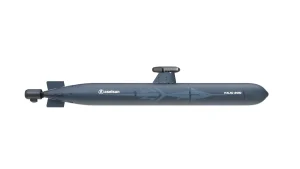
Among the most consequential hardware decisions any state can make is whether to maintain an independent nuclear deterrent. Only five nations have chosen to do so (beyond the original nuclear powers), and only four — the United States, Russia, France, and the United Kingdom — operate nuclear ballistic missile submarines (SSBNs) as the backbone of that deterrent. France’s Le Triomphant-class, built by Naval Group, represents the most capable expression of that commitment outside the American arsenal.
Why SSBNs Constitute the Most Survivable Leg of the Triad
The strategic logic is straightforward: land-based silos can be targeted with sufficient accuracy; airfields can be destroyed before bombers take off; but a submerged SSBN whose position is unknown cannot be pre-emptively eliminated. This property — assured second-strike capability — is what makes SSBNs the cornerstone of credible nuclear deterrence. France recognized this in the 1960s and has maintained a continuous at-sea deterrent patrol (CASD) since 1972, meaning at least one Le Triomphant-class submarine is on patrol at all times.
Technical Specifications
| Parameter | Value |
|---|---|
| Submerged displacement | 14,335 tons |
| Length | 138 m |
| Reactor | K15 PWR (150 MW) |
| Submerged speed | 25+ knots |
| Diving depth | 350+ m |
| Crew | 110 (two rotational crews) |
| SLBM type | M51.2 (16 tubes) |
| Warheads per missile | 6 MIRVed TN-75 warheads (~100 kt each) |
| Missile range | 8,000+ km |
| Total warhead capacity | 96 independently targetable warheads |
| Self-defense | F17 heavyweight torpedoes × 4 tubes |
The M51.2 SLBM: Global Reach from Deep Ocean
The M51.2 is France’s current SLBM and represents a generational leap over its predecessor. At 8,000+ km range, it can reach virtually any target on Earth from deep Atlantic or Pacific patrol areas. Each missile carries six independently targetable TN-75 warheads with estimated yields of approximately 100 kilotons — six times the yield of the bomb dropped on Hiroshima. The combination of range, MIRV technology, and platform survivability means that even a partial French SSBN force retains a credible second-strike capacity against any adversary on Earth.
France’s Nuclear Doctrine: Force de Frappe and NATO Autonomy
France’s nuclear posture is governed by the principle of stricte suffisance (strict sufficiency): maintain only the minimum number of weapons necessary to deter any actor from attacking France’s vital interests. Unlike the United States and United Kingdom, France does not integrate its nuclear forces into NATO’s Nuclear Planning Group. This is a deliberate choice reflecting Charles de Gaulle’s 1966 withdrawal from NATO’s integrated military command — a position that has never been fully reversed despite France’s 2009 return to the integrated command structure.
The practical implication: France’s nuclear weapons fire only on orders from the French President. No NATO ally has veto authority or targeting input. This structural independence is what distinguishes France from the UK, whose Trident D5 missiles (though British-warheaded) depend on a US-managed supply chain.
Comparison with Peer SSBN Classes
| Submarine | Country | Displacement | Missiles | Range |
|---|---|---|---|---|
| Le Triomphant | France | 14,335 t | 16 × M51 (6 MIRV) | 8,000+ km |
| Ohio class | USA | 18,750 t | 24 × Trident D5 (8 MIRV) | 11,300 km |
| Vanguard class | UK | 15,900 t | 16 × Trident D5 (8 MIRV) | 11,300 km |
| Borei class | Russia | 24,000 t | 16 × Bulava (10 MIRV) | 8,000 km |
| Jin class | China | 11,000 t | 12 × JL-2 (3 MIRV) | 7,400 km |
The European Strategic Autonomy Dimension
Since Russia’s 2022 invasion of Ukraine and the subsequent debate about NATO’s Article 5 reliability under potential future US administrations, European strategists have increasingly discussed the role of French and British nuclear forces as a potential “European deterrent.” France has historically resisted formalizing this concept, as it would compromise the national character of the Force de Frappe. However, Emmanuel Macron’s 2020 speech offering to open “a strategic dialogue” with European partners on French nuclear deterrence marked a significant rhetorical shift.
For defense analysts, Le Triomphant-class submarines are at the center of this debate. Their existence is the only reason France can credibly make such an offer.
Editorial Assessment — Envanter Media
Le Triomphant represents Naval Group’s most strategically significant contribution to French national security — a platform whose value is measured not in battles fought but in attacks prevented. The continuous at-sea deterrent patrol maintained since 1972 has delivered precisely what it was designed to deliver: no nuclear attack has been made against France, and no conventional attack against French vital interests has been contemplated by any nuclear power. Whether that deterrent logic extends to European partners remains the most consequential unresolved question in European defense policy.