Rolls-Royce MT30 Marine Gas Turbine: 40 MW from a Trent 800 — Technical Profile for Zumwalt and Type 26 (2026)

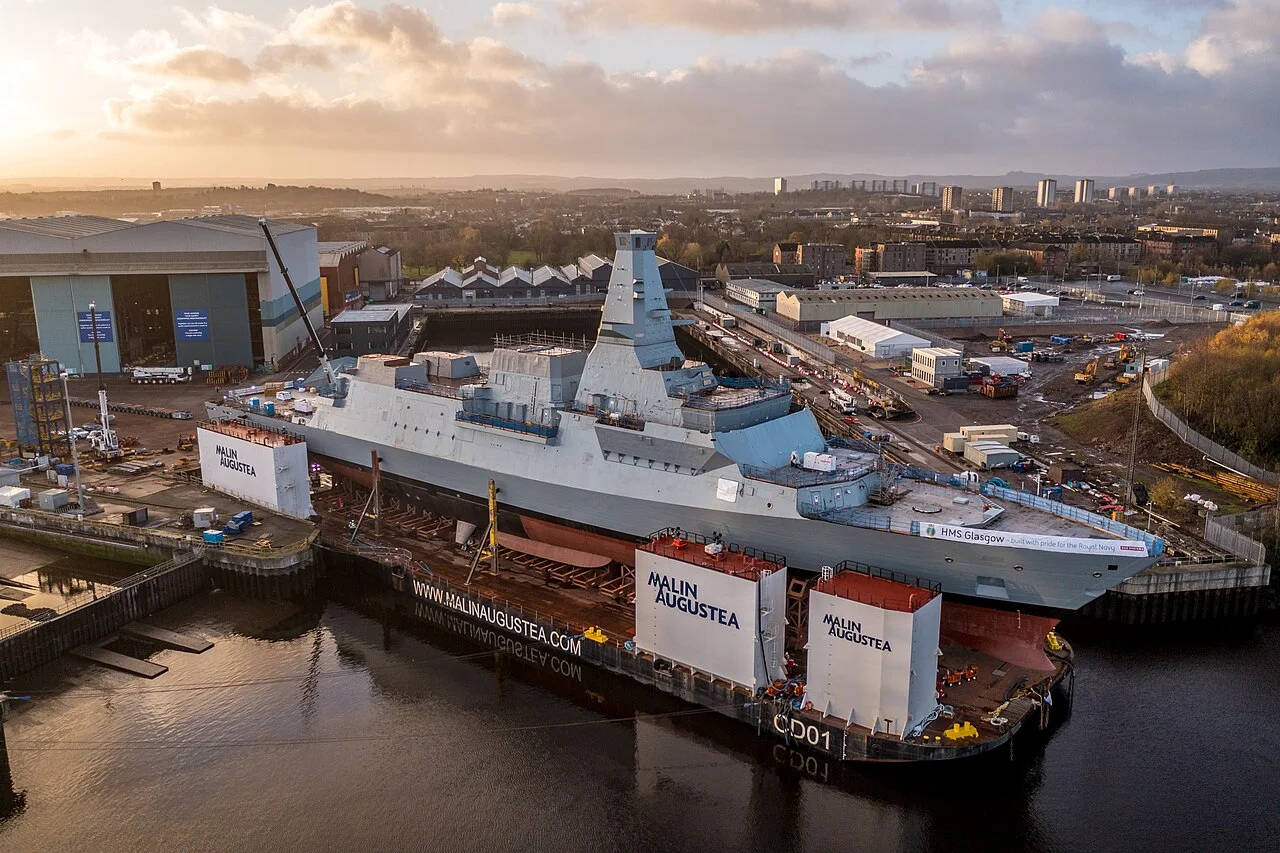
The Rolls-Royce MT30 is a naval gas turbine derived from the Trent 800 aero-engine (Boeing 777). At 40 MW maximum output and 43% thermal efficiency, it is the world’s most powerful in-service naval gas turbine. It powers the US Navy’s DDG-1000 Zumwalt-class destroyers in an Integrated Full Electric Propulsion (IFEP) architecture and will power the Royal Navy’s Type 26 City-class frigates and Australia’s Hunter-class frigates.
Technical Specifications
| Parameter | Value |
|---|---|
| Max Power Output | 40 MW (53,620 BHP) |
| Thermal Efficiency | 43% |
| Aero Derivative | Rolls-Royce Trent 800 |
| Module Weight | ~2,000 kg |
| Power Density | ~20 kW/kg |
| Fuel | F-76 (marine diesel) or JP-8 |
| First Service | USS Zumwalt DDG-1000, 2016 |
| Architecture | COGLAG or IFEP compatible |
Platforms and Operators
- DDG-1000 Zumwalt class (US Navy): Two MT30s per ship in IFEP configuration. Three ships in service.
- Type 26 Glasgow class (Royal Navy): One MT30 per ship (sprint) + four WR-21 (cruise). Eight ships ordered.
- Hunter class (Royal Australian Navy): Type 26 derivative, nine ships, MT30-powered, delivery from 2032.
- Canadian Surface Combatant: Type 26 architecture, MT30 expected.
Competitors
The GE Marine LM2500 series dominates the naval gas turbine market by number of installations. The MT30 competes at the high-power end where LM2500 variants cannot reach 40 MW. The LM6000 can match MT30’s power but is less established in naval IFEP architectures. The MT30’s 43% thermal efficiency is a decisive advantage over LM2500’s ~38% for long-endurance missions.