What Is TUSAŞ ANKA? The MALE Drone Behind 400,000 Hours of Turkish Intelligence Operations

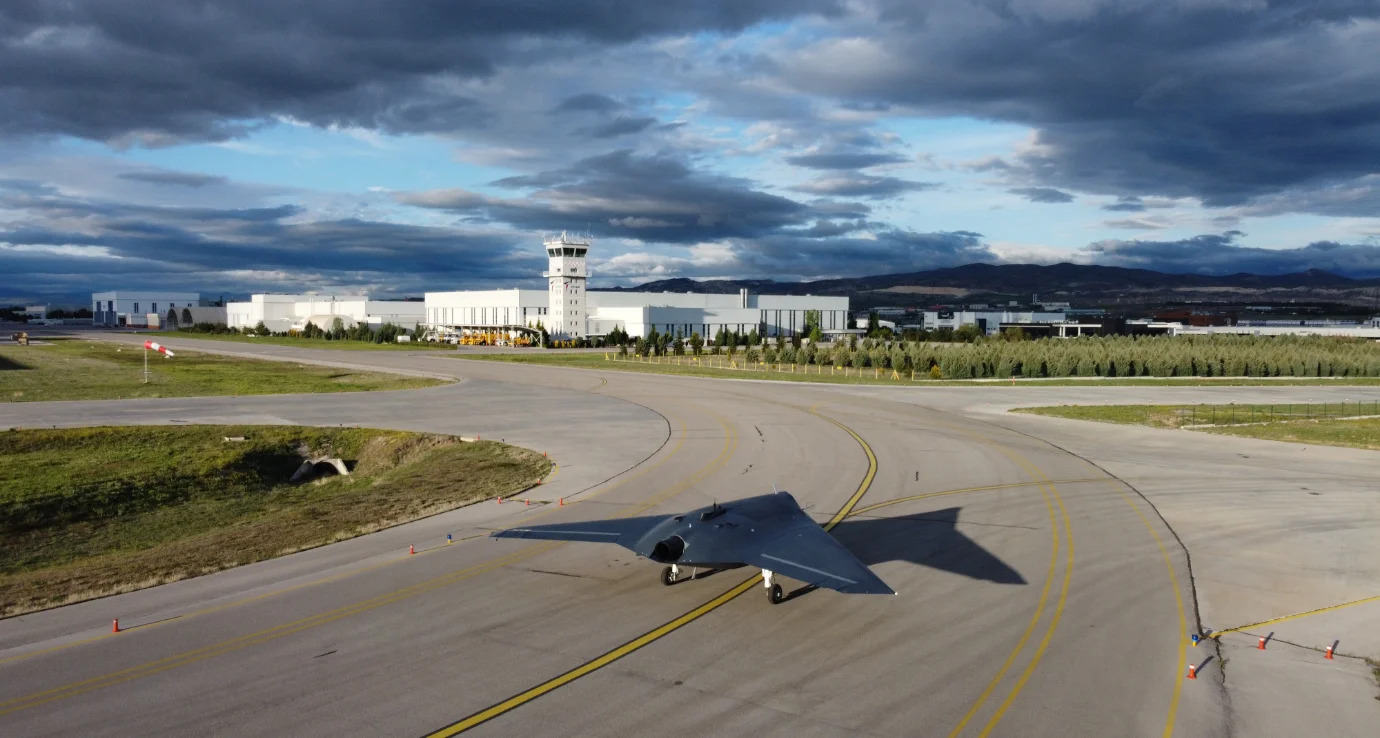
Four hundred thousand flight hours — that is the operational total ANKA has accumulated since its maiden flight in December 2010. More than a headline figure, it represents an unbroken chain of intelligence, surveillance and strike missions that have shaped Turkish military doctrine over more than a decade. TUSAŞ built ANKA as Turkey’s first domestically developed medium-altitude long-endurance unmanned system, and it remains the backbone of the country’s airborne ISR architecture today.
Technical Specifications
| Specification | Value |
|---|---|
| Wingspan | 17.5 m |
| Length | 8.6 m |
| Height | 3.25 m |
| Max Takeoff Weight | 1,700 kg |
| Payload Capacity | 350+ kg |
| Endurance | 30 hours |
| Service Ceiling | 30,000 ft |
| Line-of-Sight Range | 250+ km |
| Satellite Range | 2,500+ km |
From Rollout to Operational Maturity
ANKA’s first public appearance came at a rollout ceremony in July 2010 at TUSAŞ facilities, with its maiden flight following in December. A serial production contract for ten aircraft under the ANKA-S designation was signed in October 2013, and deliveries have continued steadily since. The platform has flown extensively in support of operations along Turkey’s southern border, accumulating the kind of operational data that only comes from sustained real-world use — not test ranges and carefully managed conditions.
That data has fed continuous improvements. The avionics, autopilot algorithms and payload integration software flying today are meaningfully different from the original configuration, refined through years of feedback from operators in the field.
The Electronic Warfare Dimension
Much of ANKA’s operational profile focuses on the less visible end of the mission spectrum: electronic intelligence gathering. Dedicated ELINT variants carry systems that collect radar parameters, communication signatures and electronic order of battle data across wide areas. COMINT-configured aircraft intercept voice and data communications. Active jamming variants can degrade enemy radar and communication networks over a radius far larger than any ground-based system could reach. This electronic warfare dimension makes ANKA a force multiplier that extends well beyond what a camera and a missile can do.
Armed ANKA: Closing the Kill Chain
Armed variants of ANKA carry MAM-L and MAM-C smart micro-munitions, CIRIT laser-guided rockets and L-UMTAS anti-tank guided missiles with extended range. A multi-mode SAR/GMTI radar allows target detection and tracking through cloud cover and in complete darkness. The combination of persistent surveillance, precision identification and organic firepower on a single platform gives ground commanders a capability that previously required coordination across multiple assets.
The Foundation for What Came After
ANKA is not a legacy programme — it continues to receive updates and remains operationally relevant. But its most important contribution may be the institutional knowledge it seeded. The engineers, flight test data and manufacturing processes built around ANKA became the foundation on which AKSUNGUR’s heavier airframe and ANKA-III’s stealth design were constructed. Without 400,000 hours of ANKA flight data, neither successor would have been possible.