What is the B-52H Stratofortress? America’s Cold War Bomber Still Flying After 70 Years, Explained

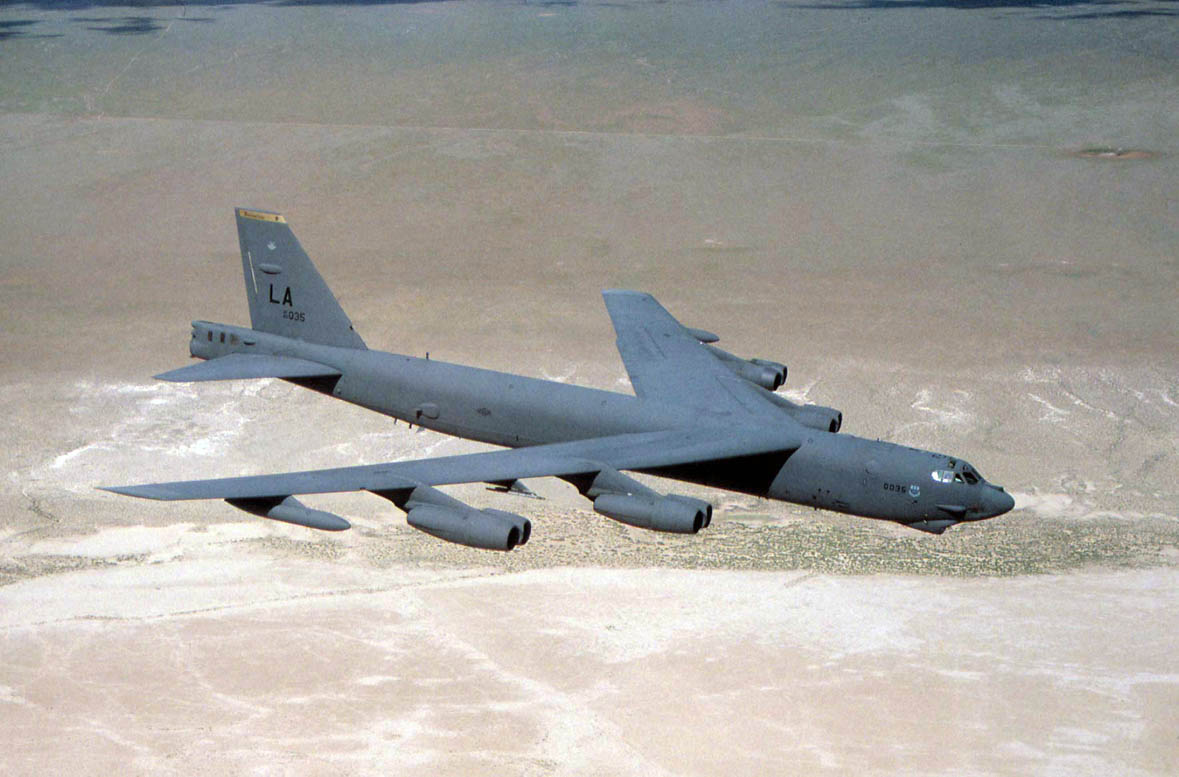
The Boeing B-52H Stratofortress is the U.S. Air Force’s last surviving strategic heavy bomber, in continuous operational service since 1955. With 76 airframes currently active in the U.S. Air Force inventory and a comprehensive modernization program underway that will keep the platform flying past 2050, the B-52 will be the only military aircraft in history to serve for a full century. The current upgrade program – dubbed the B-52J after re-engining – replaces the eight aging Pratt & Whitney TF33 turbofans with new Rolls-Royce F130 engines, installs a Raytheon AN/APG-79 AESA radar, and re-wires the digital backbone for compatibility with the AGM-181 LRSO nuclear cruise missile and the new generation of hypersonic standoff weapons.
Key facts at a glance
| Attribute | Value |
|---|---|
| Type | Long-range strategic heavy bomber |
| Manufacturer | Boeing |
| First flight | 15 April 1952 (YB-52); 6 March 1961 (B-52H) |
| Crew | 5 |
| Engines (B-52J) | 8x Rolls-Royce F130 turbofans |
| Length | 48.5 m |
| Wingspan | 56.4 m |
| MTOW | 219,600 kg |
| Max speed | Mach 0.86 |
| Combat radius | 7,210 km (unrefueled) |
| Service ceiling | 15,166 m |
| Total payload | up to 32,000 kg |
| Fleet size (2026) | 76 active; 12 reserve |
| Planned retirement | ~2050 |
The 76-airframe force
Of the 102 B-52H airframes originally built between 1960 and 1962, 76 remain operational and 12 are held in storage at Davis-Monthan AFB. Operational aircraft are based at Minot AFB (North Dakota) and Barksdale AFB (Louisiana), with regular deployments to Andersen AFB Guam, Diego Garcia, RAF Fairford and forward bases in the Middle East. The B-52 fleet has flown in every U.S. major combat operation since Vietnam.
Weapons
| Role | Weapons |
|---|---|
| Strategic nuclear | AGM-86B ALCM (W80 warhead); AGM-181 LRSO (from ~2030) |
| Conventional stand-off | AGM-158B JASSM-ER, AGM-158D JASSM-XR, AGM-86C/D CALCM |
| Hypersonic | AGM-183 ARRW (test); HACM (planned) |
| Anti-ship | AGM-84 Harpoon, AGM-158C LRASM |
| Direct attack | JDAM, GBU-39 SDB, GBU-31 2000-lb, GBU-15 |
Combat record
- 1965-1973 – Vietnam. Operation Arc Light, Linebacker I/II; 18 losses to North Vietnamese SAMs.
- 1991 – Desert Storm. 1,624 sorties; 25,700 tonnes of munitions dropped – 30 percent of all coalition tonnage.
- 1999 – Allied Force. Conventional ALCM strikes against Serbian targets.
- 2001-2021 – Afghanistan. Sustained CAS and area-denial missions.
- 2003 – Iraqi Freedom. 153 B-52 sorties dropped 1,300 tonnes of munitions.
- 2014-present – Iraq / Syria. Anti-ISIS strikes; sustained operations from Al Udeid.
- 2024-present – Houthi conflict. Strikes against Yemeni Houthi facilities.
The B-52J upgrade program
The largest single B-52 modernization in 40 years is the Commercial Engine Replacement Program (CERP) – selected from competition in 2021 to install Rolls-Royce F130 engines based on the proven BR725 commercial powerplant. The change brings:
- 30 percent better fuel economy
- 40 percent longer engine life – matching airframe lifetime
- Significantly reduced infrared signature
- Elimination of the TF33 obsolete-parts supply chain
The first B-52J flight is planned for 2028, with full fleet conversion by 2033. Total program cost is estimated at USD 8.2 billion.
Avionics modernization
Parallel to CERP, Northrop Grumman is installing a Raytheon AN/APG-79 AESA radar (derived from F/A-18E/F radar) to replace the 1950s-era AN/APS-115. Boeing is leading a cockpit avionics refresh with new flat-panel displays and integrated weapons-management. Together with re-engining, these upgrades produce the “B-52J” designation that will carry the platform into the 2050s.
B-52 vs. its peers
| B-52H Stratofortress | B-1B Lancer | B-2A Spirit | Tu-95MS Bear | |
|---|---|---|---|---|
| Origin | USA | USA | USA | Russia |
| Payload | 32,000 kg | 34,019 kg | 18,144 kg | 20,000 kg |
| Combat radius | 7,210 km | 5,500 km | 11,100 km | 6,500 km |
| Stealth | No | Limited | Yes | No |
| Speed | Mach 0.86 | Mach 1.25 | Mach 0.95 | Mach 0.71 |
| Planned retirement | ~2050 | ~2035 | ~2032 | ~2040 |
Why the B-52H matters
The B-52H is the single most cost-effective heavy-bomb-truck in the U.S. Air Force inventory. Its enormous payload, long range, and ability to carry virtually every U.S. stand-off and direct-attack munition makes it the workhorse for any high-volume conventional strike requirement. With the B-1B retiring in the early 2030s and the B-2 transferring to the B-21 fleet, the B-52H will be the only U.S. bomber still in service from the Cold War era – and will outlast the B-2 it was supposed to be replaced by.