MBDA Mistral 3: The Short-Range Air Defence Missile Optimised for the Drone Era
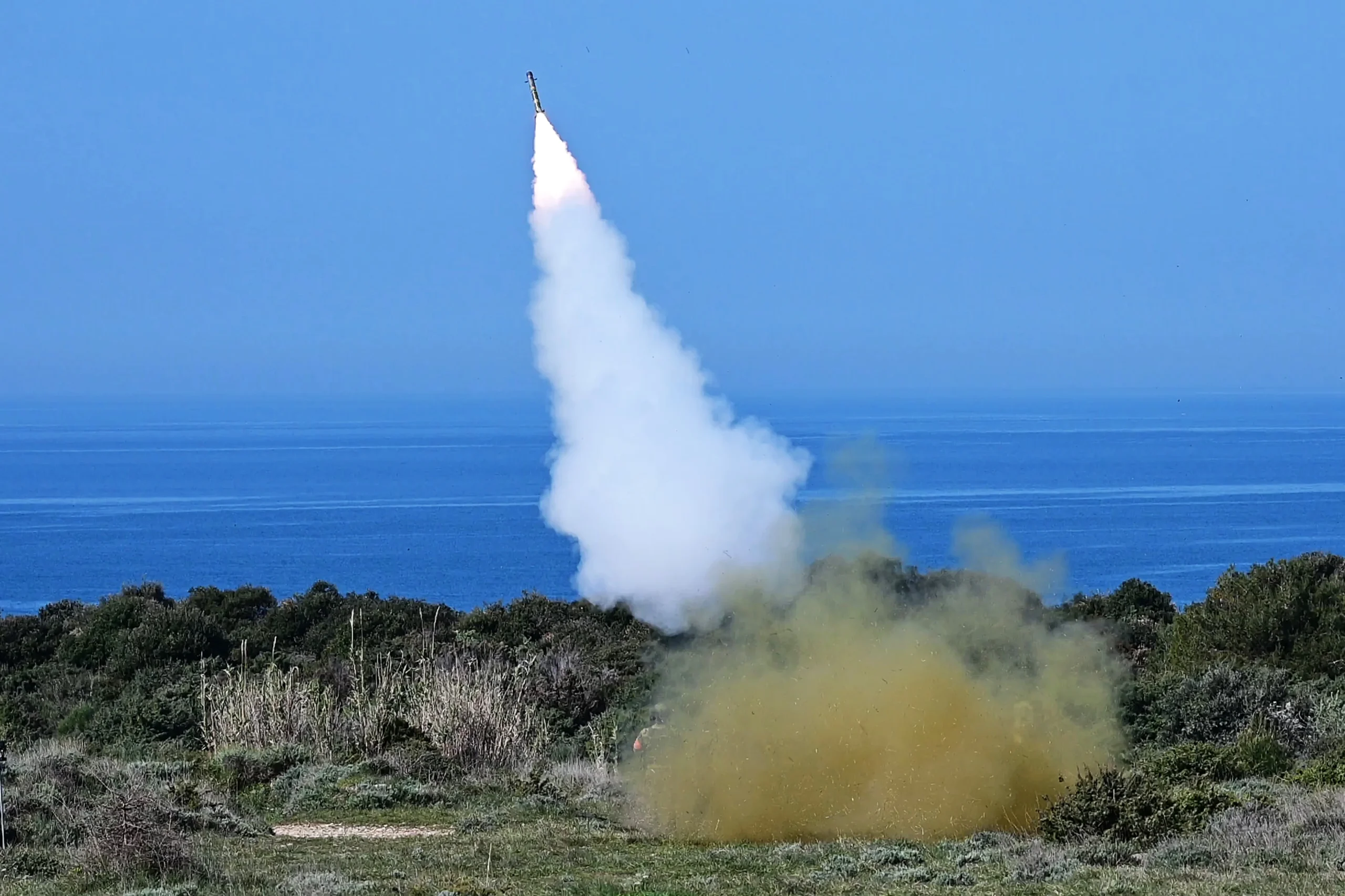
Mistral 3 is MBDA’s latest short-range air defence (SHORAD) missile system, combining the ALTAIR dual-band IR/UV seeker with a compact, man-portable configuration scalable to vehicle, helicopter, and naval platforms. Active in Yemen against Houthi drones and supplied to Ukraine for low-altitude defence, Mistral 3 represents the most operationally validated SHORAD missile of the drone era in Western inventories.
1. Programme Evolution
| Version | Year | Key Advance |
|---|---|---|
| Mistral 1 | 1988 | Single-band IIR seeker; initial operational service |
| Mistral 2 | 2003 | Improved IRCCM; extended range/altitude |
| Mistral 3 | 2020s | ALTAIR dual-band IIR+UV; drone-optimised algorithms; extended envelope |
2. ALTAIR Seeker Technology
The ALTAIR seeker is the defining feature of Mistral 3. Conventional MANPADS seekers use a single-band infrared detector that identifies targets by heat contrast — a signature that flares can mimic. ALTAIR adds a UV channel alongside the IR band. The two channels fuse target data: a real aircraft has a specific combined IR/UV spectral signature, while flares generate IR heat but a different UV profile. The result is a seeker that can maintain lock through standard countermeasures with substantially improved probability compared to Mistral 2.
3. Technical Specifications
| Specification | Mistral 1/2 | Mistral 3 |
|---|---|---|
| Missile length | 1.86 m | 1.86 m |
| Diameter | 90 mm | 90 mm |
| Launch weight | 18.7 kg | ~18.7 kg |
| Speed | Mach 2.5 | Mach 2.6+ |
| Range | ~5 km | ~6 km |
| Altitude ceiling | 3,000 m | 3,500 m |
| Warhead | 3 kg tungsten fragmentation + laser fuse | 3 kg + improved dispersion |
| Guidance | Passive IIR fire-and-forget | ALTAIR dual-band IIR+UV |
4. Platform Configurations
- MANPADS: Single-shoulder-fired launcher for dismounted infantry
- ATLAS: Twin-tube vehicle-mounted configuration
- TETRAD: Four-tube vehicle-mounted SHORAD
- SIMBAD-RC: Twin naval remote-control mount; frigates, OPVs, fast attack craft
- ATAM: Four-tube helicopter mount; EC-665 Tiger, Cougar, Super Puma
- Alesta: Integrated SHORAD battery combining ATLAS vehicles
5. Operators
| Country | Version | Platform | Notes |
|---|---|---|---|
| France | Mistral 3 | MANPADS, ATLAS, ATAM | Primary operator |
| Saudi Arabia | Mistral 2/3 | SHORAD + MANPADS | Active use Yemen vs Houthi drones |
| India | Mistral 2 | ATAM helicopter | Licence production target |
| Qatar | Mistral 2/3 | SIMBAD-RC naval | — |
| UAE | Mistral 2 | SHORAD | — |
| Brazil | Mistral 2 | ATAM (AS-550/365) | Latin America’s sole Mistral operator |
| Singapore | Mistral 2 | SHORAD | — |
| Ukraine | Mistral 2 | Carried | FR and partner-supplied 2022+ |
6. Combat Record
Yemen (2015–present): Saudi Arabia has used Mistral to engage Houthi Shahed and locally assembled drones. The Yemen experience directly shaped Mistral 3’s drone-specific seeker algorithms — a feedback loop from operational use that no exercise can replicate.
Ukraine (2022–present): France and partners supplied Mistral systems early in the conflict. Deployed in mobile SHORAD detachments to defend critical infrastructure, the system engaged Russian helicopters and low-altitude munitions.
7. Turkish Counterpart
| Feature | Mistral 3 | ROKETSAN Sungur |
|---|---|---|
| Range | 6 km | ~4 km |
| Altitude | 3,500 m | ~2,500 m |
| Guidance | ALTAIR IIR+UV | Passive IIR |
| Platforms | MANPADS + vehicle + naval + helo | MANPADS |
| Combat record | Yemen + Ukraine | None |
8. Assessment
Mistral 3 arrives at a moment of unprecedented demand for SHORAD capability. The proliferation of affordable armed drones — from Shahed-type loitering munitions to commercial quadcopters carrying grenades — has created a defensive gap that traditional point-defence systems struggle to fill cost-effectively. Mistral 3’s ALTAIR seeker upgrade, multi-platform flexibility and Yemen/Ukraine operational data give it a credibility advantage its competitors in the 5-7 km range bracket cannot easily match. For NATO members and partner nations rebuilding SHORAD depth, Mistral 3 is the most mature European option available today.