MBDA Sky Warden C-UAS: Layered Counter-Drone Architecture for the Swarm Era

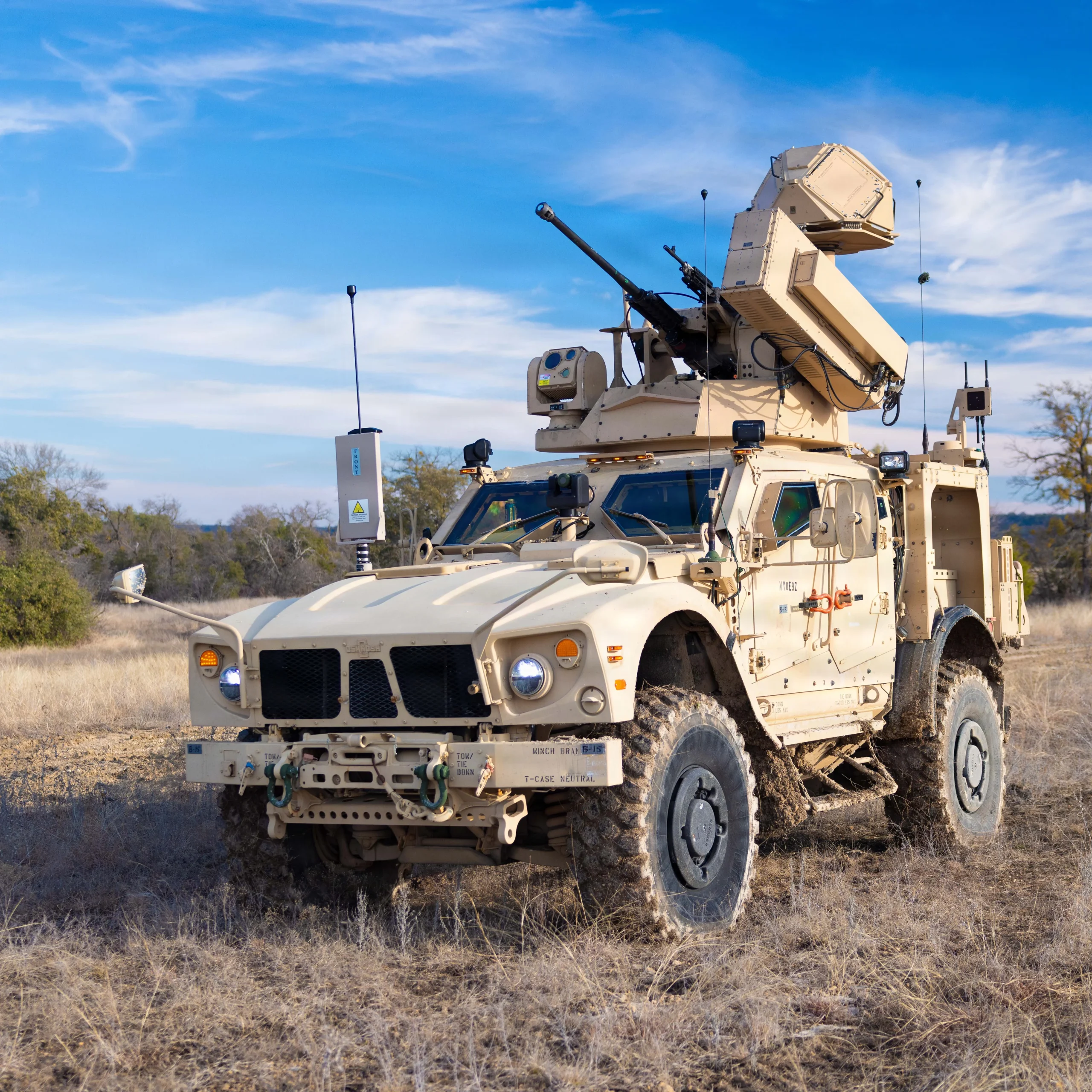
The 2020 Nagorno-Karabakh conflict was the proof of concept. Ukraine became the scale demonstration. Yemen is the asymmetric stress test. The operational lesson across all three theatres is consistent: drone swarms and cheap loitering munitions have invalidated the cost calculus of traditional air defence. A Shahed-136 that costs $20,000–50,000 to produce cannot rationally be engaged by a $500,000 missile without creating a budget crisis. MBDA’s Sky Warden C-UAS system is designed for exactly this problem — a layered defeat architecture that uses the cheapest effective means against each threat class.
1. Threat Taxonomy
| Group | Weight | Examples | Primary Threat Vector |
|---|---|---|---|
| Group 1 | <9 kg | DJI Mavic, FPV racers | Reconnaissance, IED delivery, targeting acquisition |
| Group 2 | 9-25 kg | Commercial cargo UAS, Forpost | SIGINT, one-way kamikaze, payload delivery |
| Group 3 | 25-600 kg | Shahed-136, Orion-class UAS | Precision loitering munition, swarm saturation |
2. System Architecture
Sky Warden implements a detect-identify-decide-defeat chain with automation at each stage:
Layer 1: Detection and Identification
- Multi-mode radar: 360° persistent surveillance, track-while-scan for Group 1-3 UAS
- EO/IR sensor suite: Day/night optical and thermal identification, cooperative with radar track
- RF spectrum monitoring: UAS control link detection, operator geolocation capability
- Acoustic sensor array: Short-range Group 1 UAS detection; especially effective in urban canyon environments
Layer 2: Soft-Kill (Electronic Attack)
- GPS denial/spoofing: Navigation disruption forcing autonomous return-to-home or ground lock
- Control frequency jamming: Severing operator-to-UAS command link on standard C2 frequencies
- FPV link disruption: Cutting first-person-view video uplink for manual UAS operators
Layer 3: Hard-Kill
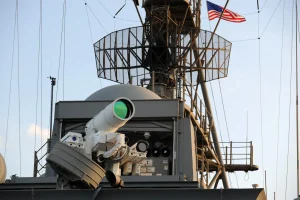
- High-Energy Laser (HEL): Continuous-wave or pulsed laser dwell on Group 1-2 targets; near-zero marginal cost per engagement
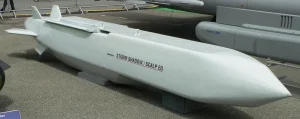
- Kinetic interceptor: Miniature guided projectiles for Group 2-3 targets — lower cost than full-size air defence missiles
- Directed kinetic munition: Rapid multi-round engagement for saturation attacks, autonomous fire sequencing
3. Engagement Automation: The Swarm Problem
A swarm of 20 Group 1 UAS launched simultaneously cannot be manually engaged — human reaction time is not the binding constraint, but rather the cognitive processing required to classify, prioritise, and assign each track to an effector. Sky Warden’s ENGAGE C2 layer automates this triage: rule-based threat priority scoring assigns each track to the lowest-cost effective effector, queues engagements, and presents the human operator with a confirmation step only for ambiguous or high-value decisions. This architecture is directly derived from lessons in Yemen and Ukraine where single-engagement air defence was overwhelmed by saturation tactics.
4. Ukraine’s Operational Lessons
Ukraine has provided four specific lessons directly applicable to Sky Warden’s design priorities:
- Cost asymmetry is decisive: Engaging Shahed-136 with Patriot PAC-3 is a strategic liability — any country that must do this systematically runs out of missiles before the attacker runs out of production capacity.
- Soft-kill alone fails at range: GPS-denied Shaheds navigate on INS and continue their attack run — soft-kill must be combined with hard-kill to guarantee defeat.
- Swarm tactics require automated sequencing: Multiple simultaneous tracks at different azimuths exceed operator cognitive bandwidth — automation is not optional, it is the system’s core value proposition.
- Laser economics are compelling: A HEL dwell time of 2-5 seconds at appropriate power levels destroys Group 1-2 UAS at near-zero marginal cost — the capital expenditure is the system itself, not the engagement.
5. Assessment
Sky Warden is MBDA’s structural answer to a doctrinal crisis that existing air defence architecture cannot solve within acceptable cost constraints. The layered defeat model — soft-kill first (zero marginal cost), laser second (near-zero marginal cost), kinetic interceptor third (moderate cost) — preserves expensive guided missiles for threats that genuinely require them. For NATO and allied ground forces operating in contested airspace, the operational calculus is straightforward: a C-UAS system that destroys Group 1-2 targets with laser fire and reserves missiles for Group 3 threats produces a dramatically lower cost-per-engagement curve than any single-layer kinetic system.